Most procurement errors with railing systems emerge before a quote is ever issued — when buyers compare catalog visuals, select a finish they like, and move into pricing without having defined what they are actually ordering. The downstream cost shows up at installation: wrong anchor types, dimensional mismatches from unaccounted base plate lengths, or a fabrication scope that does not match the site assembly expectation. None of these problems are difficult to prevent, but each one requires a decision to be made at the right stage rather than deferred to the contractor or discovered during field installation. What follows will help a buyer, specifier, or procurement lead define the right questions — about package scope, finish durability, fabrication method, and base connection logic — before a contract is signed.
System package boundaries buyers must define first
The first distinction a buyer needs to make has nothing to do with aesthetics: it is whether the project requires a fully fabricated system, a component package, or a post and rail assembly only. These are not interchangeable scopes, and conflating them is the single most reliable way to create on-site assembly gaps that no one planned for.
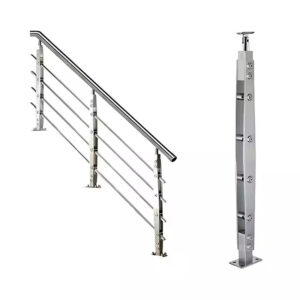
A fully fabricated system typically arrives with pre-welded panels and pre-bracketed posts — the installer’s job is mounting, not assembly. A component package delivers posts, rails, and infill elements separately, requiring field assembly that demands competent labor, correct sequencing, and adequate time. A post and rail assembly only makes sense when the contractor is sourcing infill independently or where the building design calls for a mixed-material approach. If the buyer does not specify which of these configurations they need before quoting, suppliers will often default to whatever they carry most readily — and that default may not match the site expectation.
The practical consequence of misidentifying the scope is not just a reorder. It is a fabrication timeline mismatch, a crew waiting on parts that were not included in the original package, and an installation punch list that was never anticipated in the project schedule. Defining the package boundary is a configuration decision, not a regulatory one — but it controls everything that follows, including how finish work is coordinated and how base connections are detailed.
Visual comparisons that hide finish and weld work
Comparing steel railing options from finished product photography is a reasonable starting point and a poor ending point. Two systems that look nearly identical in a catalog can behave very differently across a three-year maintenance cycle, and the differences are encoded in coating strategy, weld finishing quality, and what happens after the system is cut in the field.
One underestimated failure pattern involves field modification. When a steel railing is cut to fit an irregular run, the cut edge must be deburred and treated with a zinc-based touch-up paint before installation proceeds. This is not a technically demanding step, but it is systematically skipped — either because the crew does not know it is required or because the touch-up kit was not included in the package. The result is an exposed raw edge that begins corroding within the first season, compromising a finish that looked sound at handover.
Powder-coated steel finishes offer meaningful UV stability — color holds better over time compared to some alternative coatings — but UV resistance and scratch resistance are separate properties. A powder-coated system that receives a surface scratch in service needs a touch-up paint application to restore the barrier, not just a cosmetic fix. Buyers who treat powder coat as permanent protection rather than as a durable but maintainable finish layer will underestimate lifecycle maintenance requirements. Neither of these distinctions is visible when comparing finished visuals side by side, which is why coating strategy needs to be a direct procurement conversation rather than an assumption carried from a product image.
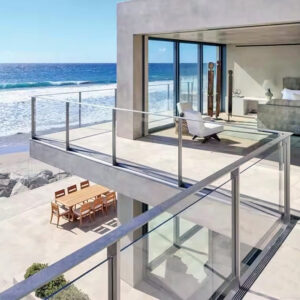
Weld finishing quality follows the same logic. A system with clean, ground welds will photograph identically to one with rough bead passes that have been sprayed over. The difference surfaces during close inspection at installation, during punch list reviews, or — worst case — during an owner walkthrough when the project is already closed. Specifying weld finish grade and requesting fabrication samples or shop drawings before ordering is the more reliable approach than relying on product visuals alone. Teams sourcing stainless steel balcony railing systems should treat visible weld quality as a procurement specification point, not an assumed standard.
Customized layouts versus faster standard fabrication
The trade-off between panelized pre-welded systems and custom fabrication is not a question of quality — it is a question of what the project schedule and design complexity can actually support. Pre-welded systems compress installation time because panels arrive ready to mount; custom fabrication accommodates tailored layouts, curves, and integrated design features, but it adds lead time, finish complexity, and inspection burden that compound significantly at scale.
A 2,000 linear foot custom run with curved configurations and integrated ledges is not simply a larger version of a straightforward straight run. It represents a qualitatively different fabrication engagement — one where specialized equipment, extended shop time, and more complex finish inspection sequences are all in play. Underestimating that scope at the bidding stage is a predictable path to budget overruns and schedule delays, particularly when the lead time assumption was borrowed from a standard panelized order.
| 系数 | Pre-welded Panelized System | 定制加工 |
|---|---|---|
| Installation speed | Fast; panels arrive ready to mount | Slower; site adjustments often needed |
| Design flexibility | Limited to fixed infill patterns | Fully tailored layouts, curves, and integrated features |
| Lead time | Shorter; standardized production | Extended; specialized fabrication required |
| Finish and inspection | Predictable factory-controlled finish | Increased finish work and inspection complexity |
| Cost and schedule risk | Lower; scope is more predictable | Higher; underestimating lead time can cause budget and schedule overruns |
The less obvious consequence of choosing custom fabrication is on the finish and inspection side. Factory-controlled finishes on panelized systems are predictable — the same process, the same environment, the same quality check for every panel. Custom fabrication introduces variability: more weld points, more surface area to finish, and more opportunities for inconsistency that show up during inspection rather than in the shop. For projects where schedule compression matters more than design flexibility, the predictability of a pre-welded panelized system is often the stronger argument.
Base connection details that shift after quoting
Base connection detailing is where the most avoidable post-award change orders originate. The details are not complex individually, but they are consistently missed at quoting because they sit at the intersection of structural, waterproofing, and dimensional coordination — a gap between trades that no single party owns until something goes wrong.
The dimensional issue is straightforward but frequently overlooked: a base plate adds a fixed 2.5 inches to the handrail length. If that addition is not included in the initial takeoff dimensions, the overall mounting positions shift after the quote is issued, forcing dimensional rework that nobody budgeted. It is not a rounding error — it changes where posts land relative to slab edges, expansion joints, and adjacent construction. Confirming that figure before the quote closes costs nothing; discovering it after contract award costs time, money, and occasionally a reorder.
| Detail Often Overlooked | Consequence After Quoting | 需要确认的事项 |
|---|---|---|
| Base plate adds 2.5 in. to handrail length | Overall dimensions and mounting positions shift | Include base plate length in all takeoff dimensions |
| Slab type dictates anchor selection (wood, concrete, stone) | Wrong anchors specified; post-quote change orders | Verify slab material and required anchor type per substrate |
| Deck membrane penetrations | Waterproofing compromised; leakage and structural risk | Confirm waterproofing detail and trade responsibility |
The anchor and waterproofing questions carry different risk profiles but similar consequences. Wood decks, concrete slabs, and stone substrates each require different anchor types — specifying for concrete and installing on a composite wood deck produces a connection that may not perform structurally under load. Deck membrane penetrations add a waterproofing coordination requirement: whoever penetrates the membrane owns the seal, and if that responsibility is not assigned before installation, it defaults to no one. The result is a post base that allows water ingress into the substrate — a defect that rarely surfaces immediately and is expensive to correct once finishes and adjacent work are in place.
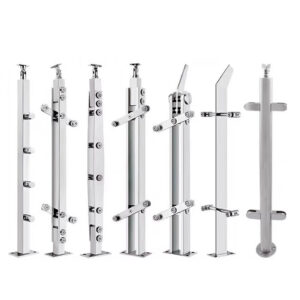
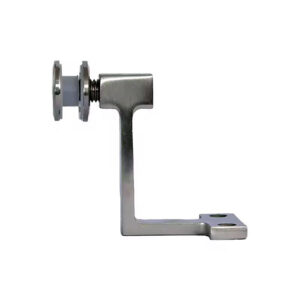
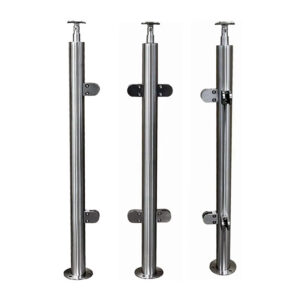
For teams evaluating post hardware options, systems like core mount base systems address some of these coordination challenges by providing defined connection geometry — but the slab type and membrane responsibility still need to be confirmed before ordering, not after.
Fabrication fit that determines the better system
Material selection for balcony railing systems is frequently treated as an aesthetic or budget decision when it is more accurately a climate and maintenance decision. Steel and aluminum have distinct performance profiles across weight, corrosion resistance, cold weather behavior, and finish maintenance, and choosing without accounting for site conditions can produce a system that fails faster than a less expensive alternative would have.
The most consequential planning criterion here is geographic. Steel railing should not be specified for installations within approximately two miles of saltwater. This is a practitioner-established threshold based on corrosion behavior in salt-air environments, not a codified regulatory limit — but the consequence of ignoring it is system-level corrosion failure that no powder coat specification can reliably prevent over time. In coastal environments, aluminum is the functionally appropriate choice regardless of cost differential, because its inherent corrosion resistance eliminates the exposure that compromises steel in those conditions.
| 系数 | Steel | 铝质 |
|---|---|---|
| Weight and feel | Heavier, sturdier | 打火机 |
| 耐腐蚀性 | Requires powder-coated finish | Naturally more corrosion-resistant |
| Cold weather behavior | 标准性能 | Gains strength in cold weather |
| Coastal proximity limit | Not recommended within 2 miles of saltwater | Preferred option for coastal environments |
| Finish maintenance | UV-stable color; scratches need touch-up paint kit | Lower inherent maintenance |
| Strongest application fit | High-traffic commercial (code-tested pre-welded panels available) | Coastal and corrosion-prone installations |
Away from coastal conditions, pre-welded commercial-grade steel railing panels present a strong argument for high-traffic commercial applications. These panels can be specified to code-tested performance standards — ASTM E985-24 provides a testing framework relevant to permanent metal railing systems for buildings — and their factory-controlled fabrication makes them virtually maintenance-free compared to field-assembled alternatives. The predictability of a code-tested pre-welded panel reduces long-term upkeep exposure and simplifies compliance documentation, which matters on commercial projects where ongoing liability and inspection records are part of the building’s operating posture.
The finish maintenance question reinforces the material selection decision in a different way. Steel’s UV stability is real, but the scratch vulnerability of powder coat means that an active commercial environment — where carts, equipment, or regular foot traffic contact the railing — will eventually produce surface damage that requires intervention. Aluminum’s lower inherent maintenance burden is not irrelevant even on inland projects; it simply competes against steel’s sturdier feel and stronger commercial track record. The decision logic is: match the material to the dominant risk factor — corrosion proximity first, then traffic and maintenance expectation.
Before a quote is issued for any steel railing system, three things should already be confirmed: the package scope and assembly configuration, the coating and weld finish specification, and the base connection detail including slab type, anchor selection, and membrane responsibility. These are not installation questions — they are design and procurement questions that, when deferred, reliably generate change orders, dimensional rework, or field modifications that were never in the budget.
The right system is not the one that performs best in a catalog comparison. It is the one whose fabrication method, finish maintenance requirements, and base connection logic are matched to the actual building condition before the contract closes. For coastal projects, that judgment starts with material disqualification. For commercial high-traffic applications, it starts with specifying code-tested pre-welded panels. For everything in between, it starts with defining the package boundary clearly enough that every trade on site knows what they are receiving and what they are expected to do with it.
常见问题
Q: What happens if the slab type changes between the design phase and installation — does the entire base connection need to be re-specified?
A: Yes, the anchor specification must be redone from scratch when the substrate changes, because anchor types are not interchangeable across wood, concrete, and stone. A concrete anchor installed into a composite wood deck will not meet the structural load requirement, and if a membrane is now involved, waterproofing responsibility also needs to be reassigned before any penetration is made. Catching a substrate change after contract award is manageable; catching it after installation has begun is expensive.
Q: If a project is inland but in a high-humidity region with frequent rain, does the two-mile coastal rule still apply to material selection?
A: The two-mile saltwater threshold addresses salt-air corrosion specifically, not general humidity. For inland high-humidity environments, powder-coated steel with proper weld finishing and consistent touch-up maintenance remains a viable option — the corrosion mechanism in salt air is distinct from moisture exposure alone. The more relevant planning factor in that context is how much surface scratching the installation is likely to receive, since humid conditions accelerate corrosion at any unprotected edge or break in the coating.
Q: Once the system package scope is confirmed and a quote is signed, what should the procurement team do immediately before fabrication begins?
A: Request shop drawings and fabrication samples before production starts. This is the last point at which weld finish grade, panel dimensions, and base plate geometry can be verified against actual site conditions without generating a change order. Confirming these details after the quote closes but before material is cut eliminates the most common sources of dimensional rework and finish disputes that surface during installation punch lists.
Q: Is a component package ever the better procurement choice over a fully fabricated system, even when crew experience is uncertain?
A: A component package can be the right choice when the contractor is supplying a non-standard infill or when the design calls for mixed materials that make pre-welded panels impractical — not because it is simpler, but because the project configuration requires it. In those cases, the procurement decision needs to include explicit labor sequencing requirements and verified crew competency for field assembly, rather than assuming the component package is a drop-in equivalent to a pre-welded system with fewer parts.
Q: How should a specifier weigh aluminum against steel on a commercial inland project where both materials are structurally acceptable?
A: Lead with traffic and maintenance expectation as the deciding factor. Steel’s sturdier feel and code-tested pre-welded panel availability give it a practical edge on high-traffic commercial applications where long-term compliance documentation matters. Aluminum’s lower maintenance burden becomes more compelling when the facility management program is limited or when surface contact from equipment and carts is frequent enough to make ongoing powder coat touch-up operationally unrealistic. Neither material wins categorically — the dominant risk factor on that specific project determines which trade-off is worth accepting.