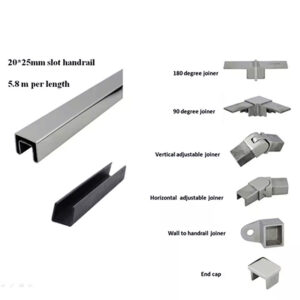
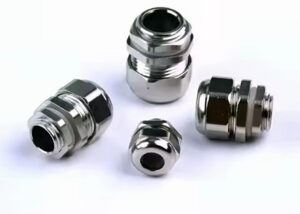
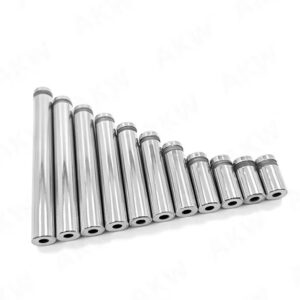
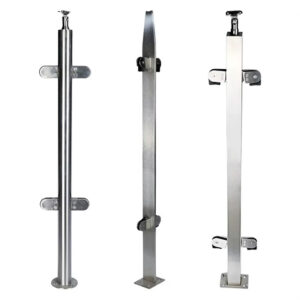
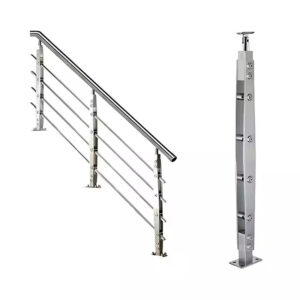
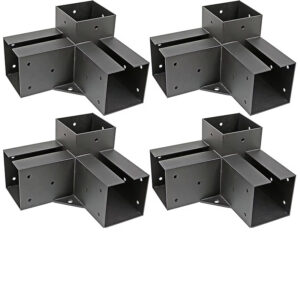
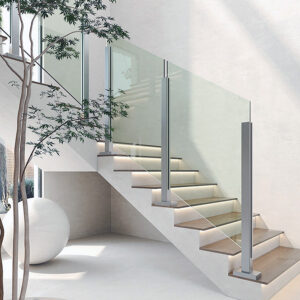
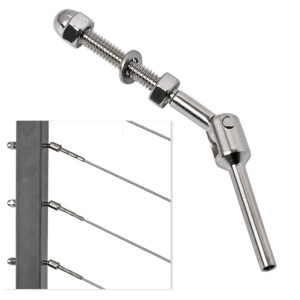
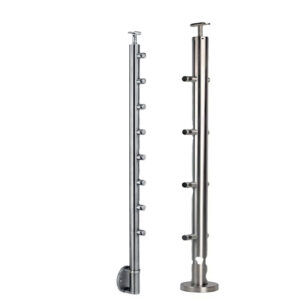
Кронштейны и адаптеры для стекла
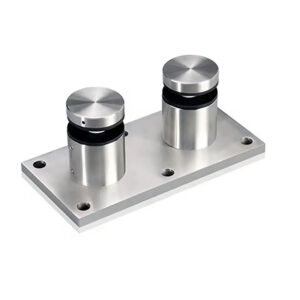
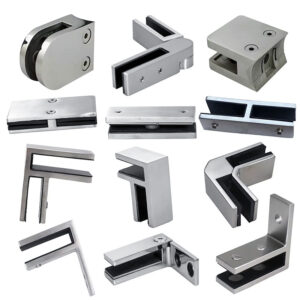
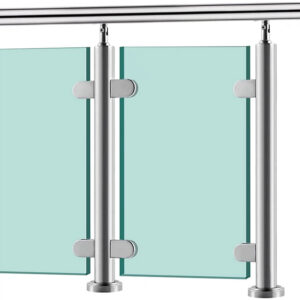
Кронштейны и адаптеры для стекла
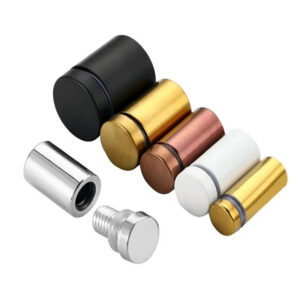
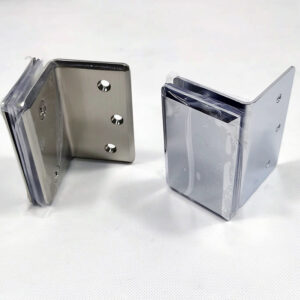
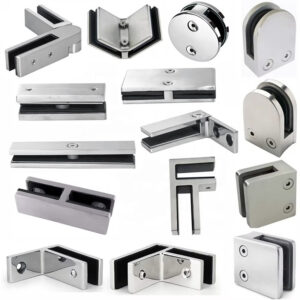
ESANG glass brackets and adapters are used to connect glass panels to walls, posts, structural surfaces, and custom railing assemblies. These components help solve connection details that are not fully covered by standard glass clamps, spigots, standoffs, or base shoe channels.
В эту категорию входят Кронштейны для стеклянных панелей, Wall to Glass Connectors, Glass Mounting Adapters, Structural Glass Brackets, и Post to Glass Adapters.
For contractors, distributors, fabricators, and project buyers, glass bracket and adapter selection should consider glass thickness, mounting surface, post shape, wall condition, offset distance, hole position, support direction, material grade, surface finish, and project layout. ESANG can manufacture glass brackets and adapters according to drawings, samples, dimensions, material grade, finish requirements, and installation conditions.
Glass Bracket and Adapter Options
| Bracket or adapter option | Лучше всего подходит для | Основные вопросы при отборе кандидатов |
|---|---|---|
| Кронштейны для стеклянных панелей | Supporting glass panels from posts, walls, side structures, or custom railing frames | What glass thickness, support direction, bracket size, and fixing surface are required? |
| Wall to Glass Connectors | Glass panels connected to walls, stair stringers, side surfaces, or structural partitions | What wall material, glass hole layout, offset distance, and fixing method are needed? |
| Glass Mounting Adapters | Custom glass connections, non-standard mounting surfaces, and transition details | What mounting interface, glass condition, adapter shape, and installation tolerance are required? |
| Structural Glass Brackets | Glass railing projects requiring stronger support review or project-specific bracket design | What glass size, support load path, substrate, and project specification should be reviewed? |
| Post to Glass Adapters | Connecting glass panels to round, square, rectangular, or custom stainless steel posts | What post shape, glass thickness, adapter position, and finish should match the railing? |
How to Choose Glass Brackets and Adapters
Glass brackets and adapters are selected when a project needs a specific connection between glass and another structure. The first question is not only what the glass panel looks like, but what it must connect to.
| Состояние проекта | Рекомендуемое направление | Почему это важно |
|---|---|---|
| The glass panel connects directly to a wall or side structure | Use wall to glass connectors or side-mounted glass support brackets | Wall material, offset distance, glass holes, and anchor method must be coordinated. |
| The glass panel connects to stainless steel posts | Use post to glass adapters or glass panel support brackets | Post shape and adapter position affect alignment and visible fit. |
| The project has a custom mounting interface | Use glass mounting adapters or project-specific connector designs | Adapters help bridge non-standard surfaces, profiles, or layout conditions. |
| The project requires stronger support review | Use structural glass brackets or project-reviewed bracket layouts | Glass size, substrate strength, bracket spacing, and load path should be reviewed together. |
| The glass layout includes stairs, corners, or transitions | Use custom brackets, adapters, or adjustable connection details where needed | Stair pitch, angle, offset, and transition points can require non-standard hardware. |
| The project uses standard post-supported glass panels | Review whether glass clamps are more suitable than adapters | Standard clamps may be simpler when the mounting surface and glass thickness match. |
Glass-to-Wall, Post-to-Glass, and Structural Bracket Differences
Different glass bracket types solve different connection problems. A wall-to-glass connector, post-to-glass adapter, and structural bracket should not be treated as interchangeable.
| Connection type | Основная функция | Общие соображения |
|---|---|---|
| Glass-to-wall connection | Fixes glass panels to a wall, stair stringer, fascia, or side support | Wall material, anchor type, glass hole position, offset distance, and edge clearance |
| Post-to-glass connection | Connects glass panels to stainless steel posts or post-supported frames | Round or square post shape, adapter position, glass thickness, and finish match |
| Glass panel support bracket | Provides support at specific panel points or custom connection areas | Bracket spacing, glass size, support direction, and fixing method |
| Structural glass bracket | Supports project-specific glass loads or stronger connection requirements | Project drawings, substrate review, glass specification, and complete system design |
| Glass mounting adapter | Bridges glass to a special surface, profile, or non-standard connection detail | Adapter shape, tolerance, finish, fasteners, and installation sequence |
Mounting Surface and Glass Preparation
Glass brackets and adapters require accurate coordination between the glass panel, support surface, and fixing method. Before production or installation, the project team should confirm glass thickness, hole positions, edge distances, support geometry, and mounting surface condition.
| Пункт для подтверждения | Почему это важно | Типичные отзывы покупателей |
|---|---|---|
| Толщина стекла | Bracket slot, gasket, adapter shape, and fixing hardware must match the glass | Glass thickness, glass type, and project specification |
| Glass hole positions | Many brackets and adapters depend on accurate drilled hole locations | Glass drawings, hole diameter, hole spacing, and edge distance |
| Mounting surface | Wall, post, steel frame, stair stringer, fascia, or custom support affects fixing method | Surface material, thickness, photos, drawings, and installation detail |
| Форма поста | Round, square, rectangular, or custom posts require different adapter shapes | Post dimensions, profile drawings, and finish requirement |
| Offset distance | Side-mounted glass may require a specific distance from the support structure | Projection dimension, wall condition, and visual requirement |
| Connection direction | Support may be vertical, side-mounted, angled, or project-specific | Railing layout, stair angle, panel position, and connection drawing |
Материалы, отделочные материалы и изготовление на заказ
ESANG glass brackets and adapters can be manufactured according to project requirements, including bracket shape, adapter interface, glass thickness range, mounting surface, screw layout, offset distance, material grade, surface finish, and packaging requirements.
| Материал или отделка | Типичные области применения | Примечания |
|---|---|---|
| 304 нержавеющая сталь | Interior glass railings, commercial interiors, residential stairs, and dry environments | A common option for many indoor glass bracket applications. |
| нержавеющая сталь 316 | Outdoor glass railings, balconies, poolside projects, humid areas, and higher-corrosion environments | Обычно используется в тех случаях, когда требуется повышенная коррозионная стойкость. |
| 316L нержавеющая сталь | Проекты, требующие улучшенной свариваемости или более высоких антикоррозионных характеристик | Подходит в случаях, когда в технических требованиях указана низкоуглеродистая нержавеющая сталь. |
| Матовая или сатиновая отделка | Commercial glass railings, stair glass, balcony systems, and most architectural applications | Помогает сделать менее заметными отпечатки пальцев и незначительные следы от прикосновений. |
| Зеркальная полировка | Декоративные интерьеры, отели, виллы и отдельные визуальные решения премиум-класса | Придаёт яркий внешний вид, но требует более бережного обращения и ухода. |
For non-standard glass railing projects, customers can provide drawings, glass thickness, hole positions, mounting surface details, bracket or adapter requirements, finish requirements, and installation conditions. ESANG can review the requirements and manufacture glass brackets or adapters to match the project specification where feasible.
Compatibility with Glass Hardware and Railing Systems
Glass brackets and adapters should be selected together with the surrounding glass railing system. The best connector depends on whether the glass is post-supported, side-mounted, bottom-supported, or integrated with a handrail or cap rail.
- For standard post-supported glass panels, review Glass Clamps and Connectors where a clamp is more suitable than a custom adapter.
- For side-mounted glass, coordinate adapters with Glass Spigots and Standoffs when standoff-style support is required.
- For bottom-supported frameless glass, review Системы базовой обуви instead of side or post brackets.
- For post-supported systems, coordinate adapters with Посты из нержавеющей стали, post shape, and post spacing.
- For top edge finishing or handrail integration, coordinate with Рельсы для крышек or related handrail components.
Адаптация к требованиям проекта
Many glass bracket and adapter projects are customized according to glass thickness, support surface, offset distance, post profile, and project layout. ESANG can support custom glass panel support brackets, wall-to-glass connectors, glass mounting adapters, structural glass brackets, post-to-glass adapters, and related stainless steel connection hardware.
When a project has standard-oriented requirements related to guardrail height, glass type, glass thickness, opening limitations, material grade, or installation method, customers should provide the required drawings and specifications. ESANG can manufacture glass brackets and adapters to match those provided details, while final compliance depends on the complete installed system, glass specification, structural design, installation method, and applicable local code.
Вопросы, связанные с установкой и реализацией проекта
Glass brackets and adapters should be reviewed before glass production and site installation. Glass holes, edge distances, bracket spacing, support surface strength, and hardware alignment can affect the complete glass railing system.
- Glass thickness, height, and panel width
- Tempered or laminated glass specification
- Glass hole positions, hole diameter, and edge distances
- Wall, post, fascia, stair stringer, steel frame, or custom mounting surface
- Bracket spacing, adapter offset, and support direction
- Класс материала для использования в помещениях, на открытом воздухе, в прибрежных зонах или возле бассейнов
- Surface finish and maintenance requirements
- Compatibility with handrails, cap rails, posts, or other glass hardware
- Требования местных строительных норм и технических условий проекта
Glass drilling, notching, hole layout, and edge preparation should be confirmed with the glass supplier, project designer, installer, or local authority. ESANG can manufacture hardware to match provided glass and project requirements, but the complete installed system should be reviewed as a whole.
Сценарии применения
Wall-Mounted Glass Panels
Wall to glass connectors are used when glass panels connect to walls, stair stringers, side structures, or architectural surfaces. Wall material, hole position, offset distance, and anchor method should be confirmed.
Post-Supported Glass Railings
Post to glass adapters are used where glass panels connect to round, square, rectangular, or custom stainless steel posts. Post shape, glass thickness, adapter position, and finish should be coordinated.
Stair Glass and Side-Mounted Glass
Stair glass projects may require brackets or adapters that follow stair angles, stringer positions, landings, or offset requirements. Drawings and glass hole layouts are important for review.
Коммерческие системы стеклянных перил
Hotels, offices, shopping centers, public buildings, and transport facilities may require custom glass brackets and adapters for repeatable installation, consistent finish, and project-specific connection details.
Custom Architectural Glass Assemblies
Custom projects may require special adapter profiles, structural brackets, project-specific hole layouts, or non-standard mounting interfaces. ESANG can review drawings and manufacture components to match the required design where feasible.
Связанные категории товаров
- Кронштейны для стеклянных панелей
- Wall to Glass Connectors
- Glass Mounting Adapters
- Structural Glass Brackets
- Post to Glass Adapters
- Glass Clamps and Connectors
- Glass Spigots and Standoffs
- Системы базовой обуви
- Посты из нержавеющей стали
Часто задаваемые вопросы
What are glass brackets and adapters used for?
Glass brackets and adapters are used to connect glass panels to walls, posts, structural surfaces, stair stringers, fascia surfaces, or custom railing frames. They are useful when standard clamps, spigots, or base shoe systems do not fully match the project connection detail.
What is the difference between glass clamps and glass brackets?
Glass clamps typically hold glass panels to posts, walls, or flat surfaces with clamp bodies and gaskets. Glass brackets and adapters are broader connection components used for wall-to-glass, post-to-glass, structural, or custom mounting conditions.
When should wall to glass connectors be used?
Wall to glass connectors are used when glass panels need to connect directly to walls, stair stringers, side supports, or structural surfaces. Wall material, glass hole layout, offset distance, and fixing method should be confirmed before production.
When should post to glass adapters be used?
Post to glass adapters are used when glass panels connect to stainless steel posts and the project needs a specific adapter shape, offset, or connection detail. Post shape, glass thickness, and adapter position should be reviewed together.
What are structural glass brackets?
Structural glass brackets are brackets used where the glass support condition requires stronger or project-specific review. The project team should confirm glass size, support surface, bracket spacing, and complete system requirements.
Can ESANG customize glass brackets and adapters?
Yes. ESANG can manufacture glass brackets and adapters according to drawings, samples, glass thickness, hole positions, mounting surface, post shape, material grade, finish, and packaging requirements.
Can glass brackets be used with stainless steel posts?
Yes. Glass brackets and post-to-glass adapters can be used with stainless steel posts. The post shape, adapter interface, glass thickness, hole position, and finish should be confirmed before ordering.
Should I choose 304 or 316 stainless steel brackets?
Нержавеющая сталь марки 304 обычно используется в помещениях и в сухих условиях. Нержавеющая сталь марки 316, как правило, предпочтительна для использования на открытом воздухе, в прибрежных зонах, возле бассейнов, во влажных условиях или в средах с повышенной коррозионной активностью. Окончательный выбор марки следует осуществлять с учетом условий эксплуатации и технических требований проекта.
What information is needed for a glass bracket or adapter inquiry?
Useful information includes glass thickness, glass size, hole positions, mounting surface, post shape, bracket or adapter type, offset distance, material grade, finish, quantity, drawings, and project environment.
How should stainless steel glass brackets and adapters be maintained?
Для регулярной очистки обычно используются мягкие моющие средства, чистая вода и мягкая ткань. Следует избегать использования чистящих средств на основе хлорида, стальной ваты и абразивных инструментов. Установки, расположенные на открытом воздухе, у бассейна и в прибрежных зонах, следует очищать чаще, чтобы уменьшить загрязнение поверхности и сохранить внешний вид.
Похожие посты:
Требования к пассивации крепежных элементов, кронштейнов и анкерных деталей из нержавеющей стали
Определите условия обработки с учетом состояния детали, способа изготовления и воздействия, а не применяйте одно общее предписание по пассивации ко всем компонентам.
Очистка крепежных элементов для кабельных и стеклянных перил из нержавеющей стали марки 316 в морских условиях
Очищайте кабельные клеммы, стеклянные зажимы, крепежные элементы и щели, не оставляя следов химических веществ и не повреждая полированные и матовые поверхности.
Как остатки производственного процесса приводят к появлению чайных пятен на перилах из нержавеющей стали
Причины появления чайных пятен — это застрявшие частицы, окрашивание под воздействием высокой температуры, перенос абразивных частиц и остатки, скопившиеся в линиях отделки или щелях.
Травление и пассивация фурнитуры для перил из нержавеющей стали: различия в сфере применения и рисках
Травление удаляет накипь и поврежденные поверхностные слои; пассивация направлена на приведение поверхности в надлежащее состояние после очистки, при этом она сопряжена с иными факторами контроля и рисками.
План технического обслуживания фурнитуры для прибрежных перил: соль, щели, крепежные элементы и отделка поверхности
При планировании технического обслуживания следует учитывать такие факторы, как воздействие внешних факторов, накопление соли, наличие щелей, сочетание разнородных металлов, состояние крепежных элементов и внешний вид покрытия.
Правила очистки строительной площадки после резки, сварки и монтажа перил из нержавеющей стали
Перед сдачей объекта удалите шлифовальную пыль, остатки сварки, цементные отложения и загрязнения от углеродистой стали, чтобы предотвратить появление излишних пятен.
Проекты Эсанга

Сертификат Эсанга
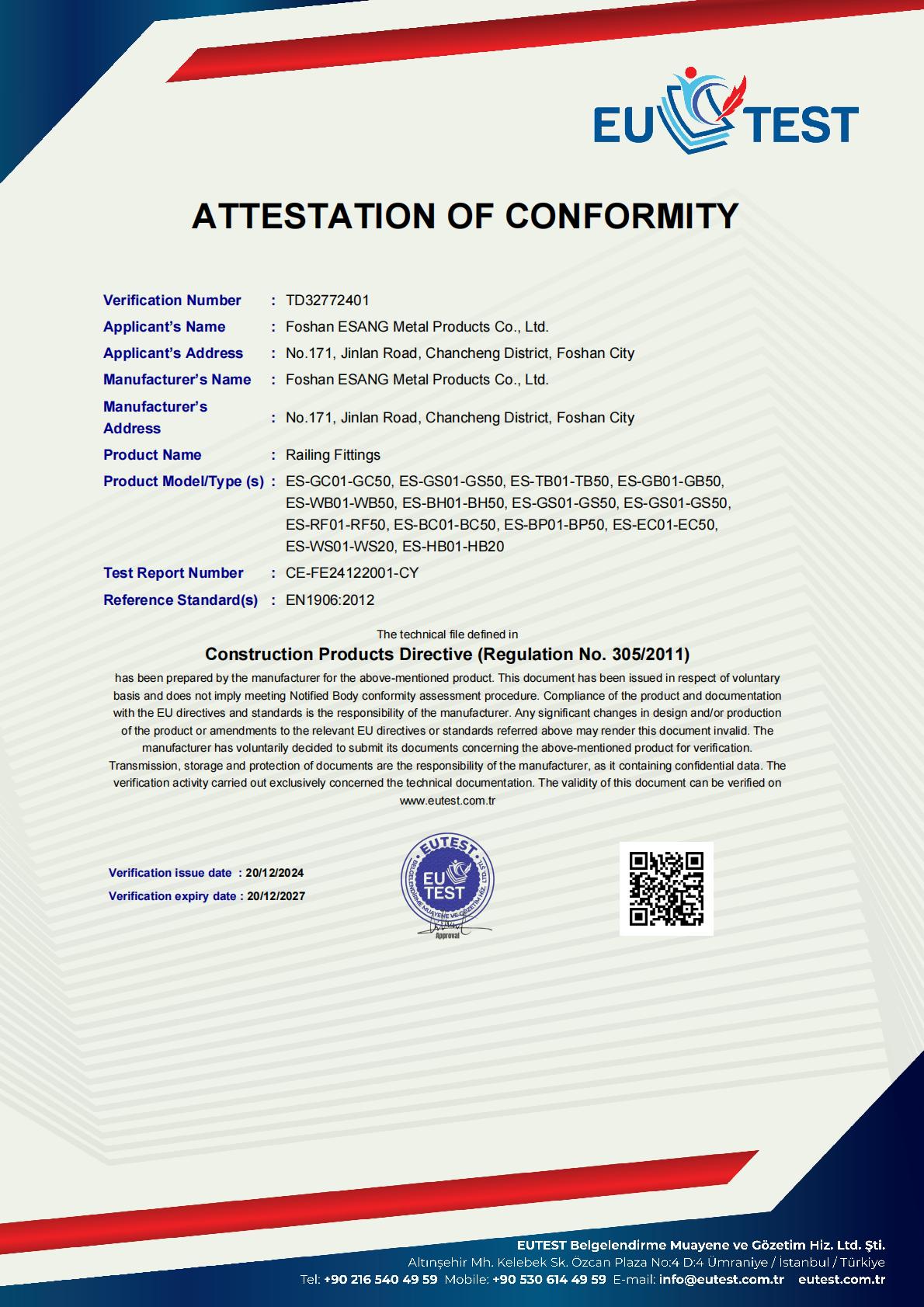
Компания Foshan ESANG Metal Products с гордостью поддерживает сертификация CE (Верификационный номер TD32772401) в соответствии с Директивой о строительной продукции (Постановление № 305/2011), что подтверждает нашу приверженность высочайшим европейским стандартам безопасности и качества.
Сертифицированный ассортимент продукции:
Наш обширный ассортимент фурнитуры для перил, включающий зажимы для стекла, натяжители, кронштейны, настенные крепления, опорные башмаки, фурнитуру для перил, кабельное оборудование и компоненты для столбов, отвечает требованиям EN1906:2012 стандарты, обеспечивающие целостность конструкции и надежность работы всех установок.
Что это значит для вашего проекта:
✓ Полное соответствие нормативным требованиям для европейского и международного рынков
✓ Независимая проверка безопасности и долговечности
✓ Документационная поддержка архитектурных спецификаций
✓ Гарантия качества от третьей стороны
Сертификация действительна до 2027 года | Отчет об испытаниях: CE-FE24122001-CY
Проекты Эсанга

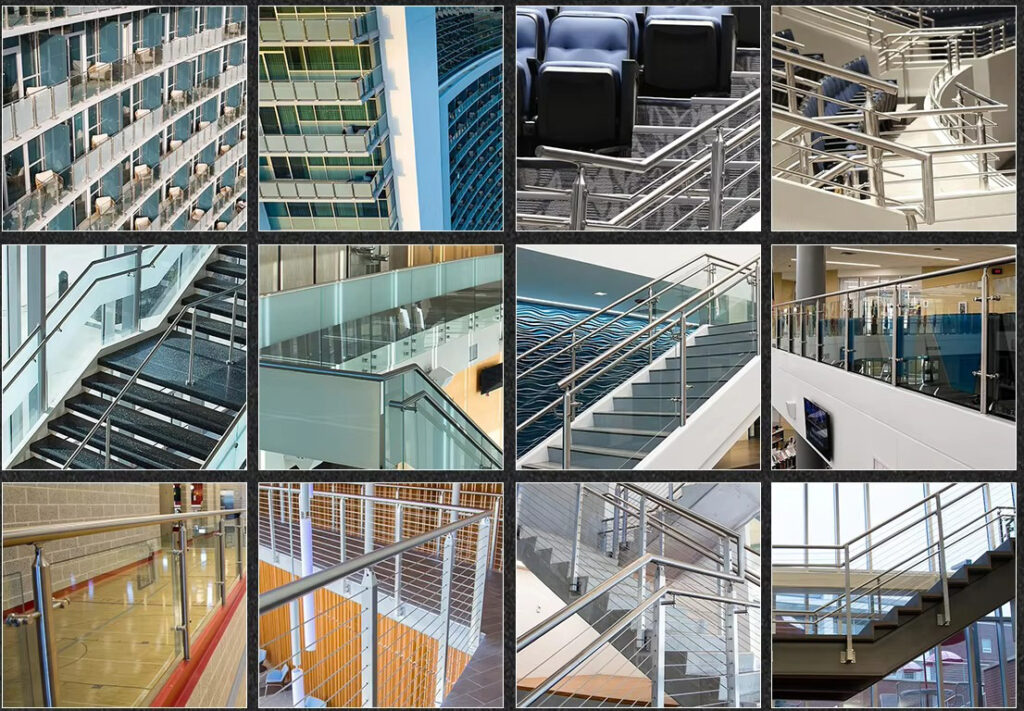
Справочные продукты