Specify What Moves, How Far It Moves, and How It Locks
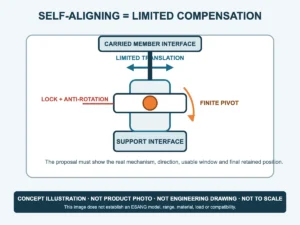
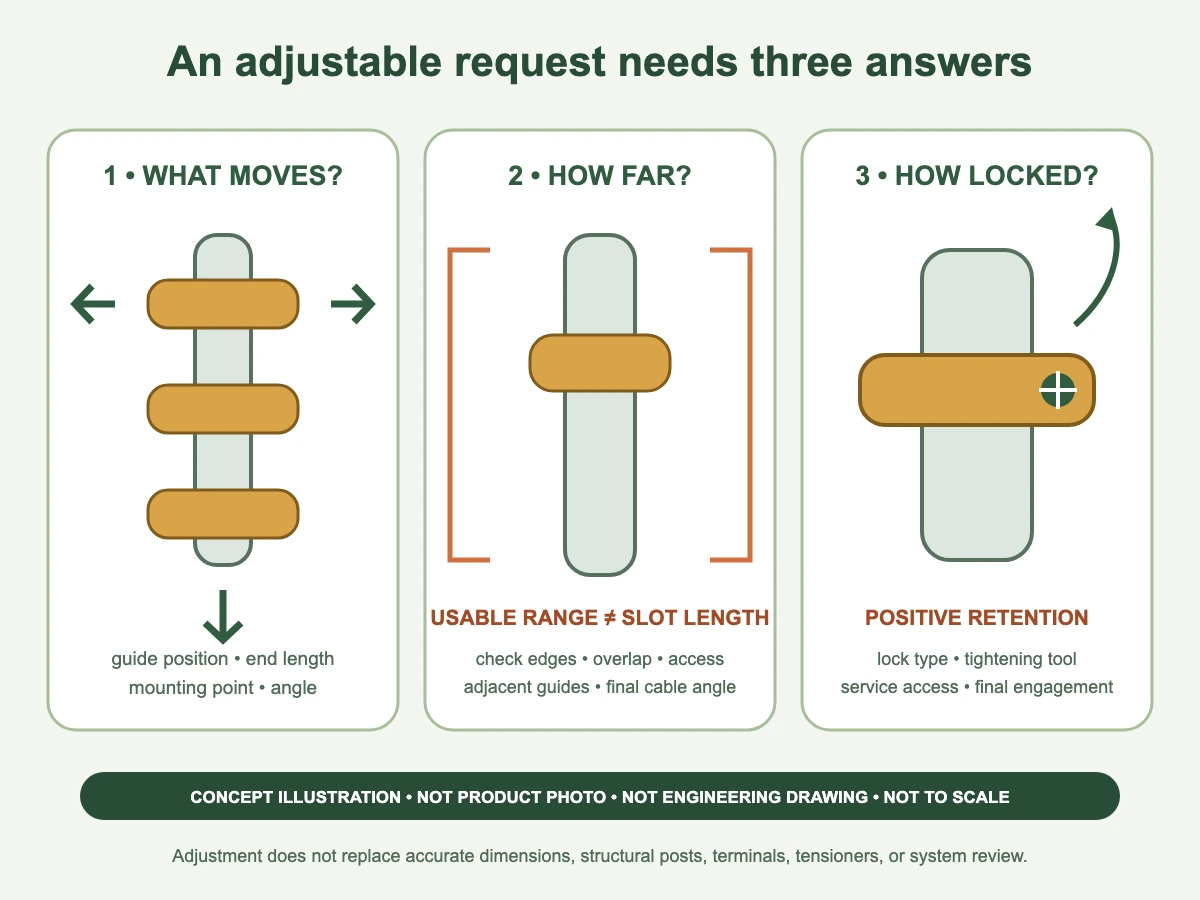
An adjustable cable spacer system is useful when a fixed hole pattern cannot safely absorb the intended installation tolerance or when cable guides must be set to a project-specific position. “Adjustable” is not one mechanism and it does not mean unlimited range. The request must identify whether the variable is guide position, body length, end mounting position, spacer angle, or another defined interface.
The locking method matters just as much as the movement. A movable guide that cannot be secured in a known final position may drift during cable threading, tensioning, cleaning, or service. The proposed configuration should name the adjustment direction, usable travel, locking parts, access needed for tightening, and the inspection or re-tightening responsibility—without treating adjustment as a substitute for an accurate railing layout.
Start by Naming the Adjustment Problem
Guide-position adjustment
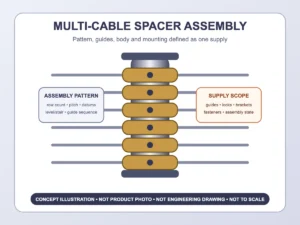
This direction is relevant when one or more cable centerlines must be positioned along a spacer body before being locked. Define the number of guides, required center-to-center pattern, reference datum, and whether each guide moves independently or as part of a linked pattern. A system that can move every guide independently may offer flexibility but also creates more settings to verify and more locking points to access.
End or body-length adjustment
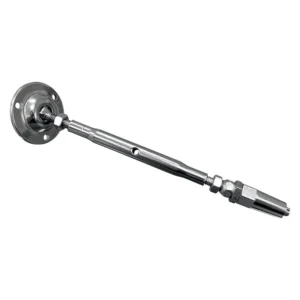
Some projects need limited take-up at the top or bottom interface to match a measured clear height. State the nominal body length, required adjustment direction, and usable—not theoretical—travel after thread engagement, fastener access, and cover parts are considered. Adjustment should correct the agreed tolerance window, not conceal an unknown overall dimension.
Angle or mounting-position adjustment
A stair or sloped run may require a guide body, attachment face, or bracket to align with the cable direction. Provide actual rise and run or a verified angle, plus photos of the top and bottom receiving surfaces. Ask whether the proposed adjustment is set during assembly, during installation, or remains serviceable afterward. Never assume a movable joint can accept any stair angle or carry cable tension.
Evaluate the Lock as a Separate Interface
The quotation should show how each adjusted position is retained. Depending on the proposed design, that may involve a clamp, opposed nuts, a set screw, a keyed feature, a captured insert, or another mechanism. These are examples of fields to define, not a promise that every mechanism is available.
- Positive retention: identify which part prevents sliding or rotation after final setting.
- Tool access: confirm that the installer can reach the lock after cables, rails, trims, or covers are in place.
- Contact with the cable: distinguish a lock for the guide or bar from a clamp acting directly on the cable. A spacer should not become an unplanned cable termination.
- Thread engagement or clamp overlap: require a defined acceptable final condition. Running a threaded section to its last turn or a clamp to the edge of its slot is not the same as usable adjustment.
- Service state: state whether the lock is intended to be set once, periodically checked, or adjusted during later maintenance.
If the locking detail is missing from a comparison, two “adjustable” quotations may describe fundamentally different site work and service risk.
Coordinate Cable Rows, Openings, and Adjustment Travel
Provide cable count, cable centerlines, diameter, construction, and the largest preassembled fitting that must pass the guide. A slot or movable guide still needs a suitable cable-contact surface. Ask the proposed configuration to identify the opening, insert, sleeve, or grommet basis; the edge finish; and any replacement parts.
Adjustment travel must not move an opening so close to a bar edge, end connection, adjacent guide, or fastener that the intended geometry is lost. The usable envelope is therefore governed by more than the length of a slot or thread. It also depends on guide size, remaining material, lock footprint, access, and the final cable angle.
For stair work, the cable rows, guide faces, and spacer body may not share the same orientation. A marked side elevation should show which part follows the stair pitch and which part remains vertical. Releasing a part from a generic “stair adjustable” description can produce crossed cable lines, side loading at the guides, or inaccessible locks.
Do Not Use Adjustment to Redefine the Structural Bay
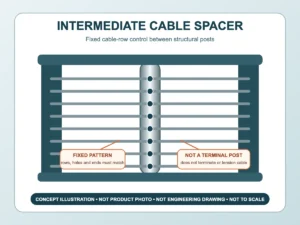
An adjustable spacer remains an intermediate cable-positioning component unless a verified project design assigns a different role. It is not a terminal post, tensioner, structural intermediate post, or top-rail support by default. Post-to-post span, spacer-station location, cable tension, frame stiffness, terminal hardware, and anchorage remain system-level decisions.
The spacer body must still have a suitable profile, length, and stiffness for its unsupported height and connection method. Adding movable guides, slots, or joints can change how the body behaves during handling and installation; a longer or more perforated bar should not be assumed equivalent to a short solid one. Request the offered profile, end restraint, and connection details rather than relying on the word “adjustable.”
Decide What Happens in the Factory and What Happens on Site
A useful quotation separates factory-prepared work from installer work:
- factory-cut body versus site-trim allowance;
- factory-installed guides versus loose guides to be positioned on site;
- preset stair orientation versus a joint to be set at installation;
- locks and sleeves included versus separately sourced;
- drilling template or setting gauge included versus measurements transferred by the installer; and
- final tightening, marking, cleaning, and inspection responsibilities.
Field drilling or cutting should be released only against a controlled drawing. Confirm which surfaces may be machined, how cut edges are finished, and how chips or contamination are removed. Unplanned drilling can collide with a locking feature or leave insufficient material around a guide.
Use a Quote Matrix That Exposes the Mechanism
| Решение | Buyer input | Quotation should identify | If mismatched |
|---|---|---|---|
| Переменная | Which position, length, or angle must change | Adjustment direction and usable travel | Hardware moves in the wrong plane or cannot reach the setting |
| Locking | Required access and service plan | Lock type, tool, final engagement, replacement parts | Guide slips, rotates, or cannot be tightened after assembly |
| Cable pattern | Row count, target centers, cable and fitting sizes | Guide range, opening, sleeve/insert, edge condition | Cable cannot pass or final centers cannot be held |
| Body and ends | Clear height, top/bottom interfaces, stair geometry | Profile, nominal length, end pieces, attachment method | Spacer bows, conflicts with the frame, or needs rework |
| Supply scope | Quantity, exposure, finish, factory/site split | Offered material/finish and included bars, guides, locks, brackets, fasteners, gauge | Price comparison omits critical parts or labor |
Requested materials, finishes, mechanisms, packaging, and custom travel are subject to the proposed configuration. Cables, terminals, tensioners, posts, rails, anchors, and installation are not automatically included.
Open the Inquiry with a Marked Layout
Send a photo or elevation showing the terminal posts, structural posts, top and bottom boundaries, cable rows, proposed spacer stations, and the location of the tolerance you want the adjustable system to absorb. Add the cable and fitting sizes, level or stair geometry, nominal spacer length, exposure, quantity, and preferred finish.
The proposed record should then freeze the adjustment variable, usable range, lock, cable-guide detail, body profile, end interfaces, material and finish, factory/site work, included parts, quantity, and revision. This keeps a controlled adjustment feature from becoming an open-ended site decision.