Salt doesn’t distribute evenly across a coastal railing installation, and a maintenance plan that ignores that fact will fail at the hardware level before it fails visibly. The windward post base and the sheltered underside of a handrail on the same project can face exposures that differ by enough to demand completely different cleaning cadences—and treating them uniformly almost always means under-maintaining the most aggressive zones. The practical cost isn’t just staining; it’s seized fasteners, passive-layer breakdown, and galvanic corrosion at stainless-to-aluminum interfaces that’s already well advanced by the time a surface inspection catches it. What follows helps owners, contractors, and property managers map exposure honestly, sequence cleaning against risk, and recognize the thresholds where preventive maintenance stops being sufficient.
Exposure Zones Within One Coastal Project
Zone classification is the first structural decision in any coastal railing maintenance plan, and collapsing a project into a single maintenance schedule is the most common setup failure. A front-row bayfront installation and a unit one block inland on the same development don’t share a cleaning cadence—and specifying one that covers only the milder condition leaves the heavy-exposure hardware chronically under-maintained.
The functional boundary is salt load and drying time. In heavy salt zones—oceanfront faces, windward bluffs, bayfront splash exposure—salt deposits arrive continuously and don’t get a chance to dilute through rainfall alone. Field practice from installers working these environments points to weekly 10–15 minute rinses as the baseline, with attention specifically directed at cable exits, post bases, glass panels, and the tight transition points that trap deposits. The goal is desalination before salt crystals have time to draw moisture and initiate surface attack. Moderate zones, even those still within strong salt-air range, allow a longer interval before deposits become aggressive—monthly cleaning with a quarterly deep inspection represents a more realistic cadence without accepting meaningful corrosion risk.
Material selection intersects here in a way that affects maintenance burden differently than owners often expect. Powder-coated aluminum with a fully intact coating can tolerate a longer rinse interval than bare or brushed stainless hardware because the coating interrupts direct metal-salt contact—but that tolerance disappears the moment the coating is compromised. The zone-based schedule and the material’s current surface condition have to be read together, not separately.
| Зона воздействия | Recommended Schedule | Key Details & Material Considerations |
|---|---|---|
| Heavy Salt Zone (front-row beach, bayfront, windward bluff) | Weekly rinsing | 10–15 minute rinse targeting rails, cables, posts, glass, and tight spots such as cable exits and post bases. |
| Moderate Salt Zone (a block inland, still in strong salt air) | Monthly baseline cleaning + quarterly deep clean | For powder-coated aluminum with intact coating, monthly washes and quarterly inspections can replace weekly rinses. |
The downstream implication of zone mapping is procurement-level: projects in heavy zones should specify 316-grade stainless throughout, including fasteners, and should document which elevations and orientations fall into each zone so that future owners inherit a defensible maintenance basis rather than a vague recommendation to “clean regularly.”
Hidden Crevices and Fasteners in Routine Inspection
Visible rails can look acceptable while corrosion is already progressing in the hardware behind them. That gap between surface appearance and actual condition is where most coastal maintenance plans underperform—not because owners skip the obvious surfaces, but because inspections don’t systematically reach the locations where geometry traps salt and moisture out of direct sight.
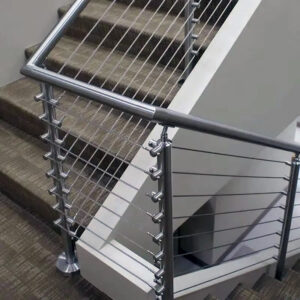
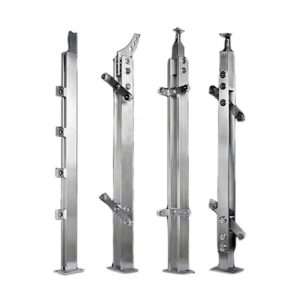
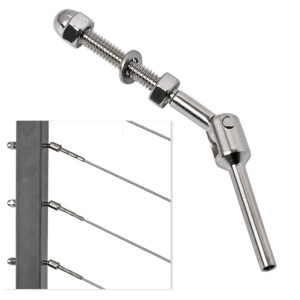
Cable exits are a reliable failure point. The fitting creates a tight opening where salt-laden water enters and doesn’t easily rinse back out, making it a salt reservoir even after the adjacent rail surface has been cleaned. Post bases share the same logic: water pools at the deck interface, salt concentrates as it dries, and the base sits in a crevice condition that few rinse patterns fully penetrate. Under handrails, the sheltered geometry prevents both salt removal by rain and meaningful desalination from a standard rinse unless the inspector specifically directs water into that cavity. These aren’t exhaustive diagnostic categories—they’re the high-consequence examples that field experience and manufacturer inspection guidance consistently identify as the points where corrosion advances furthest before it becomes visible.
Stainless-to-aluminum interfaces carry a different risk category: galvanic corrosion driven by the electrochemical potential difference between the two metals in the presence of a salt electrolyte. Isolators interrupt that circuit, but they need to be verified present and intact as part of every quarterly inspection, not assumed from the original installation record. Where isolators are missing or degraded, the interface will preferentially corrode regardless of how well the rest of the system is maintained.
| Crevice / Location | Риск коррозии | Inspection & Maintenance Action |
|---|---|---|
| Cable exits | Salt deposits accumulate in tight openings, leading to hidden corrosion. | Rinse thoroughly during weekly rinsing; inspect quarterly for staining or deposit buildup. |
| Post bases | Moisture traps that hold salt-laden water against the metal. | Dry and inspect quarterly; check for early-stage corrosion. |
| Under handrails | Sheltered area where salt accumulates without direct rinsing. | Include in targeted rinse pattern; inspect quarterly. |
| Stainless-to-aluminum interfaces | Galvanic corrosion risk where dissimilar metals meet. | Verify isolators are present; apply touch-up coatings or add isolators where missing. |
The practical inspection discipline is to walk the rail quarterly with these specific locations as primary targets—not as a general walkthrough that happens to notice obvious staining. Fasteners deserve specific attention: a fastener that’s beginning to seize or shows surface corrosion before the surrounding hardware is a sign that deposit accumulation at that point is ahead of the visible surface condition. Catching it early keeps intervention at the anti-seize and cleaning level; missing it turns a quarterly check into an unplanned fastener extraction.
Light Preventive Cleaning Versus Corrective Restoration
The trade-off between frequent light cleaning and infrequent restoration is not a matter of preference—it has a documented failure pattern on a defined timeline. Field observation from oceanfront installations shows visible tea staining on 316 stainless in under a year when owners defer to an annual cleaning schedule. Salt crystals don’t remain inert on the surface; they pull and hold atmospheric moisture, sustaining the electrochemical conditions that drive pitting even after the original deposit has dried. Waiting for an annual restoration cycle means accepting that this process is running continuously between visits.
Preventive cleaning at the right cadence works by interrupting that cycle before deposits consolidate. Weekly rinsing in heavy-exposure zones, quarterly mild pH-neutral soap washing, and passivation applied when the surface starts to look depleted preserves the passive layer without aggressive chemistry. That’s the key distinction: light preventive cleaning is designed to protect the passive layer, while corrective restoration is reactive to its partial breakdown. The risk of restoration isn’t just the labor and cost—it’s that the chemicals required to address established tea staining (and the physical methods sometimes applied alongside them) can damage the passive layer if the wrong products are used. Chlorine bleach, muriatic acid, and steel wool appear repeatedly in installation guidance as substances to avoid precisely because they attack the surface condition they’re meant to restore.
The owner’s real trade-off is ongoing time and discipline versus concentrated effort and finish risk. Preventive cleaning is low-impact per visit but requires consistency. Corrective restoration after staining or pitting is established involves more aggressive products, more physical effort, and a real possibility that the work leaves the surface in a condition that requires passivation to recover—which is itself a chemistry application that needs to be done correctly. For most owners, the preventive path is lower total cost and lower risk to finish, but it only delivers that outcome if it’s actually sustained.
| Подход | Frequency & Methods | Risk to Finish | Outcome |
|---|---|---|---|
| Light Preventive Cleaning | Weekly rinsing (heavy zones), quarterly wash with pH-neutral soap; passivation only when surface looks tired | Low risk when using approved chemicals; avoids deposit-driven pitting and tea staining | Maintains passive layer; prevents visible staining and extends component life |
| Infrequent Corrective Restoration | Annual deep cleaning only; may involve aggressive tea-stain removers or passivation after corrosion appears | High risk: salt crystals draw moisture causing pitting within a year; harsh chemicals (bleach, muriatic acid, steel wool) can damage passive layer further | Visible tea staining, pitting; may require component replacement and more intensive restoration |
The decision point for owners managing multiple zones on the same property is whether to apply the heavier-zone schedule everywhere as a conservative default, or to genuinely differentiate by zone and manage accordingly. Differentiating is more efficient but requires a simple tracking mechanism—otherwise the lighter-zone areas tend to drift toward the most convenient cadence rather than the appropriate one.
Access Products and Records Needed by Owners
A maintenance plan that requires the person executing it to source materials each time or recall what was done from memory is a plan that degrades in practice. The two structural supports for continuity are pre-approved supplies kept on-site and a record format simple enough that entries actually get made.
Anti-seize compound on fasteners during installation or re-assembly isn’t just a corrosion mitigation step—it’s the difference between a fastener that comes out cleanly during inspection and one that requires mechanical extraction and possible hardware damage. Without it, coastal fasteners in stainless and aluminum assemblies are prone to galling, and the first time a seized fastener is discovered without anti-seize available, the inspection becomes a repair event. Similarly, keeping passivation gel on hand matters because the decision to passivate typically arises during a quarterly inspection, not in advance of one—having the product available means the work gets done during the same visit rather than deferred.
A tension gauge is worth including because cable tension affects both safety and appearance, and coastal environments can accelerate fitting wear in ways that reduce tension without obvious visible change. Checking tension quarterly alongside the visual inspection catches this before it becomes a structural concern.
| Category | Items | Назначение |
|---|---|---|
| Cleaning Supplies | pH-neutral soap; citric/oxalic-based stainless cleaner | Safe routine cleaning and tea-stain removal without damaging the passive layer |
| Spare Components | Extra cable, tensioners, isolators | Proactive replacement of worn or corroded parts before failure |
| Protective Consumables | Anti-seize compound; passivation gel | Prevent galling on fasteners; restore passive layer when needed |
| Tools | Tension gauge | Verify correct cable tension during inspections |
| Records | One-page maintenance log kept near the deck | Track cleaning dates, inspection findings, and part replacements for continuity |
The one-page log format matters because it creates continuity across different people doing the work and provides the inspection history needed to recognize patterns—particularly the pattern of staining that returns faster after each cleaning, which is an escalation signal discussed in the next section. A log that records cleaning date, products used, findings, and any parts replaced takes less than five minutes to complete and converts isolated maintenance events into a traceable record. Without it, the next inspection starts without context, and gradual deterioration is invisible.
For owners looking to align their hardware selection and maintenance planning from the outset, Esang’s waterfront railing solutions are designed around the specific demands of salt-air exposure at the material and detail level.
Escalation Triggers for Corrosion Control
Not every staining event or fastener issue is a reason to escalate—but specific patterns indicate that the current maintenance approach has reached the boundary of what it can manage, and continuing without escalation allows progressive damage to compound. Distinguishing between a stain that preventive cleaning can address and one that signals passive-layer breakdown is the most consequential judgment call in coastal hardware maintenance.
The clearest escalation indicator from field guidance is staining that returns quickly after cleaning, particularly when isolators have already been added at stainless-to-aluminum interfaces. Marks that persist or reappear within a short interval after correct cleaning and isolation work suggest that corrosion is driven by something beyond surface deposit accumulation—passive-layer depletion, galvanic current that isolators aren’t fully interrupting, or subsurface corrosion that’s not yet visible. At that threshold, the appropriate response is passivation or a component review, not another cleaning cycle. Applying more cleaning effort to a passive-layer problem treats the symptom without addressing the mechanism.
Fasteners that seize during inspection are an escalation trigger of a different kind—one that’s easy to underestimate because a seized fastener seems like an isolated problem rather than a system signal. A fastener that can’t be removed without force in a coastal installation usually means the cleaning program hasn’t been reaching that location effectively, and similar conditions likely exist at other fasteners on the same exposure face.
Loose or twisted posts represent a structural escalation threshold that falls outside the scope of owner maintenance and requires contractor contact. Post movement in a coastal installation can reflect base corrosion, fastener failure, or substrate deterioration—conditions that require structural assessment, not preventive cleaning. Treating a loose post as a maintenance item rather than a structural concern is a judgment error with safety implications.
These triggers aren’t an exhaustive list. They are the high-consequence examples from field and manufacturer guidance that consistently mark the boundary between what routine maintenance can manage and what requires professional intervention or component replacement. Recognizing them early—through consistent inspection cadence and a maintenance log that makes patterns visible—keeps escalation a controlled decision rather than an emergency response.
For a closer look at how corrosion develops in cable railing systems under coastal conditions, Esang’s article on preventing red rust corrosion on stainless steel cable railing in coastal climates covers the surface chemistry and failure mechanisms in more depth.
The most useful thing a coastal railing maintenance plan can do is make exposure differences visible and actionable before they drive repair costs. Zone mapping, hidden-crevice inspection, and a clear distinction between preventive and corrective cleaning are the structural elements that convert a general intention to “maintain the railing” into something a property manager or owner can actually execute consistently. The failure mode that undermines most plans isn’t neglect—it’s uniform treatment of a non-uniform exposure environment, where the highest-risk locations drift toward the same cadence as the easier ones because no one ever formally mapped the difference.
Before finalizing any coastal maintenance program, confirm which zones within the property fall into heavy versus moderate exposure, verify that isolators are present and intact at all dissimilar-metal interfaces, and establish a log format simple enough to sustain. Those three checks, done before the first maintenance visit rather than after the first staining episode, determine whether the plan is one that sustains the installation or one that reacts to it.
Часто задаваемые вопросы
Q: How far inland does a property need to be before this coastal maintenance plan becomes unnecessary?
A: Once you are more than roughly one mile from the coastline and not in a direct windborne salt-spray corridor, the weekly rinse schedule is generally excessive. Salt deposition at that distance falls into a medium corrosivity category, where an annual inspection with spot cleaning is typically adequate. Local winds and topography can extend the salt reach further, so if you notice salt bloom or early tea staining, adopt a quarterly cleaning cadence. The plan described here is built for the high-deposition zone where salt does not dilute naturally between cleanings.
Q: What if my deck railing is mostly sheltered under a deep roof overhang—does it still need weekly rinsing?
A: A fully sheltered railing protected from direct wind and spray can usually move to a monthly check with a quarterly deep clean instead of weekly rinses. The real risk is not visibility but whether salt-laden air still reaches the hardware through eddies and gaps. Hidden crevices—post bases, cable exits, the underside of handrails—can still concentrate salt even on a sheltered deck. Inspect those tight spots quarterly; if you find any salt residue or early staining, restore a more frequent rinse cycle for those specific locations.
Q: We’ve been cleaning all railings on the same schedule. What’s the most efficient way to phase in zone-based maintenance without disrupting our routine?
A: Begin by walking the property once with a simple zone map: mark ocean-facing elevations, splash-prone corners, and areas set back more than 15 metres as heavy, moderate, and light. Shift the heavy-zone railings to a weekly 10–15‑minute fresh-water rinse immediately. Keep the rest of the installation on your existing schedule for the first month, then bring the moderate zones onto a monthly clean with quarterly deep inspections. This staggered approach spreads the effort and prevents the highest-risk locations from lapsing while the team builds the new habit.
Q: At what point do the costs of this intensive maintenance justify switching to a different railing system that might need less cleaning?
A: The crossover is when quarterly inspections repeatedly show tea staining, seized fasteners, or crevice corrosion that passivation alone cannot resolve—even after faithfully executing the zone-based schedule. In front-row oceanfront conditions, switching to a purpose-built marine railing system with minimal crevices, 316‑grade stainless throughout, and fully isolated dissimilar-metal contacts often reduces long-term maintenance burden and lifecycle cost. Esang’s waterfront railing solutions are engineered for exactly this exposure environment. Before replacing, run the full preventive program for one complete season to confirm whether the existing hardware is fundamentally incompatible with the site.
Q: If my beach house is only used for a few weeks a year, do I need to follow the weekly rinse schedule year-round?
A: Salt does not take a vacation: corrosion advances at the same rate even when the property is empty. If you cannot commit to weekly heavy-zone rinses through the off-season, you must either hire a local service to handle those minimal rinses or accept that corrective restoration—passivation or component replacement—will likely be needed every few years. A practical middle ground is to close the house with a thorough clean and passivation treatment at the end of the season, then arrange for a monthly rinse and quick visual check during the off-months. That is often enough to keep salt from sitting unrinsed for extended periods.