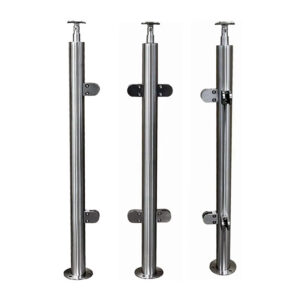
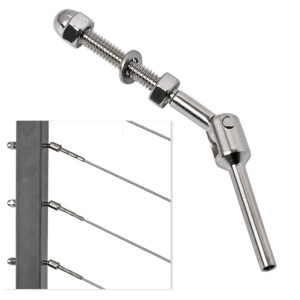
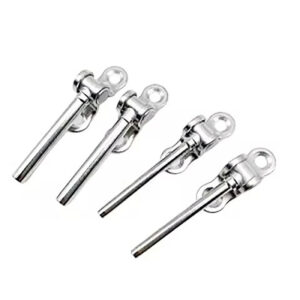
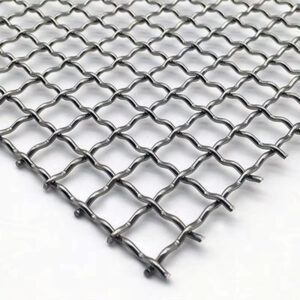
Pier and Dock Railing Layout: Posts, Infill, Access, and Mounting
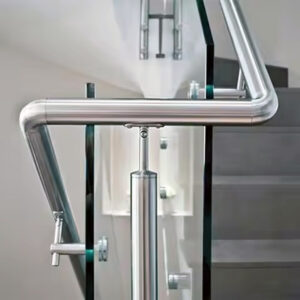
Plan pier and dock runs around post locations, infill modules, corners, gates, access routes, substrate edges, and mounting responsibility.
ESANG anchoring systems are used to fix stainless steel railing, handrail, post, bracket, glass, and cable hardware to concrete, masonry, structural surfaces, and project-specific substrates. They help transfer the railing system into the building structure and are critical for installation reliability.
В эту категорию входят Masonry Anchor Hardware, Expansion Anchor Hardware, Chemical Anchor Systems, и Heavy Duty Anchor Bolts.
For contractors, distributors, fabricators, and project buyers, anchoring system selection should consider substrate type, anchor type, base plate design, edge distance, embedment depth, hole preparation, material grade, corrosion exposure, and project installation requirements. ESANG can supply and manufacture stainless steel anchoring hardware according to drawings, dimensions, material grade, finish requirements, and installation conditions.
| Anchoring option | Лучше всего подходит для | Основные вопросы при отборе кандидатов |
|---|---|---|
| Masonry Anchor Hardware | Concrete, brick, block, stone, and masonry-based railing or handrail installations | What substrate type, hole condition, anchor size, and installation method are required? |
| Expansion Anchor Hardware | Mechanical anchoring into suitable concrete or masonry substrates | What anchor diameter, embedment depth, edge distance, and torque requirement should be confirmed? |
| Chemical Anchor Systems | Projects requiring adhesive anchoring, threaded rods, or deeper bonded fixing methods | What adhesive type, hole cleaning method, curing condition, and substrate requirement should be reviewed? |
| Heavy Duty Anchor Bolts | Commercial railings, post base plates, high-use areas, and stronger mounting conditions | What base plate, anchor diameter, substrate condition, and project requirement should be checked? |
Anchoring hardware should be selected according to the substrate and the railing component being fixed. A wall bracket, post base plate, glass spigot, or cable railing post may all require different anchoring details.
| Состояние проекта | Рекомендуемое направление | Почему это важно |
|---|---|---|
| The railing is fixed to concrete, brick, block, or stone | Use masonry anchor hardware selected for the substrate condition | Masonry type, strength, edge distance, and hole preparation affect anchor performance. |
| The project uses mechanical expansion anchors | Use expansion anchor hardware matched to hole size, embedment, and substrate | Expansion anchors depend on correct hole preparation, installation torque, and substrate condition. |
| The project requires bonded anchors or threaded rods | Use chemical anchor systems where suitable | Chemical anchors require correct hole cleaning, adhesive selection, curing time, and installation control. |
| The project uses larger posts or base plates | Use heavy duty anchor bolts or project-reviewed anchor layouts | Post base loads, anchor spacing, and substrate strength should be reviewed together. |
| The installation is outdoor, coastal, poolside, or humid | Consider 316 stainless steel anchors and compatible fasteners | Коррозионная стойкость приобретает все большее значение в условиях влажной среды или воздействия хлоридов. |
| The anchor supports a code-sensitive railing or guardrail | Confirm the anchor design with the project engineer or local authority | Final compliance depends on the complete installed system, substrate, and project design. |
| Тип анкера | Основная функция | Общие соображения |
|---|---|---|
| Masonry anchor hardware | Fix railing hardware to masonry or concrete-based substrates | Substrate type, hole condition, edge distance, and fixing method |
| Expansion anchor hardware | Mechanically locks into the substrate through expansion | Hole diameter, embedment depth, torque control, and concrete condition |
| Chemical anchor systems | Bonds threaded rods or anchors into prepared holes using adhesive systems | Hole cleaning, adhesive type, curing time, temperature, and installer procedure |
| Heavy duty anchor bolts | Support stronger or larger railing base connections | Base plate size, anchor diameter, substrate strength, and project loads |
Anchor performance depends on the substrate and installation method. Before ordering or installing anchors, buyers should confirm the base material and the hardware being supported.
| Detail to confirm | Почему это важно | Типичные отзывы покупателей |
|---|---|---|
| Тип подложки | Concrete, brick, block, stone, steel, or mixed substrates require different anchor methods | Site photos, drawings, substrate specification, or installer notes |
| Base plate or bracket layout | Anchor spacing must match the hardware being fixed | Base plate drawing, bracket drawing, hole pattern, and post size |
| Edge distance | Anchors too close to edges may require special review | Distance from slab edge, stair edge, wall edge, or balcony edge |
| Глубина заделки | Anchor depth affects holding performance and installation feasibility | Anchor size, substrate thickness, and project requirement |
| Hole preparation | Hole diameter, drilling accuracy, and cleaning affect installation quality | Drilling method, cleaning method, bit size, and installer procedure |
| Corrosion exposure | Outdoor, poolside, coastal, or industrial environments may require higher corrosion resistance | Project location, exposure condition, cleaning plan, and material requirement |
ESANG anchoring systems can be supplied or manufactured according to project requirements, including anchor type, diameter, length, thread detail, washer and nut selection, base plate compatibility, material grade, surface finish, and packaging requirements.
| Материал или отделка | Типичные области применения | Примечания |
|---|---|---|
| 304 нержавеющая сталь | Interior handrail, railing, and bracket anchoring in dry environments | A common option for many indoor installations where corrosion exposure is limited. |
| нержавеющая сталь 316 | Outdoor, coastal, poolside, humid, and higher-corrosion environments | Обычно используется в тех случаях, когда требуется повышенная коррозионная стойкость. |
| 316L нержавеющая сталь | Projects requiring low-carbon stainless steel or more demanding corrosion performance | Suitable when the specification calls for 316L material. |
| Brushed or passivated finish where specified | Architectural or corrosion-focused stainless steel hardware projects | Finish and treatment should be confirmed according to the project requirement. |
For non-standard anchoring projects, customers can provide drawings, anchor dimensions, substrate details, base plate layouts, thread requirements, material grade, finish requirements, and installation conditions. ESANG can review the requirements and manufacture anchoring hardware to match the project specification where feasible.
Anchoring systems should be selected together with the hardware they support. The same anchor may not be suitable for every wall bracket, post base plate, glass spigot, or cable railing component.
Many anchoring projects are customized according to substrate condition, base plate design, post size, bracket layout, corrosion exposure, and installation method. ESANG can support custom masonry anchor hardware, expansion anchor hardware, chemical anchor components, heavy duty anchor bolts, threaded rods, washers, nuts, and related stainless steel fastening parts.
When a project has standard-oriented requirements related to guardrail height, handrail support, base plate fixing, material grade, corrosion resistance, or load-related design requirements, customers should provide the required drawings and specifications. ESANG can manufacture anchoring hardware to match those provided details, while final compliance depends on the complete installed system, substrate condition, structural design, installation method, and applicable local code.
Anchoring systems should be reviewed before drilling, base plate fabrication, or site installation. Anchor selection is closely tied to substrate strength, edge distance, embedment, hole preparation, and the component being fixed.
For post-installed anchors in concrete, project teams may need to review evaluation criteria, manufacturer installation instructions, and local code requirements. The ICC-ES approved acceptance criteria search is one reference point for U.S. evaluation criteria related to post-installed anchors. Final anchor selection and installation approval should be confirmed by the project designer, engineer, contractor, or local authority.
Anchoring systems are commonly used to fix stainless steel post base plates to concrete slabs, decks, terraces, balconies, stairs, and platforms. Base plate hole pattern, anchor spacing, and substrate strength should be reviewed together.
Wall mount brackets require anchors matched to the wall material and bracket layout. Concrete, masonry, wood framing, steel supports, and finished wall systems may require different fixing methods.
Glass spigots, base shoe channels, and structural glass brackets may require anchoring hardware selected according to glass height, substrate condition, drainage, and project requirements.
Cable railing terminal posts and tensioning points require careful anchor review because cable tension and post layout affect the installed assembly.
Outdoor, coastal, poolside, and humid environments require more attention to stainless steel grade, fastener compatibility, corrosion exposure, and cleaning. 316 or 316L stainless steel may be considered for more demanding conditions.
Anchoring systems are used to fix railing posts, handrail brackets, base plates, glass hardware, cable railing components, and other stainless steel hardware to concrete, masonry, structural surfaces, or project-specific substrates.
Expansion anchors mechanically lock into the substrate through expansion. Chemical anchors use adhesive systems to bond threaded rods or anchors into prepared holes. The correct choice depends on substrate, edge distance, load requirements, installation conditions, and project design.
Masonry anchor hardware is used when railing or handrail components are fixed to concrete, brick, block, stone, or similar masonry substrates. The substrate type and condition should be confirmed before anchor selection.
Heavy duty anchor bolts may be considered for larger post base plates, commercial railings, high-traffic areas, or stronger mounting conditions. The project team should confirm substrate strength, anchor spacing, and base plate design.
Yes. ESANG can manufacture anchoring hardware according to drawings, anchor diameter, length, thread detail, material grade, washer and nut requirements, base plate compatibility, finish, and packaging needs.
Yes. Anchoring systems can be used outdoors when the material grade, fastener compatibility, substrate, drainage, and maintenance plan are suitable. 316 stainless steel is usually preferred for coastal, poolside, humid, or higher-corrosion environments.
Нержавеющая сталь марки 304 обычно используется в помещениях и в сухих условиях. Нержавеющая сталь марки 316, как правило, предпочтительна для использования на открытом воздухе, в прибрежных зонах, возле бассейнов, во влажных условиях или в средах с повышенной коррозионной активностью. Окончательный выбор марки следует осуществлять с учетом условий эксплуатации и технических требований проекта.
Useful information includes substrate type, anchor type, anchor diameter and length, base plate or bracket drawing, hole pattern, edge distance, material grade, finish, quantity, drawings, and project environment.
Final anchor selection should be confirmed by the project designer, engineer, contractor, installer, or local authority because anchor performance depends on the complete installed system, substrate, edge distance, embedment, and installation method.
Routine inspection and cleaning should follow the project environment. For exposed outdoor, poolside, or coastal installations, stainless steel anchors and surrounding hardware should be cleaned more regularly to reduce surface contamination and maintain appearance.
Plan pier and dock runs around post locations, infill modules, corners, gates, access routes, substrate edges, and mounting responsibility.
Separate airborne salt, direct splash, retained wetness, deposits, and cleaning access before choosing coastal railing materials and details.
Check the existing opening, slab condition, edge geometry, drainage, and revised load path before converting an embedded post to a surface base.
Request comparable base hardware, substrate inputs, finishes, drawings, anchor boundaries, samples, and inspection documents in one project RFQ.
Compare adjustable bases against the actual slope, bearing surface, leveling range, finish interface, and fixing access before selecting a detail.
Перед проведением инженерной экспертизы необходимо определить характеристики основания, геометрию, нагрузки, условия эксплуатации и данные по креплению, чтобы этикетка с информацией об оборудовании не была ошибочно принята за проект соединения.

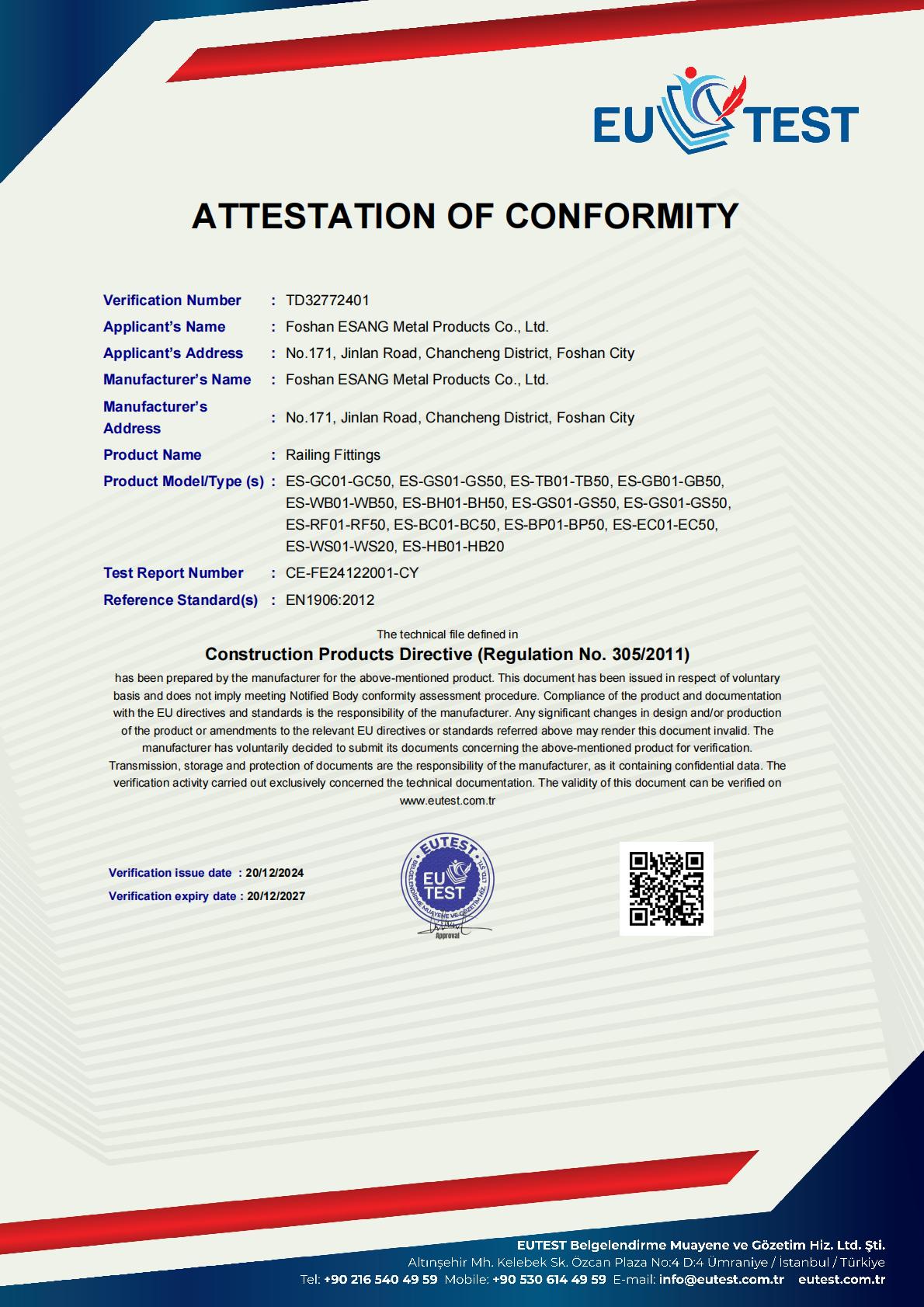
Компания Foshan ESANG Metal Products с гордостью поддерживает сертификация CE (Верификационный номер TD32772401) в соответствии с Директивой о строительной продукции (Постановление № 305/2011), что подтверждает нашу приверженность высочайшим европейским стандартам безопасности и качества.
Сертифицированный ассортимент продукции:
Наш обширный ассортимент фурнитуры для перил, включающий зажимы для стекла, натяжители, кронштейны, настенные крепления, опорные башмаки, фурнитуру для перил, кабельное оборудование и компоненты для столбов, отвечает требованиям EN1906:2012 стандарты, обеспечивающие целостность конструкции и надежность работы всех установок.
Что это значит для вашего проекта:
✓ Полное соответствие нормативным требованиям для европейского и международного рынков
✓ Независимая проверка безопасности и долговечности
✓ Документационная поддержка архитектурных спецификаций
✓ Гарантия качества от третьей стороны
Сертификация действительна до 2027 года | Отчет об испытаниях: CE-FE24122001-CY