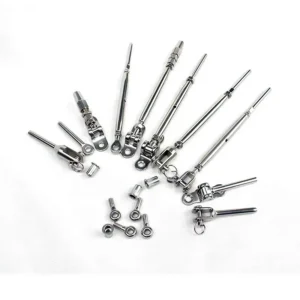
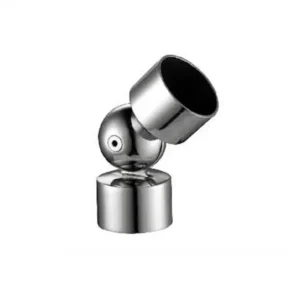
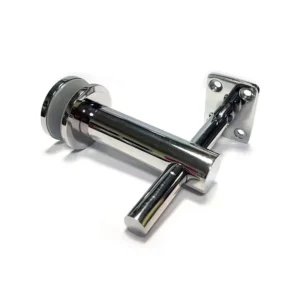
Multi-angle cable tensioners are selected to align a cable termination with a sloped or angled run. They are most useful when a straight fitting would be side-loaded at a stair, ramp or non-perpendicular terminal post. The key decision is the actual cable angle and pivot plane, followed by the fixed/tensioning end pair, usable take-up and mounting interface. They are not a blanket solution for pulling one cable around multiple corners. Send a side elevation or marked photo, cable details and post connection to start the selection.
Send an angled cable layout to ESANG on WhatsApp
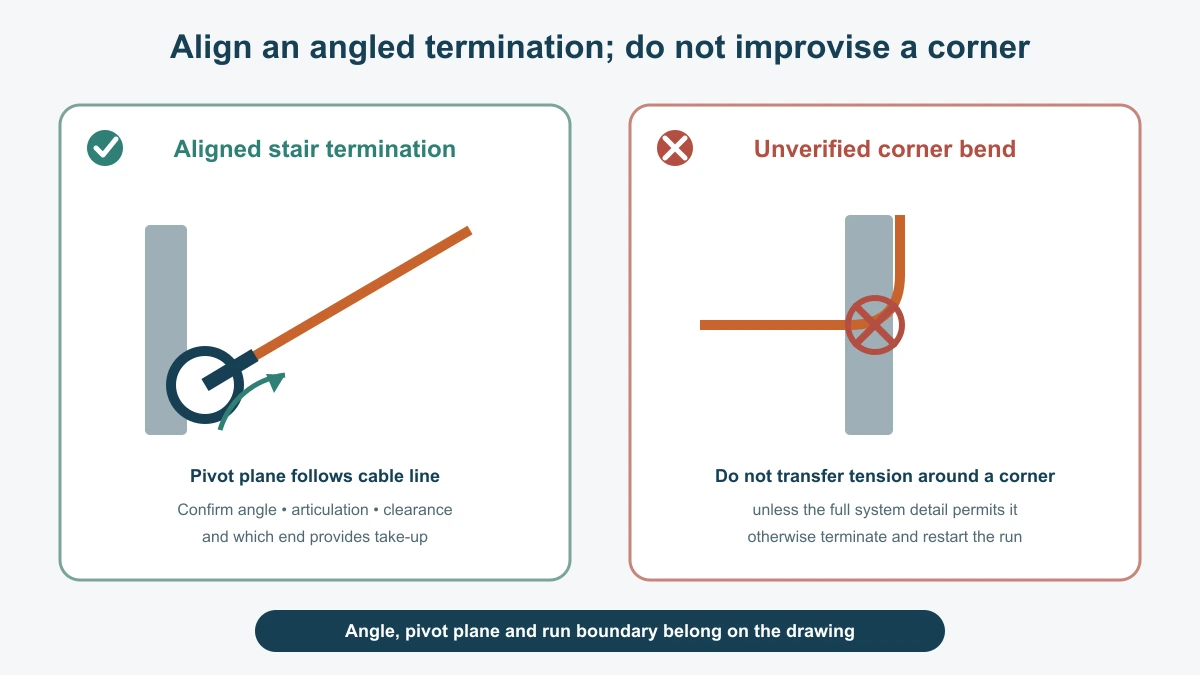
Align the termination; do not improvise a corner
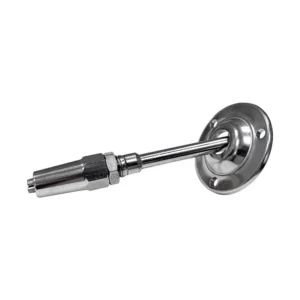
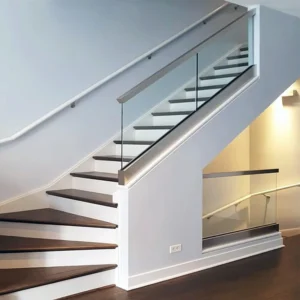
At a stair end post, the cable line may meet the mounting face at an angle. A pivoting jaw, ball, swivel or articulated plate can allow the terminal to align with that line, provided its permitted movement and load direction match the design. A fixed straight fitting forced against a post edge can rub the cable, bind the thread or apply a side load to the terminal.
A change in plan direction is a different problem. Unless a verified system detail permits the cable to bend around a corner, treat the corner as the end of one tensioned run and the start of another. A multi-angle end fitting can align each run with the terminal post; it does not by itself prove that tension will pass safely and evenly around a bend.
Choose the interface from the post and access
| Angled interface | Where it helps | What must be shown |
|---|---|---|
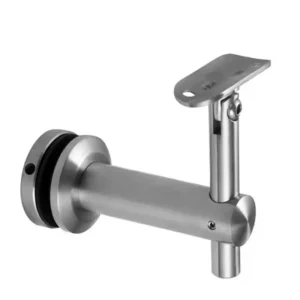
| Surface-mounted pivot or fork | Inside face of stair or ramp terminal posts | Pivot plane, mounting face, pin, fasteners, articulation envelope and tool clearance |
| Through-post terminal with angular seat | Where a stem passes through the post at a defined cable angle | Hole angle, post depth, bearing or beveled washer, rear access and thread projection |
| Ball or self-aligning terminal | Where limited alignment is needed at an end face | Seat geometry, permitted articulation, retention and compatible post opening |
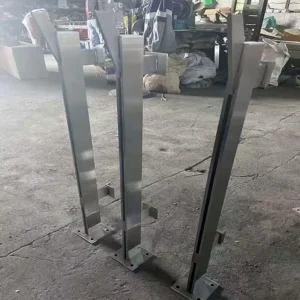
Surface mounting keeps pins and adjustment points visible, but the post face and fastener arrangement must carry the proposed load path. Through-post hardware can create a compact face, but the installer needs space behind the post for the washer, nut or adjustment tool. A closed fascia, wall or post cap can make an otherwise suitable tensioner impossible to assemble.
Pair the angled end with a compatible tensioning strategy
An angled run still needs a deliberate fixed end and a deliberate tension-adjustment end. The articulated component may be the fixed end, the tensioning end or part of both ends depending on the design. Do not assume that a pivot also provides take-up. The quotation should identify which end moves to align, which end moves to tension and how each setting is retained.
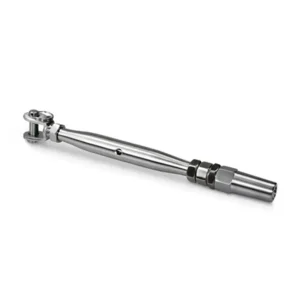
One tensioning end may cover the run when its travel and access are sufficient. Two adjustable ends can provide more installation flexibility, but both need minimum thread engagement and locking. If the opposite end is a fork, eye, ball or stop, its pin, hole, seat and cable termination must match the angle-capable component as an assembly.
Angle changes the space needed for adjustment
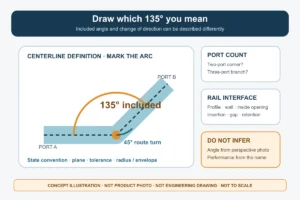
Define the working angle or angle range from the actual drawing, not from a product photo. Record the pivot plane and make sure the fitting can rotate in that plane without touching the post, rail, adjacent cable or fastener. The articulation point and the tension-adjustment thread may require separate clearances.
Also show the closed length, open length, usable take-up, thread designation, minimum engagement, starting position and lock detail. At a steep angle, a wrench may need more space than it does on a level run. A long threaded tail can collide with the post face or emerge behind the post at an awkward location. These conflicts should be resolved before cable length and hole positions are frozen.
Cable construction and bend behavior must not be confused
State both diameter and construction. A 1×19 cable is comparatively stiff and is commonly used for straight or gently routed railing runs; a 7×7 construction is more flexible for tighter routing. These industry patterns do not authorize an unverified bend radius, and they do not prove fit with an ESANG tensioner. The exact fitting must be proposed for the exact cable.
If the cable must pass through intermediate posts, define the hole or sleeve alignment along the same slope. At terminal and corner posts, identify whether the cable stops, articulates or is intended to continue. Poor alignment can abrade strands at a post edge and can prevent the fitting from seating even if the nominal cable size is correct.
Swaged or swageless assembly remains a separate choice
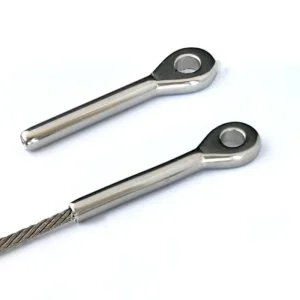
A swaged angled terminal may arrive factory attached or may require a matched field swager, die and inspection sequence. Factory assembly can control the termination but relies on accurate finished length. A swageless version can support field termination without traditional swaging, but it still needs a suitable cable cutter, exact gripping components and the specified hand tools.
Ask whether the gripping element is matched to the cable construction, what insertion or strand preparation is required, and whether any component can be reused. “Swageless” does not mean tool-free, reusable or universally compatible. The assembly instructions for one manufacturer’s pivot cannot be transferred to a visually similar fitting.
Know when an adjacent product is the better fit
- For a level, straight run where take-up is the main issue, compare adjustable cable tensioners.
- When the whole end-pair, cable and post interface are not yet defined, start with системы натяжения кабеля.
- When field termination method is the main decision, review натяжители кабеля без зажимов.
- Do not substitute a product called “heavy duty” for angle compatibility. Any heavy-duty designation still needs an exact rated configuration and does not permit side loading.
Separate the fitting from the complete railing responsibility
The proposed supply may include a multi-angle body only, a fixed/tensioning pair, cable terminals, a cut cable assembly or a scheduled hardware set. The quotation should list bodies, pivots, pins, retaining parts, nuts, washers, surface fasteners, cable-side components and required tools. Post drilling, reinforcement, mounting tabs, anchors, geometry approval, structural verification, installation and final system acceptance are excluded unless expressly stated.
Common mismatches are a pivot that moves in the wrong plane, an angle range that does not include the actual stair pitch, a through-post stem too short for the post, insufficient rear clearance, a cable forced over an edge, thread travel blocked by the mounting plate, and a cable construction not accepted by the terminal. Each can make a visually similar component unusable.
Inquiry fields for an angle-specific proposal
Send a plan and side elevation or marked photos; actual cable angle at each end; whether the cable terminates or changes direction; run lengths and quantities; cable diameter and construction; fixed and tensioning end preference; post material, profile, wall thickness and hole layout; through-post or surface mounting; space behind and around the post; pivot plane and required articulation; closed/open envelope and take-up; thread and locking preference; swaged or swageless assembly route; available tools; material and finish requirement; exposure; and supply boundary.
The proposed configuration should state the permitted alignment, end pair, cable compatibility, mounting and pin details, closed/open length, usable take-up, minimum engagement, locking method, assembly tools, included parts and any configuration-specific load evidence. That information distinguishes a true angle solution from a straight fitting shown at an angle in a photograph.