Suppliers can return a glass railing quote in days — the problem is that two quotes built on different assumptions about substrate type, mounting method, and glass thickness are not actually the same quote. The price difference looks like supplier variability; it is usually structural incompatibility that goes undetected until shop drawing review forces a resubmission, a schedule slip, or a variation order that costs more than the original savings. The field failure pattern that most often traces back to the RFQ stage is not defective hardware — it is missing information: an unspecified corner condition, a substrate that cannot carry the anchor loads the selected hardware generates, or a panel width that demands thicker glass than the quote assumed. Buyers who define substrate, glass build-up, mounting condition, finish, drawing responsibility, and exposure class before sending the RFQ are in a position to compare prices that will actually hold through fabrication and into the field.
RFQ inputs that prevent non-comparable hardware quotes
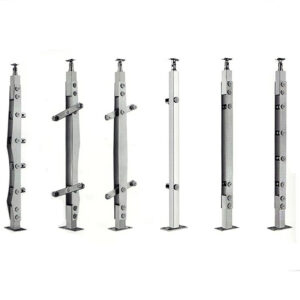
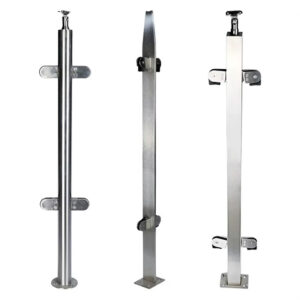
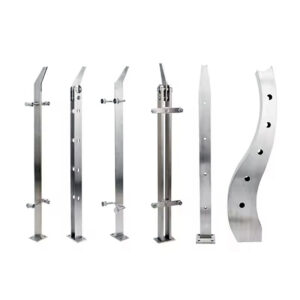
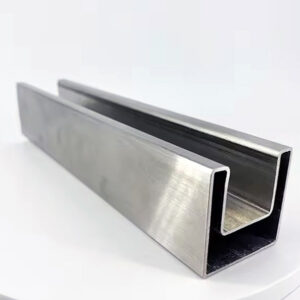
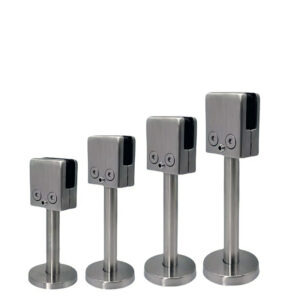
The single most reliable way to generate incomparable quotes is to leave the mounting method unspecified. A pillar-mounted system, a spigot, a U-channel, and a base shoe are not interchangeable hardware choices with a pricing delta between them — each changes the anchor pattern, the substrate demand, the installation labor, and the connection geometry in ways that make line-item price comparisons meaningless. A supplier who quotes a U-channel and a supplier who quotes a spigot system are pricing different scopes, even if the linear footage is identical.
The speed-versus-scope trade-off is real and worth naming explicitly. A narrow RFQ — one that omits mounting method, substrate type, glass thickness, and corner conditions — will return pricing faster and from a wider field of suppliers. But the pricing it returns cannot survive shop drawing review without resubmission, because the design assumptions suppliers made to fill the gaps will diverge. That is when the variation orders arrive. A detailed RFQ delays the quote cycle by days or weeks, requires the buyer to resolve drawing and specification questions before suppliers open the file, and forces early coordination between the glass processor, the contractor, and the hardware supplier. The payoff is that the quotes it returns can actually be compared.
Supplier-side constraints affect sourcing strategy in ways buyers sometimes discover too late. Some suppliers require a minimum project size — 150 linear feet of guardrail is one threshold worth confirming — and will not provide a full quotation below it, which redirects smaller projects to distributors or changes the supply model entirely. Turnaround expectations matter too: a standard RFQ cycle may require nine or more business days for firm pricing, and submissions with shorter windows often return preliminary numbers that cannot be converted to binding quotes without resubmission. Neither of these is an industry-wide rule, but both are planning criteria a buyer should confirm with each supplier before setting internal schedule milestones.
Each mounting method locks a different set of downstream requirements, and the RFQ must name them before suppliers can price equivalently.
| Méthode de montage | Hardware & Labor Impact | What the RFQ Must Lock |
|---|---|---|
| Pillar-mounted | Requires post, base plate, anchor pattern; higher installation labor | Post type, base plate detail, anchor specification |
| Spigot | Single-point anchor with high pull-out force at base; concentrated substrate load | Spigot model, embedment depth, substrate condition |
| profilé en U | Continuous channel with distributed anchoring; requires uninterrupted mounting surface | Channel profile, anchor spacing, substrate width |
| Semelle de base | Surface-mounted shoe; minimum surface width needed for secure attachment | Shoe profile, mounting surface width, reinforcement if under 3 inches |
Balcony geometry, substrate and glass thickness fields
Substrate type is the most consequential field buyers omit from a glass railing RFQ, and it is also the field most likely to produce anchor failures that were never flagged in the quote. A single spigot supporting a 42-inch tall glass panel under a standard top rail load can generate approximately 1,200 lbs of pull-out force at its base connection — a figure that hollow concrete block, with a typical anchor capacity of 400 to 800 lbs, cannot reliably carry. That mismatch does not appear in a hardware quote that never asked what the spigot is going into. It appears in the field, after installation, under load.
The difference between substrates is not marginal. Two-by wood framing yields 500 to 1,000 lbs of anchor capacity — marginal at upper design loads and dependent on blocking and reinforcement details that must be coordinated before hardware is selected. A four-inch concrete slab and a steel beam with a welded base plate both carry well above the spigot demand, but each requires different anchor specifications, edge distances, and connection details in the RFQ. These are practitioner-sourced design figures, not codified regulatory minimums — but the consequence of ignoring the substrate call-out is structural, not just administrative.
| Type de substrat | Typical Anchor Capacity | Meets 1,200 lb Spigot Demand? | What the RFQ Must Confirm |
|---|---|---|---|
| Hollow concrete block | 400–800 lbs | No — anchor failure likely | Solid grout fill required, or alternate mounting method |
| 2x wood framing | 500–1,000 lbs | Marginal — risk at upper design loads | Blocking, reinforcement detail, or alternate substrate |
| 4-inch concrete slab | 2,500+ lbs | Oui | Slab thickness, edge distance, and condition |
| Steel beam with welded base plate | 3,000+ lbs | Oui | Beam size, weld specification, base plate detail |
Panel width and glass thickness are directly coupled, and the coupling is not forgiving. For IBC-compliant 42-inch panels, the relationship follows a clear progression: panels up to 600mm wide can use 10mm tempered glass, but panels in the 1,200 to 1,500mm range require 19mm — nearly twice the thickness, with corresponding changes in hardware rebate dimensions, channel sizing, and shipping weight. A buyer who specifies panel count without specifying panel width leaves the supplier to assume glass thickness, which means the hardware — shoe channel profile, spigot jaw width, glazing gasket — may not match the glass that actually arrives on site.
Two additional geometry fields that regularly surface as installation problems are mounting surface width and balcony radius. A base shoe channel requires a minimum three-inch mounting surface width for secure attachment; surfaces narrower than that require metal reinforcement that adds cost and lead time. Curved balcony geometries introduce a separate constraint: a minimum five-foot radius is the practical threshold for bent base shoe and curved glass installations, and tighter radii risk glass breakage and metal distortion during fabrication. Neither of these fields appears on most RFQ templates, and both change whether a hardware type is viable before a single component is quoted.
Post spacing belongs in the same category. Moving from four-foot to six-foot post centers under a 50 lb/ft line load raises the base moment by roughly 50 percent — from approximately 700 ft-lbs to 1,050 ft-lbs. Hardware that is adequate at four-foot spacing may not be at six feet. The RFQ should fix post spacing as a locked field, not leave it as a supplier assumption.
For exterior laminated glass in structural baluster applications, interlayer specification matters beyond the glass thickness selection. SGP interlayer is required for exterior laminated glass in these applications; PVB is appropriate only for interior conditions. Buyers specifying laminated glass without calling out the interlayer type are leaving a delamination risk unaddressed at the hardware selection stage.
Finish, packaging and labeling details buyers forget
Finish and packaging details do not change the structural adequacy of a hardware quote, but omitting them reliably introduces rework, substitution disputes, and project-stage confusion that are difficult and expensive to resolve after fabrication. These fields are consistently underspecified in first-round RFQs, and the table below covers the categories most likely to create downstream problems.
| Overlooked Detail | Risk if Unspecified | What to Confirm in RFQ |
|---|---|---|
| Sealant compatibility with aluminum | Acid-cure silicone releases acetic acid that corrodes aluminum shoe moldings | Specify DOW 795 or equivalent neutral-cure sealant |
| Wood handrail finishing responsibility | Handrails arrive unfinished; rework and added cost for field finishing | Confirm finishing is by others, or request FSC/SFI certification if needed |
| LED lighting color and output | Wrong color temperature or insufficient brightness supplied | Specify 3000K or 4000K; 3 W/ft (185 lm/ft) or 5 W/ft (250 lm/ft) |
| Buy American Act compliance | Non-compliant hardware on federally funded projects | Request domestic stainless steel and mill certificates upon request |
Sealant compatibility deserves particular attention for aluminum base shoe systems. Acid-cure silicone releases acetic acid during curing, which can corrode aluminum shoe moldings from the inside out — a failure mode that is not visible at installation and may not surface until warranty claims begin. The RFQ should specify a neutral-cure sealant compatible with aluminum; DOW 795 is one practitioner-referenced example, though it should not be treated as the only viable option. The point is that sealant type must be called out, not left to installer discretion in the field.
For projects with LED-integrated base shoe systems, color temperature and output wattage must be confirmed in the RFQ — 3000K warm white versus 4000K cool white, and 3 W/ft (approximately 185 lm/ft) versus 5 W/ft (approximately 250 lm/ft) are not interchangeable selections that can be adjusted post-order. On federally funded projects, Buy American Act compliance must be explicitly requested, including domestic stainless steel sourcing and mill certificates — it is a planning criterion the buyer must activate, not a default supplier assumption.
Exterior balcony hardware is where material grade matters most. For coastal or high-humidity exposures, Acier inoxydable 316 should be the specified grade, not a buyer preference that suppliers can substitute. Grade omission in the RFQ is one of the most common sources of post-award disputes on exposed balcony projects.
Drawing ownership between contractor, glass processor and supplier
Unassigned drawing responsibility is a permitting and coordination risk that compounds across trades. The failure pattern is predictable: the contractor assumes the supplier provides stamped calculations, the supplier assumes the contractor provides base structure geometry, and the glass processor holds a panel schedule that does not reference either — and the first moment all three assumptions are tested simultaneously is when the building permit application is submitted. The delay that follows is not a hardware problem.
The deliverable-by-deliverable ownership question must be resolved in the RFQ, not during shop drawing review.
| Deliverable | Typical Owner | Risk if Unassigned | What RFQ Should Confirm |
|---|---|---|---|
| Stair geometry (.dwg/.dxf) | Stair fabricator or contractor | $1,500/floor CAD service charge added by supplier | Who provides base structure drawings and in what format |
| Sacrificial weld plate detail | Supplier or contractor | Hardware may not align with structural steel | Confirm connection detail appears in supplied drawings |
| Engineer-sealed calculations | Supplier (if specified in scope) | Permit approval delayed due to missing stamped documents | Who provides stamped calculations for building permit |
| Shop drawings | Supplier or contractor | Misalignment between trades; installation conflicts | Who produces, reviews, and approves shop drawings |
Stair geometry is a particular pressure point. If structural stair drawings are not provided by the stair fabricator in a compatible CAD format, some suppliers will charge for base structure CAD conversion — a fee that has been cited at $1,500 per floor as a cost-risk example. That figure is not a quoted industry standard, but it illustrates the cost consequence of leaving drawing ownership unassigned. The RFQ should confirm who provides base structure drawings, in what format, and by what date.
Engineer-sealed calculations and shop drawings carry a separate risk. Glass railing systems are often pre-engineered to IBC standards, but local code variations may require modifications that need stamped drawings for permit approval. Whether the supplier provides those sealed documents, or whether an independent engineer of record is responsible, is a decision that must be explicit in the RFQ. Leaving it ambiguous does not accelerate permitting — it delays it, because the building department will ask for documents that no party has been contracted to produce.
Release point for a glass railing hardware package
A hardware package should not be released until the buyer can confirm that every field that affects fabrication, delivery, and installation has been frozen. The practical release check is whether the buyer can attach to the RFQ a drawing or schedule that shows each railing run with its mounting surface, exposure class, glass build-up, post spacing, and finish requirement. If any of those fields is still open, releasing the package transfers that risk to the supplier, who will resolve it with an assumption — or to the field, where it becomes a variation order.
Warranty terms are a total-cost comparison item that the RFQ should request explicitly. A standard materials and labor warranty of one year and a five-year delamination warranty for exterior laminated glass are planning criteria for comparing quotes across suppliers — they are not minimum legal entitlements, and they will not appear in every quote unless the buyer asks. Extended warranty options, where available, are typically a separate line item and should be evaluated against the project’s maintenance access, exposure conditions, and asset lifecycle expectations.
Labor sourcing is a pre-release confirmation item on union or prevailing wage projects. Factory-trained employees handle standard installations, but union wage projects may involve vetted outside subcontractors — a sourcing decision that must be confirmed before the package is released, not discovered during mobilization. Similarly, if the substrate includes galvanized steel, the weld preparation process — coating removal of one to two inches around the weld joint to avoid zinc oxide exposure, followed by post-weld re-galvanization or zinc-rich paint — is a scope item that should be confirmed as covered before release, not assumed by either party.
The final submission check is straightforward but worth stating: some suppliers require images, drawings or plans, and complete contact information — name, phone, email, and address — before opening an RFQ file. Incomplete submissions delay pricing cycles that are already tight. If the buyer cannot attach a drawing package at submission, the RFQ is not ready to release.
Pour les acheteurs qui évaluent glass mounting adapter options or base shoe channel profiles as part of their hardware package, the mounting surface width and glass thickness fields covered in the geometry section directly determine which profiles and adapter dimensions are viable — confirming those fields before supplier outreach removes one of the most common resourcing loops.
The most reliable indicator that a glass railing hardware RFQ is ready to release is that the buyer has nothing left to assume. Substrate type, glass build-up, mounting method, post spacing, corner conditions, exposure class, finish, drawing ownership, and warranty expectations are all fields where a supplier’s assumption and the buyer’s assumption will diverge — and the cost of that divergence is paid during shop drawing review, not during pricing. A quote built on unresolved fields is a budget number, not a procurement basis.
Before comparing returned quotes, verify that each one priced the same mounting method against the same substrate, the same glass thickness against the same panel width, and the same drawing scope against the same stamping responsibility. If those fields were not locked in the RFQ, the quotes are not comparable — and the cheapest number will most likely generate the largest variation order.
Questions fréquemment posées
Q: What should a buyer do if their project is under 150 linear feet of guardrail and suppliers decline to quote?
A: Redirect sourcing to distributors rather than direct manufacturers, or consolidate smaller project runs into a single RFQ if phasing allows. Some manufacturers set a minimum linear footage threshold before issuing a full quotation, so confirming that threshold before submitting saves time — a declined submission resets the schedule by at least the standard nine-business-day quote cycle.
Q: Once a hardware package is released and quotes are returned, what is the immediate next step before awarding to the lowest bidder?
A: Verify that each quote priced the same mounting method, substrate type, glass thickness, panel width, and drawing scope before treating the numbers as comparable. If those fields were not locked in the RFQ, suppliers filled the gaps with different assumptions, and the lowest price is most likely the one carrying the largest unresolved risk — which surfaces as a variation order during shop drawing review, not during pricing.
Q: At what point does a detailed RFQ stop reducing variation order risk and start creating unnecessary schedule delay?
A: When the geometry, substrate, glass build-up, and drawing responsibilities are fully resolved, additional specification detail adds diminishing returns. The tipping point is whether the buyer can attach a drawing or schedule showing each railing run with its mounting surface, exposure class, post spacing, and finish requirement. That attachment is the practical release check — if it exists, the RFQ is detailed enough; if it does not, releasing early transfers unresolved risk to the supplier as an assumption or to the field as a change order.
Q: Is a pre-engineered IBC-compliant system always sufficient, or does local code require engineer-stamped drawings regardless?
A: Local code variations can require stamped drawings even when a system is pre-engineered to IBC standards, and the building department will ask for those documents at permit submission regardless of the system’s pre-approval status. Whether the supplier provides sealed calculations or an independent engineer of record is responsible must be explicitly assigned in the RFQ — leaving it unspecified does not accelerate permitting, it delays it.
Q: How should a buyer weigh a lower hardware price against a shorter or less clearly defined warranty when comparing quotes?
A: Evaluate warranty terms against the project’s exposure conditions and maintenance access rather than treating them as equivalent line items. A one-year materials and labor warranty on an exterior coastal balcony has a materially different risk profile than the same warranty on an interior installation. A five-year delamination warranty for exterior laminated glass changes the total cost of ownership calculation for high-humidity or marine-exposure projects, and extended warranty options — where available as a separate line item — should be requested in the RFQ so the comparison is made at quoting rather than after award.