Choosing between cast-in and post-installed anchors is not a preference question; it is a sequencing and evidence question. The answer depends on when the post-base reaction, substrate type, and construction sequence are known relative to when concrete work happens, and on whether installation access will still support the drilling, embedment, and inspection steps a post-installed system requires. Getting this decision wrong after concrete is placed has different consequences than getting it wrong before placement, which is why the anchorage method should be treated as a release point rather than a default.
What the two anchor routes change in project planning
| Planning factor | Cast-in anchors | Post-installed anchors | 决策边界 |
|---|---|---|---|
| Anchor-position timing | Bolt positions are locked into the concrete work | Layout flexibility is preserved for later positioning | Choose only after the construction sequence and base-plate layout are known |
| Base-plate revisions | Later revisions can create coordination rework | Later layout adjustment remains possible | Flexibility does not establish structural equivalence |
| Installation variables | Coordination centers on the positions fixed during concrete work | Drilling conditions, embedment, installation procedure, and inspection remain system- and project-specific | Confirm the route through the approved anchor design and site quality plan |
| Structural comparison | Use the project post-base reaction, substrate, and approved anchor design | Use the project post-base reaction, substrate, and approved anchor design | Installation convenience alone is not a structural basis for selection |
Cast-in and post-installed anchors are not two versions of the same step; they change what the project team must know and when. A cast-in approach requires the bolt positions to be fixed before or during the concrete pour, which means the base-plate layout, post spacing, and any coordination with adjoining structural or architectural elements must be settled early. Once the concrete cures, those positions are no longer a design input but a fixed condition that later decisions must work around.
A post-installed approach shifts that timing. Because the anchor positions are set after the structural element exists, the base-plate layout can remain open longer, which is useful where the railing design, glazing coordination, or post spacing is still subject to change. That flexibility is a planning advantage, not a structural one. Whether a post-installed anchor performs as required still depends on the substrate it is installed into, the embedment achieved, and the installation procedure followed for that specific anchor system.
This is where project planning and structural adequacy have to be kept separate. The timing advantage of a post-installed route does not tell a reviewer anything about whether the achieved embedment or substrate condition meets the anchor design. Similarly, the fact that a cast-in layout avoids later drilling does not mean the bolt positions, once fixed, will still suit a base-plate revision raised after the pour. Each route creates a different coordination risk, and the risk changes with how firm the base-plate layout is at the time concrete work proceeds.
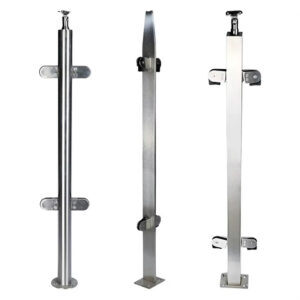
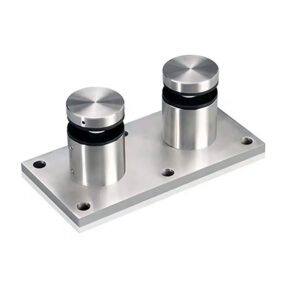
For a buyer working through 锚固系统 and surface-mount base plates as part of a railing package, this means the anchor-route decision cannot be made from the hardware catalog alone. The post-base reaction, substrate type, and construction sequence have to be confirmed first, because those are the inputs that determine whether a given anchor route is even feasible, independent of which route is more convenient to schedule. Convenience and structural adequacy answer different questions, and conflating them is the planning error this comparison is meant to prevent.
Construction sequence and access conditions that favor each option
The construction sequence determines which anchor route is physically available, before any discussion of load or substrate begins. Where the railing posts must be positioned before other finishes or structural pours are complete, a cast-in approach aligns the anchor installation with that same construction step, avoiding a separate later operation. Where the railing scope is finalized only after the structural concrete is already in place, a post-installed approach becomes the available route, since the concrete element already exists and cannot accept embedded bolts without demolition.
Installation access works alongside sequence but is not identical to it. A project can have a sequence that technically allows post-installed anchors — the concrete is in place and the railing scope is confirmed — without having the access needed to drill, place, and inspect those anchors as the system requires. Access includes whether the installation crew can reach the mounting location with the necessary tools, whether surrounding work has already enclosed or obstructed the area, and whether the inspection step can be performed without disturbing adjoining finishes. A cast-in layout avoids this later access problem entirely, because the anchor is placed during a construction stage when the area is typically open, but it does so by requiring the bolt positions to be correct before that stage closes.
Where the sequence allows either route in principle, the decision still turns on which one matches how firm the base-plate layout is at that point in the schedule. If the layout is final and unlikely to change, locking the bolt positions into the concrete work removes a later field operation. If the layout carries open questions — about post spacing, glazing coordination, or final railing geometry — preserving the flexibility of a post-installed approach avoids the coordination rework that a premature cast-in commitment can create.
Neither sequence nor access condition establishes which route is structurally adequate. They establish which route is available and practical to execute. The structural basis for selecting between available options still depends on the post-base reaction, the substrate, and the approved anchor design for the specific system under consideration.
Substrate, edge, and base-plate inputs required for comparison
| Project input | Why it matters to the comparison | Boundary before selection |
|---|---|---|
| Post-base reaction | Provides the project load basis for comparing the anchorage routes | Use the project-specific reaction; no value is established here |
| Substrate type | Sets a necessary project condition for the anchor design | Confirm the actual substrate before choosing the route |
| Edge condition | Forms part of the project-specific anchorage comparison | Establish the applicable edge condition through the project design |
| Base-plate layout and revision status | Shows whether locked cast-in bolt positions could conflict with later revisions or whether layout flexibility is still needed | Confirm the current base-plate layout before release |
| Construction sequence | Shows when anchor positions must be fixed and whether later positioning remains useful | Coordinate the route with the actual concrete and railing sequence |
| 安装访问权限 | Determines whether project-specific drilling, installation, and inspection activities can be addressed | Confirm site access conditions rather than assuming post-installed work is feasible |
Before a cast-in and post-installed route can be compared on equal terms, several project-specific inputs need to be established, because without them the comparison has no common basis. The post-base reaction describes the load the anchorage must resist and is the starting point for any anchor design, cast-in or post-installed; without it, neither route can be verified as adequate.
Substrate type is a separate input that interacts with the anchor route differently depending on which option is being considered. A cast-in anchor becomes part of the substrate as it is poured, so the substrate’s own properties are established concurrently with the anchor. A post-installed anchor instead has to perform within a substrate that already exists, which means its behavior depends on the substrate’s actual condition at the time of drilling and installation — a condition that can differ from design assumptions if the substrate has aged, cracked, or been finished in ways that affect anchor performance.
Edge condition matters for a related reason: where an anchor sits near the edge of the substrate element, the available substrate volume around the anchor changes, which affects how the anchor can transfer load. This applies to both cast-in and post-installed anchors, but it has to be confirmed against the actual edge geometry of the project rather than assumed from a typical layout.
Base-plate layout and its revision status are the inputs most directly affected by the route chosen. A locked cast-in position cannot absorb a later base-plate revision without the coordination rework that revision creates. A post-installed route can still accommodate layout changes up to the point installation occurs, but only within the limits of the substrate and edge conditions already confirmed.
Construction sequence and installation access round out this input set, not as independent factors but as the conditions that determine whether the anchor route suggested by the structural inputs is actually achievable on site. A buyer comparing anchoring systems against a railing project’s surface-mount base plate requirements should treat these inputs as a set: resolving one without the others leaves the comparison incomplete.
Installation controls and inspection evidence for each route
| Control or evidence area | Route relevance | Check before acceptance | 证据边界 |
|---|---|---|---|
| Approved anchor design | Both routes | Confirm that the selected route is covered by the project-approved design | The approved design, not installation convenience, establishes the structural basis |
| Bolt-position coordination | Cast-in | Confirm that positions fixed during concrete work match the base-plate layout | Later base-plate revisions can create coordination rework |
| Drilling conditions | Post-installed | Confirm the project-specific drilling conditions | Suitable conditions cannot be assumed from route selection alone |
| Embedment | Post-installed | Confirm the system- and project-specific embedment | No universal embedment value is established here |
| Installation procedure | Post-installed | Confirm the applicable project procedure | The procedure remains specific to the selected system and project |
| Inspection, mounting verification, and any post-base testing | Both routes, as defined by the project | Confirm what the approved design and site quality plan call for | ASTM E894 metadata identifies these as relevant subjects; consult the paid standard and project engineer before using requirements or values |
Once a route is selected, the controls that confirm it was executed correctly differ by route, even though both routes answer to the same approved anchor design. For cast-in anchors, the primary control is bolt-position coordination: confirming that the positions fixed during the concrete pour match the base-plate layout the railing design requires. Because this position cannot be adjusted after the concrete cures, any mismatch discovered later becomes a coordination problem rather than a field correction.
For post-installed anchors, the controls shift to the installation event itself: the drilling conditions encountered, the embedment achieved, and whether the installation procedure specified for that anchor system was followed. These are system- and project-specific; a procedure appropriate for one anchor system or substrate condition does not transfer automatically to another, which is why the specific system’s documentation governs rather than a general post-installed practice.
Both routes converge on the same question at the inspection stage: does the installed condition match what the approved anchor design assumed? ASTM E894-88(2004), covering anchorage of permanent metal railing systems, identifies anchor tension and shear, post-base testing, and mounting verification as subjects relevant to this kind of inspection evidence. Because that standard is available only as a paywalled document, the specific tension, shear, or testing requirements it addresses have to be confirmed against the paid text and the project engineer rather than assumed from the subject area alone.
This is the stage where the anchor route decision is tested against evidence rather than planning logic. A cast-in layout that was coordinated correctly on paper still needs field confirmation that the as-built positions match the design. A post-installed anchor that was installed under suitable drilling and embedment conditions still needs inspection evidence that those conditions were in fact met, not merely planned for. Neither route is self-verifying; the inspection and mounting verification step is where the approved design and the as-built condition are reconciled, and the site quality plan should define what that evidence consists of for the specific project.
Project approval points before the anchorage method is released
Releasing an anchorage method for construction means confirming that the inputs gathered through substrate, edge, and base-plate review, and the controls defined for installation and inspection, are consistent with the approved anchor design before work proceeds. This is the point where planning convenience and structural adequacy are reconciled into a single decision, rather than left as separate considerations.
Where the post-base reaction, substrate type, and construction sequence were known early enough, the project team can compare the cast-in and post-installed routes on their actual merits for that project rather than defaulting to whichever route the schedule seems to favor. Where the base-plate layout is still subject to revision at the point the method must be released, that open status is itself a project condition favoring the route that preserves flexibility, provided the structural inputs still support it. Where the layout is final, the absence of further revisions removes that reason to prefer flexibility, and the comparison can rest more heavily on installation access and site sequencing.
The release decision should also confirm that the inspection and mounting verification evidence appropriate to the selected route has been defined in the site quality plan, not deferred to the installation stage. For cast-in anchors, this means confirming the as-built bolt positions against the base-plate layout before the railing posts are set. For post-installed anchors, it means confirming that the drilling conditions, embedment, and installation procedure specified for the selected system will be documented as installation proceeds, consistent with what ASTM E985-24 identifies regarding building metal railing design and load or deflection criteria, while recognizing that specific field conditions remain for the project designer and code authority to set.
Treating installation convenience as equivalent to structural adequacy is the error this approval step is meant to prevent. The anchorage method is released once the approved anchor design, the confirmed project inputs, and the defined inspection evidence are aligned — not once a route has simply been found workable within the construction sequence.
常见问题
问: Can the anchorage route be finalized while the railing base-plate layout is still changing?
A: Final release should wait until the post-base reaction, actual substrate, construction sequence, installation access, and current base-plate layout are known. This is especially important for cast-in anchors because their bolt positions are fixed during the concrete work.
问: Does the extra layout flexibility of post-installed anchors make them the better choice for late design changes?
A: It can reduce position-coordination pressure when the layout changes, but flexibility does not establish structural equivalence. The revised route still needs to be covered by the approved anchor design, with its drilling, embedment, installation, and inspection conditions resolved for the project.
问: What should be coordinated before cast-in bolt positions are released for the concrete work?
A: Confirm that the fixed bolt positions match the current base-plate layout and the project-approved anchor design. Also resolve the relevant substrate and edge conditions so a later base-plate revision does not create avoidable coordination rework.
问: How can a team judge whether post-installed anchorage is practical at the actual site?
A: Check the installation access and drilling conditions against the actual substrate, edge condition, and selected system. Then identify the project-specific embedment, installation procedure, and inspection provisions before treating the route as feasible.
问: Where should the acceptance and inspection requirements for either route come from?
A: Use the approved anchor design and site quality plan to define the required records, mounting verification, inspection, and any post-base testing. ASTM E894 identifies these as relevant subjects, but its metadata alone does not supply project requirements or acceptance values; those must be confirmed from the applicable standard text and project engineering.