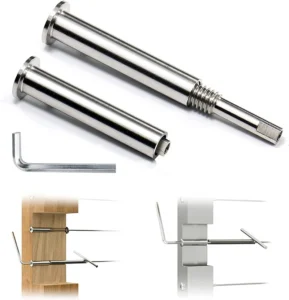
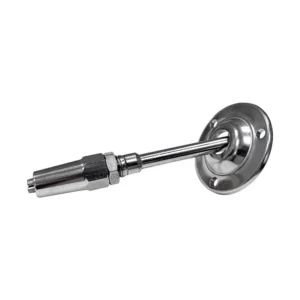
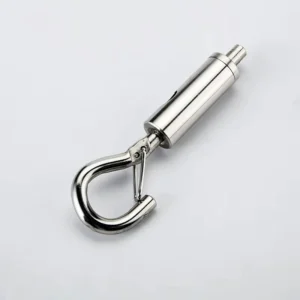
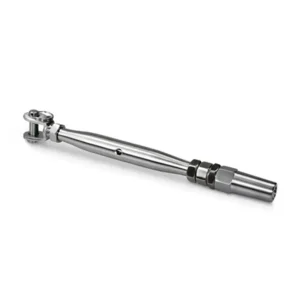
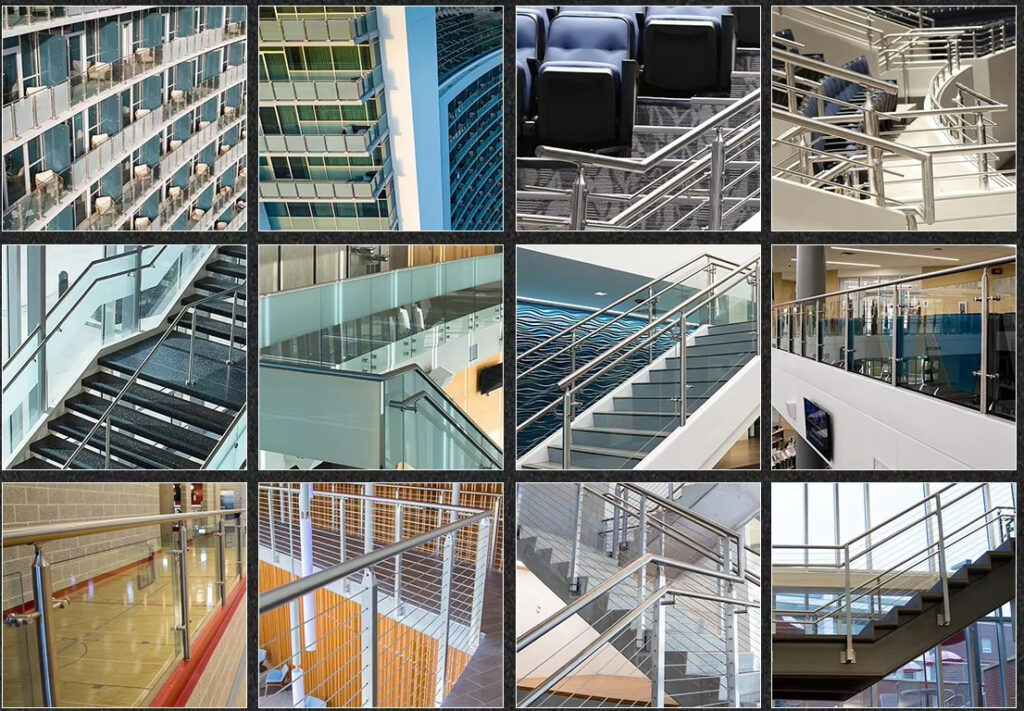
A cable railing purchase is not just a choice of visible fitting. The run has to work from one terminal to the other: cable construction, a fixed or receiving end, an accessible tensioning end, intermediate post passages, any spacer bars, and every stair or corner condition must be resolved together. Use this directory to route each part of that decision, then ask ESANG to state the proposed supply scope in the quotation.
Discuss a Cable Railing System on WhatsApp
Route the Purchase to the Right Hardware Family
These five category routes divide the current public cable-railing range by function. They are not five interchangeable names for the same part.
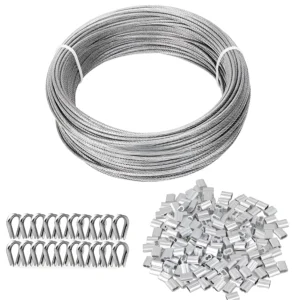
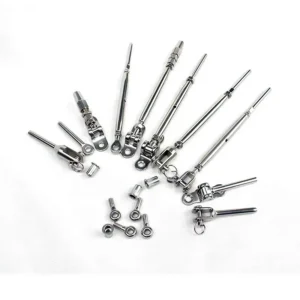
• Ferragens e acessórios para cabos — start here when the immediate decision is the cable-side assembly method, the post-side connection, or the boundary of a proposed hardware kit.
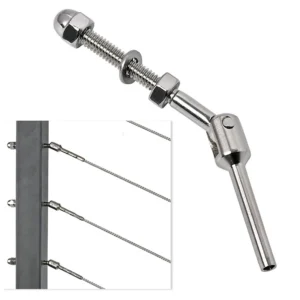
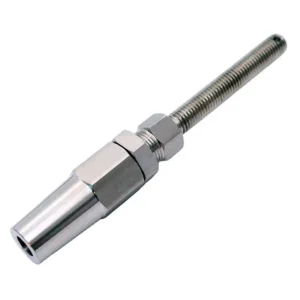
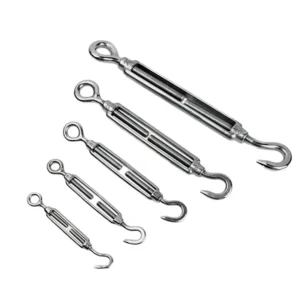
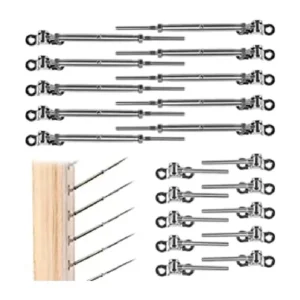
• Tensionadores e esticadores — use this route when a cable run needs a defined adjustment point, take-up access, or an angle-capable tensioning connection.
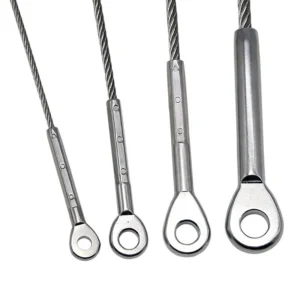
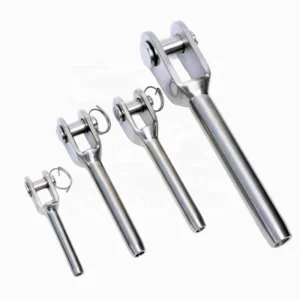
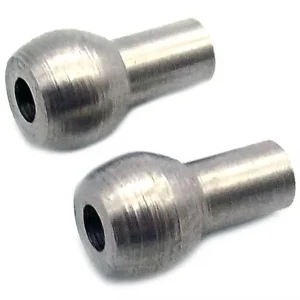
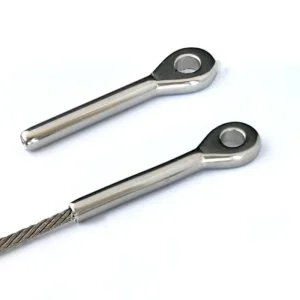
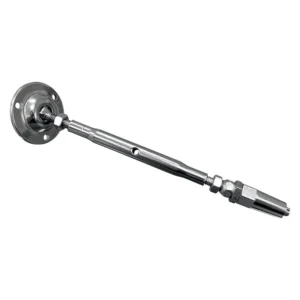
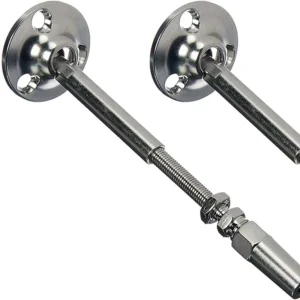
• Conexões de extremidade de cabo — compare threaded, swaged, ball, fork, eye and stop-style terminal interfaces by the part they must mate with.
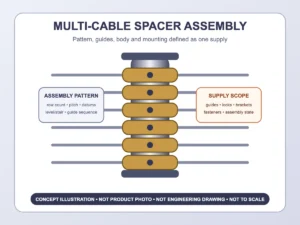
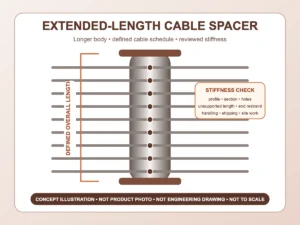
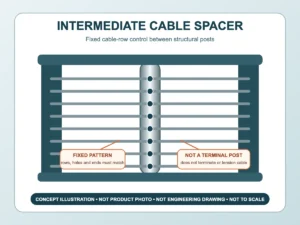
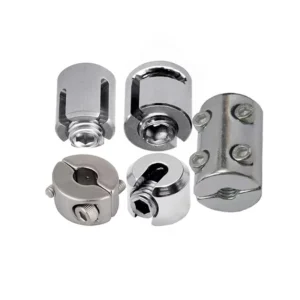
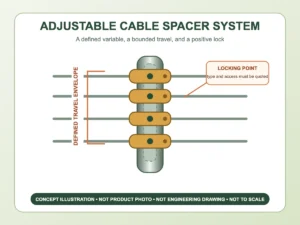
• Barras espaçadoras de cabos — use this route for intermediate row-position support between structural posts; a spacer is not automatically a terminal or tensioner.
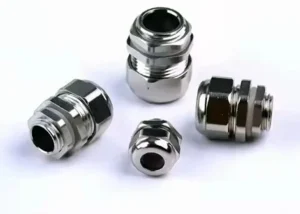
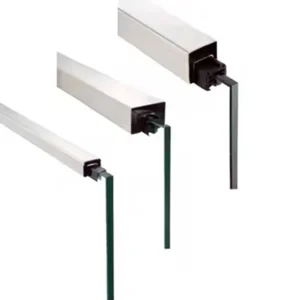
• Hardware de poste passante — use this route for straight pass-through holes, cable-hole finishing and protection, terminal-post passages, or a separately reviewed corner route.
The directory title does not by itself confirm that cable, posts, anchors, tools or every visible accessory are included. A comparable quotation should identify every proposed line item and clearly mark buyer-supplied or site-supplied items.
Map the Cable Run Before Selecting Parts
1. Define the two ends
State which end is intended to provide adjustment and what the opposite end must do. A terminal can be fixed, retaining, articulated or tensionable depending on its design. Do not assume that every threaded fitting is a tensioner or that every end stop can take the role of a terminal-post assembly.
2. Classify every post
Mark posts as terminal, intermediate, corner or stair posts on the elevation. Intermediate posts may only guide a cable; terminal posts receive the end load and the tensioning arrangement; corner posts introduce a change of direction that must be designed rather than inferred from a straight-hole detail.
3. Decide through-post or surface connection
A through-post layout needs coordinated hole position, hole size, post wall or section, cable exit direction and access for the fitting. A surface-mounted layout instead needs a defined face geometry, mounting fastener or threaded receiver, articulation and clearance. The two approaches affect post fabrication and cannot be swapped late without rechecking the drawing.
4. Add intermediate support only where it has a defined role
Spacer bars can keep several cable rows in a planned pattern between posts. They do not replace the structural post, the cable terminal, or the tensioner. Overall spacer length, row positions, cable passages and the spacer’s own fixing method belong in the inquiry.
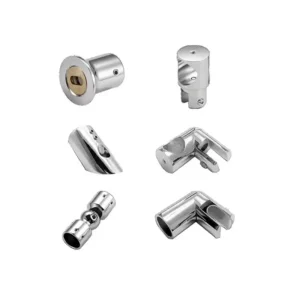
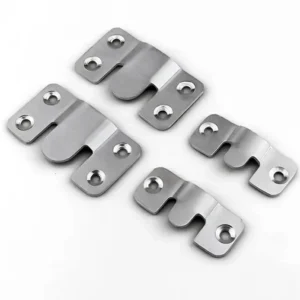
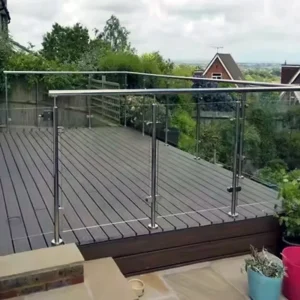
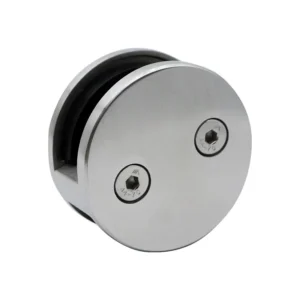
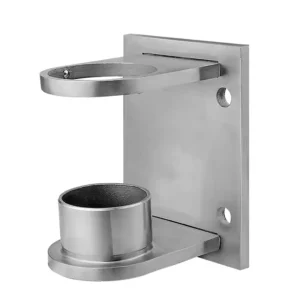
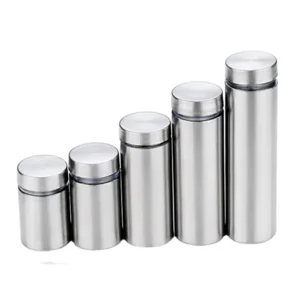
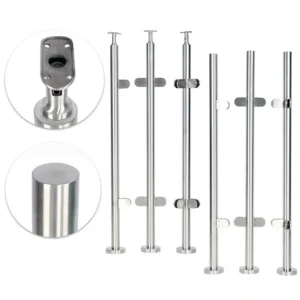
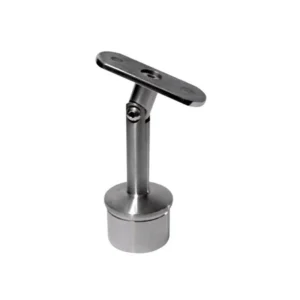
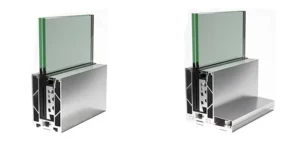
Visible Component Forms, Not a Complete Supply Promise
Corner and Stair Conditions Need Their Own Decision
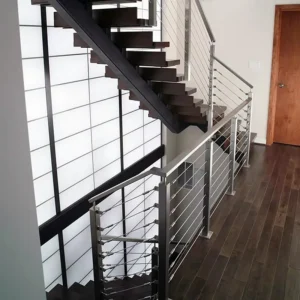
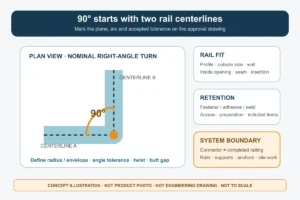
A straight horizontal run, an inclined stair run and a corner run do not share the same alignment. At a stair, the end fitting must meet the cable axis without unintended side loading. At a corner, the drawing should say whether each direction terminates and restarts, or whether an angle-specific route is intended. Do not treat a cable pulled through one sharp, unreviewed hole as an automatic corner solution.
Information That Starts a Useful Inquiry
A marked-up elevation, sketch or site photo is enough to start. Add what is already known and leave unknown fields visibly open:
• overall railing layout, straight lengths, stair pitch and corner locations;
• number of cable rows, intended row positions, and the project’s opening or spacing requirement;
• requested cable diameter and construction, or a request for ESANG to propose them for review;
• post profile, outside size, wall or section detail, hole layout and material;
• preferred through-post or surface-mounted connection;
• which end should be accessible for tension adjustment;
• indoor, outdoor, coastal, poolside or other exposure description;
• quantity by run or by component, finish requirement and destination.
Fields to Compare in the Quotation
• proposed cable diameter and construction, and whether cable is included;
• fixed-end and tensioning-end part descriptions for each run type;
• swaged, mechanical or other cable-side preparation and any required tool;
• post-side interface, thread, hole, washer, nut, receiver or mounting-fastener detail;
• adjustment travel, installation clearance and accessible tensioning location;
• intermediate pass-through, spacer and corner-routing details;
• proposed material grade and finish, with the requested material evidence;
• included components, exclusions, packing unit and quantity basis.
Final guard performance, post strength, anchorage, cable spacing and code compliance belong to the complete installed system and project design. A component photo or category name is not evidence of those outcomes.
Send Your Cable Layout to ESANG on WhatsApp