Specifying the wrong glass build-up for a balcony railing rarely fails visibly at the time of purchase — it surfaces later, during a code inspection, after a breakage event, or when a fabricator returns a substitution request because the drawing notes didn’t account for pre-tempering fabrication requirements. The downstream cost isn’t just material replacement; it’s schedule disruption, potential liability exposure, and in some cases a code-driven retrofit that the original quote never contemplated. The decision that prevents most of this is made earlier than most teams think: not at the point of pricing, but at the point of specifying glass type, interlayer, thickness, and framing system together. Working through each of those variables against actual project conditions is what separates a defensible glass specification from one that creates problems at inspection or after the first impact event.
Exposure conditions that define the glass build up
Glass thickness is not a single default value applied across all balcony conditions — it is a span-dependent design choice, and mismatching thickness to unsupported panel length creates both structural risk and potential code exposure. The figures commonly cited in industry practice — 1/4″ for shorter spans, 3/8″ as the most common choice for typical residential guardrail infill, and 1/2″ for longer unsupported spans — reflect the relationship between panel stiffness, bending stress, and the load demands a guardrail system must handle. Treating 3/8″ as a universal default without checking span length is the kind of assumption that produces a structurally marginal panel or a code-minimum conflict that only becomes apparent during review.
The more consequential exposure condition, however, is geographic. Coastal environments and hurricane-prone zones increasingly require laminated glass for exterior applications, and in many jurisdictions that requirement is already written into the adopted building code. Specifying monolithic tempered glass in those conditions doesn’t just create a performance risk — it creates a code rejection risk that sends the project back to the specification stage after fabrication has already started. That sequence is expensive in a way that no unit price comparison captures at the outset.
| Exposure condition | Recommended glass | Why it matters |
|---|---|---|
| Short spans (e.g., small guard infill) | 1/4″ tempered | Thickness below 1/4″ may not meet structural or code minimums |
| Typical residential spans | 3/8″ tempered (most common) | Balances cost and stiffness for most guardrail infill panels |
| Long spans | 1/2″ tempered | Thicker glass resists bending and stress over larger unsupported lengths |
| Coastal or hurricane zones | Laminated glass (often code-required) | Tempered-only panels risk code rejection and liability in high-wind regions |
The practical implication is that exposure conditions should be confirmed before thickness and glass type are locked in the drawing package, not after pricing has been collected. A project in a non-coastal protected location may reasonably use 3/8″ monolithic tempered glass for standard spans. The same project at a coastal site, or with longer unsupported panel dimensions, requires a different build-up entirely — and discovering that after fabrication orders are placed is where the cost of a premature specification decision becomes concrete.
Breakage behavior buyers should compare early
The most consequential difference between tempered and laminated glass is not strength — it is what happens after breakage. Tempered glass is meaningfully stronger than standard annealed glass by a significant factor, which is why it performs well under normal load conditions. But that strength metric is irrelevant once the panel fails. When tempered glass breaks, it shatters into a large volume of small blunt fragments across the entire panel simultaneously. There is no residual structure. The panel does not hold its shape. It does not maintain barrier function. The opening it was protecting is now exposed.
This is the failure mode that buyers who evaluate glass type on price alone consistently underweight. A monolithic tempered panel in a frameless balcony railing system that shatters under thermal stress, impact, or a manufacturing defect does not just create a cleanup problem — it creates a fall-through path with no secondary barrier. The probability of any given panel breaking may be low, but the consequence of that breakage is what determines whether the specification is appropriate for the application.
Laminated glass changes this risk profile at the mechanism level. Two tempered panes bonded with an interlayer — typically EVA or SGP depending on the environment — crack under the same forces, but the interlayer holds the fragments in position. The panel is damaged and must be replaced, but it continues to function as a barrier immediately after the breakage event. That retained integrity is not a marginal upgrade; it is a fundamentally different post-breakage outcome.
| Property | Tempered glass | Laminated glass |
|---|---|---|
| Comparative strength | 5–7× stronger than annealed glass | Uses two tempered panes bonded; retains high strength |
| Breakage pattern | Shatters into many small, blunt pieces | Cracks but interlayer holds fragments in place |
| Panel integrity after break | Entire panel disintegrates; no residual barrier | Panel remains in position; barrier function persists |
| Fall‑through risk | High – shower of pieces leaves an open fall path | Low – fragments retained, preventing fall‑through |
The decision implication here is that breakage behavior should be part of the glass selection conversation before drawings are issued, not after the first incident report. For any location where a panel failure creates a fall-through path over a significant drop — or where foot traffic below the railing line is regular — the post-breakage column in that comparison is the one that drives the specification, not the unit cost column.
Monolithic tempered versus laminated tradeoffs
The IBC draws a clear line between residential and commercial scope for glass guardrail infill: monolithic tempered glass is permitted for residential applications, and laminated glass is required for commercial ones. That threshold is a planning anchor, not a universal rule, because jurisdictions vary in their adopted code version and local amendments — but it is a strong enough baseline that specifying monolithic tempered glass for a commercial guardrail application without confirming local code alignment is a risk most projects cannot absorb. Failed inspections and required glass replacement at that stage carry costs well beyond the price difference between glass types.
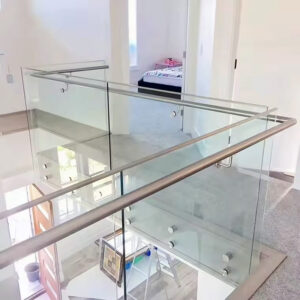
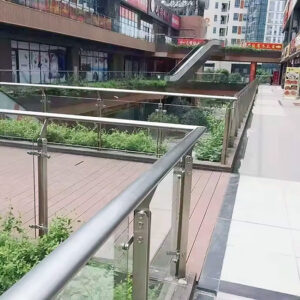
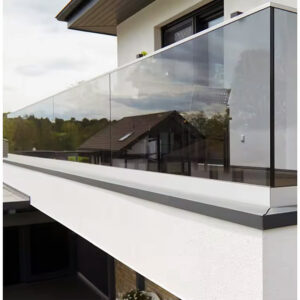
The frameless versus framed dimension adds a second layer to this trade-off. In a framed system with a continuous top handrail, the structural tube provides a secondary load path if a panel is compromised. The handrail continues to function as a barrier even if the glass is gone. In a frameless system — where the glass panel is the primary structural and barrier element — a shattered monolithic tempered panel leaves nothing. For frameless designs, the engineering risk profile of monolithic tempered glass without a secondary handrail is difficult to defend in higher-consequence locations, even where code technically permits it. Laminated glass is the appropriate choice for frameless assemblies because the interlayer provides the retention that the framing system would otherwise supply. Glass Balcony Railing systems designed around frameless configurations typically reflect this requirement in their hardware and panel specifications.
The interlayer choice within laminated glass carries its own locational logic. EVA interlayers perform adequately in protected interior or non-coastal exterior environments. SGP (SentryGlas Plus) interlayers provide greater stiffness and substantially better resistance to delamination in coastal or high-humidity conditions. Specifying EVA in a coastal installation is not a minor substitution — premature delamination becomes visible as edge clouding or interlayer separation, and by the time it is apparent, the panels are already installed and the project is past the point where a specification correction is inexpensive. Railing systems operating within the standards framework established by ASTM E985-24 for permanent metal railing systems depend on component-level specifications like interlayer selection holding up over the service life of the installation, not just at the point of acceptance.
| Decision factor | Tempered glass | Laminated glass |
|---|---|---|
| IBC occupancy | Allowed for residential; not permitted for commercial | Required for all commercial applications |
| Frameless design suitability | Not recommended without handrail; fall‑through hazard | Recommended; interlayer retains barrier integrity |
| Interlayer durability | No interlayer | EVA for non‑coastal settings; SGP for coastal to resist delamination |
The trade-off that most teams simplify too early is the relationship between framing system, glass type, and interlayer specification. Those three variables are interdependent. Locking glass type without confirming framing configuration, or specifying laminated glass without confirming the right interlayer for the exposure environment, leaves gaps that show up at fabrication or, worse, years into the installation’s service life.
Drawing notes that trigger quote and substitution gaps
The specification problems that produce the most expensive downstream friction are not the ones where the wrong glass type is chosen — they are the ones where the drawing package is vague enough that different fabricators interpret the notes differently, and the project doesn’t discover the gap until quotes come back inconsistent or a substitution request arrives after order placement.
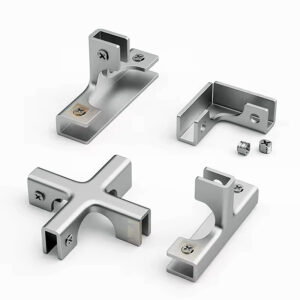
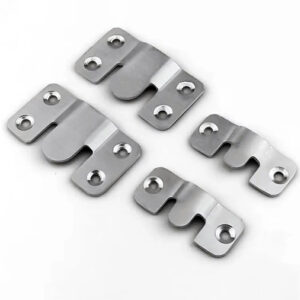
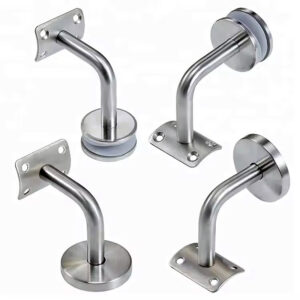
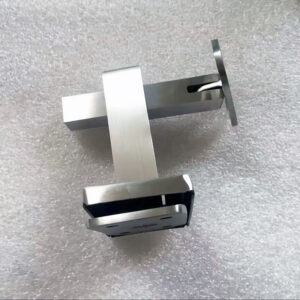
Two specific gaps appear repeatedly. The first is thickness tolerance. Glass panels are manufactured to nominal dimensions, but the actual supplied thickness will fall within a tolerance band — ±1/16″ for 1/4″ panels, and ±1/8″ for 3/8″ and 1/2″ panels. A drawing note that specifies nominal thickness without acknowledging the tolerance band creates a situation where a fabricator supplies panels that meet industry practice but are rejected at the project level because the reviewer expected the nominal dimension exactly. That discrepancy generates a substitution request, a re-quote, or a delay — none of which were priced into the original schedule. The fix is straightforward: state the nominal thickness and confirm the acceptable tolerance band in the drawing notes so all fabricators are working to the same acceptance criterion. Glass Panel Support Brackets and other hardware components are typically sized around nominal glass thickness, so tolerance confirmation at the drawing stage also prevents hardware fit conflicts during installation.
The second gap is more consequential in terms of procurement impact. Tempered glass cannot be cut, drilled, or modified after the tempering process. Any holes for point-fix hardware, slots for clamp systems, notches, or edge profiles must be executed before the glass enters the tempering furnace. Drawing packages that do not explicitly specify this — or that show hardware connection details without noting that all cutouts must be pre-tempered — create a scenario where a fabricator receives panels they cannot work with, and the project is looking at either a full re-order with lead-time implications or a substitution to a different connection system that may not match the design intent.
| Specification gap | Risk if unclear | What to confirm in drawings |
|---|---|---|
| Glass thickness tolerances | Quoted panels may be within tolerance (±1/16″ for 1/4″, ±1/8″ for 3/8″ and 1/2″) but not match nominal, causing rejection or cost surprises | State nominal thickness and confirm that supplied panels meet the tolerance band |
| Pre‑tempering fabrication | Tempered glass cannot be cut or drilled after tempering; omitting this leads to unworkable panels and substitution proposals | Note that all cutouts, holes, and edgework must be completed before tempering; no post‑temper modifications allowed |
The review check at the drawing stage is simple but often skipped: confirm that every cutout, hole, and edge treatment shown in connection details is explicitly noted as a pre-tempering fabrication requirement, and that the glass thickness note includes a tolerance reference. Both items take minutes to add at the specification stage and hours to resolve after fabrication has started.
Post breakage retention as the selection threshold
The clearest way to determine whether a project condition requires laminated glass is to ask one question: if this panel breaks, what happens next? For commercial guardrail applications, the IBC answers that question definitively — post-breakage barrier integrity is required, monolithic tempered glass cannot provide it, and laminated glass is required accordingly. That is not a directional recommendation; it is a code threshold with inspection consequences attached.
For residential applications, the current code picture is more permissive but less stable. Monolithic tempered glass remains code-compliant for residential balcony guardrails in most jurisdictions. But the direction of commercial practice — where laminated glass is now essentially universal for new projects — is migrating toward residential specification expectations, and code officials in some jurisdictions are already applying heightened scrutiny to residential tempered-only assemblies. Specifying monolithic tempered glass for a residential balcony today is not a code violation, but it may create a future retrofit exposure if residential laminated requirements advance, and it is already a liability exposure in higher-consequence locations where the consequences of a panel failure are significant regardless of occupancy classification.
Overhead glazing and areas with regular foot traffic directly below the railing line represent the highest-consequence category. A broken monolithic tempered panel in either condition does not just leave an open fall path — it produces a shower of falling fragments across the area below. The hazard is both directional (fall-through) and projectile (falling debris). Laminated glass in these conditions is the only specification that addresses both failure modes, because the interlayer retains the fragments in the frame after breakage.
| Application | Fall‑through consequence | Glass selection driver |
|---|---|---|
| Overhead glazing or high‑traffic areas below | High – broken fragments falling on people | Laminated required; tempered-only creates falling debris hazard |
| Commercial building guardrails | High – code mandates post‑breakage barrier integrity | Laminated required per IBC; monolithic tempered not permitted |
| Residential balcony guardrails (current) | Moderate – fall‑through risk exists but code still permits tempered | Tempered allowed; laminated increasingly preferred and may become a future code requirement |
| Coastal or hurricane‑prone residential | High – wind‑borne debris and corrosion demand durability | Laminated with SGP interlayer; tempered-only may not meet coastal code |
The practical threshold for selection is this: if the post-breakage condition — panel gone, opening exposed, fragments distributed — would be unacceptable in that location, laminated glass is the right specification regardless of what the minimum code permits. Code sets a floor, not an optimum. For glass cap rail assemblies and frameless systems in particular, post-breakage retention is a functional requirement for the system to remain a barrier, and the specification should reflect that function rather than the minimum permissible material.
Glass type selection for a balcony railing is ultimately a risk allocation decision: the choice made at the specification stage determines who absorbs the cost of a post-breakage event — the specifier, the contractor, or the building owner. Monolithic tempered glass is a defensible choice for a framed residential system in a protected non-coastal environment with adequate secondary restraint. It is a difficult choice to defend in a frameless commercial application, an overhead installation, a coastal site, or any location where a panel failure creates a significant fall or debris hazard.
Before issuing a glass specification, confirm three things: that the glass type matches the occupancy and framing system; that the interlayer — if laminated is specified — matches the exposure environment; and that the drawing package explicitly defines thickness tolerance and pre-tempering fabrication requirements. Those three items resolve the majority of quote gaps, substitution requests, and inspection conflicts that follow vague glass notes downstream.
Frequently Asked Questions
Q: Does the residential versus commercial code distinction still apply if a residential balcony is above a shared walkway or public entry?
A: Occupancy classification alone should not drive the decision in that condition — consequence of failure should. Even where residential code permits monolithic tempered glass, a panel failure above a regularly occupied public path creates a falling debris hazard and an exposed fall path that the code minimum does not resolve. The practical specification threshold is whether the post-breakage outcome is acceptable in that location, which in a high-traffic below-grade condition it is not. Laminated glass is the appropriate specification regardless of occupancy label.
Q: After confirming glass type and interlayer, what should be locked down in the drawing package before quotes go out?
A: The two items that most consistently produce quote gaps and substitution requests are thickness tolerance and pre-tempering fabrication requirements. Confirm that every nominal thickness note includes the accepted tolerance band (±1/16″ for 1/4″ panels, ±1/8″ for 3/8″ and 1/2″ panels), and that every cutout, hole, or edge treatment shown in connection details is explicitly flagged as a pre-tempering requirement. Both items should be resolved in the drawing package before fabricators price the work — not in a response to a substitution request after panels have been ordered.
Q: At what point does an EVA interlayer become the wrong choice even for a project that isn’t technically in a coastal zone?
A: High ambient humidity, proximity to a pool or water feature, or any condition that produces sustained moisture exposure at the panel edge can accelerate EVA delamination in the same way a coastal salt environment does. The relevant condition is not geographic designation but actual moisture exposure at the installation. If edge clouding or interlayer separation would be unacceptable during the service life of the installation, SGP is the safer interlayer choice regardless of whether the project falls within a formally defined coastal zone.
Q: Is a framed tempered glass system with a continuous handrail actually comparable in safety to a laminated frameless system, or is the handrail distinction overstated?
A: They are not equivalent — the comparison depends on what failure mode is being evaluated. A framed system with a continuous top handrail does maintain barrier function after glass breakage because the tube provides a secondary load path. But it does not address falling debris below the railing line, and it depends on the handrail connection remaining structurally sound after the panel loss. A laminated frameless system retains both barrier integrity and fragment containment after breakage. For locations where debris fall or full barrier retention after damage matters, laminated glass addresses failure modes that a secondary handrail alone does not.
Q: For a residential project today, is specifying laminated glass worth the cost premium given that it isn’t yet required by code in most jurisdictions?
A: For framed residential systems in protected, non-coastal environments, monolithic tempered glass with adequate secondary restraint is a defensible specification at current code. The cost premium for laminated glass becomes justified when any of the following conditions apply: the system is frameless, the location is coastal or high-humidity, the railing is above a high-consequence drop, or the project owner has explicit liability concerns about post-breakage exposure. The additional factor is trajectory — commercial practice has moved to laminated glass as a near-universal standard, and residential code scrutiny is tightening in some jurisdictions. Projects with long service life expectations may be better served by a specification that anticipates that direction rather than one that reflects only the current residential minimum.