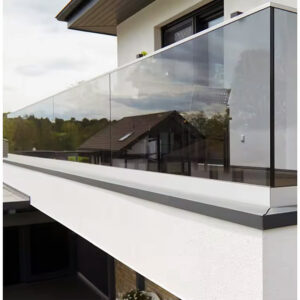
For architects, developers, and contractors, navigating the code landscape for multi-family glass railings presents a foundational challenge. The choice between the International Residential Code (IRC) and International Building Code (IBC) is not a designer’s preference but a jurisdictional mandate dictated by building typology. Misidentifying the governing code triggers a cascade of compliance failures, from incorrect guard heights to improper glass specifications, risking costly redesigns and failed inspections.
This distinction is critical now as multi-family construction prioritizes modern, open designs with frameless glass systems. The safety requirements for these high-occupancy buildings are inherently more stringent, directly impacting material selection, structural engineering, and project budgeting. Understanding the IBC’s specific mandates is the first non-negotiable step in delivering a project that is both aesthetically compelling and legally compliant.
IRC vs IBC: The Core Governing Code Difference
The Jurisdictional Trigger
The project’s governing code is determined by occupancy, not aesthetics. The IRC applies strictly to one- and two-family dwellings. For any residential building containing three or more dwelling units—such as apartment complexes, condominiums, or mixed-use structures with residential components—the IBC is the enforceable model code. This creates a multi-tiered compliance landscape where state adoptions and local amendments further filter the baseline requirements.
Implications for Design Authority
This initial classification fundamentally alters the project’s entire regulatory framework before design begins. The IBC’s scope encompasses stricter life-safety and accessibility standards tailored to higher-density living. It systematically transfers more performance verification and liability to manufacturers through required third-party testing. In my experience, the most common and costly oversight is assuming a luxury single-family railing detail can be directly applied to a multi-family balcony; the code basis is entirely different.
Navigating Code Adoption Cycles
A critical, often overlooked layer is the specific edition of the IBC adopted by the local Authority Having Jurisdiction (AHJ). States and municipalities may lag behind the latest ICC publications. Confirming the active edition—be it 2018, 2021, or 2025—is essential, as significant changes to glazing and guard requirements can occur between cycles. Early consultation with the local building department is a non-negotiable step to anchor all subsequent specifications.
Cost & Compliance Impact: IBC vs IRC for Multi-Family
The Higher Baseline
Adherence to the IBC establishes a higher cost baseline compared to IRC projects. The stricter mandates for laminated glass and increased guard height directly increase material and fabrication expenses. This creates an inherent “safety vs. value engineering” tension, where cost-cutting pressures must be carefully balanced against compliance and long-term liability exposure.
Risk Allocation and Verification
The IBC’s emphasis on performance-based standards changes the risk profile. Requirements for certified test reports (like ASTM E2353 for frameless systems) shift liability from the field installer to the manufacturer. This incentivizes investment in pre-engineered, certified systems but reduces supplier options to those with robust testing documentation. Successful project budgeting must allocate specific resources for early jurisdictional research and professional engineering stamps, as this upfront investment directly mitigates schedule risk and costly change orders.
The Value of Certified Systems
Specifying pre-certified railing systems is a strategic cost-control measure for multi-family developers. While the unit cost may be higher, the value lies in predictable permitting, reduced engineering fees per project, and minimized field coordination issues. We compared proprietary systems against custom-fabricated options and found the total installed cost and risk profile were often lower with a certified, integrated solution.
Glass Safety Standards: Laminated Requirements Compared
The Laminated Mandate
A pivotal safety evolution in the IBC is the mandate for laminated glass in guard applications. Unlike older practices permitting fully tempered glass alone, the IBC requires glass that is either fully tempered or heat-strengthened and laminated with a polymer interlayer. This ensures post-breakage integrity, holding glass fragments together to maintain the protective barrier.
Specification and Testing Benchmarks
This glass must comply with specific impact safety standards. The key benchmarks are CPSC 16 CFR Part 1201 Category II or ANSI Z97.1 Class A performance. These standards define the impact resistance and breakage characteristics required for safety glazing in hazardous locations like railings. This specification shift reduces supplier options, favoring producers with in-house laminating and certified testing capabilities.
Practical Application and Thickness
The typical minimum thickness for laminated glass in railing applications is 1/4 inch. However, this is a starting point. Larger unsupported spans, higher wind loads, or specific aesthetic desires for greater glass stiffness will necessitate thicker lites, such as 3/8 inch or 1/2 inch, which must be confirmed through engineering analysis.
| Material Standard | Minimum Glass Type | Typical Thickness |
|---|---|---|
| IBC Requirement | Laminated safety glass | 1/4 inch minimum |
| CPSC 16 CFR 1201 | Category II compliant | Varies by span |
| ANSI Z97.1 | Class A compliant | Varies by span |
Source: ANSI Z97.1 Safety Glazing Materials Used in Buildings. This standard establishes the safety performance specifications and test methods for glazing materials, defining the impact resistance (Class A) required for code-compliant glass in railings.
Guard Height Showdown: 36 Inches vs 42 Inches
The Minimum Height Divide
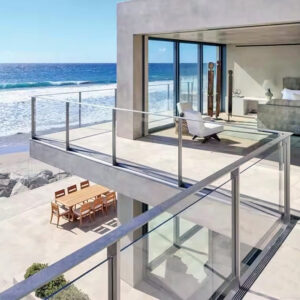
The most visually apparent code difference is the minimum guard height. The IRC mandates 36 inches, while the IBC requires 42 inches for decks, balconies, and other elevated walking surfaces in multi-family and commercial settings. This 6-inch increase is a fundamental safety enhancement for higher-occupancy buildings with greater traffic and use variability.
Trigger Heights and Stair Transitions
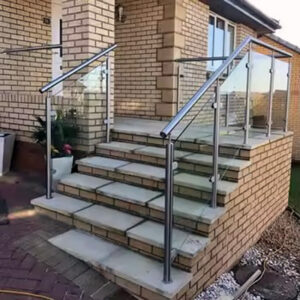
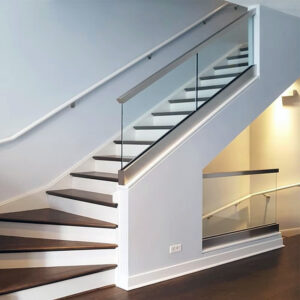
The trigger point for requiring any guard is consistent across both codes: a drop of 30 inches or more from the adjacent walking surface. The complexity arises on stairs, where the guard often also serves as a handrail. In this scenario, both codes specify a height between 34 and 38 inches measured vertically from the stair nosing. Detailing this transition from a 42-inch balcony guard to a 36-inch stair handrail requires careful planning to maintain continuous graspability and compliance with ICC A117.1 for accessibility.
Impact on Design and Perception
The additional height directly influences material use, sightlines, and the perceived openness of a space. It can affect views from seated positions indoors and requires consideration in the overall façade design. The following table clarifies the key dimensional requirements:
| Application Area | IRC Minimum Height | IBC Minimum Height |
|---|---|---|
| Deck/Balcony Guard | 36 inches | 42 inches |
| Guard Trigger Height | 30 inches above grade | 30 inches above grade |
| Stair Handrail Height | 34-38 inches from nosing | 34-38 inches from nosing |
Source: Technical documentation and industry specifications.
Load Requirements: IBC vs IRC Structural Comparison
Concentrated and Uniform Loads
Both codes impose identical rigorous load requirements for the structural integrity of the guard assembly itself. The system must resist a 200-pound concentrated load applied in any direction and a uniform load of 50 pounds per linear foot (plf) applied to the top rail. These tests simulate human impact and leaning forces.
The Critical Infill Load
A key IBC emphasis specific to glass railings is the infill load requirement. Glass panels and their supporting hardware must be designed to withstand 50 pounds per square foot (psf) applied perpendicularly to the surface. This addresses wind pressure and distributed human impact on the large glass infill area, a consideration not explicitly defined for glass in the IRC. This often dictates the glass thickness, bracket spacing, and anchoring design.
Engineering and Anchoring Imperatives
These load cases necessitate project-specific engineering calculations. The anchoring detail—how the post or bracket attaches to the building structure—is the most critical component and a frequent point of failure. It must account for not just vertical loads but overturning moments, especially for frameless systems. In high-wind or seismic regions, local amendments will impose even stricter criteria that supersede these model code minimums.
| Load Type | IBC Requirement | IRC Requirement |
|---|---|---|
| Concentrated Load | 200 pounds | 200 pounds |
| Uniform Top Load | 50 plf | 50 plf |
| Glass Infill Load | 50 psf | Not specified |
Source: Technical documentation and industry specifications.
Frameless Systems: Which Code Allows More Design Freedom?
The Top Rail Exception Pathway
Both the IBC and IRC accommodate the desired frameless aesthetic through a critical exception to the general rule requiring a structural top rail. This top rail can be omitted if the entire laminated glass baluster assembly is tested and certified to ASTM E2353, “Standard Test Methods for Performance of Glass in Permanent Glass Railing Systems, Guards, and Balustrades.”
The Certification Advantage
This exception creates a clear market advantage for manufacturers who invest in the rigorous and costly ASTM E2353 testing process. It incentivizes the use of pre-engineered, certified systems over custom field-fabricated solutions. For multi-family projects, specifying a pre-certified system is the most reliable path to achieving a frameless design while streamlining permit approval, as the testing documentation provides the AHJ with verified performance data.
Specification and Liability Clarity
When selecting a frameless system, the project specifications must explicitly require submission of the full ASTM E2353 test report for the exact product configuration being used (including glass thickness, bracket type, and spacing). This report is the legal and technical foundation that mitigates field liability for the designer, contractor, and owner, proving the system performs as a structural barrier without a top rail.
Navigating Local Amendments & High-Wind Zones
The Amendment Landscape
The model IBC provides a national baseline, but local jurisdictions frequently enact stricter amendments. This creates fragmented regional requirements that demand specific attention. For example, coastal Florida counties have detailed wind-borne debris and large-missile impact protocols for glazing, while California cities may have unique seismic bracing details.
Hazard-Specific Design Responses
These regional hazards dictate specialized engineering responses. In hurricane-prone zones, designs require explicit wind load calculations, often leading to thicker glass, reduced panel spans, or the use of hurricane-rated framing systems. In coastal environments, the specification for stainless steel hardware typically escalates from Grade 304 to the more corrosion-resistant Grade 316.
Partnering for Local Expertise
This complexity makes early engagement with local engineers and suppliers with regional experience imperative. National developers should mandate that their design teams or product suppliers demonstrate proven compliance in that specific AHJ’s territory. The table below outlines common regional considerations:
| Regional Hazard | Key Design Consideration | Typical Specification Impact |
|---|---|---|
| High-Wind (e.g., Florida) | Wind load calculations | Thicker glass, reduced spans |
| Seismic (e.g., California) | Lateral movement accommodation | Specialized framing details |
| Coastal Environments | Corrosion resistance | 316 stainless steel hardware |
Source: Technical documentation and industry specifications.
Choosing the Right System: A Multi-Family Decision Framework
Step 1: Confirm the Code Basis
Initiate every project by confirming the governing IBC edition and all local amendments with the AHJ. This due diligence must occur during schematic design, not during submittal. Document this communication to establish the fixed parameters for all subsequent decisions.
Step 2: Evaluate System Typology
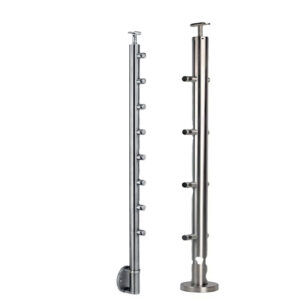
Decide between a traditional top-rail system and a certified frameless system. The frameless path requires confirmed, project-specific ASTM E2353 documentation. Consider the total installed cost, including engineering, fabrication, and the premium for certified systems versus the aesthetic and market value benefit. For reliable, code-compliant glass railing hardware and systems, partnering with a specialist who provides certified solutions is often the most efficient path.
Step 3: Finalize Technical Specifications
Specify IBC-compliant laminated glass meeting ANSI Z97.1 Class A or CPSC Category II. Ensure load calculations from the supplier account for infill loads and local wind/seismic requirements. Require complete submittal packages including test reports, engineering stamps, and installation instructions. This tension between market desire for minimalist aesthetics and increasing code complexity is accelerating the adoption of fully engineered, prefabricated railing systems that arrive on-site as certified, permit-ready units, reducing field labor and inspection uncertainties.
The decisive factor in multi-family railing success is treating code compliance as a proactive design parameter, not a reactive checklist. Prioritize confirming the local IBC amendments and wind/seismic loads before finalizing aesthetics. Insist on certified systems with full test documentation to de-risk permitting and installation. This framework turns compliance from a constraint into a foundation for durable, defensible design.
Need professional guidance navigating IBC glass railing compliance for your next project? The experts at Esang provide engineered systems and technical support to ensure your multi-family designs meet all safety and code requirements.
Frequently Asked Questions
Q: When does a multi-family balcony railing require laminated glass instead of just tempered?
A: The IBC mandates laminated safety glass for all guard applications in buildings with three or more dwelling units. The glass must be either fully tempered or heat-strengthened and laminated to ensure post-breakage integrity, complying with standards like ANSI Z97.1 or CPSC 16 CFR 1201. This creates a higher material cost baseline and reduces supplier options, favoring manufacturers with specific testing and lamination capabilities.
Q: How do load requirements for glass railings differ between residential and multi-family codes?
A: Both the IRC and IBC require guards to resist a 200-pound concentrated load and a 50 plf uniform load. A critical IBC-specific requirement is the infill load: glass panels must withstand 50 pounds per square foot applied perpendicularly to address wind and human impact. This necessitates detailed engineering for anchoring and glass thickness. For projects in high-wind or seismic zones, expect local amendments to impose even stricter load criteria beyond this baseline.
Q: Can you install a truly frameless glass railing in an IBC-governed apartment building?
A: Yes, but only through a specific code exception. The IBC generally requires a structural top rail, but this can be omitted if the laminated glass baluster assembly passes the impact and retention tests outlined in ASTM E2353. This exception incentivizes the use of pre-certified, tested systems. For multi-family projects, specifying these certified systems is the most reliable strategy to achieve the frameless aesthetic while streamlining permit approval and mitigating field liability.
Q: What is the primary cost driver when switching from IRC to IBC railing standards?
A: Adhering to IBC standards imposes a higher cost baseline primarily due to two mandates: the increased 42-inch guard height and the requirement for laminated safety glass. These specifications increase material and engineering expenses. Successful project budgeting must allocate resources for early jurisdictional research and professional engineering stamps, as this investment directly reduces schedule risk and costly change orders during inspection phases.
Q: How do local amendments affect the specification of stainless steel glass railing systems?
A: Local jurisdictions frequently enact stricter amendments to the baseline IBC, creating a fragmented compliance landscape. In hurricane-prone areas, this means specific wind load calculations requiring thicker glass or reduced spans. In seismic zones, designs must account for lateral movement. This complexity means national developers should partner with local specialists, and suppliers must develop region-specific product lines and documentation to ensure compliance.
Q: What is the minimum guard height for a balcony in a three-story apartment building?
A: The International Building Code (IBC) mandates a minimum guard height of 42 inches for decks and balconies in multi-family buildings like apartments and condominiums. This is a 6-inch increase over the 36-inch requirement in the IRC for one- and two-family homes. This parameter directly influences material use and sightlines. On stairs where the guard serves as a handrail, the height must be between 34 and 38 inches from the stair nosing, a crucial detail for transition zones.