Specifying a higher-grade wire and leaving everything else unchanged is one of the more expensive mistakes in railing procurement — not because it causes immediate failure, but because the corrosion failure point simply shifts from the wire to the connectors, and that damage typically shows up at the joints months or years after installation. By that stage, correction requires partial disassembly rather than a straightforward maintenance intervention. The actual decision that prevents this outcome is not which cable grade to buy, but whether the exposure level at the project site justifies a full-system upgrade — and whether the hardware package matches the wire specification. After reading this, you will be better positioned to judge whether the 316 premium is recoverable on your project and where partial upgrades tend to quietly fail.
Exposure factors that decide whether grade matters
Grade selection is a direct function of what the railing assembly will face over its service life, not a branding decision. Under conditions classified as mild — genuinely indoor settings with no meaningful moisture or chemical exposure — the difference between 304 and 316 in practice is small enough that the cost premium for 316 rarely recovers. The calculation changes when the installation is outdoor, and changes again substantially when saltwater or chloride-laden air is part of the operating environment.
ISO 9223:2012 classifies atmospheric corrosivity across a spectrum from C1 (very low, indoor) to C5 (very high, coastal and industrial). That framework is useful here not as a compliance trigger, but as a planning lens: it formalizes the principle that environmental severity is measurable, variable, and directly connected to material selection. A railing system that would perform reliably under C2 conditions may develop surface corrosion within a year or two in C4 or C5 exposure — which is precisely the range that coastal and near-marine installations occupy.
The risk in getting this wrong is not just aesthetic. Surface corrosion on cable wire compromises visual acceptance early, but structural integrity becomes a concern if corrosion advances to the point where wire tensile capacity is reduced. That outcome is significantly harder and more costly to remediate than a correct initial material selection.
| Environnement | Niveau recommandé | Risk if Wrong Grade Is Used |
|---|---|---|
| Indoor applications | 304 | Unnecessary cost if 316 is used; no performance benefit |
| Outdoor general exposure | 316 | 304 may develop surface corrosion and require earlier replacement |
| Marine / saltwater exposure | 316 | 304 will rust quickly, compromising appearance and structural integrity |
The practical check before specifying grade is straightforward: define the site’s distance from saltwater, assess whether the installation faces prevailing marine winds or spray, and confirm whether any chemical cleaning agents or industrial contaminants are likely to contact the assembly. Those inputs determine whether the upgrade is warranted — not the project tier or the aesthetic preference of the client.
Partial upgrades that fail because connectors lag behind
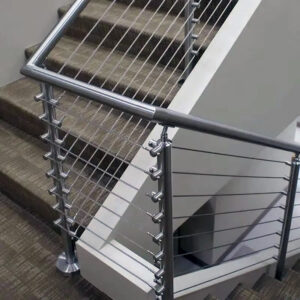
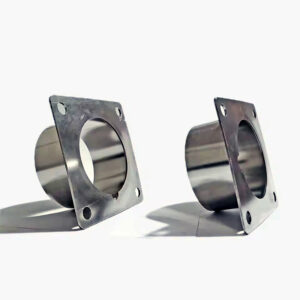
The most common failure pattern in wire railing upgrades is not poor wire quality. It is a specification mismatch: 316 cable installed alongside 304 or lower-grade terminals, swage fittings, tensioners, or post hardware. The wire holds. The connectors corrode. Rust first appears at the exact points — the end fittings, the tensioning hardware, the mounting brackets — where the material grade was never upgraded.
This failure mode is particularly difficult to catch at inspection because the wire looks correct. The grade marking is on the cable, the installation looks complete, and the corrosion issue only becomes visible after weather cycles have worked on the lower-grade hardware. At that point, the rework involves partial disassembly and hardware replacement — a scope that typically costs more than the difference between a consistent 316 hardware package and a mixed-grade one would have been at procurement.
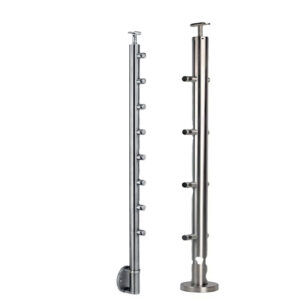
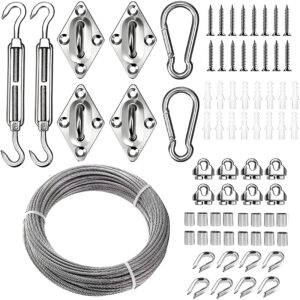
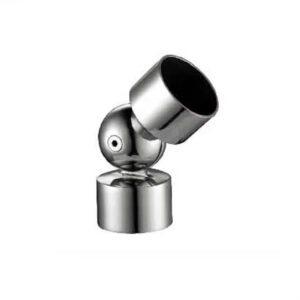
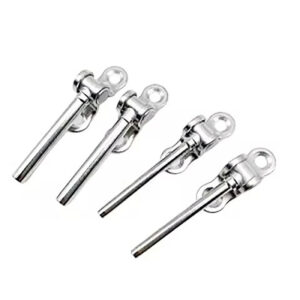
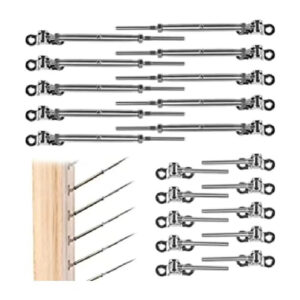
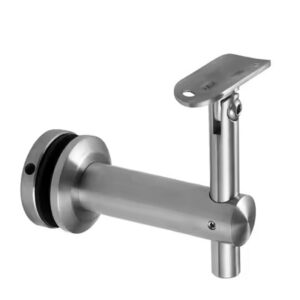
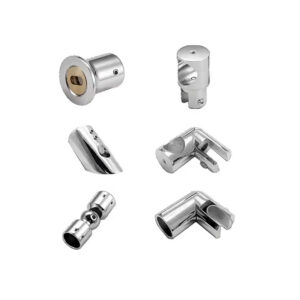
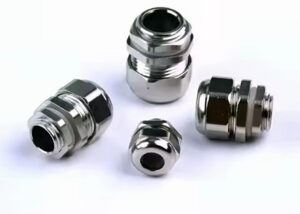
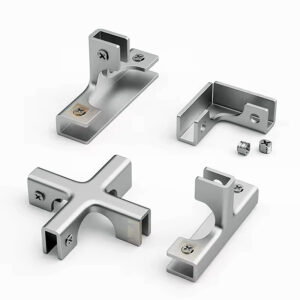
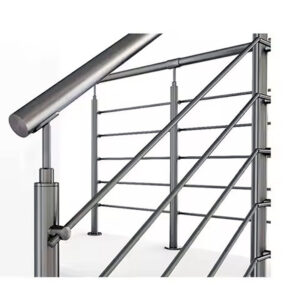
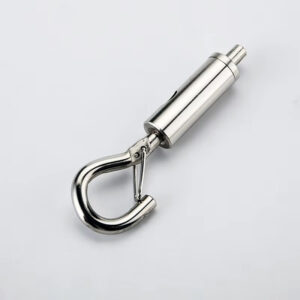
The practical implication is that a stainless steel upgrade should be treated as a system decision, not a line-item decision. If the site exposure justifies 316 wire, the same logic applies to every component that is equally or more exposed: end fittings, swage terminals, thread-and-tension hardware, and any through-post fittings. Stainless Steel Cable Fittings 316 Marine Grade specifies the same grade designation as the wire itself — that kind of full-system consistency is what the upgrade is actually buying.
A useful procurement review check at this stage is to request material certificates for every hardware component, not just the cable. If a supplier packages wire and fittings together but cannot confirm consistent grade across all hardware in the assembly, that is the gap that tends to produce connector-level corrosion failures.
316 cost compared with lower-grade cable options
The cost difference between 304 and 316 stainless steel cable is real, and it reflects material composition rather than brand positioning. The molybdenum added to 316 improves both corrosion resistance and strength in chloride environments, and that additive carries a procurement premium. Whether that premium is justified depends entirely on the exposure conditions the system will face.
In a mild or indoor setting, 304 performs adequately and the 316 premium is unlikely to recover through avoided replacement or reduced maintenance. In a coastal installation where chloride exposure is consistent and cleaning requirements run more than once per year, the lifecycle equation shifts. Early corrosion on 304 in those conditions can force replacement within a timeframe that is shorter than the cost difference between the two grades implies — which means the lower initial cost produces a higher total cost.
| Fonctionnalité | Acier inoxydable 304 | Acier inoxydable 316 |
|---|---|---|
| Relative cost | Coût initial moins élevé | Higher cost (contains molybdenum) |
| Résistance à la corrosion | Suitable for mild environments | Superior in chloride/saltwater settings |
| Key additive | Aucun | Molybdenum for improved strength and rust resistance |
| Ideal environment | Indoor applications | Outdoor, marine, and coastal environments |
The procurement framing that prevents poor decisions here is to treat 304 and 316 as different lifecycle products rather than the same product at different price points. Specifying 304 in a coastal setting does not save money over time — it defers a larger cost to a later project phase. Specifying 316 in a dry interior does not add long-term value — it spends money that the environment does not require. The environment, not the budget line in isolation, is what determines which choice is economical.
Mixed-material packages that weaken corrosion performance
Packaged railing systems sold as assemblies — cable, posts, fittings, and hardware combined — do not always specify grade consistently across every component. A system described broadly as “stainless” may include 316 wire alongside 304 posts, or 316 wire with ungraded or zinc-coated hardware in the fittings. That kind of inconsistency is not always visible in a product listing and may not be flagged at the point of sale.
The corrosion performance of a mixed-material assembly is effectively set by its weakest component, not its strongest. If one connector in the chain is lower grade or a dissimilar metal, it becomes the first point of failure under exposure conditions that the higher-grade wire would otherwise handle without issue. This is not a theoretical concern — it is a predictable degradation pattern that follows from the way chloride attack concentrates at weaker alloy boundaries.
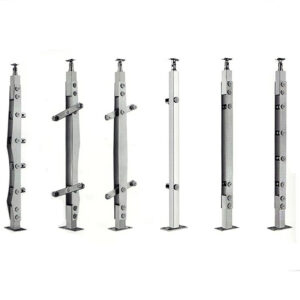
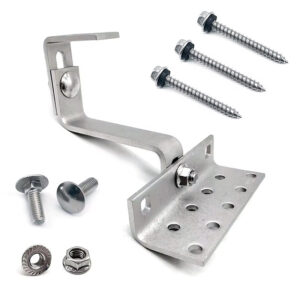
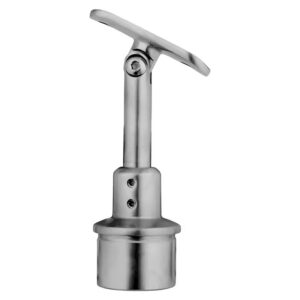
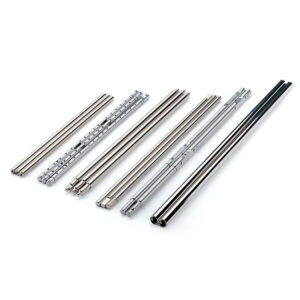
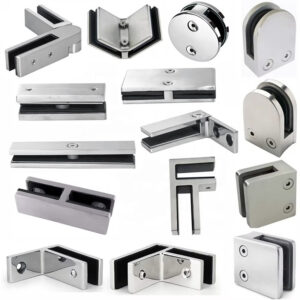
When reviewing a packaged system or a supplier’s cable railing assembly kit, the specification check should confirm grade designation for every hardware component individually. For any project where exposure justifies 316, that designation should be verified on end caps, swage fittings, tensioners, lag screws, and mounting hardware — not assumed from the wire specification alone. A Cable Assembly Hardware Kit that confirms 316 grade across all components removes the procurement ambiguity that leads to these failures; one that only specifies cable grade leaves the hardware question open.
The audit point here is documentation. A consistent grade claim is only defensible if it is backed by traceable material certificates for the full assembly, not a single line-item certification for the cable.
Environmental severity that makes the upgrade pay off
The 316 upgrade becomes economically rational when the cost of early corrosion — replacement, rework, disruption, aesthetic remediation — exceeds the initial cost premium. That crossover does not happen uniformly. It depends on two conditions that can be assessed before procurement: the intensity of chloride exposure at the site, and the maintenance frequency the environment will require regardless of grade.
In coastal locations with direct or frequent salt spray, 304 cable will typically show surface corrosion within a service period that makes replacement necessary well before the system’s intended service life. The rework cost at that stage involves more than material — it involves labour, access to a completed installation, and the disruption to the project owner. That accumulated cost usually exceeds what the 316 premium would have been at initial procurement.
Cleaning frequency is a related input. Even high-quality stainless steel requires periodic cleaning to maintain performance — typically one to three times per year under standard conditions, more often in marine-adjacent settings. Higher cleaning frequency with lower-grade material is not just a maintenance cost; it is also a mechanical stress pattern on surface finish and cable tension components. When cleaning cycles run above once per year because the environment demands it, the durability advantage of 316 compounds across the service life in a way that changes the total cost comparison.
| Facteur | Condition That Favors Upgrade | Why It Changes the Cost Equation |
|---|---|---|
| Saltwater exposure | Direct or frequent contact with salt-laden air/spray (coastal) | 316 prevents early structural corrosion, avoiding higher replacement costs over time |
| Cleaning frequency | Location requires more frequent cleaning (e.g., near the sea) | Higher ongoing maintenance with lower grades makes 316’s durability more economical |
The threshold judgment is not precise enough to reduce to a fixed distance from the shoreline or a fixed salt concentration. It is better framed as a decision gate: if the site conditions would require cleaning more than once per year and place the railing within consistent salt-air exposure, the upgrade cost is likely to recover. If neither condition applies, 304 is adequate and the premium is not warranted.
The central implication across these sections is that a stainless steel wire railing upgrade is a system procurement decision, not a cable-grade decision. The value of 316 wire depends on whether the hardware matched it in grade, whether the packaged assembly was verified component by component, and whether the site environment is genuinely severe enough for the premium to recover through avoided maintenance and replacement costs. Where all three conditions are met — consistent hardware grade, verified assembly documentation, and coastal or chloride-heavy exposure — the upgrade is typically worth the cost difference. Where any one of those conditions is absent, the full value of the upgrade does not carry through to the finished installation.
Before finalising a specification or accepting a supplier’s package, confirm grade across the complete hardware list, request material certificates rather than relying on product descriptions, and assess cleaning frequency as a proxy for exposure severity. Those three checks resolve most of the specification gaps that cause corrosion failures to appear at joints rather than on the wire — which is where they are most expensive and most disruptive to address.
Questions fréquemment posées
Q: Does the 316 upgrade still make sense if the balcony is elevated and not directly exposed to spray, but the building is within a few hundred metres of the coast?
A: Yes, in most cases the upgrade is still warranted. Elevation reduces direct spray contact but does not eliminate chloride-laden air, which carries salt particles inland and deposits them on surfaces regardless of direct exposure. ISO 9223:2012 corrosivity classifications account for this — coastal and near-marine environments can reach C4 or C5 even without direct spray contact. If prevailing winds draw from the sea, an elevated balcony at that distance should be treated as a marine-adjacent exposure rather than a sheltered one.
Q: After confirming the full hardware list is grade-consistent, what should the next procurement step be?
A: Request traceable material certificates for every component before the order is finalised — not after delivery. Product descriptions and grade labels on packaging are not the same as documented mill certificates tied to the specific batch. Certificates should cover wire, end fittings, swage terminals, tensioners, and any through-post or mounting hardware. If a supplier cannot produce them for each component category, that gap is worth resolving before installation rather than after corrosion appears at the joints.
Q: At what point does heavy cleaning frequency indicate that even 316 may not be sufficient, and a different system should be considered?
A: When a coastal or industrial site demands cleaning more than four times per year and involves chemical contaminants beyond standard salt air — chlorinated pool environments, industrial fallout, or acidic cleaning agents — 316 stainless may still corrode at a rate that shortens service life. In those conditions, the appropriate response is to re-evaluate the system type, consider duplex stainless or coated alternatives for the most exposed components, and confirm that cleaning agents are pH-neutral and approved for stainless steel contact. The 316 threshold is corrosion resistance under chloride exposure, not unlimited chemical tolerance.
Q: Is it more cost-effective to specify 316 throughout on a project where only part of the railing faces coastal exposure — for example, one side of a building?
A: Specifying 316 on exposed elevations only is defensible, but only if the hardware is also upgraded consistently on those elevations and the procurement and documentation process is managed separately for each zone. The risk in splitting specifications across a single project is that mixed-grade components get installed in the wrong location, either through procurement error or on-site substitution. If project management overhead and the risk of installation error are factored in, a single consistent 316 specification across the whole project often produces a lower total cost than a split approach — even if some elevations technically do not require the upgrade.
Q: How does a contractor verify that a packaged cable assembly kit actually matches the grade claimed on the label?
A: Check the material certificate against the specific component batch number, not just the product name. Grade claims on packaging can describe the predominant material in a kit while individual components — lag screws, end caps, or tension hardware — carry a different or unspecified grade. Each hardware type in the kit should have its own traceable certification confirming the alloy designation. If the supplier provides a single certificate that covers the kit as a whole without component-level breakdown, treat that as incomplete documentation and request itemised certificates before accepting the delivery.