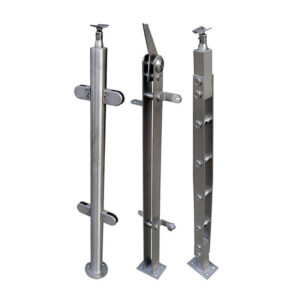
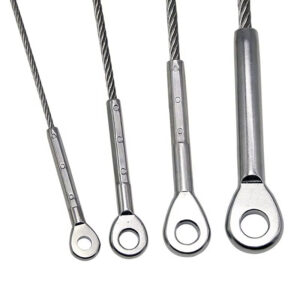
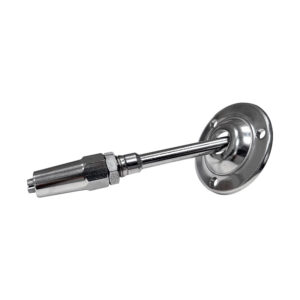
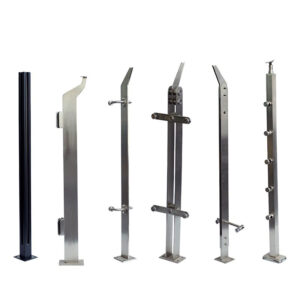
Projects that source custom stainless steel handrails without resolving fabrication scope, drawing control, and packaging terms in a single quotation tend to discover the gaps at installation — when rework costs are highest and schedule pressure is greatest. A supplier who passes a visual sample but outsources welding or polishing has no reliable mechanism for batch repeatability, and that failure only becomes visible when components arrive on site with dimensional drift or finish inconsistency that prevents a clean fit. The procurement decisions that prevent this — confirming in-house operations, locking finish references before production, and aligning MOQ with export packing requirements — need to happen before the order is placed, not after the first shipment. What follows will help you evaluate supplier readiness, draw review, and procurement terms in enough detail to avoid the most common and most costly misalignment points.
OEM and ODM scope before factory discussion
Before any factory-level conversation begins, the inquiry should start with an image or drawing submission that lets the manufacturer assess feasibility first. This step is not a formality — it surfaces whether the geometry, finish, and grade you need fall within the supplier’s confirmed in-house capability or whether they will be subcontracted out. That distinction matters more than it appears at the quoting stage.
OEM production gives you control over branding, packaging detail, and component geometry, but it requires drawing revision cycles, sample approval, and finish qualification steps that standard catalog systems skip entirely. A buyer who treats OEM and standard supply as interchangeable in a procurement timeline is almost always the one whose project slips by three to five weeks when the first sample triggers a dimensional correction. The speed advantage of standard systems is real, but so is the detail limitation — if the project requires non-standard bracket spacing, a specific wall return geometry, or branded end caps, standard supply will not close that gap regardless of how quickly it ships.
The practical question to resolve before engaging a factory is which operations are controlled on-site: cutting, welding, polishing, drilling, packing, and drawing support. A supplier who subcontracts any of these cannot make a credible commitment on batch consistency, and the risk is distributed in ways that are difficult to audit once production begins. Asking this question directly — and asking for a clear answer rather than a general capability statement — is the fastest way to separate suppliers who can execute OEM scope from those who can only quote it.
For projects where the geometry is genuinely custom, méthodes de fabrication sur mesure de mains courantes en acier inoxydable covers welding and bending controls in more detail, which is useful context when reviewing what a manufacturer’s in-house scope should actually include.
Drawing package details that control fabrication accuracy
A drawing package that specifies grade and dimensions but leaves finish undefined has done only part of the work. The remaining part — finish specification, sample approval, and acceptance reference — determines whether what you approved as a sample will be reproducible across the full order.
Satin and bead-blasted finishes are the two most common sources of site rejection in stainless handrail orders, and both fail in ways that are predictable if you know where to look. Each variation risk and the corresponding clarification step are worth checking before production is confirmed.
| Type de finition | Common Variation Risk | Ce qu'il faut clarifier |
|---|---|---|
| Satin (brossé) | Visual standard on drawings may not match production output because sheet metal finishes differ from hand-applied shop finishes | Explicitly control finish appearance in drawings and sample approval; confirm whether finish is shop-applied or from sheet metal |
| Bead blasted | Inconsistent reproduction across the order if specification is not made directly with the fabricator | Specify finish directly with the fabricator; obtain and hold a control sample as the final acceptance reference |
The underlying problem is that visual finish standards written into drawings cannot be reliably enforced at the production stage without a physical control sample that the fabricator has approved and held. For satin finishes, the difference between a sheet metal finish and a hand-applied shop finish can be visible under direct light and will be noticed immediately on site. For bead-blasted finishes, the texture and reflectivity can vary meaningfully between production runs unless the fabricator is working against a retained sample rather than a written description. Neither of these is a guaranteed defect — they are failure risks that arise when finish control is left to interpretation rather than anchored to a sample. The cost of resolving a finish mismatch after delivery is disproportionate to the cost of a pre-production sample: one control sample eliminates an entire category of rejection risk.
Drawing revision status also matters here. A drawing marked “for review” that enters production without a formal approval step creates ambiguity about which version governs the order — and that ambiguity is difficult to resolve in a dispute.
MOQ and packaging terms that affect landed project cost
Minimum order quantity and export packaging are procurement variables that look administrative but have real effects on landed cost and site readiness. MOQ affects whether you can order in project quantities without surplus, and export packing determines whether components arrive in condition for immediate installation or require sorting, cleaning, or minor repair.
The friction is that MOQ, drawing revision status, finish reference, grade, and export packing terms are rarely confirmed in the same quotation document — and when they are not, each becomes a separate negotiation with a separate lead time. The practical test of supplier readiness is whether a single quotation can close all five. If a supplier cannot quote MOQ, current drawing revision, material grade, finish reference sample status, and packing standard together in one document, the coordination risk is distributed across the order in ways that are difficult to track and nearly impossible to audit after the fact.
For export orders, packaging should specify how tube lengths and fittings are separated, what surface protection is applied before packing, how components are identified for site sorting, and whether the packing method is compatible with the shipping mode. A handrail system that arrives with scratched tube ends or unlabeled fittings creates installation labor that was not budgeted. Requesting packing specifications in writing — including photos of a prior packed export order if available — is a reasonable pre-order check, not an unusual demand.
MOQ thresholds vary by product type, with fittings and standard wall brackets typically available at lower quantities than fully fabricated tube assemblies. If a project is phased, confirming whether MOQ applies per order or per product line can affect how phases are sequenced and whether surplus inventory becomes a storage problem.
Custom fabrication lead time differences for simple and complex designs
Lead time in custom handrail fabrication is not a fixed variable — it expands in predictable ways depending on design complexity, and treating a complex geometry as if it has the same timeline as a standard profile is where project schedules break down.
Simple designs — standard tube profiles, catalog fittings, straight runs with conventional wall returns — typically move faster because they require fewer drawing revision cycles, no bespoke tooling, and a finish that can be matched to existing production references. Complex designs introduce compounding lead time factors: non-standard geometry may require a fabrication drawing review cycle before cutting begins, custom bends require tooling confirmation, and finishes that are not standard production options require a sample qualification step before batch production is approved. Each of these adds time independently, and they can run sequentially rather than in parallel if the supplier’s workflow is not set up for concurrent processing.
The hidden trade-off is that buyers who choose OEM supply for the control it provides — over branding, finish, and geometry — often underestimate how much of that lead time is consumed before production even begins. Drawing approval, sample sign-off, and finish reference confirmation are pre-production activities that have their own durations. A supplier who quotes a production lead time without accounting for these pre-production steps is quoting an incomplete timeline.
Custom stainless steel staircase railing fabrication lead times breaks down the planning differences between standard and complex designs in more specific terms, which is useful when building a project schedule that includes realistic buffer for revision cycles.
For projects with phased installations or tight site access windows, the relevant question is not just total lead time but where in the sequence drawing approval and sample sign-off fall — because those are the steps where buyer-side delays also accumulate.
Supplier readiness once drawings, grade, finish, and packing are confirmed
Supplier readiness is not a status a supplier declares — it is a condition you verify. The point at which drawings, grade, finish reference, and packing standard are confirmed simultaneously is the earliest point at which an order can realistically be placed without residual coordination risk.
The verification check that is most often skipped is asking whether the supplier assigns a dedicated project manager to the order from detailing through manufacture and delivery. This is not a formal qualification requirement, but it is a defensibility check: a supplier with a named contact who is accountable across the full production cycle has a structural mechanism for catching the errors — a drawing revision that did not propagate, a finish sample that was not approved before production began — that cause installation failures. Without that coordination role, responsibility is distributed across sales, production, and logistics in ways that make it difficult to resolve problems quickly when they arise.
Where a supplier holds ISO 9001:2015 certification, this indicates operation within a documented quality management framework — meaning that processes for drawing control, production review, and non-conformance handling exist and are audited. It does not guarantee project coordination quality or on-time delivery, but it does mean that the supplier has a documented system you can reference when asking how drawing revisions are controlled or how non-conforming product is handled. The certification is most useful as a starting point for process questions, not as a substitute for asking them.
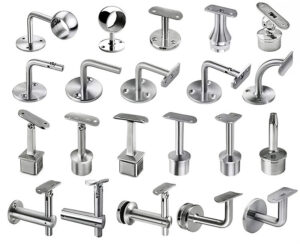
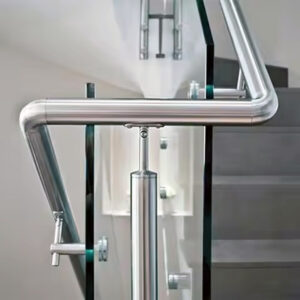
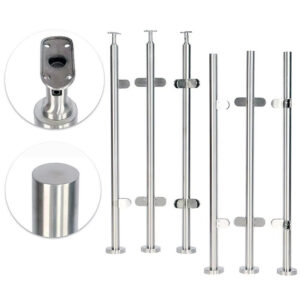
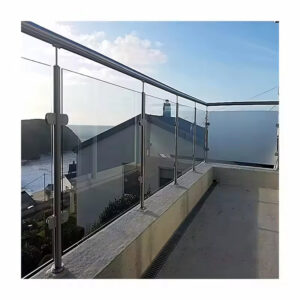
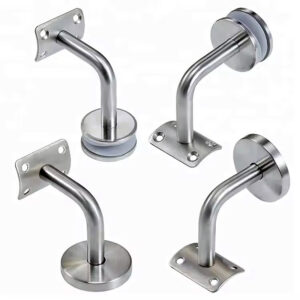
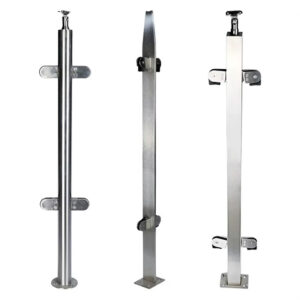
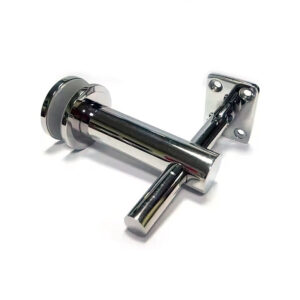
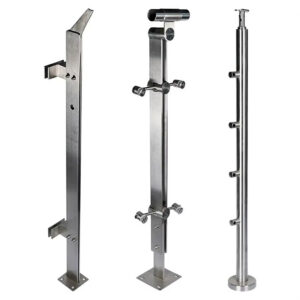
For wall-mounted installations in particular, confirming that the supplier’s scope includes bracket positioning drawings tied to the approved geometry — not just component supply — determines whether you have the information needed for accurate site installation. Mains courantes en acier inoxydable et systèmes de mains courantes à paroi continue illustrate the range of configurations where this coordination check applies, including runs where bracket spacing and wall return geometry are critical to a clean installation.
The readiness test is practical: if a supplier can produce a single quotation document that closes drawing revision status, material grade, finish reference sample status, MOQ, and export packing standard together, the coordination risk is concentrated and auditable. If any of those five elements is deferred to a later conversation, the risk is distributed — and it is most likely to surface at installation.
The most consequential decision in sourcing custom stainless handrails is not choosing between OEM and standard supply — it is confirming, before the order is placed, that the supplier controls the operations the order depends on. In-house welding, polishing, and drawing support are not overhead details; they are the conditions under which batch repeatability and site fit become credible commitments rather than assumptions. A supplier who can close MOQ, drawing revision, grade, finish reference, and packing standard in a single quotation document has demonstrated the coordination capacity the order requires.
What to confirm before committing: the current revision status of the drawings and who approves changes, whether a physical finish control sample has been produced and retained, which operations are performed in-house, what the export packing specification covers in writing, and whether a named project contact will be accountable across the full production cycle. These are not unusual demands — they are the minimum set of confirmations that separate a supplier who can execute the order from one who can only quote it.
Questions fréquemment posées
Q: What happens if the project requires a material certification document — will the manufacturer provide one, and in what format?
A: This depends on the supplier’s documentation scope, which should be confirmed before the order is placed. Standards such as ISO 10474:2013 and EN 10204:2004 define the types of inspection documents available for steel products, ranging from a declaration of compliance to a fully witnessed mill certificate. Ask specifically which document type is available for the grade being supplied, whether it covers the full batch or only a sample, and whether it will be issued by the mill or the fabricator. If a third-party inspection certificate is required for import or project compliance, confirm this requirement in writing before production begins — not as a post-shipment request.
Q: If the supplier passes all five readiness checks but the first batch still arrives with dimensional drift, what is the practical recourse?
A: The recourse depends on what was documented before production began. Where a drawing revision is on record, a finish control sample was retained, and packing specifications were agreed in writing, you have a reference set against which non-conformance is measurable and attributable. A supplier operating under ISO 9001:2015 must have a documented non-conformance handling procedure, which gives you a process to invoke. Without those pre-production records, a dispute over dimensional drift or finish inconsistency becomes a matter of assertion rather than evidence — and resolving it at that stage is slow and costly. The readiness checks are also your evidence trail if the order needs to be contested.
Q: Is it worth requesting OEM supply for a small or one-off project, or does the drawing and sample cycle only make sense above a certain order size?
A: OEM supply is most justified when geometry, finish, or branding cannot be met by a standard catalog system — not primarily by order size. The drawing revision cycle and sample qualification steps carry a fixed time cost regardless of quantity, so on a small order that cost is proportionally heavier. If the project requires non-standard bracket spacing, a specific wall return geometry, or a finish that must match existing installed work, OEM is the correct path even at low volume. If standard profiles and catalog fittings close the gap, standard supply is faster and avoids the pre-production overhead. The decision criterion is whether the detail requirements can be met without custom drawings, not whether the order is large enough to justify them.
Q: How does phased project delivery affect MOQ terms — does each phase need to meet the minimum independently?
A: This is a negotiation point that must be resolved explicitly before the order structure is agreed, because supplier policies vary. Some manufacturers apply MOQ per product line across the full order, which allows phases to be sequenced without each one independently meeting the threshold. Others apply MOQ per shipment, which creates either a surplus inventory problem on early phases or a constraint on how phases can be split. If the project has tight site access windows or staged installation, ask the supplier to confirm in writing whether MOQ applies per order, per shipment, or per product line — and model the surplus and storage implications for each phase before committing to the phasing structure.
Q: If a sample is approved but the named project manager changes between sample sign-off and batch production, what controls prevent the approved reference from being lost?
A: Personnel continuity is a real failure risk, and the control for it is documentation rather than individual accountability. The approved finish control sample should be physically retained at the factory and referenced by a document number tied to the order, not held informally by the project manager. Drawing revision status should be logged in a system that survives personnel changes, not managed through email chains with a single contact. When confirming supplier readiness, ask where the approved sample is stored, how drawing revisions are recorded, and what happens to that documentation if the assigned contact changes. A supplier with a functioning quality management system will have clear answers; one relying on individual continuity will not.