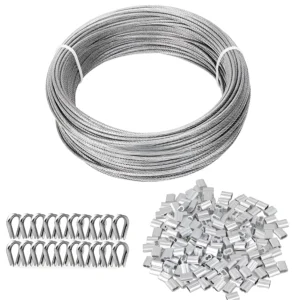
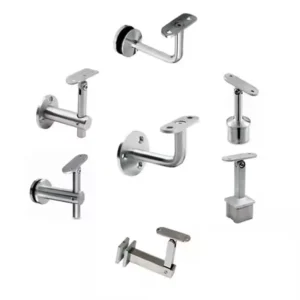
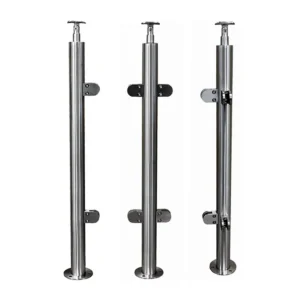
When three OEM/ODM quotes come back for the same railing hardware program at three different totals, the real question is not which number is lowest but whether the three bidders priced the same job. A quote comparison that skips scope equalization rewards whoever excluded the most, not whoever can deliver the specified assembly.
Normalize part numbers, revisions, quantities, materials, and finishes
| Scope element | Project baseline | Quotation entry | Front de décision |
|---|---|---|---|
| Part number | Required part number | Quoted part number | Treat the items as equal only when their identities match |
| Révision | Required drawing or specification revision | Quoted revision | Resolve any revision difference before comparing prices |
| Quantité | Required quantity by part | Quoted quantity by part | Compare totals only on the same quantity basis |
| Matériau | Required stainless steel grade | Quoted grade or substitution | Record any grade substitution as an exception |
| Finition | Required finish | Quoted finish or substitution | Record any finish difference as an exception |
| Interface | Required mating or mounting interface | Quoted interface | Confirm technical equivalence before equalizing price |
| Packing | Required packing specification | Included packing basis | Keep packing requirements aligned in the total |
A quoted price only means something once it is tied to a specific, identified item. Part numbers and drawing revisions exist because the same nominal component can be produced to different geometries, tolerances, or interface details depending on which version of the drawing the bidder worked from. Where a bidder quotes against an older revision, or against a part number that was renamed or split after a design change, the unit price may look competitive while describing a different physical part. This is a common failure point in multi-bidder comparisons because suppliers do not always flag which revision they priced; they price what they were sent, and if the request for quotation itself carried stale references, the quote inherits the error silently.
Quantity basis creates a related distortion. A bidder working from a different quantity breakpoint than its competitors may apply different tooling amortization or batch efficiencies, so a lower unit price can simply reflect a different lot size rather than a more efficient process. The comparison only holds when every bidder is quoting the same part, same revision, and same quantity tier.
Material grade and finish substitutions are where technical equivalence most often breaks silently. A bidder may offer a visually similar finish or a stainless steel grade with different corrosion behavior without stating it as a deviation, particularly if the request for quotation left grade or finish open to supplier recommendation. Where the project specifies a grade for its exposure environment, a quote that substitutes a different grade is not necessarily disqualifying, but it changes what is being compared and must be recorded as a deviation rather than folded into the price.
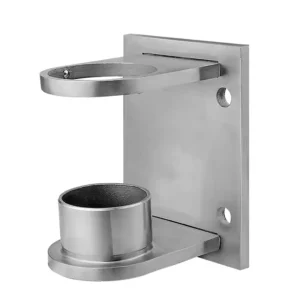
Interface and mounting geometry carry the same risk in railing hardware specifically, because brackets, connectors, and glass hardware depend on precise mating dimensions with adjoining structure. A component that matches on material and finish can still fail to interface correctly if its mounting geometry was quoted against an assumption rather than the confirmed drawing. Packing requirements, while seemingly administrative, affect landed cost and handling risk enough that they belong in the same equalization pass rather than being treated as a delivery afterthought. Before comparing any dollar figures, the buyer needs every bidder’s response mapped against the same baseline for each of these elements, with mismatches flagged rather than absorbed.
Separate tooling, samples, testing, inspection, packaging, and delivery costs
| Cost element | Bidder A | Bidder B | Comparison treatment |
|---|---|---|---|
| Unit price | Amount and pricing basis | Amount and pricing basis | Compare only after technical scope is equalized |
| Tooling | Included, separately priced, or excluded; amount | Included, separately priced, or excluded; amount | Show separately from unit price |
| Samples | Included, separately priced, or excluded; amount | Included, separately priced, or excluded; amount | Compare on the same sample scope |
| Testing | Included, separately priced, or excluded; amount | Included, separately priced, or excluded; amount | Compare on the same testing scope |
| L'inspection | Included, separately priced, or excluded; amount | Included, separately priced, or excluded; amount | Compare on the same inspection scope |
| Documentation | Included, separately priced, or excluded; amount | Included, separately priced, or excluded; amount | Compare on the same document scope |
| Packaging | Included, separately priced, or excluded; amount | Included, separately priced, or excluded; amount | Compare against the same packing requirements |
| Delivery | Included, separately priced, or excluded; amount | Included, separately priced, or excluded; amount | Compare on the same delivery basis |
| Changes | Quoted change-cost basis | Quoted change-cost basis | Record separately from unit price |
Once the technical scope is equalized, the next distortion comes from how each bidder bundles cost categories into or out of the headline unit price. Tooling cost is the clearest example: one bidder may amortize tooling into the per-piece price across the full order quantity, another may quote tooling as a separate line item recovered on a smaller run, and a third may exclude it entirely on the assumption that existing tooling applies. All three approaches can produce different headline unit prices for an identical part, and none of them is wrong on its own; the problem arises only when the buyer compares the headline figures without knowing which basis produced them.
Samples, testing, and inspection follow the same logic. A bidder that includes first-article samples and a defined testing scope in the unit price is quoting a different commitment than one that lists samples and testing as optional add-ons. Where a project requires inspection documentation as a condition of acceptance, a quote that omits inspection cost has not actually priced the job the project needs; it has priced a narrower version of it. Documentation cost behaves similarly, since generating and issuing inspection or material documents is a cost center some bidders absorb and others itemize.
Packaging and delivery costs change with the terms each bidder assumed rather than with the hardware itself, so a comparison needs to confirm whether figures are landed cost or ex-works, and whether packaging matches the specification or an assumed default. Change costs deserve separate tracking because a bidder’s basis for pricing a specification change after award says something about ongoing order risk that a one-time unit price cannot capture.
None of these categories is inherently better handled one way than another; the issue for the buyer is visibility. A lower total that bundles tooling into volume pricing may be better for a program with stable, repeat quantities, while a bidder that separates tooling may better suit a program where quantities are still uncertain. The project information the buyer supplies into a quotation review, including expected order pattern and whether repeat runs are anticipated, shapes which bundling approach actually represents lower total cost rather than lower headline price.
Compare included documents and quality controls line by line
| Item to compare | Bidder commitment to record | Ce qu'il établit | Boundary before award |
|---|---|---|---|
| Quality-management credential | Standard and certification status claimed | Supplier-qualification evidence | The ISO 9001 standard identity alone does not establish supplier certification or product conformity |
| Steel inspection document | Inspection-document type promised for delivery | Document type required by the order | Document presence alone does not prove traceability, test validity, grade conformity, or authenticity |
| Testing | Tests included and related documents promised | Quoted testing scope | No test result or conformity conclusion follows until the evidence is reviewed |
| L'inspection | Inspection included and related documents promised | Quoted inspection scope | Do not assume an unquoted control is included |
| Project drawings and specifications | Applicable project documents named in the quote | Technical basis used for the quote | A UFGS-style structure is an example, not a universal requirement |
| Submittals | Submittals included in the quoted document package | Quoted documentation scope | Project-specific requirements govern the required package |
Documents and quality controls are frequently the least visible difference between quotes because they rarely appear as a line item with an obvious price attached, yet they define what the buyer can verify after delivery. A bidder’s claimed quality-management credential, such as a stated ISO 9001 certification, establishes that a management system framework exists at the supplier, but the standard’s identity by itself does not confirm that the certification is current, scoped to the relevant facility, or connected to conformity of the specific parts being quoted. The buyer comparing quotes needs to record what each bidder actually commits to providing as evidence, not just what standard they name.
Steel inspection documentation works on a similar principle. Organisation internationale de normalisation describes categories of inspection documents that a steel product supplier may issue according to the order’s requirements, but the existence of a named document type in a quote does not by itself prove the material is traceable to a verified heat, that any referenced test was performed as described, or that the certificate accompanying a given shipment is authentic. A bidder who commits to a specific inspection-document type is making a narrower and more checkable promise than one who writes “certification provided” without specifying which document class applies.
Testing and inspection scope need the same treatment. Where one bidder quotes a defined testing regime with associated documentation and another quotes testing as a general assurance without specifying what is tested or reported, the two quotes are not offering equivalent evidence even if both use the word “tested.” The gap only becomes visible when the buyer asks each bidder to name the specific tests and the specific documents that accompany them.
Project drawings, specifications, and submittal requirements anchor what documentation is even relevant. A structure like UFGS 05 52 00 illustrates how a project specification can define its own submittal and documentation requirements in detail, but that structure is an example of how a project might organize its requirements, not a universal code that applies by default to every order. Where the governing project specification defines a submittal package, the quote comparison needs to check each bidder’s offered documents against that specific package rather than against a generic assumption of what “complete documentation” should include.
Expose substitutions, assumptions, and exclusions that change technical equivalence
| Exception type | Que faut-il photographier ? | Why it changes the comparison | Resolution before award |
|---|---|---|---|
| Substitution | Exact item, material, finish, or interface offered instead | It may change technical equivalence | Accept, reject, or price against the original requirement |
| Assumption | Exact quantity, scope, pricing, or delivery basis used | Totals may rest on different bases | Replace with the project-confirmed basis or carry the exception explicitly |
| Exclusion | Required item or service left outside the total | A lower total may represent a narrower scope | Add the missing scope and cost or reject the exclusion |
Every quote rests on assumptions the bidder made when information was incomplete, and every quote may contain substitutions offered in place of the literal requirement. The comparison task is not to penalize bidders for making assumptions, since some degree of interpretation is unavoidable when a request for quotation leaves details open, but to make every assumption, substitution, and exclusion explicit so the totals can be compared on the same basis.
A substitution changes the item itself: a different material grade, a different finish, or a different interface offered because it was available, cost less, or was believed to be functionally equivalent. Whether a substitution is acceptable depends entirely on the project’s actual requirement, which means the buyer’s project team, not the bidder, has to make that determination. A substitution that is immaterial for one application can be disqualifying for another, particularly where glass thickness compatibility, load path, or corrosion exposure differs between projects even when the hardware looks similar.
An assumption changes the basis the price was calculated on without changing the item itself: an assumed quantity tier, an assumed delivery incoterm, an assumed packing standard. Assumptions are dangerous specifically because they are often invisible in the quoted number; two bidders can quote the identical part at different prices because one assumed a larger order quantity or a less protective packing method, and nothing in the headline price discloses that difference.
An exclusion removes something the project requires from the quoted total altogether. A lower total built on an exclusion is not a better price; it is an incomplete price, and the comparison is only valid once the excluded scope is added back in, either as cost or as an explicit rejection of that bidder’s scope. Where a bidder’s documentation does not state its assumptions and exclusions clearly, the buyer’s request for clarification is not an adversarial step but the mechanism by which an apparently low quote either holds up or reveals itself as narrower in scope than its competitors.
Score lead time and change support against the order risk
| Decision factor | Project-specific need | Bidder commitment | Risk interpretation |
|---|---|---|---|
| Scope-alignment gate | Equalized technical and evidence scope | Aligned scope or open exceptions | Do not compare schedule or support until the scope is aligned |
| Délai de livraison | Required order timing | Quoted lead time and basis | Evaluate against order risk only on an aligned scope |
| Change cost | Project change exposure | Quoted change-cost basis | Keep separate from unit price |
| Change support | Support needed when requirements change | Quoted support boundary | Score against the project’s change risk |
| Repeat-order support | Project repeat-order need | Quoted repeat-order support | Compare only after technical and evidence scope is aligned |
Lead time and change support are schedule and flexibility questions, and they only become meaningful comparisons once the technical and evidence scope across bidders has been aligned. A shorter lead time quoted against a narrower technical scope, fewer included tests, or an excluded inspection step is not actually a faster delivery of the required part; it is a faster delivery of a different, lighter commitment. Comparing lead times before resolving scope exceptions produces a schedule ranking that does not correspond to the project’s actual risk.
Once scope is aligned, lead time still needs to be read against what it assumes. A quoted lead time built on an assumed tooling lead-in, an assumed material lead time, or an assumed sample-approval cycle changes meaning if any of those assumptions do not hold for the actual order. Where a project’s own schedule has limited tolerance for delay, the buyer needs to know not just the headline lead time but what conditions the bidder’s lead time depends on, since a lead time that holds only under ideal conditions carries different risk than one with contingency built in.
Change cost and change support describe what happens when the order needs to move after award, whether through a specification revision, a quantity adjustment, or a schedule shift. A bidder’s basis for pricing changes says something about how the relationship will behave under the kind of mid-order adjustment that railing hardware programs can encounter when field conditions or architectural drawings are revised after initial award. Repeat-order support matters on a different axis: a program expected to reorder benefits from understanding, up front, how a bidder handles repeat runs of the same part, including whether tooling retained from the first order carries forward.
None of these factors should be weighted before the scope-alignment step is complete, because a bidder offering stronger change support or shorter lead time against a narrower technical scope is not necessarily the lower-risk choice. The order risk a project actually carries depends on matching schedule and flexibility commitments to the same equalized scope used for the earlier cost and document comparisons.
Award on an equalized scope with exceptions resolved
An award decision only has integrity once the preceding steps have converged: the technical scope normalized to the same parts, revisions, and quantities; cost categories separated so the comparison is unit price against unit price rather than bundled total against bundled total; documents and quality controls checked against what each bidder specifically commits to rather than what standards they merely reference; every substitution, assumption, and exclusion logged and resolved as accepted, rejected, or priced; and lead time and change support scored only after that scope alignment is in place.
At that point, the remaining decision is which equalized bid best serves the project’s specific priorities, and the inputs that matter are the ones the project team already holds: which deviations are acceptable for the application, how much schedule risk the project can absorb, and how much weight repeat-order flexibility carries against a one-time program. Where a project is a single order with no anticipated repeat runs, a bidder’s tooling amortization approach or repeat-order support may matter less than its documented testing and inspection scope. Where a project anticipates recurring orders across a longer relationship, the same bidder’s change-cost basis and repeat-order terms may carry more weight than a marginal difference in the initial unit price.
The exceptions resolved earlier in the comparison should be closed out explicitly before award rather than carried forward as open questions, since an unresolved substitution or assumption at the point of award becomes a dispute at the point of delivery. Hardware specified for a railing or glass assembly depends on its mounting geometry and interfaces matching the surrounding structure, and a technical exception left unresolved at award is the same exception the installer encounters on site. Coordinating that confirmed, equalized scope with the supplier’s own configuration and documentation process is what allows the awarded quote to translate into the part that actually arrives.
Questions fréquemment posées
Q : What should I send bidders so their OEM/ODM railing hardware quotes start from the same scope?
A : Issue one controlled schedule that identifies each part number, drawing or specification revision, quantity, stainless steel grade, finish, interface, and packing requirement. Also state the required samples, testing, inspection, documents, delivery basis, and change-cost basis so bidders can price the same package.
Q : Can I compare a lower quote if it includes a different material, finish, or mounting interface?
A : Not as a like-for-like price until the difference is resolved. Record the exact substitution, decide whether it is acceptable for the project, and either compare it on an approved adjusted basis or request pricing against the original requirement.
Q : Does an ISO 9001 reference or a steel inspection document prove that the quoted hardware conforms?
A : No. A standard reference does not by itself establish supplier certification or product conformity, and the presence of an inspection document does not by itself prove traceability, test validity, grade conformity, or authenticity; verify the claimed status and review the promised evidence against the order requirements.
Q : How should I treat required services or documents that one bidder excludes from its total?
A : Treat them as an open scope exception, not as a saving. Add the missing required scope and its cost to the evaluation or reject the exclusion before comparing the evaluated totals.
Q : When should lead time and repeat-order support affect the award decision?
A : Compare them after the technical scope, evidence package, and cost basis are aligned. Then assess each bidder’s stated lead-time basis, change-support boundary, and repeat-order support against the project’s actual timing and change risk.