Tensores y tensores
Tensores y tensores
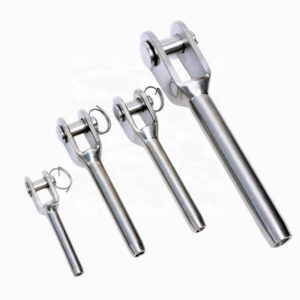
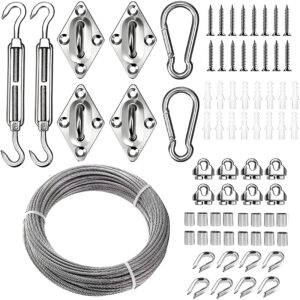
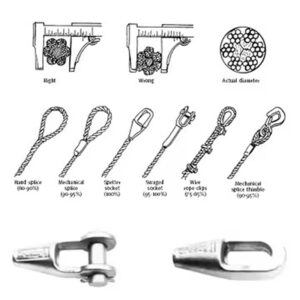
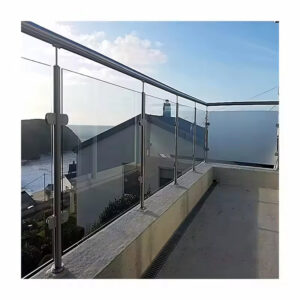
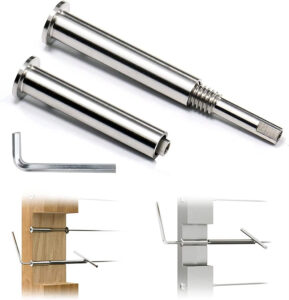
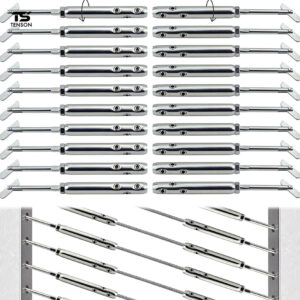
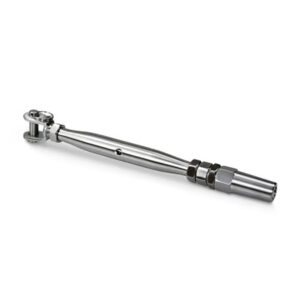
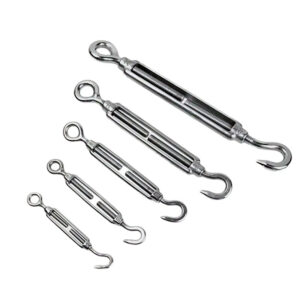
Los tensores y tensores de cable ESANG se utilizan para ajustar y mantener la tensión de los cables en los sistemas de barandillas de cable de acero inoxidable. Ayudan a mantener las líneas de cable alineadas en escaleras, cubiertas, balcones, terrazas y proyectos de barandillas arquitectónicas.
Esta categoría incluye Sistemas tensores de cables, Tensores de cable ajustables, Tensores de alta resistencia, Tensores de cable multiángulo, y Tensores de cable sin tuerca.
En el caso de los contratistas, distribuidores, fabricantes y responsables de compras de proyectos, a la hora de seleccionar un tensor de cable se deben tener en cuenta el diámetro del cable, el rango de ajuste, el estado de los bornes, el ángulo del cable, el tipo de accesorio, el método de montaje (con prensado o sin prensado), la calidad del material, el acabado y el entorno de instalación. ESANG puede suministrar y fabricar accesorios de tensado de cables de acuerdo con los planos, el tamaño del cable, la calidad del material, los requisitos de acabado y las condiciones de instalación del proyecto.
Opciones de tensores de cable y tensores de tornillo
| Opción de tensado | Ideal para | Preguntas clave para la selección |
|---|---|---|
| Sistemas tensores de cables | Conjuntos generales de barandillas de cable que requieren un ajuste de la tensión y una alineación de los cables | ¿Qué diámetro de cable, estado del poste, punto de tensado y rango de ajuste se requieren? |
| Tensores de cable ajustables | Proyectos que requieran ajustes sobre el terreno, ajustes de precisión o controles repetidos de la tensión | ¿Qué grado de ajuste se necesita y desde dónde se podrá acceder al tensor? |
| Tensores de alta resistencia | Tramos más largos, instalaciones al aire libre, barandillas de cable para uso comercial y condiciones de tensión más exigentes | ¿Qué calibre de cable, longitud del tendido, resistencia de los postes y exposición ambiental deben tenerse en cuenta? |
| Tensores de cable multiángulo | Barandillas de escaleras, tramos en ángulo, esquinas y trazados de cable no rectos | ¿Qué ángulo del cable, qué inclinación de la escalera, qué dirección de la esquina y qué articulación del accesorio se requieren? |
| Tensores de cable sin tuerca | Proyectos en los que se prefiere el tensado de cables sin la preparación tradicional de terminales prensados | ¿Qué diámetro de cable, método de montaje, herramientas de instalación y rango de ajuste se requieren? |
Cómo elegir tensores de cable
Los tensores de cable deben seleccionarse en función del lugar en el que se vaya a ajustar el cable y del trazado del mismo. Un tramo recto en un balcón, un tramo en una escalera y una esquina pueden requerir diferentes detalles de tensado.
| Estado del proyecto | Dirección recomendada | Por qué es importante |
|---|---|---|
| El recorrido del cable es recto y sencillo | Utilice sistemas de tensores de cable estándar o tensores de cable ajustables | Los tensores estándar permiten un ajuste controlado en tramos de cable rectos habituales. |
| El proyecto requiere algunos ajustes durante la instalación. | Utiliza tensores de cable ajustables con una rosca o un rango de ajuste adecuados | El ajuste in situ permite alinear los tendidos de cable y corregir las tolerancias de instalación. |
| El recorrido del cable es más largo o más complicado | Utiliza tensores de alta resistencia o accesorios de tensado homologados para el proyecto | Las carreras más largas pueden requerir un mayor rango de ajuste y un soporte final más resistente. |
| El cable sigue el trazado de las escaleras o los tramos en ángulo | Utiliza tensores de cable multiángulo o accesorios compatibles con diferentes ángulos | Los tramos de cable en ángulo requieren una articulación y una alineación correctas en la conexión al poste. |
| El proyecto prescinde del estampado tradicional | Utiliza tensores de cable sin muelle cuando sea adecuado. | Los tensores sin tuerca pueden simplificar el montaje, pero deben ser compatibles con el cable y el método de instalación. |
| El proyecto es al aire libre, en la costa, junto a una piscina o en un entorno húmedo | Ten en cuenta los tensores de acero inoxidable 316 y los requisitos de mantenimiento adecuados | La resistencia a la corrosión es más importante en entornos húmedos o expuestos al cloruro. |
Ubicación del tensor y trazado del cable
La ubicación del tensor influye en el acceso para la instalación, el aspecto, el ajuste y el mantenimiento. Los tensores suelen colocarse cerca de los postes terminales, los postes de extremo o los puntos de ajuste designados a lo largo del tramo de barandilla de cable.
| Factor de diseño | Qué hay que confirmar | Hardware relacionado |
|---|---|---|
| Ubicación del poste terminal | Dónde empieza, termina y se tensa el cable | Tensores de cable, tensores de varilla, accesorios de extremo, herrajes para bornes |
| Acceso a los ajustes | Si se puede acceder al tensor tras la instalación | Tensores ajustables, tensores a la vista, herrajes de tensado ocultos |
| Ángulo del cable | Dirección del cable: recta, en escalera, en ángulo o en esquina | Tensores multiángulo, herrajes para postes de esquina, accesorios compatibles con ángulos |
| Longitud del tendido del cable | Distancia entre los puntos terminales y rango de ajuste necesario | Tensores de alta resistencia, tensores ajustables, terminales para cables |
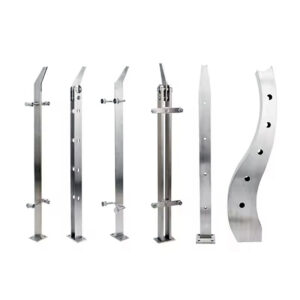
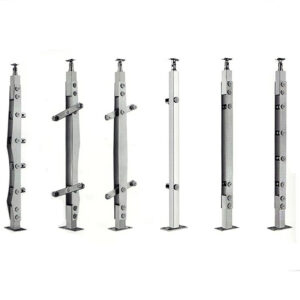
| Diseño de la publicación | Postes redondos, cuadrados, rectangulares, de extremo o de esquina | Accesorios de paso, accesorios de montaje en superficie, conectores de terminales |
Tensores de tornillo, tensores ajustables y tensores sin engaste
Los accesorios de tensado deben seleccionarse en función del método de instalación y de las necesidades de ajuste. Los distintos tipos de tensores pueden parecer similares, pero requieren una preparación del cable y una secuencia de instalación diferentes.
| Tipo de tensado | Función principal | Aspectos generales a tener en cuenta |
|---|---|---|
| Sistemas tensores de cables | Permite ajustar la tensión general de los cables en los tramos de barandilla | Diámetro del cable, estado del poste, rango de ajuste y acceso para la instalación |
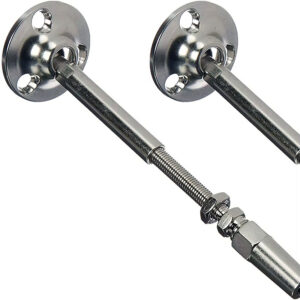
| Tensores de cable ajustables | Permite realizar ajustes precisos durante o después de la instalación | Longitud de la rosca, rango de ajuste, método de bloqueo y visibilidad |
| Tensores de alta resistencia | Proporcionar herrajes de tensado más resistentes o más visibles para diseños exigentes | Longitud del tendido del cable, resistencia de los postes, estado de los terminales y entorno del proyecto |
| Tensores de cable multiángulo | Admite tendidos de cable en ángulo o no rectos | Rango de ángulos, inclinación de los peldaños, estado de las esquinas y articulación de los elementos de unión |
| Tensores de cable Swageless | Permite el tensado sin necesidad de la preparación tradicional de los terminales prensados | Compatibilidad de los cables, secuencia de montaje, experiencia del instalador y método de ajuste |
Materiales, acabados y fabricación a medida
Los tensores y tensores de cable de ESANG pueden suministrarse o fabricarse según los requisitos del proyecto, incluyendo el diámetro del cable, las características de la rosca, el rango de ajuste, el tipo de conexión en los extremos, la calidad del material, el acabado superficial y los requisitos de embalaje.
| Material o acabado | Uso habitual | Notas |
|---|---|---|
| Acero inoxidable 304 | Sistemas de barandillas con cable para interiores, interiores comerciales, escaleras residenciales y entornos secos | Una opción habitual en muchos proyectos de barandillas de cable para interiores. |
| Acero inoxidable 316 | Barandillas de cable para exteriores, proyectos costeros, zonas junto a piscinas, cubiertas, terrazas y entornos húmedos | Se suele preferir cuando se requiere una mayor resistencia a la corrosión. |
| Acero inoxidable 316L | Proyectos que requieren una mejor soldabilidad o un comportamiento frente a la corrosión más exigente | Adecuado cuando las especificaciones exigen acero inoxidable con bajo contenido en carbono. |
| Acabado cepillado o satinado | Barandillas de cable para uso comercial, terrazas, balcones y la mayoría de los proyectos arquitectónicos de barandillas de cable | Ayuda a disimular las pequeñas marcas de uso y las huellas dactilares. |
| Pulido espejo | Aplicaciones decorativas o de alta gama | Ofrece un aspecto más brillante, pero requiere un manejo y una limpieza más cuidadosos. |
Para proyectos de barandillas de cable que se salgan de lo habitual, los clientes pueden facilitar planos, el diámetro del cable, el tipo de poste, las condiciones de los extremos, la ubicación de la tensión, el rango de ajuste, los requisitos de acabado y el entorno del proyecto. ESANG puede analizar los requisitos y fabricar los herrajes de tensión del cable para que se ajusten a las especificaciones del proyecto, siempre que sea posible.
Compatibilidad con los herrajes y postes de los cables
Los tensores y los tensores de cable deben seleccionarse junto con los accesorios para cables, los remates, los postes y los herrajes de paso. Un tensor solo funciona como parte de un conjunto completo de barandilla de cable.
- Para la selección general de accesorios, combine los tensores con Accesorios para cables.
- Para la terminación del cable, ponte en contacto con Terminales de cable.
- Para el paso de cables por los postes, consulte Herrajes pasantes y el trazado de los agujeros para los postes.
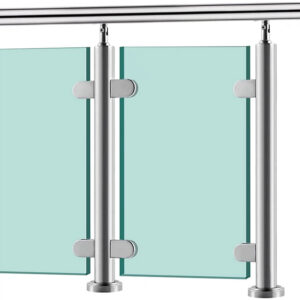
- En el caso de los sistemas de cable con soportes en postes, coordínese con Postes de acero inoxidable, postes de extremo, postes intermedios y postes de esquina.
- Para tramos más largos o para reforzar el espaciado, consulta Barras separadoras de cables cuando sea necesario.
Adaptación a los requisitos del proyecto
Muchos proyectos de tensores de cable se personalizan en función del diámetro del cable, la disposición de los postes, la dirección del cable, el estado de los terminales, el rango de ajuste y el entorno de instalación. ESANG puede ofrecer sistemas de tensores de cable a medida, tensores de cable ajustables, tensores de alta resistencia, tensores de cable multiángulo y tensores de cable sin engarce.
Cuando un proyecto presenta requisitos basados en normas en relación con la altura de las barandillas, la separación entre cables, las limitaciones de abertura, la calidad de los materiales, la resistencia a la corrosión o el método de instalación, los clientes deben facilitar los planos y las especificaciones requeridos. ESANG puede fabricar componentes de tensado de cables que se ajusten a los detalles facilitados, si bien el cumplimiento final depende del sistema instalado en su totalidad, del diseño estructural, del método de instalación y de la normativa local aplicable.
Consideraciones sobre la instalación y el proyecto
Los accesorios de tensado de los cables deben revisarse como parte del diseño completo de la barandilla de cables. Antes de la fabricación o del pedido, deben comprobarse la longitud de los cables, la distancia entre los postes, el estado de los terminales y la facilidad de acceso para su ajuste.
- Diámetro y estructura del cable
- Ubicación de los postes terminales y de los postes de extremo
- Tipo de tensor y rango de ajuste
- Método de montaje con o sin prensado
- Detalles de la rosca, conexión final y método de fijación
- Ángulo de la escalera, disposición en esquina o tramo recto
- Tipo de poste, disposición de los agujeros para los postes y dirección del cable
- Calidad del material para entornos interiores, exteriores, costeros o junto a piscinas
- Requisitos del código de construcción local y de las especificaciones del proyecto
En el caso de proyectos de barandillas de cable para terrazas, balcones, escaleras y zonas de acceso público, el sistema completo una vez instalado debe ser revisado por el diseñador del proyecto, el ingeniero, el contratista o la autoridad local. ESANG puede fabricar los accesorios de tensado que se ajusten a los requisitos especificados, pero el cumplimiento definitivo depende del montaje completo y de las condiciones in situ.
Escenarios de aplicación
Barandillas de cable para terrazas y balcones
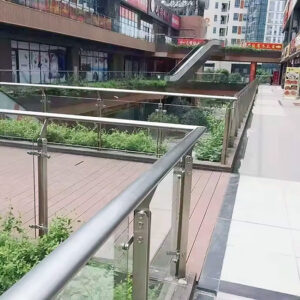
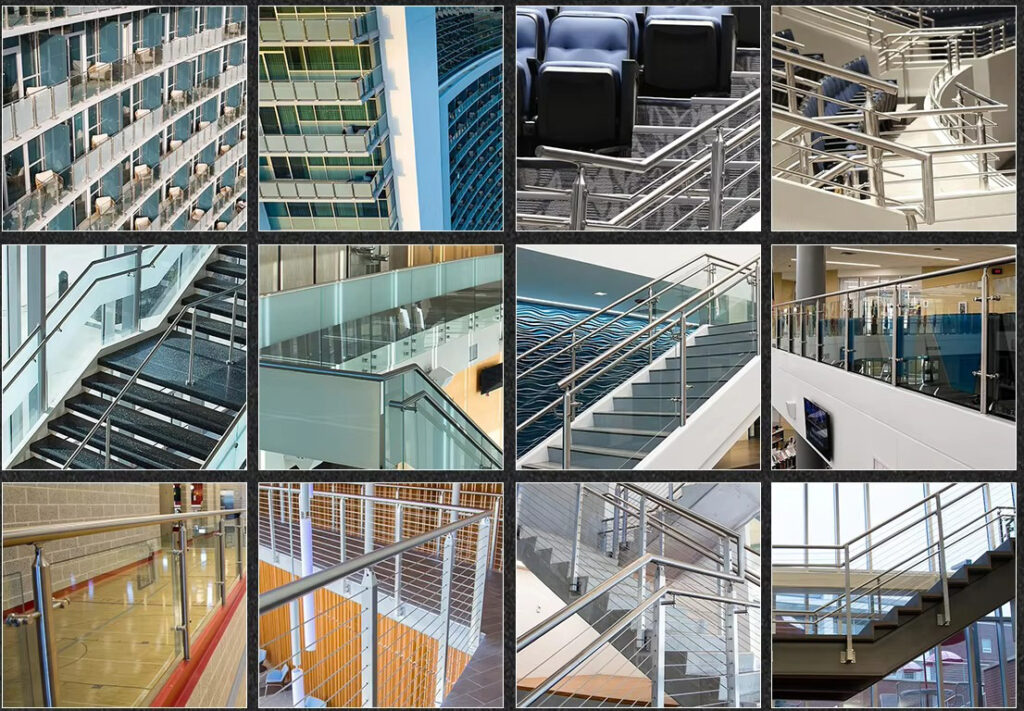
Los tensores de cable se utilizan habitualmente en los sistemas de barandillas de terrazas y balcones para mantener la alineación de los cables a lo largo de los tramos horizontales. Antes de realizar el pedido, es necesario confirmar la longitud del cable, la distancia entre los postes y el estado de los postes terminales.
Barandillas de cable para escaleras
Las barandillas de cable para escaleras pueden requerir tensores multiángulo o accesorios compatibles con diferentes ángulos. Es necesario analizar conjuntamente la inclinación de la escalera, la disposición de los postes y la dirección del cable.
Sistemas de barandillas de cable para uso comercial
En edificios comerciales, oficinas, espacios públicos y proyectos del sector hotelero se pueden utilizar tensores de cable y tensores de rosca para realizar instalaciones de barandillas de cable limpias y repetibles, con un acabado uniforme y fácil acceso para los ajustes.
Barandillas de cable para exteriores y zonas costeras
Los entornos al aire libre, junto a piscinas, costeros y húmedos requieren prestar mayor atención a la resistencia a la corrosión, la limpieza y la calidad del material. Para condiciones de exposición más exigentes, se puede considerar el uso de acero inoxidable 316 o 316L.
Conjuntos de barandillas de cable a medida
Los proyectos a medida pueden requerir longitudes específicas de los tensores, detalles de roscado, conexiones en los extremos, movimiento en múltiples ángulos o métodos de montaje sin prensado. Los planos y las condiciones de instalación ayudan a confirmar que se utilicen los herrajes adecuados.
Categorías de productos relacionados
- Sistemas tensores de cables
- Tensores de cable ajustables
- Tensores de alta resistencia
- Tensores de cable multiángulo
- Tensores de cable sin tuerca
- Accesorios para cables
- Terminales de cable
- Herrajes pasantes
- Postes de acero inoxidable
Preguntas frecuentes
¿Para qué sirven los tensores de cable?
Los tensores de cable se utilizan para ajustar y mantener la tensión en los sistemas de barandillas de cable de acero inoxidable. Ayudan a mantener las líneas de cable alineadas y a reducir la holgura a lo largo de los tramos de barandilla.
¿Cuál es la diferencia entre un tensor de cable y un tensor de tornillo?
Un tensor de cable es cualquier elemento de fijación que se utiliza para ajustar la tensión de un cable. Un tensor de cable es un tipo específico de dispositivo de tensión ajustable. La elección adecuada depende del diámetro del cable, el estado del poste, la visibilidad, el rango de ajuste y la disposición del proyecto.
¿Cuándo deben utilizarse los tensores de cable ajustables?
Los tensores de cable ajustables resultan útiles cuando es necesario ajustar con precisión la tensión del cable durante la instalación o el mantenimiento. Se suelen utilizar cerca de los bornes o de los puntos de tensión designados.
¿En qué casos conviene utilizar tensores de alta resistencia?
Se puede considerar el uso de tensores de alta resistencia para tramos de cable más largos, sistemas comerciales, barandillas exteriores o proyectos que requieran herrajes de tensado visibles más resistentes. Se deben evaluar conjuntamente el diámetro del cable, la resistencia del poste y la longitud del tramo.
¿En qué casos resultan útiles los tensores de cable multiángulo?
Los tensores de cable multiángulo resultan útiles para escaleras, tramos de cable en ángulo, esquinas y diseños de barandillas no rectilíneos en los que la dirección del cable no forma un ángulo recto simple con el poste.
¿Qué son los tensores de cable sin casquillo?
Los tensores de cable sin engaste están diseñados para tensar el cable sin necesidad de la preparación tradicional de los terminales engastados. Permiten el montaje in situ cuando el diámetro del cable y el método de instalación se ajustan al diseño del accesorio.
¿Puede ESANG personalizar los tensores de cable y los tensores de varilla?
Sí. ESANG puede fabricar tensores de cable, tensores ajustables, tensores de tornillo, accesorios multiángulo y tensores sin engaste según el diámetro del cable, las especificaciones de la rosca, el tipo de material, el acabado y los planos del proyecto.
¿Debería elegir tensores de cable de acero inoxidable 304 o 316?
El acero inoxidable 304 se utiliza habitualmente en interiores y entornos secos. El acero inoxidable 316 suele ser la opción preferida para entornos exteriores, costeros, junto a piscinas, húmedos o con mayor riesgo de corrosión. El tipo definitivo debe seleccionarse en función de la exposición del proyecto y de las especificaciones.
¿Qué datos hay que facilitar para solicitar información sobre un tensor de cable?
Entre la información útil se incluyen el diámetro del cable, la disposición del cable, el tipo de poste, la distancia entre postes, el estado de los terminales, el tipo de tensor, el rango de ajuste, la calidad del material, el acabado, la cantidad, los planos y el entorno del proyecto.
¿Cómo se deben mantener los tensores de cable de acero inoxidable?
Para la limpieza habitual se suele utilizar un detergente suave y agua limpia.
Related Posts:
Replacing Core-Mounted Posts With Surface Bases: Precheck
Check the existing opening, slab condition, edge geometry, drainage, and revised load path before converting an embedded post to a surface base.
Railing Post Base RFQ Checklist for Project Buyers
Request comparable base hardware, substrate inputs, finishes, drawings, anchor boundaries, samples, and inspection documents in one project RFQ.
Adjustable Railing Post Bases for Sloped or Uneven Surfaces
Compare adjustable bases against the actual slope, bearing surface, leveling range, finish interface, and fixing access before selecting a detail.
Railing Post Base Anchors: Inputs for Engineering Review
Define substrate, geometry, loads, exposure, and anchor evidence before engineering review so a hardware label is not mistaken for a connection design.
Planos de las placas base de los postes de barandilla: orificios, bordes y tolerancias
Proporcione a los fabricantes e instaladores un plano de la placa base que especifique los centros de los orificios, los bordes de la placa, el acceso para las herramientas y las tolerancias acordadas antes de la producción.
Gama de soportes de pared ESANG: estándar, de alta resistencia, ajustables y empotrados
Adapta las opciones de soportes de pared estándar, de alta resistencia, ajustables y empotrados a las necesidades de saliente, espesor de la pared, acceso, acabado y documentación del proyecto.
Proyectos de Esang

Certificado de Esang

Foshan ESANG Metal Products se enorgullece de mantener Certificación CE (Verificación n.º TD32772401) en virtud de la Directiva sobre productos de construcción (Reglamento n.º 305/2011), lo que afirma nuestro compromiso con los más altos estándares europeos de seguridad y calidad.
Gama de productos certificados:
Nuestra amplia gama de herrajes para barandillas, que incluye abrazaderas de vidrio, tensores, soportes, soportes de pared, zapatas, herrajes para pasamanos, herrajes para cables y componentes para postes, satisface los requisitos más exigentes. EN1906:2012 garantizando la integridad estructural y la fiabilidad del rendimiento en todas las instalaciones.
Qué significa esto para su proyecto:
✓ Cumplimiento total de la normativa para los mercados europeos e internacionales
✓ Rendimiento de seguridad y durabilidad verificado de forma independiente.
✓ Soporte de documentación para las especificaciones arquitectónicas
✓ Tranquilidad gracias a la garantía de calidad de terceros
Certificación válida hasta 2027 | Informe de pruebas: CE-FE24122001-CY
Proyectos de Esang

Productos de referencia