Sistemas de zapatas base
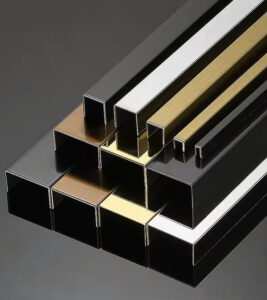
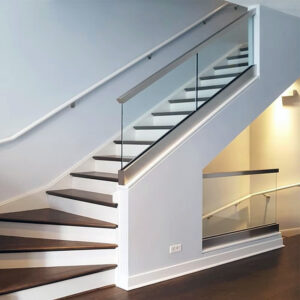
Sistemas de zapatas base
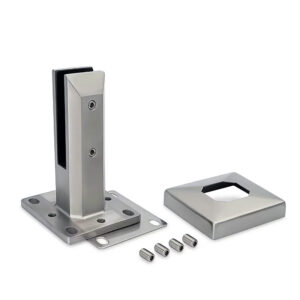
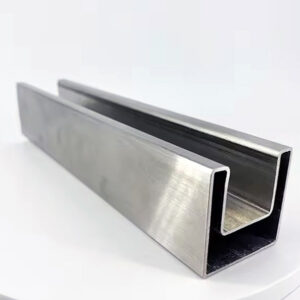
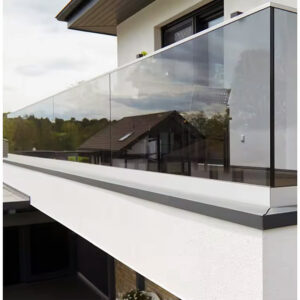
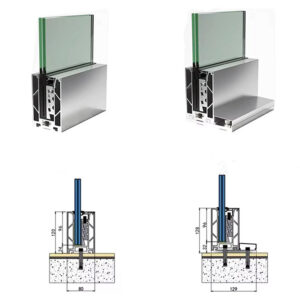
Los sistemas de zócalos ESANG se utilizan para sujetar los paneles de vidrio desde la parte inferior en barandillas de vidrio sin marco o semisín marco. Proporcionan un soporte continuo en forma de canal, en lugar de utilizar abrazaderas individuales para vidrio, postes o soportes independientes.
Esta categoría incluye Canales para zapatos con base de cristal, Perfiles en U de acero inoxidable, Raíles de base de vidrio estructural, y Canales de cristal empotrados.
Para contratistas, distribuidores, fabricantes y responsables de compras de proyectos, a la hora de seleccionar los zócalos de base se deben tener en cuenta el grosor y la altura del vidrio, el perfil del canal, la superficie de montaje, el drenaje, la junta o el material de fijación, si la instalación es vista o empotrada, la calidad del material, el acabado de la superficie y el entorno del proyecto. ESANG puede suministrar y fabricar zócalos de base y componentes de canal en U de acuerdo con los planos, las dimensiones, los requisitos de acabado y las condiciones de instalación.
Opciones del sistema de suela
| Opción de zapata base | Ideal para | Preguntas clave para la selección |
|---|---|---|
| Canales para zapatos con base de cristal | Sistemas de barandillas de cristal con soporte inferior continuo para balcones, terrazas, espacios comerciales y aplicaciones de cristal sin marco | ¿Qué grosor de cristal, tamaño de canal, superficie de montaje, drenaje y acabado se requieren? |
| Perfiles en U de acero inoxidable | Canales con fondo de cristal, soporte para bordes, alineación de cristales y conjuntos de canales de acero inoxidable seleccionados | ¿Qué datos se necesitan sobre el perfil en U, el ajuste del cristal, la junta, el tapón y el conector? |
| Raíles de base de vidrio estructural | Sistemas de barandillas de cristal que requieren un soporte de base continuo más resistente o un análisis estructural específico para el proyecto | ¿Qué aspectos se deben revisar en cuanto a la altura del vidrio, el perfil del riel, el estado del sustrato y las especificaciones del proyecto? |
| Canales de cristal empotrados | Proyectos que requieren un aspecto más limpio de la base empotrada o de perfil bajo | ¿El canal quedará empotrado en el suelo, instalado a ras de las superficies acabadas o cubierto por los materiales circundantes? |
Cómo elegir un sistema de suela
Los sistemas de zócalos deben seleccionarse en función de cómo se sujeta el vidrio por la parte inferior. Tanto los perfiles continuos como los perfiles en U, los rieles estructurales y los perfiles empotrados pueden sujetar el vidrio desde abajo, pero difieren en cuanto a su aspecto, los preparativos de instalación, el drenaje y los requisitos de soporte.
| Estado del proyecto | Dirección recomendada | Por qué es importante |
|---|---|---|
| El proyecto requiere una barandilla de cristal sin marco con soporte inferior continuo | Utiliza rieles para zapatos con base de cristal | Un canal continuo puede crear un aspecto limpio y sin marcos, además de proporcionar un soporte inferior uniforme. |
| El cristal necesita un perfil inferior de acero inoxidable o un soporte en los bordes | Utiliza perfiles en U de acero inoxidable | Los perfiles en U sirven para fijar los paneles de vidrio y se pueden combinar con tapones, conectores y piezas de esquina. |
| El proyecto requiere un análisis más exhaustivo de los fundamentos | Utilizar rieles de base de vidrio estructural o un diseño de rieles de base específico para el proyecto | Se deben comprobar conjuntamente la altura del vidrio, la disposición de los paneles, el sustrato y los requisitos del proyecto. |
| El proyecto requiere una base empotrada o de perfil bajo | Utiliza perfiles de cristal empotrados | La instalación a ras requiere una preparación minuciosa del suelo, un buen sistema de desagüe y una planificación adecuada del acabado de la superficie. |
| El proyecto utiliza puntos de apoyo individuales en lugar de un canal continuo | Considera la posibilidad de utilizar grifos o separadores de cristal en lugar de sistemas de zócalos | Los soportes y los separadores resuelven distintos problemas de montaje y aportan un estilo visual diferente. |
| El proyecto es al aire libre, junto a la piscina, en la costa o en un entorno húmedo | Revisar el tipo de material, el drenaje, los elementos de fijación, los detalles de instalación y el acceso para el mantenimiento | La gestión del agua y la resistencia a la corrosión cobran mayor importancia en entornos expuestos. |
Diferencias entre zócalos, perfiles en U y montajes empotrados
Tanto los sistemas de zócalos como los sistemas de perfil en U sostienen el vidrio desde la parte inferior, pero no siempre se trata del mismo producto. La elección adecuada depende de la altura del vidrio, los requisitos de soporte, el aspecto y el método de instalación.
| Tipo de sistema | Función principal | Aspectos generales a tener en cuenta |
|---|---|---|
| Canaleta para zócalos de cristal | Proporciona un soporte inferior continuo para los paneles de barandilla de cristal | Espesor del vidrio, método de fijación, tamaño del canal, sustrato, drenaje y acabado a la vista |
| Perfil en U de acero inoxidable | Sirve de soporte o sujeción para el cristal en la parte inferior o en los bordes | Perfil del canal, ajuste del cristal, junta, tapón, conector de esquina y método de instalación |
| Riel de base de cristal estructural | Ofrece un soporte de base continuo más resistente o específico para cada proyecto | Altura del vidrio, revisión estructural, fijación de la base, disposición de los anclajes y especificaciones del proyecto |
| Canal de cristal empotrado | Crea un efecto de base de cristal empotrada o de perfil bajo | Hueco en el suelo, impermeabilización, acceso para la limpieza, desagüe y coordinación de la superficie acabada |
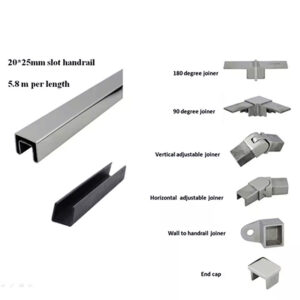
| Tapones y conectores para canales | Acabar, unir o doblar perfiles en U | Longitud del tramo, geometría de las esquinas, estado de los extremos, acabado y secuencia de montaje |
Cuándo utilizar una zapata en lugar de espigas o abrazaderas
Los sistemas de zócalo suelen elegirse cuando el proyecto requiere un soporte inferior continuo y una línea de cristal limpia y sin marcos. Los espigones, los separadores y las abrazaderas pueden ser más adecuados cuando el proyecto requiere puntos de soporte individuales, montaje lateral o cristal con soporte en postes.
| Enfoque de hardware | Uso habitual | La mejor opción |
|---|---|---|
| Sistemas de suela | Barandilla de cristal sin marco con soporte inferior continuo | Balcones, interiores comerciales, terrazas y largas barandillas de cristal |
| Grifos de cristal | Vidrio con soporte inferior y puntos de apoyo individuales | Vallas para piscinas, cristaleras para terrazas y diseños abiertos sin marcos |
| Separadores de cristal | Cristal montado lateralmente con desplazamiento visible | Diseños de vidrio para escaleras, vidrio para montaje en pared, vidrio para montaje en cornisa y vidrio suspendido |
| Abrazaderas de vidrio | Vidrio fijado a postes, paredes o soportes planos | Barandillas de cristal con postes de soporte, cristales para escaleras y barandillas de balcón con herrajes de sujeción a la vista |
Materiales, acabados y fabricación a medida
Los sistemas de zócalos y los perfiles en U de ESANG pueden fabricarse de acuerdo con los requisitos de cada proyecto, incluyendo el perfil del canal, la longitud de la sección, el grosor del vidrio, el tipo de conector, el diseño de los tapones de los extremos, los detalles de las esquinas, la calidad del material, el acabado de la superficie y los requisitos de embalaje.
| Material o acabado | Uso habitual | Notas |
|---|---|---|
| Acero inoxidable 304 | Barandillas de cristal para interiores, interiores comerciales, proyectos residenciales y entornos secos | Una opción habitual para muchas aplicaciones de canales de vidrio en interiores. |
| Acero inoxidable 316 | Barandillas de cristal para exteriores, zonas junto a la piscina, balcones, terrazas y ambientes húmedos | Se suele preferir cuando se requiere una mayor resistencia a la corrosión. |
| Acero inoxidable 316L | Proyectos que requieren una mejor soldabilidad o un comportamiento frente a la corrosión más exigente | Adecuado cuando las especificaciones exigen acero inoxidable con bajo contenido en carbono. |
| Acabado cepillado o satinado | Sistemas de barandillas de cristal para uso comercial, perfiles para balcones y la mayoría de aplicaciones arquitectónicas | Ayuda a reducir la visibilidad de las huellas dactilares y las pequeñas marcas de uso. |
| Pulido espejo | Interiores decorativos, hoteles, villas y aplicaciones visuales premium selectas | Aporta un aspecto brillante, pero requiere un manejo y una limpieza más cuidadosos. |
En el caso de proyectos no estándar, los clientes pueden facilitar planos, el grosor del vidrio, las dimensiones de los perfiles, la longitud de los tramos, los detalles de las esquinas, los requisitos de los tapones de los extremos, los requisitos de acabado y las condiciones de instalación. ESANG puede analizar estos requisitos y fabricar zócalos o perfiles en U que se ajusten a las especificaciones del proyecto, siempre que sea posible.
Compatibilidad con paneles de vidrio y componentes de barandillas
Los sistemas de zócalos deben seleccionarse teniendo en cuenta las especificaciones de los paneles de vidrio, la superficie de montaje y los herrajes de la barandilla circundante. Es posible que un sistema de canaletas también requiera conectores, tapones, rieles de remate, pasamanos o postes, dependiendo del diseño del proyecto.
- En el caso del vidrio sin marco con soporte inferior, hay que ajustar el tamaño del perfil al grosor del vidrio y a la altura del panel.
- Para el acabado del borde superior, consulte Rieles o sistemas de rieles continuos, si fuera necesario.
- Para un soporte individual de la parte inferior, compáralo con Grifos y separadores de cristal.
- En el caso del vidrio con soportes, consulte Abrazaderas y conectores para vidrio y opciones de postes de acero inoxidable.
- Para la integración de la barandilla, póngase en contacto con Sistemas de pasamanos cuando se requiera un pasamanos superior o un pasamanos al que poder agarrarse.
Adaptación a los requisitos del proyecto
Muchos proyectos de zócalos para vidrio y perfiles en U se personalizan en función del grosor del vidrio, el perfil del canal, el método de instalación, el acabado de la superficie y la disposición del proyecto. ESANG puede suministrar zócalos para vidrio a medida, perfiles en U de acero inoxidable, rieles estructurales, canales para vidrio empotrados, tapones para extremos, piezas para esquinas y conectores para canales.
Cuando un proyecto incluye requisitos basados en normas relativos a la altura de las barandillas, el tipo de vidrio, el grosor del vidrio, las limitaciones de apertura, la calidad de los materiales o el método de instalación, los clientes deben proporcionar los planos y las especificaciones requeridos. ESANG puede fabricar componentes de canal que se ajusten a los detalles facilitados, aunque el cumplimiento final depende del sistema instalado en su totalidad, de las especificaciones del vidrio, del diseño estructural, del método de instalación y de la normativa local aplicable.
Consideraciones sobre la instalación y el proyecto
Los sistemas de zócalos deben revisarse antes de la fabricación del vidrio y la instalación in situ. Es necesario confirmar conjuntamente las dimensiones de los canales, el grosor del vidrio, el método de fijación, el drenaje, el estado del sustrato y los detalles del acabado.
- Espesor del vidrio, altura y disposición de los paneles
- Perfil del canal, longitud del tramo y ubicación de la junta
- Instalación en superficie, empotrada, a ras o según las necesidades específicas del proyecto
- Junta, bloque de fijación, cuña o método de fijación del vidrio especificado en el proyecto
- Tapas para extremos de canal, esquinas, conectores y piezas de acabado
- Resistencia del sustrato, disposición de los anclajes, drenaje e impermeabilización
- Calidad del material para entornos interiores, exteriores, costeros o junto a piscinas
- Requisitos del código de construcción local y de las especificaciones del proyecto
Las especificaciones del vidrio, la disposición de los perfiles y la fijación de la base deben ser confirmadas por el proyectista, el ingeniero, el contratista, el proveedor de vidrio o la autoridad local. ESANG puede fabricar herrajes que se ajusten a los requisitos proporcionados, pero el sistema instalado completo debe revisarse en su conjunto.
Escenarios de aplicación
Barandillas de cristal sin marco para balcones
Los perfiles de base se utilizan habitualmente en sistemas de barandillas de cristal sin marco para balcones, en los que el proyecto requiere un soporte inferior continuo y una línea de cristal limpia. Es importante confirmar con antelación el grosor del cristal, el tamaño del perfil y el método de fijación.
Sistemas comerciales de barandillas de vidrio
Los hoteles, oficinas, centros comerciales, edificios públicos y zonas de transporte pueden utilizar sistemas de zócalos para crear barreras transparentes y diseños arquitectónicos modernos de barandillas. La longitud de los tramos, la uniformidad del acabado y la coordinación de la instalación son aspectos importantes.
Barandillas de cristal para terrazas y exteriores
Las barandillas de cristal para terrazas y balcones al aire libre requieren prestar atención al drenaje, los elementos de fijación, la calidad del material, el acabado de la superficie y el acceso para el mantenimiento. Se puede considerar el uso de acero inoxidable 316 o 316L en entornos húmedos, junto a piscinas o en zonas costeras.
Cristal para montaje empotrado en interiores
Los canales de cristal empotrados resultan útiles cuando el proyecto requiere un detalle de base discreto o empotrado. Antes de la instalación, es necesario revisar la preparación del suelo, el acceso para la limpieza y la coordinación con la superficie acabada.
Proyectos personalizados con perfiles de vidrio
Los proyectos a medida pueden requerir perfiles en U especiales, conectores curvos o de esquina, tapones, adaptadores o piezas de canal de acero inoxidable específicas para el proyecto. Es importante revisar los planos y las condiciones de instalación.
Categorías de productos relacionados
- Canales para zapatos con base de cristal
- Perfiles en U de acero inoxidable
- Raíles de base de vidrio estructural
- Canales de cristal empotrados
- Grifos y separadores de cristal
- Abrazaderas y conectores para vidrio
- Rieles
- Sistemas de pasamanos
Preguntas frecuentes
¿Qué es un sistema de suela de vidrio?
Un sistema de zócalo de cristal es un canal inferior continuo que se utiliza para sostener los paneles de cristal en barandillas de cristal sin marco o semisín marco. Proporciona un soporte de base más largo en lugar de postes, abrazaderas o espigas individuales.
¿Cuál es la diferencia entre un perfil de zócalo y un perfil en U?
Un perfil de base se utiliza normalmente como soporte continuo para paneles de barandilla de cristal. Un perfil en U puede utilizarse para el soporte de la parte inferior del cristal, la fijación de los bordes o una instalación tipo canal. La función exacta depende del perfil, el tamaño, el grosor del cristal y el diseño del proyecto.
¿Cuándo debo utilizar una zapata en lugar de espigas de vidrio?
Utilice una zapata de base cuando el proyecto requiera un soporte inferior continuo y una línea de cristal más limpia y sin interrupciones. Utilice espigas de cristal cuando el proyecto requiera puntos de soporte inferiores individuales y una distribución más visible de los herrajes.
¿Cuándo se deben utilizar los canales de cristal empotrados?
Los canales de vidrio empotrados resultan útiles cuando el proyecto requiere una base empotrada o de perfil bajo. Su instalación requiere una planificación minuciosa en lo que respecta a la preparación del suelo, el drenaje, la impermeabilización y el acceso para la limpieza.
¿Puede ESANG personalizar los canales para zapatas de base y los canales en U?
Sí. ESANG puede fabricar perfiles de base, perfiles en U de acero inoxidable, rieles estructurales de base, perfiles empotrados, tapones, piezas de esquina y conectores según los planos, el grosor del vidrio, el acabado y los requisitos de instalación.
¿Se pueden utilizar los sistemas de zócalos en exteriores?
Sí. Los sistemas de zócalos se pueden utilizar en exteriores, pero es necesario evaluar la calidad de los materiales, los elementos de fijación, el drenaje, la impermeabilización, el acabado de la superficie y el acceso para el mantenimiento. El acero inoxidable 316 puede ser la opción más recomendable para entornos húmedos, junto a piscinas, costeros o con mayor riesgo de corrosión.
¿Debería elegir acero inoxidable 304 o 316 para los sistemas de zócalos?
El acero inoxidable 304 se utiliza habitualmente en interiores y entornos secos. El acero inoxidable 316 suele ser la opción preferida para entornos exteriores, costeros, junto a piscinas, húmedos o con mayor riesgo de corrosión. El tipo definitivo debe seleccionarse en función de la exposición del proyecto y de las especificaciones.
¿Se pueden utilizar sistemas de zócalos con barandillas de remate?
Sí. Muchos sistemas de barandillas de cristal utilizan un zócalo en la parte inferior y un travesaño superior en la parte superior. El grosor del cristal, el tamaño del perfil, el perfil del travesaño superior y la disposición del proyecto deben coordinarse entre sí.
¿Qué datos hay que facilitar para solicitar información sobre un sistema de zócalos?
Entre la información útil se incluyen el grosor del vidrio, la altura del vidrio, el perfil del canal, la longitud de la sección, el método de montaje, el entorno (interior o exterior), la calidad del material, el acabado, los requisitos de drenaje, los planos y la cantidad.
¿Cómo se deben mantener los sistemas de zócalos de acero inoxidable?
Para la limpieza habitual se suele utilizar un detergente suave, agua limpia y un paño suave. Evite los productos de limpieza a base de cloro, la lana de acero y los utensilios abrasivos. Las instalaciones al aire libre, junto a la piscina y en la costa deben limpiarse con mayor frecuencia para reducir la contaminación de la superficie y mantener su aspecto.
Related Posts:
Diseño de barandillas para muelles y embarcaderos: postes, relleno, acceso y fijación
Planifica el trazado de los muelles y embarcaderos teniendo en cuenta la ubicación de los postes, los módulos de relleno, las esquinas, las puertas, las vías de acceso, los bordes del sustrato y la responsabilidad del montaje.
Coastal Railing Exposure: Salt Air, Splash, and Cleaning Access
Separate airborne salt, direct splash, retained wetness, deposits, and cleaning access before choosing coastal railing materials and details.
Replacing Core-Mounted Posts With Surface Bases: Precheck
Check the existing opening, slab condition, edge geometry, drainage, and revised load path before converting an embedded post to a surface base.
Railing Post Base RFQ Checklist for Project Buyers
Request comparable base hardware, substrate inputs, finishes, drawings, anchor boundaries, samples, and inspection documents in one project RFQ.
Adjustable Railing Post Bases for Sloped or Uneven Surfaces
Compare adjustable bases against the actual slope, bearing surface, leveling range, finish interface, and fixing access before selecting a detail.
Railing Post Base Anchors: Inputs for Engineering Review
Define substrate, geometry, loads, exposure, and anchor evidence before engineering review so a hardware label is not mistaken for a connection design.
Proyectos de Esang

Certificado de Esang
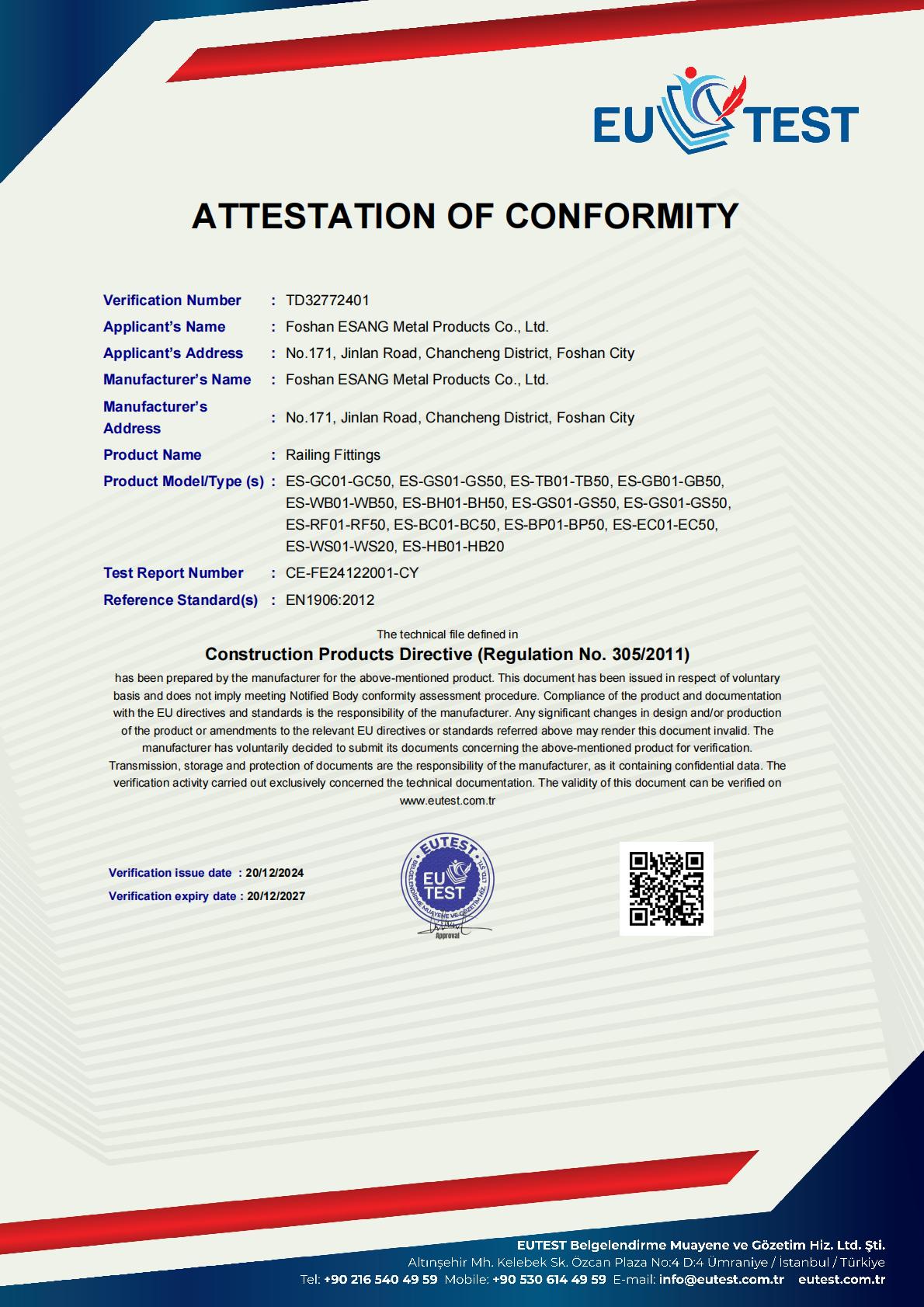
Foshan ESANG Metal Products se enorgullece de mantener Certificación CE (Verificación n.º TD32772401) en virtud de la Directiva sobre productos de construcción (Reglamento n.º 305/2011), lo que afirma nuestro compromiso con los más altos estándares europeos de seguridad y calidad.
Gama de productos certificados:
Nuestra amplia gama de herrajes para barandillas, que incluye abrazaderas de vidrio, tensores, soportes, soportes de pared, zapatas, herrajes para pasamanos, herrajes para cables y componentes para postes, satisface los requisitos más exigentes. EN1906:2012 garantizando la integridad estructural y la fiabilidad del rendimiento en todas las instalaciones.
Qué significa esto para su proyecto:
✓ Cumplimiento total de la normativa para los mercados europeos e internacionales
✓ Rendimiento de seguridad y durabilidad verificado de forma independiente.
✓ Soporte de documentación para las especificaciones arquitectónicas
✓ Tranquilidad gracias a la garantía de calidad de terceros
Certificación válida hasta 2027 | Informe de pruebas: CE-FE24122001-CY
Proyectos de Esang

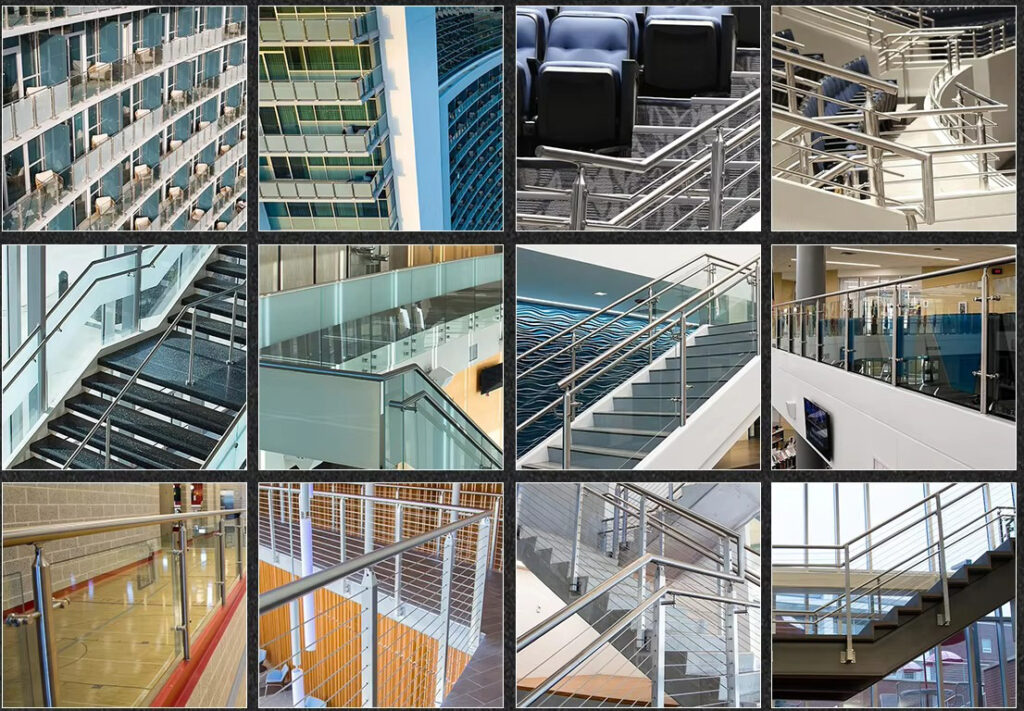
Productos de referencia