A glass base shoe RFQ that goes out with only a single total length and a vague finish note will come back with bids that cannot be fairly compared, because each bidder fills the gaps with a different assumption about scope, material, and interface responsibility. The fix is not a longer email; it is a structured RFQ that forces every bidder to price the same project, the same building conditions, and the same evidence burden before anyone quotes a number.
Project scope and quantity schedule for every railing run
| Scope condition | Information to state in the RFQ | Comparison check |
|---|---|---|
| 直线运行 | Quantity assigned to each straight run | Confirm each bidder has priced the same run-by-run scope rather than only a total length |
| 角落 | Quantity separated for each corner condition | Check that corner scope is included or expressly excluded |
| Ends | Quantity separated for each end condition | Check that termination scope is included or expressly excluded |
| Transitions | Quantity separated for each transition condition | Check how each change between conditions is treated in the offer |
| Mounting conditions | Quantity grouped by mounting condition | Compare like mounting scope across bids and record any bidder assumption |
A glass base shoe assembly is priced by the linear condition it occupies, and that condition changes at every corner, end, transition, and mounting change along a railing run. Where a buyer issues a single total length, bidders are left to decide independently how much of that length involves a simple straight condition and how much involves a corner, an end return, or a change in mounting substrate, and each of those conditions typically carries a different labor and component burden. The consequence is that two bids built from the same total length can represent two different scopes, with neither bidder’s exclusions visible to the buyer until installation begins.
Separating the quantity by run condition changes this. When the buyer states straight-run quantity apart from corner quantity, end quantity, transition quantity, and mounting-condition quantity, each bidder is forced to respond to the same physical breakdown rather than to their own interpretation of an aggregate number. This also surfaces a scope question that a single total length hides: whether corner and end conditions are included in the base price or treated as a separate line item. Where a project has a high proportion of straight run and few corners, this distinction matters less to the final price; where a project has frequent direction changes, transitions, or mixed mounting conditions, the treatment of these conditions can separate otherwise similar-looking bids by a meaningful scope difference.
The mounting condition deserves its own line because a base shoe system interfaces with whatever substrate or structure sits beneath it, and that interface is not uniform across a single project. A run anchored to a concrete slab edge, a run anchored to a steel ledger, and a run transitioning between the two each represent a distinct mounting condition that a bidder must account for separately. Grouping quantity by mounting condition, rather than burying it inside a single run total, lets the buyer confirm that every bidder has priced the same mix of conditions and has not silently assumed the easiest one applies throughout.
Technical inputs for glass, shoe, support parts, and finish
| Technical input | Project information to state | Point to verify in the offer |
|---|---|---|
| 玻璃 | Complete glass build-up | The offered configuration is tied to the stated glass build-up |
| Shoe and cover | Required shoe and cover finish | The offered finish matches the stated finish or identifies a deviation |
| Support parts | Support method | The offered support parts correspond to the stated support method |
| Visible work | Visible tolerances | The bidder records any assumption or exclusion affecting visible tolerances |
| Cap rail and adjacent hardware | Any required cap-rail or adjacent-hardware interface | The interface is included, excluded, or identified for written confirmation |
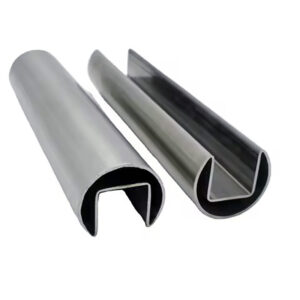
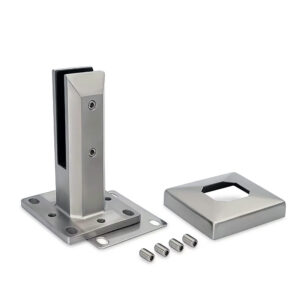
The technical description in an RFQ determines whether the bids received are actually comparable configurations or only similarly named ones. A base shoe system is not one component; it is a channel or rail, a cover or cap detail, a support method, and a finish, each of which can vary independently while the overall assembly still carries the same general name. Stating the complete glass build-up, rather than only a glass type or thickness, matters because the base shoe’s interior channel dimension and the setting blocks or gaskets used inside it must correspond to the specific build-up, including any interlayer or lamination the project requires. A bidder who prices against an incomplete glass description may offer a channel sized for a different build-up, and that mismatch does not surface until the glass and hardware arrive from separate suppliers and do not fit together.
The same logic applies to the shoe and cover finish. Visual finish and base material grade are separate properties, and an RFQ that specifies only an appearance term leaves the corrosion-relevant material decision to the bidder. Where a project sits in an interior, climate-controlled setting, finish and grade selection carry different consequences than where the installation is exposed to exterior or washdown conditions, so the RFQ should state the finish requirement in terms specific enough that a bidder cannot substitute a visually similar but differently rated product.
Support method is a further independent variable: a base shoe system can rely on continuous channel support, discrete support points, or a combination tied to a cap-rail interface, and each support method changes how the glass transmits load into the base condition. An RFQ that is silent on support method invites each bidder to default to whatever configuration their standard product line offers, which may or may not match the structural assumption the project’s design has already made.
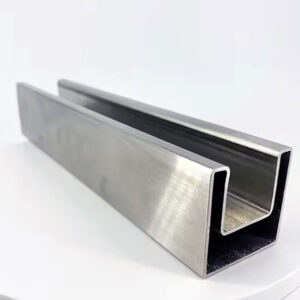
Visible tolerances and any cap-rail or adjacent-hardware interface round out the technical picture, because a base shoe system rarely installs in isolation. Where the project specifies a cap rail, handrail bracket, or other adjacent hardware that must align with the base shoe’s reveal or spacing, that interface needs to be named in the RFQ so the bidder either includes it, excludes it explicitly, or flags it as an item requiring confirmation before the configuration is finalized. The resources a base shoe system supplier offers, including 玻璃底座鞋道, 嵌入式玻璃导轨, ,以及 结构玻璃底轨, each represent a different combination of these variables, which is precisely why the RFQ needs to specify the technical inputs rather than naming a product category and leaving the rest to inference.
Mounting, substrate, waterproofing, and drainage details
| Interface detail | Project information to issue | Bid check |
|---|---|---|
| Mounting and substrate | Substrate sections for each mounting condition | The offered mounting basis corresponds to the issued substrate sections |
| Fixing zones | Fixing zones shown with the relevant sections | Any exclusion or assumption affecting the fixing zones is stated |
| 防水 | Waterproofing details at the base-shoe interface | The offer identifies how its scope meets or interfaces with the stated waterproofing details |
| 排水 | Drainage details for the applicable runs | The offered configuration and any exclusions are tied to the stated drainage details |
| Design responsibility | Project design responsibility matrix | Each design responsibility and exclusion can be assigned before award |
A base shoe system’s performance is inseparable from the building condition it sits on, which means the RFQ has to describe that building condition rather than treat the base shoe as a standalone product. Substrate sections showing each mounting condition give the bidder the structural basis they are fixing into, and this matters because a base shoe anchored to one substrate type may require different fastener types, embedment, or baseplate detailing than the same system anchored to another. Without substrate sections, a bidder has to assume a substrate, and that assumption may not match the condition the project actually presents at every run.
Fixing zones carry a related but distinct piece of information: where along the run the anchors are permitted to land, which can be constrained by structural members, edge distances, or conflicts with other building elements. An RFQ that issues substrate sections without also showing fixing zones leaves open whether the bidder’s assumed anchor spacing is actually achievable in the field, and that gap tends to surface only once installation begins.
Waterproofing and drainage sit at the same interface and carry their own logic. A base shoe channel that holds glass at a building edge or exterior condition creates a potential path for water to collect at the base of the glass, and how that water is managed, through waterproofing detailing at the channel interface or through drainage provisions along the run, is a building-envelope question as much as a hardware question. Where a project involves an exterior or wet condition, the RFQ needs to state how waterproofing and drainage are detailed so the bidder can identify whether their offered configuration integrates with that detailing or whether a gap exists between the hardware scope and the waterproofing scope. The base shoe system specification questions around channel, anchor, and drainage conditions illustrate why these details are treated as RFQ inputs rather than left to be resolved after award.
The design responsibility matrix closes this section’s purpose: on most projects, waterproofing, drainage, and even some substrate detailing may fall to a different party than the base shoe supplier, and the RFQ needs to make that assignment explicit so bidders can identify what falls outside their scope rather than silently assuming it is someone else’s problem. Where the matrix is silent, a bidder may exclude an item without stating so, and the buyer only discovers the exclusion when no party on the project has actually priced it.
Evidence and submittal requirements tied to the offered system
| Evidence or submittal | Link required to the offer | 决策边界 |
|---|---|---|
| 图纸 | Identify the offered configuration in the submitted drawings | Drawings document the offer; project acceptance still depends on the project requirements and authorities |
| 安装说明 | Supply instructions for the offered configuration | Instructions describe installation for the offer; they do not by themselves establish project acceptance |
| Material documents | Supply the requested material documents for the offered materials | An inspection-document type does not by itself prove traceability, test validity, grade conformity, or certificate authenticity |
| Test evidence | Trace the evidence to the offered configuration | A standard’s public scope or classification does not establish compliance of the offered system; detailed requirements and acceptance depend on licensed text and project authorities |
Requesting drawings, installation instructions, material documents, and test evidence only produces a useful comparison if each document is traceable to the specific configuration a bidder has actually offered, rather than being a generic product sheet that could apply to several different configurations in the bidder’s catalog. A drawing that does not identify the offered glass build-up, shoe finish, and support method leaves the buyer unable to confirm that what is drawn is what was priced, and a material document that lists a general product family rather than the specific item ordered carries the same gap.
Material documents deserve particular care because an inspection-document type, as described in ISO 10474, defines the kind of document a supplier provides with a steel-product delivery, but the existence of a document type does not by itself establish that the material behind it has been traced, tested, or certified to the standard the project requires. A bidder stating that mill certificates are available is making a narrower claim than a bidder confirming that the specific documents trace to the specific heat, grade, and finish of the offered product, and the RFQ should request the latter rather than accept the former as equivalent.
Test evidence carries a similar boundary. A standard such as ASTM E2358, which addresses the performance of glazing in permanent railing systems, guards, and balustrades, defines a classification and performance scope at the level of a public standard summary, but confirming that an offered base shoe and glass configuration meets a project’s acceptance requirement depends on the licensed standard text and the authorities the project has adopted, not on the existence of the standard’s title in a bidder’s proposal. Where a project references a guide specification structure such as UFGS 05 52 00 for its submittal organization, that structure shows how a metal-railing submittal package can be organized, but it remains an example specification rather than a universal code or a requirement that any particular bidder’s system automatically satisfies. A submittal package assembled around MTRs, test reports, drawings, and packaging gives the buyer a model for how these evidence items are organized, but organizing the request is a separate step from confirming the offered configuration actually matches each submitted document.
Commercial inclusions for packaging, spares, inspection, and delivery
| 商业产品 | RFQ comparison point | Required offer record |
|---|---|---|
| Packaging | Packaging included for the quoted scope | Inclusion, exclusion, and any supplier assumption |
| Identification | Identification included with the supplied items | Method offered and any exclusion |
| Spares | Spares included in the quoted scope | Included spares or a stated exclusion |
| Inspection points | Inspection points included in the supply process | Offered inspection points and any assumption |
| Delivery scope | Delivery scope covered by the quotation | Included boundary and any exclusion |
| Supplier assumptions | Assumptions affecting any commercial inclusion | Written confirmation before supplier selection |
Two bids can describe the same glass, shoe, support method, and finish and still differ in total commercial scope because the surrounding commercial items are not uniformly included by default. Packaging for base shoe channels and their associated cover caps and fasteners can range from minimal protection to packaging designed for the specific handling and site-storage conditions the project involves, and the RFQ should state what packaging is expected so a bidder cannot substitute a lighter packaging scope without the buyer noticing until the material arrives.
Identification of supplied items matters once a project involves multiple runs, lengths, or mounting conditions, because field crews need to match the correct component to the correct run condition without relying on visual inspection alone. An RFQ that asks whether identification is included, and in what form, lets the buyer compare bidders on this point rather than discovering during installation that components were not marked for the condition they belong to.
Spares are a commercial inclusion that is easy to omit from a bid without the omission being obvious, because a bid that excludes spares can still appear complete on its face. Stating whether spares are included, and for which components, lets the buyer evaluate whether a lower-priced bid is actually offering less total scope rather than a genuine cost advantage. Inspection points raise a related question: whether the offered scope includes inspection at defined points in the supply process, and if so, which points, changes what the buyer is purchasing beyond the physical hardware itself.
Delivery scope closes the commercial comparison, because “delivery” can mean different boundaries depending on the bidder, from delivery to a receiving dock to delivery staged at the specific run location. Where the RFQ does not state the expected delivery boundary, each bidder may assume a different one, and that assumption affects cost in a way that is not visible in a simple unit-price comparison. Any assumption a bidder makes on these commercial items, where it departs from what the RFQ requested, needs written confirmation before the buyer treats two bids as comparable on a like basis, and this is also the stage where the project information the buyer has already assembled, the quantity schedule, technical inputs, and building interface details, becomes the basis a supplier such as ESANG would use to confirm which finishes, sizes, or configuration options are actually available for the specific order rather than assumed from a catalog listing.
Bid-normalization record before supplier selection
| Comparison area | Common basis for normalization | Difference to record before selection |
|---|---|---|
| Scope and quantity | Same runs, sections, corners, ends, transitions, and mounting conditions | Omitted scope, different quantity treatment, or supplier assumption |
| Technical configuration | Same glass build-up, shoe and cover finish, support method, visible tolerances, and hardware interfaces | Deviation, exclusion, or item requiring written confirmation |
| Building interfaces | Same substrate sections, fixing zones, waterproofing, drainage, and design responsibility matrix | Different interface basis or responsibility exclusion |
| Evidence and submittals | Same requested drawings, instructions, material documents, and configuration-traceable test evidence | Missing item, unclear configuration link, or unsupported compliance conclusion |
| Commercial scope | Same packaging, identification, spares, inspection points, and delivery scope | Commercial exclusion or unconfirmed supplier assumption |
Normalizing bids before selection means checking that every bid was built on the same declared basis across scope, technical configuration, building interfaces, evidence, and commercial inclusions, rather than comparing bottom-line prices that may rest on different unstated assumptions. Where one bidder has priced corner and end conditions as included and another has silently excluded them, a price comparison alone will favor the second bidder for reasons that have nothing to do with actual cost efficiency. The same risk applies to technical configuration: a bid that is lower because it assumes a lighter support method or a different finish is not a lower-cost version of the same offer, it is an offer for a different system.
The building-interface and evidence categories carry a different kind of risk at this stage, because gaps here may not affect price directly but instead shift responsibility onto the buyer’s project team without being stated. A bidder who has not addressed the waterproofing interface, or who has not traced material documents to the offered configuration, has left a gap that the buyer’s own design or construction team may end up absorbing, and that gap needs to be identified and assigned before the award rather than discovered afterward. Where the project’s design responsibility matrix already assigns waterproofing or substrate detailing to a different party, this gap may be acceptable; where it does not, the gap is unassigned risk.
The commercial category is where normalization most directly changes the evaluated price, because packaging, identification, spares, inspection points, and delivery scope are the items most likely to be included by one bidder and omitted by another without an explicit statement either way. A buyer who normalizes bids on this basis is not asking which bidder is cheapest; they are asking which bidders are actually describing the same scope, and only then comparing price among the bids that pass that test. Where the inputs leave open how a given bidder treats an exclusion or assumption, the correct response is a written confirmation from that bidder before the comparison is finalized, not an inference drawn from silence in the proposal.
常见问题
问: Can I compare glass base shoe bids by total price alone?
A: Only after the bids have been normalized to the same scope. Confirm that each price covers the same runs, mounting conditions, technical configuration, building interfaces, evidence package, and delivery boundary, then record every exclusion or assumption that could explain a price difference.
问: How should I handle a bidder’s alternative glass base shoe configuration?
A: Treat it as a documented deviation rather than as an automatic equivalent. Ask the bidder to identify the changed glass build-up, shoe, support method, finish, interfaces, and evidence so the project team can evaluate the alternative against the stated requirements.
问: What information should be settled before requesting a final quotation?
A: Settle the project-controlled inputs that materially affect the offer: run-by-run quantities, substrate and fixing details, waterproofing and drainage interfaces, visible tolerances, adjacent hardware, and the design responsibility matrix. Any unresolved item should appear as a named assumption for written confirmation.
问: Does a test report or inspection document prove that the offered system is acceptable?
A: Not by itself. Verify that each document is authentic, relevant to the offered materials or configuration, and responsive to the project’s required evidence; final acceptance still depends on the applicable project requirements and authorities.
问: What should be carried from bid comparison into the purchase record?
A: Carry forward the selected configuration, agreed quantities, confirmed interfaces, submittal obligations, commercial inclusions, exclusions, and resolved supplier assumptions. This gives procurement and the project team one written basis for checking the eventual supply against the accepted offer.