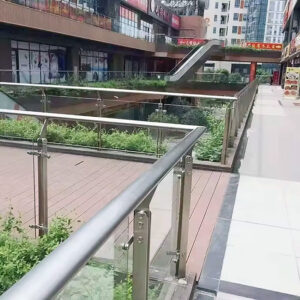
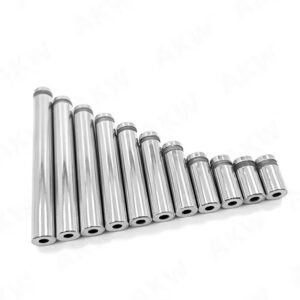
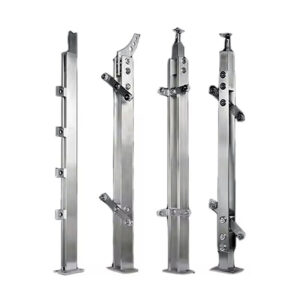
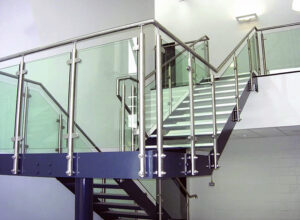
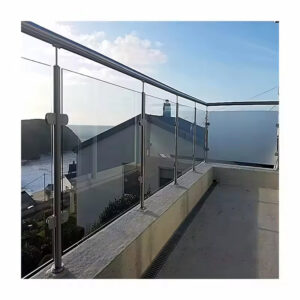
A glass base shoe railing that shows movement raises an immediate question: is the condition confined to a single pane and its seating, or does it reach into the shoe, the channel, and the structure the channel is fixed to? The answer determines whether the next step is a documentation check, a hardware inspection, or a referral to the installer and the project’s engineering authority, and conflating these levels before investigating risks treating a structural indicator as a cosmetic one.
Movement pattern at the pane, shoe, channel, or slab edge
| Observed movement pattern | First investigation boundary |
|---|---|
| Movement is limited to one pane | Check that pane’s glass seating and adjustment parts, then compare its installed arrangement with the approved project information. |
| Movement occurs within the base shoe | Check glass seating and adjustment parts inside the shoe for missing, displaced, or mismatched components. |
| The entire channel moves | Examine the channel, anchors, substrate, and supporting edge rather than treating the issue as a single-pane adjustment. |
| Movement includes the supporting slab edge | Extend the investigation to the substrate and adjacent construction; the observed pattern does not establish the root cause by itself. |
The first task on site is not to explain the movement but to locate it. A glass base shoe railing is an assembly of several interfaces stacked on top of one another: the glass pane, the seating and adjustment components inside the shoe, the channel that holds the shoe, and the substrate or slab edge the channel is fixed into. Movement observed at any one of these levels can originate there, or it can be a symptom transmitted from a level below it. Where movement is confined to a single pane while adjacent panes remain stable, the cause is more likely to sit within that pane’s own seating and adjustment parts, or in how that specific pane was set relative to the approved arrangement. Where movement is detectable across multiple panes within the same run, or where it tracks along the length of the channel rather than at an isolated point, the investigation needs to widen to the channel and its fixing, because a localized pane-level explanation will not account for a pattern that spans the assembly.
This distinction matters because the corrective path differs sharply depending on where the movement is traced to. A single-pane condition may be resolvable by addressing the seating and adjustment components for that pane, once the as-built arrangement has been compared against what the project documentation specifies. A channel-wide or slab-edge condition points toward the substrate, the anchorage, or the structural coordination between the railing system and the surrounding construction, which is outside what any single pane’s hardware can explain or correct. Treating a channel-level symptom as if it were a pane-level adjustment issue risks masking a condition that affects the guard’s structural performance rather than resolving it.
The practical discipline here is to resist assigning a cause before establishing the pattern. A technician who begins adjusting a single pane’s hardware without first confirming whether the same movement appears elsewhere in the run may correct a symptom while leaving its source unaddressed. Documenting where movement is present and where it is absent, across every pane and along the full length of the affected channel, gives the investigation a defensible starting boundary before any disassembly or adjustment begins.
As-built comparison with drawings and installation instructions
| Project reference | Compare with the as-built condition | 决策边界 |
|---|---|---|
| Approved drawings | Overall installed arrangement | Identify departures that need project review; a departure does not by itself prove the source of movement. |
| Glass schedule | Installed glass against the scheduled glass | Identify a mismatch that needs investigation; the comparison does not establish railing performance by itself. |
| Named system’s installation instructions | Glass seating, adjustment parts, and channel arrangement | Identify missing, displaced, mismatched, or differently installed parts for further review. |
Once the extent of movement has been mapped, the next judgment is whether the installed assembly matches what the project intended. This requires comparing the as-built condition against three distinct references, each of which checks a different aspect of the installation and each of which has a different boundary on what it can confirm.
The approved drawings establish the overall arrangement: spacing, orientation, and how the base shoe system relates to the surrounding structure. A departure from the drawings, such as a channel positioned or fixed differently than shown, identifies something that needs project review, but a drawing departure does not by itself prove that this departure is the source of the observed movement. Other factors may be contributing, or the departure may be unrelated to the movement entirely.
The glass schedule serves a narrower purpose: confirming that the glass actually installed matches what was scheduled for that location, including thickness and type. A mismatch here is significant because glass seating and adjustment parts are selected and configured for a specific glass thickness; where the installed glass differs from the schedule, the seating hardware may be working outside the condition it was configured for. This comparison, however, speaks to compatibility, not independently to railing performance, which depends on the full assembly rather than the glass alone.
The named system’s installation instructions provide the most granular reference: how the glass seating, adjustment parts, and channel arrangement were meant to be assembled for that specific base shoe system. Comparing the as-built condition against these instructions can reveal missing components, components installed in the wrong position, mismatched parts substituted from a different system, or steps completed differently than specified. Because base shoe systems differ from one manufacturer and product line to another, instructions for one system should not be used to judge an installation built with a different named system’s components, even where the parts appear visually similar.
Each of these three comparisons narrows the field of possible causes without closing it. A reader who completes all three checks has identified what departs from the project’s own reference documents; what remains is determining whether that departure explains the movement or whether further physical inspection is needed.
Glass seating and adjustment-part checks
Where the as-built comparison points toward the pane or shoe level, the physical inspection that follows focuses on glass seating and the adjustment parts that hold the pane within the shoe. A glass base shoe relies on these parts to transfer load from the glass into the channel while accommodating the tolerances that come with handling, setting, and the different thermal and structural movements of glass versus the metal shoe. Where these parts are missing, displaced, or substituted for a different type than the system specifies, the pane can lose the even bearing and lateral restraint the seating was designed to provide, and movement becomes detectable at the pane even when the channel and substrate are sound.
The inspection point that matters is whether the seating and adjustment parts present in the field match what the named system’s installation instructions describe, both in type and in position. A part that looks similar but is oriented incorrectly, or that has shifted from its intended seating location during handling or installation, can produce the same visible symptom as a part that is simply missing. Distinguishing between these conditions requires direct inspection rather than inference from the drawings alone, because drawings typically show design intent rather than every small component’s as-installed position.
Where the glass itself differs from what the glass schedule specifies, in thickness or edge condition, the seating and adjustment parts may no longer be matched to the pane they are holding, even if every part is present and correctly positioned. This is a distinct failure mode from a missing or displaced part: the hardware is doing what it was configured to do, but it was configured for a different glass condition than what is actually installed. Recognizing this distinction changes the corrective path, since replacing or repositioning the existing seating parts will not resolve a mismatch rooted in the glass specification itself.
Where this level of inspection does not identify a clear missing, displaced, or mismatched condition, and movement persists, the cause is more likely to sit at the channel or substrate level rather than within the shoe.
Channel fixing and substrate response indicators
Where movement extends beyond an isolated pane and tracks along the channel, or where the seating and adjustment inspection has not identified a sufficient explanation, attention shifts to how the channel is fixed and how the substrate beneath it is responding. The channel’s fixing is the interface between the glass base shoe system and the structure it depends on for load transfer; its condition determines whether the channel itself is stable or whether it is moving as a unit, carrying the glass with it.
A channel that is securely fixed but still shows movement at its interface with the substrate suggests the substrate itself may be responding to load, settlement, or another condition in the surrounding construction, rather than a defect in the base shoe hardware. This distinction matters because it moves the investigation outside the scope of the railing hardware supplier and into the structural condition of the building or slab the system is anchored to. Conversely, where the substrate is stable but the channel still shows movement relative to it, the fixing itself, its anchors, or their engagement with the substrate becomes the focus.
Because the channel and its fixing are structural elements of the guard assembly, movement at this level carries different implications than movement confined to a single pane’s seating. The scope for standard 玻璃底座鞋道 和 结构玻璃底轨 as product categories is to perform within the installation and anchorage conditions they were specified for; confirming whether the installed condition still matches those specified conditions is a necessary step before concluding that a channel-level movement reflects a hardware issue rather than a substrate issue.
Water, covers, and surrounding-finish clues
Several surface indicators can draw attention to an interface worth investigating, without on their own establishing why movement is occurring. Water entry at the base of a glass railing, staining around the shoe or channel, a cover that has become displaced or no longer seats correctly, and cracking in the surrounding finish are all observations that something at that interface may not be behaving as the installed detail intended. None of these observations, individually or together, identifies whether the cause is a seating or adjustment-part condition, a channel-fixing condition, or a substrate condition; they function as indicators that direct where to look, not as conclusions about what is found there.
Water entry at a base shoe can suggest that a sealing detail or cover has lost its intended fit, which may be connected to movement at the shoe or channel, or may be an independent condition with its own separate cause unrelated to any structural movement at all. Staining can result from water that has been present for some duration, but staining alone does not indicate how recently the condition began or how it relates to the movement under investigation. A displaced cover may have been dislodged by the same movement affecting the glass, or it may have failed independently of any glass or channel condition. Cracking in the surrounding finish, such as the material adjacent to the channel, can result from substrate movement transmitted into that finish, but it can also result from conditions entirely separate from the base shoe assembly.
Treating any one of these clues as confirmation of a specific cause risks directing the investigation toward the wrong interface. Their proper use is to prompt a closer look at the specific location where they appear, in combination with the pattern-level and as-built checks already completed, rather than to substitute for those checks.
Escalation trigger for installer and engineering review
Two conditions mark the point where further field investigation should stop and the matter should be referred to the installer and a qualified project designer or engineer rather than resolved through an on-site adjustment. The first is where the movement under investigation affects the guard’s safety function, meaning the railing’s capacity to perform its intended restraining role is in question rather than a cosmetic or incidental condition. The second is where the source of the movement remains uncertain after the pattern, documentation, and physical checks described above have been completed, and no single explanation accounts for what has been observed.
Either condition alone is sufficient to trigger escalation. A guard-safety concern should not wait for full certainty about its cause before being restricted from continued exposure, because the assembly’s structural role does not depend on first identifying the precise mechanism behind the movement. Equally, an uncertain cause should not be resolved by selecting the most convenient explanation and adjusting accordingly, because an adjustment based on an incorrect diagnosis can leave the actual condition unaddressed while appearing to have resolved the symptom.
Reference test methods such as ASTM E2353-21, which addresses static-strength, impact, and post-breakage performance of glazing in permanent railing systems, and specification documents such as ASTM E2358-24, which addresses classification and performance scope for glazing in permanent railing systems, describe the kind of structured evaluation that governs acceptance of these assemblies; however, their full requirements and acceptance criteria sit with the licensed text and the project’s own engineering authority, not with field observation alone. Their relevance here is to confirm that permanent glass railing guards are subject to defined performance expectations, which is part of why an uncertain or safety-relevant movement condition warrants a referral rather than an improvised field correction.
Where project documentation and supplier quotation review depend on the specific movement observations, as-built comparisons, and glass or hardware identification gathered during this process, that information is what allows a supplier or fabricator to evaluate whether a replacement part, channel, or rail matches the original specified condition, rather than only matching its appearance.
常见问题
问: Should movement be corrected by tightening anchors or replacing parts immediately?
A: No. First determine whether the movement is limited to one pane, occurs within the base shoe, includes the entire channel, or reaches the supporting slab edge. That boundary determines whether the first check should focus on glass seating and adjustment parts or extend to the channel, anchors, substrate, and adjacent construction.
问: What information should be prepared before an installer or project designer reviews the movement?
A: Prepare the approved drawings, glass schedule, named system’s installation instructions, and a clear record of where and how the movement occurs. Note water entry, staining, cover displacement, and finish cracking separately because these conditions can guide the interface investigation without proving the cause.
问: Does water entry or finish cracking prove that the base shoe anchorage is loose?
A: No. These are reasons to investigate the interface, but none identifies the root cause by itself. Compare the observed condition with the channel, supporting edge, adjacent construction, and approved project information before assigning a cause.
问: Can an as-built inspection establish compliance with ASTM E2353 or ASTM E2358?
A: No. An inspection can identify an arrangement or component that needs further review, but it does not establish railing performance or compliance by itself. Project acceptance must use the applicable licensed requirements, governing codes, calculations, test details, and project authorities.
问: When should exposure to the railing be restricted?
A: Restrict exposure when the movement may affect guard safety or when its source remains uncertain. Have the responsible installer and qualified project designer review the assembly before anyone improvises a field adjustment.