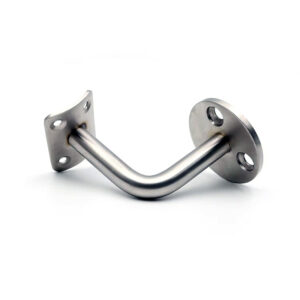
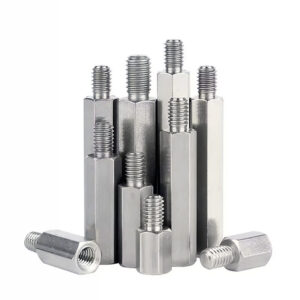
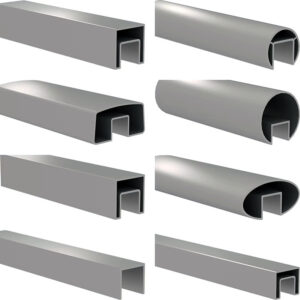
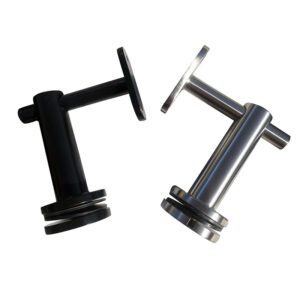
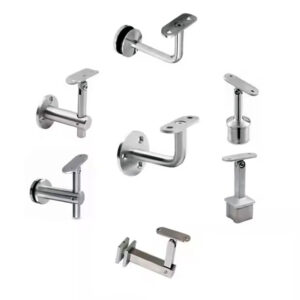
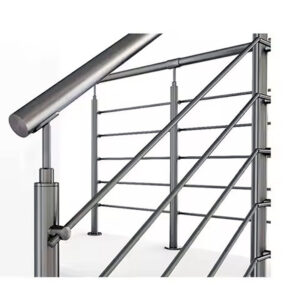
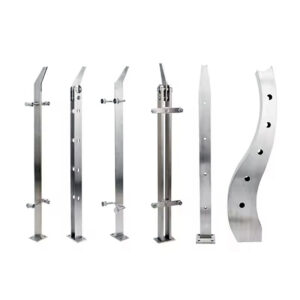
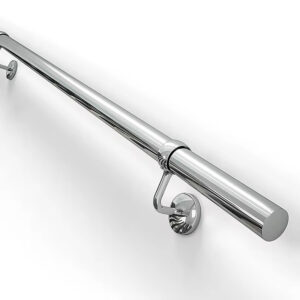
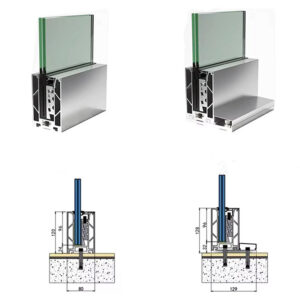
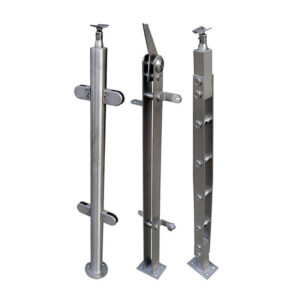
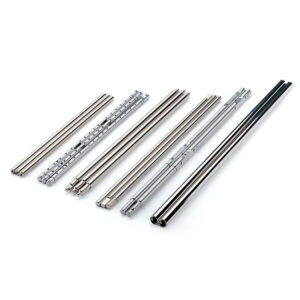
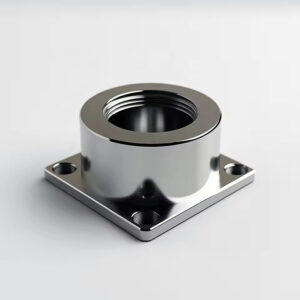
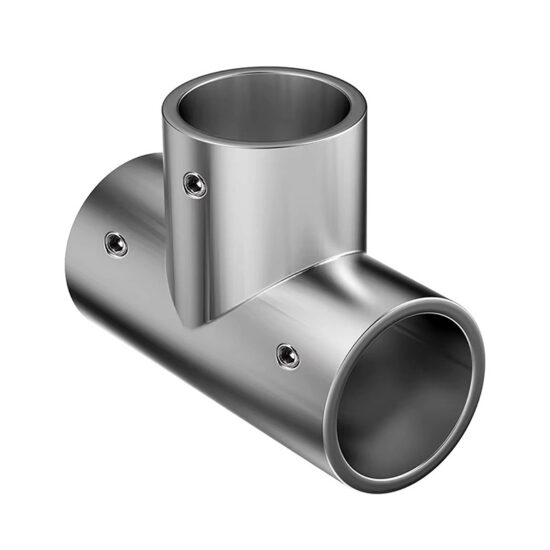
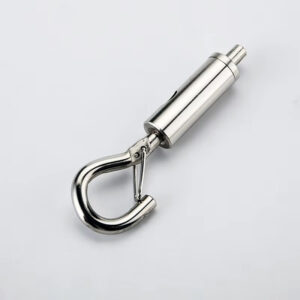
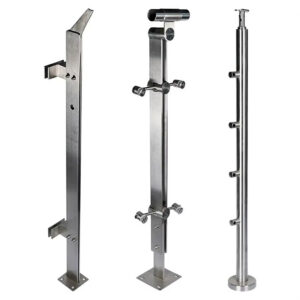
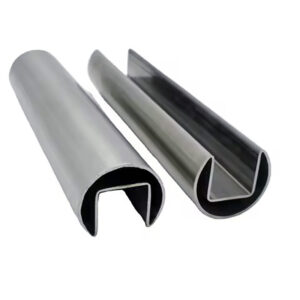
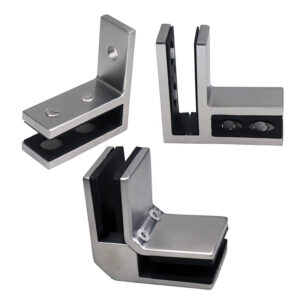
Distributors who run price comparisons before anchoring the specification end up evaluating different products under the same line item. A quote for stainless steel railing hardware is only comparable when the grade, surface finish, and packaging requirements are fixed in advance—without that anchor, the lowest number may reflect a material substitution that produces corrosion failures in the field or visible cosmetic inconsistencies that clients flag at installation. The cost rarely appears on the invoice; it surfaces as returns, replacement sourcing under time pressure, and margin erosion on projects where the hardware was never the primary concern. What follows is a decision framework for the upstream verification steps that separate repeatable sourcing outcomes from recurring claims.
Comparable Specifications Before Price Analysis
Requesting quotes before defining a controlled SKU specification means every supplier is quoting against their own interpretation of “stainless steel railing hardware.” Material grade is the most consequential variable to fix first, because it directly conditions corrosion performance in the intended environment rather than representing a universal building standard.
SS304 is a reasonable selection for indoor dry installations, where standard atmospheric corrosion resistance is sufficient. SS316 becomes the appropriate choice for coastal, poolside, or outdoor environments where chloride exposure is a real factor—the molybdenum content in SS316 resists chloride-induced pitting that SS304 will not reliably withstand over time. That selection should be made as part of the specification, not left open for the supplier to interpret.
Once the grade is defined, a Material Test Report (MTR) or Mill Test Certificate (MTC) is the practical checkpoint that reduces substitution risk. Receiving SS201 instead of SS304 is one of the most common failure patterns in cross-border hardware procurement—the two materials can look identical and only diverge under corrosion or chemical testing. Requesting an MTR/MTC does not eliminate substitution risk entirely, but it creates a documented reference point for incoming inspection and gives the distributor a paper trail if a warranty claim is raised downstream. ISO 10474 provides a framework for understanding inspection document levels—types 2.2, 3.1, and 3.2 represent increasing levels of independent certification—and which level to request is a contractual choice rather than a regulatory obligation.
| 等级 | Suitable Environment | 耐腐蚀性 | Verification Documentation |
|---|---|---|---|
| SS304 | Indoor dry environments | Standard atmospheric corrosion resistance | Material Test Report (MTR) / Mill Test Certificate (MTC) |
| SS316 | Coastal, poolside, outdoor (high chloride exposure) | Enhanced chloride corrosion resistance (molybdenum) | MTR / MTC |
Defining grade and finish requirements before soliciting quotes also changes what a low price actually signals. A quote that comes in significantly below comparable offers is worth investigating against the specification rather than accepting as a market-rate surprise.
Downstream Costs of Unverified Low Quotes
Unit price comparisons create a planning illusion when the total landed cost has not been calculated. The factors that drive real cost variation across suppliers—material grade, production method, surface finish standard, certification documents, packaging specification, and minimum order volume—are not visible in a line-item quote. A distributor who evaluates offers only on unit price is making a procurement decision on an incomplete basis.
Material substitution is the highest-consequence failure pattern in this context. Receiving SS201 when SS304 was specified is not an edge-case scenario; it is a documented risk in cross-border hardware procurement. The performance gap between the two grades may not become visible until after installation and exposure to the intended environment, at which point the cost of replacement—including labour, project delays, and client trust—can substantially exceed the original order value.
Packaging specification is a detail that frequently gets skipped in the quote evaluation process, and the downstream consequences are often framed as shipping damage rather than a procurement failure. Vacuum-sealed packaging, anti-rust paper, and protective film for polished surfaces are not premium options for long-distance overseas shipping—they are the baseline requirements for hardware that needs to arrive in a condition that matches the approved sample. Surface damage or corrosion that occurs in transit can disqualify a batch before it reaches installation, and sourcing a replacement under project-deadline pressure converts a packaging oversight into a margin event. Evaluating packaging requirements as part of the specification—before the order is placed—is more defensible than negotiating damage claims after the fact.
Single Sourcing Versus Matched Dual Supply
The decision between consolidating with one supplier and splitting supply across two is routinely treated as a logistics preference rather than a risk-management trade-off, which is where the underestimation happens.
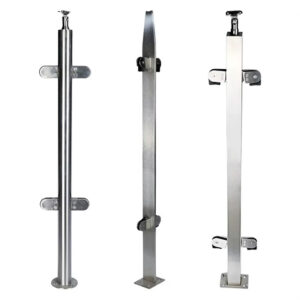
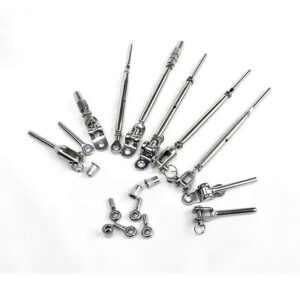
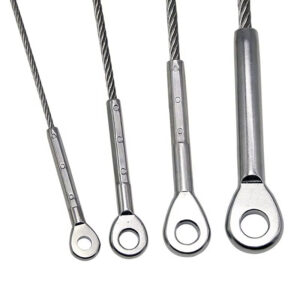
Single-source consolidation simplifies coordination and makes system consistency easier to achieve, particularly when the supplier provides a complete solution across posts, clamps, flanges, elbows, and cable fittings. That consistency matters because hardware systems have interdependent tolerances—components sourced from different suppliers may nominally meet the same specification but produce fit and finish mismatches at the assembly level. The coordination benefit of a single supplier is real, but it carries a supply continuity exposure: if that supplier faces production disruption, logistics delays, or quality issues, the distributor has no qualified fallback.
Matched dual sourcing addresses that continuity risk, but only when the approval process for both suppliers is completed with the same rigour. The most common failure pattern in dual-source strategies is that the secondary supplier receives less scrutiny than the primary—treated as a backup rather than a fully qualified source—and the approval gap becomes a quality-consistency problem when that supplier is actually needed. If the two suppliers produce hardware that differs in surface finish, dimensional tolerance, or material lot characteristics, they cannot be treated as interchangeable regardless of what the specification documents say.
| Sourcing Model | Key Benefit | Key Requirement / Risk |
|---|---|---|
| Single Supplier | Simplified coordination; easier to ensure system consistency when the supplier offers complete solutions | Supply disruption risk if the sole source faces production or logistics issues |
| Matched Dual Supply | Continuity protection through an alternate source | Requires matched approvals across suppliers; risk of inconsistent components if specifications are not tightly coordinated |
Choosing between these models should be driven by volume scale, lead-time vulnerability, and the team’s realistic capacity to run parallel approvals. A distributor who cannot commit to matched approvals on both sources should treat single sourcing as the lower-risk option, not the compromise option.
Records Needed for Future Replacement Parts
The documentation failure that most consistently erodes project margins is not the one that occurs at first order—it is the one that becomes apparent when a replacement part is needed six months later. Without lot-level records from the original purchase, every replacement sourcing event becomes a forensic exercise: trying to match a grade, finish, and dimensional profile from memory or from the installed hardware itself.
The records worth retaining are specific. A Mill Test Certificate confirms that the material meets the specified grade and provides the baseline against which any replacement order should be verified. A material composition report adds detail on alloy content that matters when the original supplier is no longer available and a secondary source needs to be evaluated. Corrosion resistance documentation confirms suitability for the installation environment and becomes relevant if a replacement part fails prematurely and the question of specification fitness arises. Surface finish records—including polishing grade, brush direction, and batch samples where available—address a consequence that is easy to underestimate: even minor polishing inconsistencies are visible in premium installations, and a finish mismatch on replacement hardware can affect perceived quality in a way that generates client-facing complaints disproportionate to the technical deviation.
| Record Type | What It Confirms | Consequence if Not Retained |
|---|---|---|
| 磨机测试证书(MTC) | Stainless steel grade meets specification | Risk of receiving a lower-grade replacement that corrodes |
| Material Composition Report | Exact alloy content | Uncertainty about long-term corrosion and mechanical properties |
| Corrosion Resistance Documentation | Suitability for intended environmental exposure (e.g., chloride resistance) | Replacement part may be unfit for outdoor/poolside use |
| Surface Finish Specification / Batch Samples | Polishing grade, brush direction, and consistency | Visible mismatch in premium projects; perceived quality drop |
These records should be treated as a defensible documentation set tied to each order, not as optional archive material. The practical trigger for retaining them is the first order, not the first replacement request—by the time the replacement is needed, the original supplier may have changed production batches, modified their polishing process, or exited the product line entirely. Retaining the records at the time of original procurement is the only point in the process where the information is reliably accessible. For distributors who want a structured starting point on what to request from a new supplier before committing to volume, 首次批量订购前如何评估不锈钢栏杆供应商 outlines the pre-order verification sequence in practical terms.
Bulk-Order Gate After Trial Approval
Placing a bulk order immediately after receiving a favourable sample price—without verifying that the trial product and commercial documents match the approved specification—is one of the more predictable ways a short-term margin decision becomes a systemic claims problem.
The failure pattern is consistent: a distributor receives a sample that meets expectations, interprets that as sufficient proof of production capability, and scales to bulk volume before running production inspection or confirming that the batch documentation reflects what was approved. The trial product and the bulk production run are not always made from the same material lot, on the same line, or with the same surface treatment. Production inspection and document verification are the checkpoints that close that gap—without them, the bulk order is a commercial commitment made on evidence that may not represent full-volume output.
The practical risk is not that overseas sourcing will inevitably produce a defective batch; it is that skipping the gated approval process removes the mechanism by which defects would have been caught before shipment. A single non-conforming bulk order can delay projects, trigger returns, and create legal exposure depending on the downstream contract structure. Recovering that margin requires replacement sourcing under pressure, which tends to produce worse commercial terms than the original order.
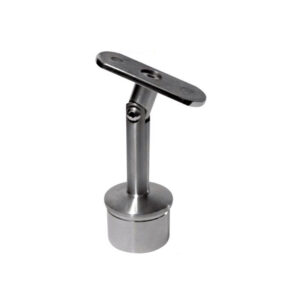
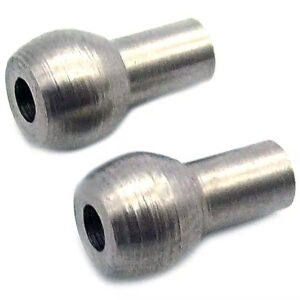
One practical lever worth incorporating into the commercial negotiation is a sample-refund arrangement, where the cost of the trial order is credited against the first bulk purchase. This is a procurement tool, not a standard term that all suppliers will accept, but it creates a structural incentive to run the trial properly rather than treating it as a formality before the volume commitment. 通用可调节硬件 is an example of a component category where dimensional and finish consistency across a bulk run matters significantly—the hardware interfaces with multiple system elements, and variation that was acceptable in a single trial piece can compound across a full project order.
The gate should be simple: the bulk order is placed only when the trial product, the inspection report, and the commercial documents all match the approved specification. Any deviation identified at that stage is a procurement decision, not a production surprise.
The compounding risk across all of these mistakes is that they reinforce each other. A specification that was never anchored makes the MTR harder to evaluate. Documentation gaps from the first order make dual-source matching harder to execute. A bulk order placed before the trial approval is complete makes all of it harder to defend when something fails downstream.
Before the next overseas hardware order, the concrete things to confirm are: whether the specification is fixed at the SKU level before quotes are compared, whether the incoming documentation covers material grade and surface finish to the required level, whether the replacement-part records from the current order will still be accessible and useful two years from now, and whether the bulk commitment will be triggered by verified trial approval rather than by price and sample appearance alone. Those are procurement decisions, not aspirational quality goals—each one has a specific point in the sourcing process where it either gets resolved or gets deferred to a more expensive stage.
常见问题
Q: What if I’m sourcing only a small batch of railing hardware for a one-off project—do I still need the full specification, MTR, and packaging checks?
A: Yes. The risks that drive the recommendation—material substitution, surface damage in transit, and undocumented grade differences—don’t scale down with order size. A single small batch that arrives as SS201 instead of SS304 can still cause corrosion failures or visible cosmetic issues on site. Fixing the grade, finish, and packaging requirements before you request quotes, and obtaining at least a mill test certificate, protects the project outcome regardless of volume.
Q: Once I’ve established a reliable single-source supplier and completed the trial-to-bulk gate, what ongoing steps should I take to maintain that quality baseline across repeat orders?
A: Create a routine verification loop: request batch-level MTRs for each new shipment and compare them against the originally approved baseline. Supplement that with periodic incoming inspection of surface finish and critical dimensions on a sampling basis, and log any supplier process change notices. This approach surfaces gradual drift before it becomes a field failure and keeps your documentation set current, so replacement orders remain straightforward.
Q: At what point is it safe to reduce the frequency of requesting mill test certificates—for example, after several consistent batches from the same supplier?
A: There is no safe point to eliminate mill certificates entirely when the hardware’s performance is material-dependent. After a documented track record of consistent chemistry and no non-conformities over multiple orders, you may adjust the inspection level—moving from a batch-specific 3.1 certificate to a periodic spot-check with a supplier’s type 2.2 report on routine orders—but only if your downstream contracts don’t demand independent certification. Treat any deviation as a trigger to return to full-batch verification.
Q: When should I specify an ISO 10474 type 3.1 or 3.2 inspection certificate instead of a standard mill test report (type 2.2)?
A: Choose type 2.2 when the application risk is low and a supplier’s declaration of compliance is adequate. Specify type 3.1 when you need batch-specific traceability and independent verification that the material being shipped matches the order’s chemical and mechanical requirements. Reserve type 3.2 for high-liability installations—such as public-access structures or projects with severe contractual penalties—where an independent third party must witness the testing and certify the results. The jump to 3.2 adds cost and lead time, so it should be driven by the exposure a failure would create, not as a generic quality upgrade.
Q: For a smaller distributor with limited staff, is the administrative cost of tracking lot-level records, MTRs, and finish samples justified compared to the risk of replacement-part issues?
A: Yes, it is justified. The cost of not having those records—trying to match grade, finish, and dimensions from memory or from installed hardware months later—regularly converts a simple re-order into a forensic exercise that delays projects and erodes margin far more than the record-keeping overhead. The key is to systematize documentation at the point of incoming acceptance. Once that habit is built, the recurring effort is small relative to the avoided cost of an un-matchable replacement.