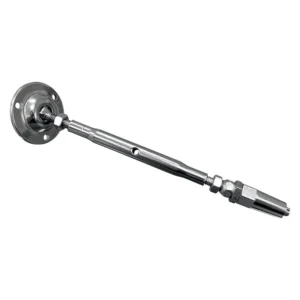
Cable tensioner systems are specified as an end-to-end combination, not as a tensioner body alone. The useful starting decision is where each cable run terminates, which end provides take-up, whether the hardware passes through the post or mounts to its face, and whether the cable arrives as a finished assembly or is terminated on site. Send a layout, a post photo or drawing, the cable diameter and construction, and an estimated quantity; unfinished dimensions can be resolved before the proposed configuration is fixed.
Start a cable tensioner system inquiry on WhatsApp
Choose the end pair before choosing the body
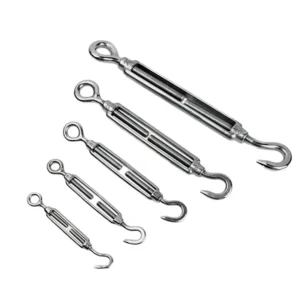
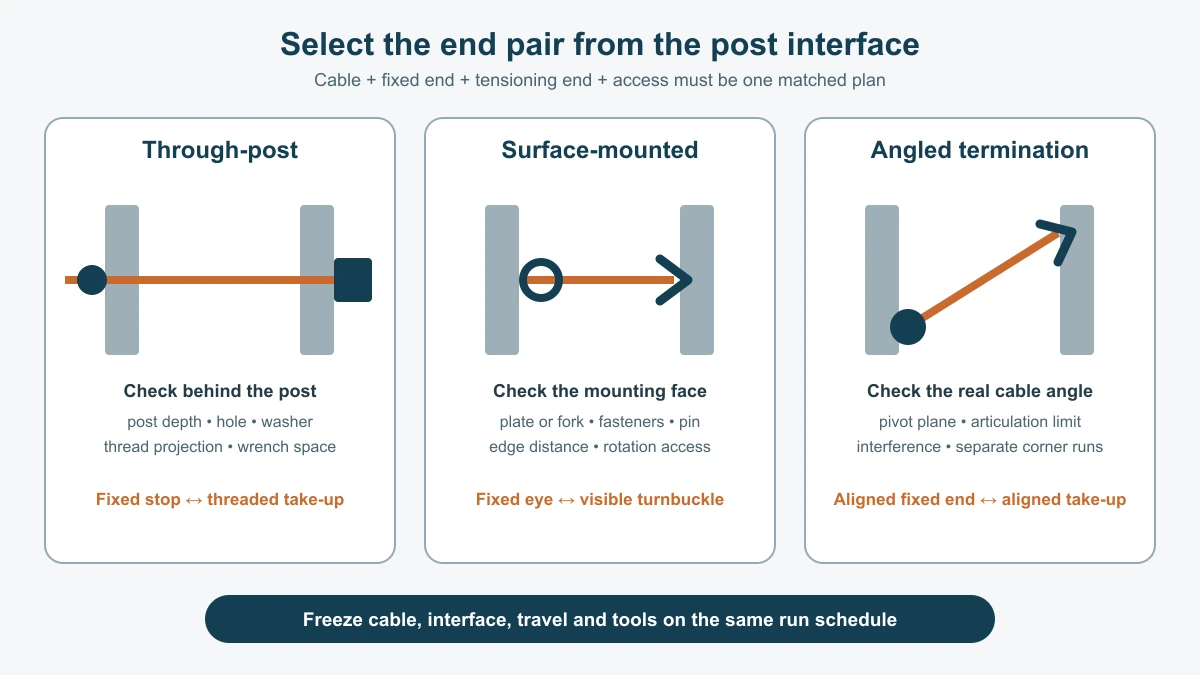
A complete run normally needs one defined tension-adjustment point and a compatible termination at the other end. The fixed end carries the load without providing take-up; the tensioning end provides controlled movement through a threaded or turnbuckle-style mechanism. Two adjustable ends may help during installation on some layouts, but they also add cost, visible hardware and another locking point. One adjustable end may be sufficient when the run length, available take-up and access allow it.
| Run condition | Useful starting arrangement | What must be confirmed |
|---|---|---|
| Straight line through terminal posts | Through-post threaded tensioner paired with a compatible fixed stop or terminal | Post thickness, hole size, rear access, washer or bearing surface, thread and take-up |
| Hardware kept inside the railing line | Surface-mounted fixed end and surface-mounted tensioning end | Mounting face, fasteners, edge distance, articulation and tool access |
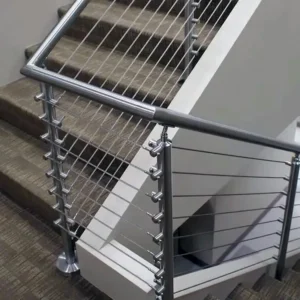
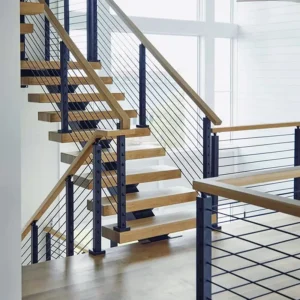
| Stair or sloped termination | Pivoting or angle-capable end paired with an aligned tensioning end | Actual cable angle, pivot plane, interference and whether the run ends at the change in direction |
Cable diameter and construction are fitting inputs
Cable diameter alone is not enough. Wire-rope construction changes flexibility, cut-end behavior and the way an end fitting grips the cable. For example, 1×19 cable is commonly used as a comparatively stiff strand for straight railing runs, while 7×7 is more flexible where a tighter change in direction is intended. Those are industry examples, not an ESANG compatibility promise. The quoted fitting must identify the exact cable diameter and construction it is intended to accept.
Do not combine a tensioner selected for one cable construction with a different cable simply because both share the same nominal diameter. A poor match can prevent full insertion, damage strands during assembly or reduce the holding performance of the termination. The cable material requirement, surface condition and cut preparation should be recorded with the fitting, especially when the cable comes from a different supplier.
Budget the adjustment before cable length is frozen
Take-up is useful only when the installer can reach it and sufficient thread remains engaged. Define the closed length, open length, usable adjustment travel, thread designation, initial installation position and minimum thread engagement on the approved drawing. The cable should not be cut to force the adjuster to either extreme at first installation. Leaving controlled reserve supports final tensioning and later correction; excessive unused length can create interference or an unwanted visual projection.
The locking method is a separate choice. Depending on the proposed design, it may use a locknut, paired nuts or another specified restraint. Ask the quotation to show the method and the wrench flats or access points. A hidden adjuster is visually clean but becomes a poor choice if a wall, post cap, fascia or adjacent cable blocks the installation tool.
Through-post and surface-mounted interfaces solve different constraints
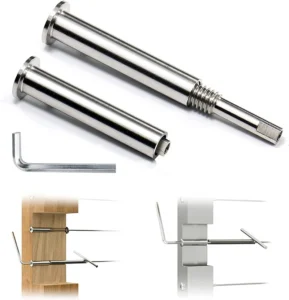
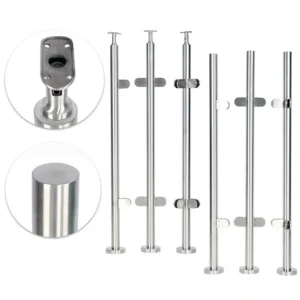
Through-post hardware can place a threaded shank, washer and nut behind the terminal face. It requires a compatible hole, a suitable bearing surface and enough rear space to assemble and tighten the hardware. A hollow metal post may also require an internal detail or local reinforcement defined by the railing designer. A product that physically passes through a post is not automatically suitable for that post wall, hole or structural load.
Surface-mounted hardware keeps the connection on the accessible face and can avoid a protruding nut at the rear. Its plate, fork, eye or pivot must match the mounting face and project fasteners. The tensioner does not establish the capacity of the post, anchor or substrate. Those interfaces remain part of the complete railing design.
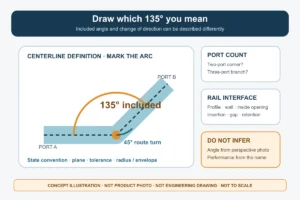
For corners, do not assume a cable may be pulled around any post or fitting. A verified corner system may allow a limited bend, while another layout should terminate one run and start a new run. Use multi-angle cable tensioners for an angled termination decision, not as proof that one tensioned run can pass through every direction change.
Swaged and swageless are assembly methods, not performance grades
A swaged terminal is permanently compressed onto the cable using a matched factory or field swaging process. The quote should identify whether assemblies arrive finished or whether a specific swaging tool and inspection gauge are required on site. A swageless or mechanical fitting avoids that traditional compression operation, but it still needs the correct cable cutter, assembly sequence and specified hand tools. Some designs use wedges, cones, jaws or inserts matched to a cable; one design’s installation steps cannot be transferred to another.
Swageless does not automatically mean tool-free, reusable or compatible with every cable. If field replacement matters, ask whether the body, gripping element or cable end can be reused, and under what inspection criteria. See натяжители кабеля без зажимов when the termination method is the main purchasing decision, or adjustable cable tensioners when access and take-up are the main constraints.
Define exactly what is being supplied
A request may cover a tensioner component, a matched end pair, a cut cable assembly, a hardware set for multiple runs, or hardware made to an approved drawing. These scopes are not interchangeable. The proposed supply schedule should name each included body, terminal, nut, washer, pin, locking part and cable, and should separate project fasteners, post fabrication, drilling, anchoring, structural design, installation and final system acceptance unless they are explicitly included.
“Heavy duty” is also not a fixed rating. If that description is required, the proposed item should be tied to an exact size, material, end configuration, stated working load basis and applicable test or manufacturer documentation. A larger-looking body or a product name cannot establish the capacity of the cable run or the complete railing.
Prevent the expensive mismatches
- Correct body, wrong cable: the cable will not seat as designed or its strands may be damaged.
- Enough nominal travel, no tool access: the hardware cannot be tensioned after the post or wall is closed.
- Thread diameter matches, thread form or hand does not: parts may start but cannot assemble or lock correctly.
- Angle fitting used as a corner guide: the cable can bear on an edge or create an unintended side load.
- Complete-looking kit with missing site interfaces: installation stops for anchors, washers, pins or post modifications that were never included.
Send enough information to compare proposals
You can start with photos, a sketch and an estimated quantity. Before production, confirm the cable diameter and construction; number and length of runs; straight, stair and corner geometry; terminal-post material, section, wall thickness and hole layout; through-post or surface-mounted preference; space behind each end post; required adjustment travel; thread standard and locking preference; swaged or swageless assembly route; required tools; material and finish requirement; exposure; and which cables, terminals, fasteners and site work are included.
The resulting proposal should identify the exact end pair, cable compatibility, closed/open dimensions, usable take-up, thread and locking detail, mounting interface, assembly method, tool list, proposed supply boundary and any load documentation attached to that exact configuration. That creates a comparable purchase record without treating one component as the tested railing system.