Pier and Dock Railing Layout: Posts, Infill, Access, and Mounting
Plan pier and dock runs around post locations, infill modules, corners, gates, access routes, substrate edges, and mounting responsibility.
تُستخدم أنظمة التثبيت ESANG لتثبيت الدرابزينات المصنوعة من الفولاذ المقاوم للصدأ، والمقابض، والأعمدة، والدعامات، والزجاج، ومكونات الكابلات على الخرسانة، والطوب، والأسطح الهيكلية، والركائز الخاصة بالمشروع. وهي تساعد على نقل نظام الدرابزين إلى هيكل المبنى، وتُعد عاملاً حاسماً في ضمان موثوقية التركيب.
تشمل هذه الفئة معدات تثبيت الحجارة, معدات تثبيت المراسي التوسعية, أنظمة التثبيت الكيميائية, ، و مسامير التثبيت عالية التحمل.
بالنسبة للمقاولين والموزعين والمصنعين ومشتري المشاريع، يجب أن يأخذ اختيار نظام التثبيت في الاعتبار نوع الركيزة، ونوع المثبت، وتصميم لوحة القاعدة، والمسافة من الحافة، وعمق الدفن، وإعداد الثقب، ودرجة جودة المادة، والتعرض للتآكل، ومتطلبات التركيب الخاصة بالمشروع. يمكن لشركة ESANG توريد وتصنيع أدوات التثبيت المصنوعة من الفولاذ المقاوم للصدأ وفقًا للرسومات والأبعاد ودرجة جودة المادة ومتطلبات التشطيب وظروف التركيب.
| خيار التثبيت | أفضل استخدام له هو | أسئلة أساسية حول الاختيار |
|---|---|---|
| معدات تثبيت الحجارة | تركيب الدرابزينات أو الدرابزينات اليدوية المصنوعة من الخرسانة والطوب والكتل والحجر والمنشآت الحجرية | ما هو نوع الركيزة، وحالة الفتحة، وحجم المثبت، وطريقة التركيب المطلوبة؟ |
| معدات تثبيت المراسي التوسعية | التثبيت الميكانيكي في أسطح خرسانية أو حجرية مناسبة | ما هي قيم قطر المثبت، وعمق التثبيت، والمسافة من الحافة، ومتطلبات عزم الدوران التي يجب التأكد منها؟ |
| أنظمة التثبيت الكيميائية | المشاريع التي تتطلب التثبيت باللاصق، أو قضبان ملولبة، أو طرق تثبيت ملتصقة أعمق | ما هي أنواع المواد اللاصقة، وطرق تنظيف الثقوب، وظروف المعالجة، ومتطلبات الركيزة التي يجب مراجعتها؟ |
| مسامير التثبيت عالية التحمل | الدرابزينات التجارية، وألواح قواعد الأعمدة، والمناطق ذات الاستخدام المكثف، وظروف التثبيت الأكثر صعوبة | ما هي لوحة القاعدة وقطر المثبت وحالة السطح الأساسي ومتطلبات المشروع التي يجب التحقق منها؟ |
يجب اختيار أدوات التثبيت وفقًا للسطح الذي سيتم التثبيت عليه ومكون الدرابزين المراد تثبيته. فقد تتطلب كل من حامل الحائط، ولوحة قاعدة العمود، ووصلة الزجاج، أو عمود الدرابزين الكبلي تفاصيل تثبيت مختلفة.
| حالة المشروع | الاتجاه الموصى به | ما أهمية ذلك |
|---|---|---|
| يتم تثبيت الدرابزين على الخرسانة أو الطوب أو الكتل الخرسانية أو الحجر | استخدم أدوات تثبيت الحجارة المختارة وفقًا لحالة الركيزة | يؤثر نوع البناء وقوته والمسافة من الحافة وإعداد الثقب على أداء المثبت. |
| يستخدم المشروع مسامير تثبيت ميكانيكية قابلة للتمدد | استخدم أدوات تثبيت التمدد المناسبة لحجم الثقب وعمق التثبيت والسطح الأساسي | تعتمد مثبتات التوسيع على الإعداد الصحيح للثقب، وعزم الدوران عند التركيب، وحالة السطح المثبت عليه. |
| يتطلب المشروع استخدام مسامير تثبيت مضمونة أو قضبان ملولبة | استخدم أنظمة التثبيت الكيميائية حيثما كان ذلك مناسبًا | تتطلب المراسي الكيميائية تنظيف الثقوب بشكل صحيح، واختيار المادة اللاصقة المناسبة، والالتزام بفترة المعالجة، ومراقبة عملية التركيب. |
| يستخدم المشروع أعمدة أو لوحات قاعدية أكبر حجمًا | استخدم مسامير تثبيت عالية التحمل أو مخططات تثبيت تمت مراجعتها في إطار المشروع | ينبغي مراجعة أحمال قاعدة الأعمدة، والمسافات بين المراسي، وقوة الركيزة معًا. |
| يتم تركيب الجهاز في الهواء الطلق، أو في منطقة ساحلية، أو بجانب المسبح، أو في بيئة رطبة | يُنصح باستخدام مسامير التثبيت المصنوعة من الفولاذ المقاوم للصدأ 316 والمثبتات المتوافقة معها | تزداد أهمية مقاومة التآكل في البيئات الرطبة أو المعرضة للكلوريد. |
| يدعم المثبت درابزينًا أو حاجز أمان مصممًا وفقًا للمعايير الفنية | تأكد من تصميم المرساة مع مهندس المشروع أو الجهة المختصة المحلية | يعتمد الامتثال النهائي على النظام المُركَّب بالكامل، والسطح المُركَّب عليه، وتصميم المشروع. |
| نوع المرساة | الوظيفة الرئيسية | الاعتبارات العامة |
|---|---|---|
| معدات تثبيت الحوائط الحجرية | ثبّت قطع تثبيت الدرابزين على الأسطح الحجرية أو الخرسانية | نوع الركيزة، وحالة الفتحة، ومسافة الحافة، وطريقة التثبيت |
| معدات تثبيت التوسيع | يتم تثبيته ميكانيكيًا في الركيزة عن طريق التمدد | قطر الثقب، وعمق التثبيت، والتحكم في عزم الدوران، وحالة الخرسانة |
| أنظمة التثبيت الكيميائية | يتم تثبيت قضبان ملولبة أو مسامير تثبيت في الثقوب المُعدة مسبقًا باستخدام أنظمة لاصقة | تنظيف الثقوب، ونوع المادة اللاصقة، ووقت المعالجة، ودرجة الحرارة، وإجراءات التركيب |
| مسامير تثبيت مخصصة للأحمال الثقيلة | توفير وصلات أقوى أو أكبر لقاعدة الدرابزين | حجم اللوح الأساسي، وقطر المثبت، وقوة الركيزة، وأحمال المشروع |
يعتمد أداء المثبتات على نوع السطح وطريقة التركيب. قبل طلب أو تركيب المثبتات، يجب على المشترين التأكد من مادة السطح والمعدات المراد تثبيتها.
| التفاصيل المطلوب تأكيدها | ما أهمية ذلك | ملاحظات نموذجية من المشتري |
|---|---|---|
| نوع الركيزة | تتطلب الأسطح الخرسانية أو الطوبية أو المكونة من الكتل أو الحجرية أو الفولاذية أو المختلطة طرق تثبيت مختلفة | صور الموقع، والرسومات، ومواصفات الركيزة، أو ملاحظات المُركِّب |
| تصميم اللوحة الأساسية أو الحامل | يجب أن يتناسب تباعد المراسي مع قطع التثبيت المستخدمة | رسم اللوحة الأساسية، ورسم الدعامة، ونمط الثقوب، وحجم العمود |
| مسافة الحافة | قد تتطلب نقاط الربط القريبة جدًّا من الحواف مراجعة خاصة | المسافة من حافة البلاطة، أو حافة الدرج، أو حافة الجدار، أو حافة الشرفة |
| عمق التضمين | يؤثر عمق المرساة على أداء التثبيت وإمكانية التركيب | حجم المرساة، وسماكة الركيزة، ومتطلبات المشروع |
| تحضير التجويف | يؤثر قطر الثقب ودقة الحفر والتنظيف على جودة التركيب | طريقة الحفر، وطريقة التنظيف، وحجم لقمة الحفر، وإجراءات التركيب |
| التعرض للتآكل | قد تتطلب البيئات الخارجية أو المجاورة للمسابح أو الساحلية أو الصناعية مقاومة أعلى للتآكل | موقع المشروع، وظروف التعرض، وخطة التنظيف، ومتطلبات المواد |
يمكن توريد أو تصنيع أنظمة التثبيت من ESANG وفقًا لمتطلبات المشروع، بما في ذلك نوع المثبت وقطره وطوله وتفاصيل الخيط، واختيار الحلقات والصواميل، وتوافق لوحة القاعدة، ودرجة جودة المادة، والتشطيب السطحي، ومتطلبات التعبئة والتغليف.
| الخامة أو التشطيب | الاستخدام النموذجي | الملاحظات |
|---|---|---|
| فولاذ مقاوم للصدأ 304 | تثبيت الدرابزين الداخلي والقضبان والدعامات في البيئات الجافة | خيار شائع في العديد من التركيبات الداخلية التي يكون فيها التعرض للتآكل محدودًا. |
| 316 فولاذ مقاوم للصدأ | البيئات الخارجية، والساحلية، والمجاورة للمسابح، والرطبة، وتلك المعرضة لمعدلات تآكل أعلى | عادةً ما يُفضل استخدامه في الحالات التي تتطلب مقاومة أفضل للتآكل. |
| فولاذ 316L المقاوم للصدأ | المشاريع التي تتطلب استخدام الفولاذ المقاوم للصدأ منخفض الكربون أو التي تتطلب أداءً أعلى في مقاومة التآكل | مناسبة عندما تتطلب المواصفات استخدام مادة 316L. |
| تشطيب بالفرشاة أو معالجة بالتمحييد حيثما يُنص على ذلك | مشاريع التجهيزات المصنوعة من الفولاذ المقاوم للصدأ، سواء كانت ذات طابع معماري أو تركز على مقاومة التآكل | يجب تأكيد التشطيب والمعالجة وفقًا لمتطلبات المشروع. |
بالنسبة لمشاريع التثبيت غير القياسية، يمكن للعملاء تقديم الرسومات، وأبعاد المثبتات، وتفاصيل الركيزة، وتصميمات لوحات القاعدة، ومتطلبات الخيوط، ودرجة جودة المواد، ومتطلبات التشطيب، وشروط التركيب. ويمكن لشركة ESANG مراجعة هذه المتطلبات وتصنيع معدات التثبيت بما يتوافق مع مواصفات المشروع حيثما أمكن ذلك.
ينبغي اختيار أنظمة التثبيت جنبًا إلى جنب مع المكونات التي تدعمها. فقد لا يكون نفس المثبت مناسبًا لكل حامل حائطي، أو لوحة قاعدة عمود، أو وصلة زجاجية، أو مكون من مكونات الدرابزين الكبلي.
يتم تخصيص العديد من مشاريع التثبيت وفقًا لحالة الركيزة، وتصميم اللوحة الأساسية، وحجم الدعامات، وتوزيع الحوامل، ومدى التعرض للتآكل، وطريقة التركيب. يمكن لشركة ESANG توفير أدوات التثبيت المخصصة للبناء، وأدوات التثبيت التمددية، ومكونات التثبيت الكيميائية، ومسامير التثبيت عالية التحمل، والقضبان الملولبة، والغسالات، والصواميل، وقطع التثبيت ذات الصلة المصنوعة من الفولاذ المقاوم للصدأ.
عندما يتضمن المشروع متطلبات تستند إلى المعايير فيما يتعلق بارتفاع الحاجز الواقي، ودعامات الدرابزين، وتثبيت لوحات القاعدة، ودرجة جودة المواد، ومقاومة التآكل، أو متطلبات التصميم المتعلقة بالأحمال، يجب على العملاء تقديم الرسومات والمواصفات المطلوبة. يمكن لشركة ESANG تصنيع قطع التثبيت لتتوافق مع تلك التفاصيل المقدمة، في حين أن الامتثال النهائي يعتمد على النظام المركب بالكامل، وحالة السطح الأساسي، والتصميم الهيكلي، وطريقة التركيب، والقوانين المحلية المعمول بها.
يجب مراجعة أنظمة التثبيت قبل البدء في الحفر أو تصنيع لوحات القاعدة أو التركيب في الموقع. ويرتبط اختيار المثبت ارتباطًا وثيقًا بقوة الركيزة، والمسافة من الحافة، وعمق التثبيت، وإعداد الثقب، والمكون المراد تثبيته.
بالنسبة للمثبتات التي يتم تركيبها لاحقًا في الخرسانة، قد يتعين على فرق المشروع مراجعة معايير التقييم، وتعليمات التركيب الصادرة عن الشركة المصنعة، ومتطلبات القوانين المحلية. إن البحث عن معايير القبول المعتمدة من قبل ICC-ES وهي إحدى المراجع لمعايير التقييم الأمريكية المتعلقة بالمثبتات المُركَّبة لاحقًا. وينبغي أن يتم تأكيد الاختيار النهائي للمثبتات والموافقة على تركيبها من قِبل مصمم المشروع أو المهندس أو المقاول أو السلطة المحلية.
تُستخدم أنظمة التثبيت عادةً لتثبيت لوحات قاعدة الأعمدة المصنوعة من الفولاذ المقاوم للصدأ على الألواح الخرسانية، والأسطح، والشرفات، والسلالم، والمنصات. وينبغي مراجعة نمط فتحات لوحة القاعدة، والمسافة بين المراسي، وقوة الركيزة معًا.
تتطلب حوامل التثبيت على الحائط استخدام مسامير تثبيت تتناسب مع مادة الجدار وتصميم الحامل. وقد تتطلب الأسطح الخرسانية، والطوب، والهياكل الخشبية، والدعامات الفولاذية، وأنظمة الجدران الجاهزة طرق تثبيت مختلفة.
قد تتطلب الصمامات الزجاجية وقنوات القاعدة الحديدية ودعامات الزجاج الإنشائية استخدام أدوات تثبيت يتم اختيارها وفقًا لارتفاع الزجاج وحالة السطح الأساسي والتصريف ومتطلبات المشروع.
تتطلب أعمدة نهاية الدرابزين الكبلي ونقاط الشد مراجعة دقيقة للتثبيت، لأن شد الكابلات وتوزيع الأعمدة يؤثران على التركيب النهائي.
تتطلب البيئات الخارجية والساحلية والمجاورة للمسابح والرطبة مزيدًا من الاهتمام بدرجة الفولاذ المقاوم للصدأ، وتوافق أدوات التثبيت، والتعرض للتآكل، والتنظيف. ويمكن النظر في استخدام الفولاذ المقاوم للصدأ من النوع 316 أو 316L في الظروف الأكثر صعوبة.
تُستخدم أنظمة التثبيت لتثبيت أعمدة الدرابزين، وحوامل الدرابزين، وألواح القاعدة، وتركيبات الزجاج، ومكونات الدرابزين الكبلي، وغيرها من التركيبات المصنوعة من الفولاذ المقاوم للصدأ، على الخرسانة أو البناء أو الأسطح الهيكلية أو الركائز الخاصة بالمشروع.
تثبت المراسي التمددية ميكانيكيًا في الركيزة عن طريق التمدد. أما المراسي الكيميائية فتستخدم أنظمة لاصقة لربط القضبان الملولبة أو المراسي في الثقوب المُعدة مسبقًا. ويعتمد الاختيار الصحيح على الركيزة، والمسافة من الحافة، ومتطلبات الحمل، وظروف التركيب، وتصميم المشروع.
تُستخدم أدوات التثبيت الخاصة بالبناء الحجري عند تثبيت مكونات الدرابزين أو الدرابزين اليدوي على الخرسانة أو الطوب أو الكتل الخرسانية أو الحجر أو أي أسطح بناء حجري مماثلة. ويجب التأكد من نوع السطح وحالته قبل اختيار أدوات التثبيت.
يمكن النظر في استخدام مسامير التثبيت عالية التحمل في حالات لوحات قاعدة الأعمدة الكبيرة، أو الدرابزينات التجارية، أو المناطق ذات الكثافة المرورية العالية، أو ظروف التثبيت التي تتطلب متانة أكبر. ويجب على فريق المشروع التأكد من متانة الركيزة، والمسافة الفاصلة بين مسامير التثبيت، وتصميم لوحة القاعدة.
نعم. يمكن لشركة ESANG تصنيع قطع تثبيت وفقًا للرسومات، وقطر المثبت، وطوله، وتفاصيل الخيط اللولبي، ودرجة جودة المادة، ومتطلبات الحلقات والصواميل، وتوافق لوحة القاعدة، والتشطيب، واحتياجات التعبئة والتغليف.
نعم. يمكن استخدام أنظمة التثبيت في الأماكن الخارجية شريطة أن تكون درجة جودة المواد، وتوافق أدوات التثبيت، والسطح الأساسي، ونظام الصرف، وخطة الصيانة مناسبة. وعادةً ما يُفضل استخدام الفولاذ المقاوم للصدأ من النوع 316 في البيئات الساحلية، أو بجوار حمامات السباحة، أو الرطبة، أو التي تتسم بدرجة تآكل أعلى.
يُستخدم الفولاذ المقاوم للصدأ من النوع 304 عادةً في البيئات الداخلية والجافة. أما الفولاذ المقاوم للصدأ من النوع 316 فيُفضل استخدامه عادةً في البيئات الخارجية، أو الساحلية، أو المجاورة للمسابح، أو الرطبة، أو تلك المعرضة لمعدلات تآكل أعلى. وينبغي اختيار النوع النهائي وفقًا لظروف التعرض الخاصة بالمشروع ومواصفاته.
تشمل المعلومات المفيدة نوع الركيزة، ونوع المثبت، وقطر المثبت وطوله، ورسم لوحة القاعدة أو الدعامة، ونمط الثقوب، والمسافة من الحافة، ودرجة جودة المادة، والتشطيب، والكمية، والرسومات، وبيئة المشروع.
يجب أن يتم تأكيد الاختيار النهائي للمثبت من قِبل مصمم المشروع أو المهندس أو المقاول أو المُركِّب أو السلطة المحلية، لأن أداء المثبت يعتمد على النظام المُركَّب بالكامل، والسطح المُركَّب عليه، والمسافة من الحافة، وعمق التثبيت، وطريقة التركيب.
يجب أن يتماشى الفحص والتنظيف الروتيني مع بيئة المشروع. أما بالنسبة للتركيبات المكشوفة في الهواء الطلق أو بجانب حمامات السباحة أو على السواحل، فيجب تنظيف المراسي المصنوعة من الفولاذ المقاوم للصدأ والتجهيزات المحيطة بها بشكل أكثر انتظامًا للحد من تلوث الأسطح والحفاظ على مظهرها.
Plan pier and dock runs around post locations, infill modules, corners, gates, access routes, substrate edges, and mounting responsibility.
Separate airborne salt, direct splash, retained wetness, deposits, and cleaning access before choosing coastal railing materials and details.
Check the existing opening, slab condition, edge geometry, drainage, and revised load path before converting an embedded post to a surface base.
Request comparable base hardware, substrate inputs, finishes, drawings, anchor boundaries, samples, and inspection documents in one project RFQ.
Compare adjustable bases against the actual slope, bearing surface, leveling range, finish interface, and fixing access before selecting a detail.
Define substrate, geometry, loads, exposure, and anchor evidence before engineering review so a hardware label is not mistaken for a connection design.

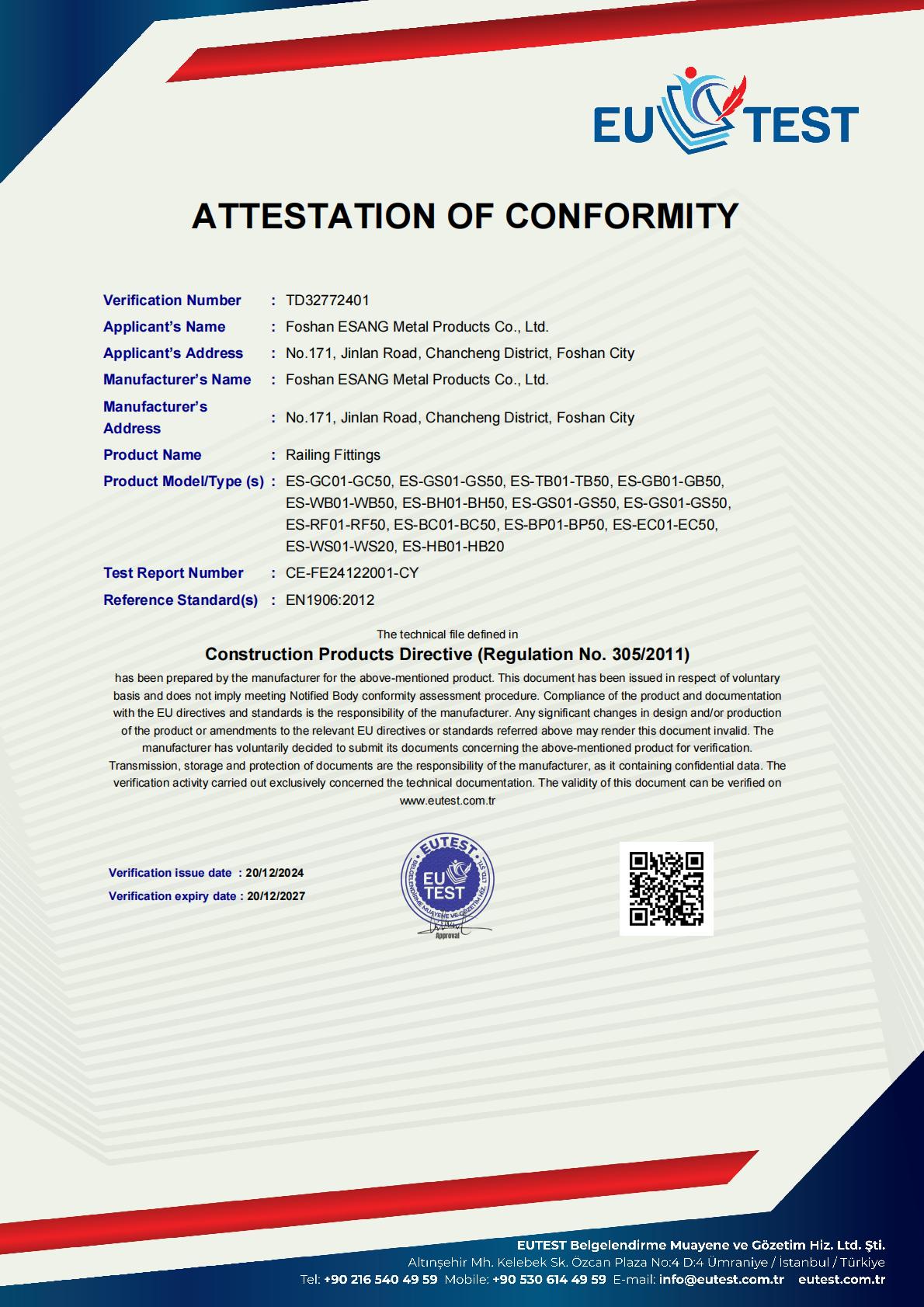
تفخر شركة فوشان إسانج للمنتجات المعدنية بما يلي شهادة CE (التحقق رقم TD3272772401) بموجب توجيه منتجات البناء (اللائحة رقم 305/2011)، مما يؤكد التزامنا بأعلى معايير السلامة والجودة الأوروبية.
مجموعة المنتجات المعتمدة:
مجموعة تجهيزات الدرابزين الشاملة التي نقدمها - بما في ذلك المشابك الزجاجية وأجهزة الشد والأقواس وحوامل الحائط وأحذية القاعدة وتجهيزات الدرابزين وأجهزة الكابلات ومكونات العمود - تلبي EN1906:2012 المعايير، مما يضمن السلامة الهيكلية وموثوقية الأداء في جميع المنشآت.
ماذا يعني ذلك بالنسبة لمشروعك:
✓ الامتثال التنظيمي الكامل للأسواق الأوروبية والدولية
✓ أداء السلامة والمتانة الذي تم التحقق منه بشكل مستقل
✓ دعم التوثيق للمواصفات المعمارية
✓ راحة البال من ضمان الجودة من طرف ثالث
الشهادة صالحة حتى عام 2027 | تقرير الاختبار: سي-إي 2412122001-سي