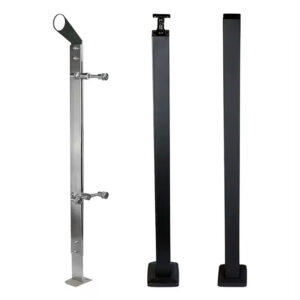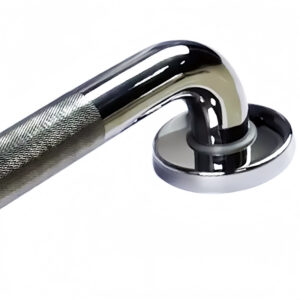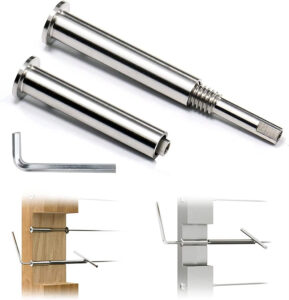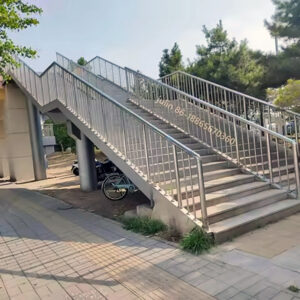
Selecting handrail materials for high-traffic industrial facilities is a critical infrastructure decision that directly impacts safety, lifecycle cost, and operational continuity. The common misconception is that this choice is a simple matter of material preference or initial budget. In reality, it’s a strategic decision balancing metallurgical properties, environmental factors, and compliance pathways. A misstep can lead to premature corrosion, unexpected maintenance costs, or costly rework to meet safety codes.
The stakes are higher now. Facility managers face increased pressure to optimize capital expenditures while ensuring long-term durability and adherence to stringent OSHA and IBC standards. The material choice influences not just the installation timeline but also the long-term liability and maintenance burden of the safety system. Getting this decision right is foundational to creating a safe, compliant, and cost-effective industrial environment.
Stainless Steel vs. Aluminum: Core Material Differences
Metallurgical Foundations
The divergence begins at the atomic level. Stainless steel is an iron-based alloy containing a minimum of 10.5% chromium, which forms a self-repairing passive oxide layer for corrosion resistance. Common grades like 304 offer general robustness, while 316 provides enhanced resistance to chlorides. Its high density grants exceptional tensile strength and rigidity, making it inherently resistant to impact and deformation. Aluminum, a lightweight non-ferrous metal, relies on high-strength alloys like 6105-T5, which is heat-treated. While its strength-to-weight ratio is excellent, its absolute yield and tensile strength are lower, often necessitating thicker wall sections to meet the same load standards as steel.
Supply Chain and Application Philosophy
This fundamental difference in material properties creates a bifurcated supply chain. For large-scale, code-intensive projects, engineered aluminum systems from specialized fabricators are the norm. These are designed, calculated, and certified as complete systems. Conversely, the market offers many standardized stainless steel kits, often marketed for small-scale or retrofit applications. This reflects a deeper split between engineered-to-order solutions and commodity product business models. The choice often dictates your project’s procurement and validation process.
The Strategic Implication
Industry experts recommend looking beyond the metal itself to the system philosophy. Easily overlooked details include the manufacturer’s in-house engineering capability and their process for third-party certification. For a major facility expansion, we compared proprietary aluminum systems against fabricated stainless options and found the former streamlined the entire approval process by shifting the compliance burden upstream.
Cost Comparison: Initial Investment vs. Lifetime Value
Beyond Unit Price
A simplistic focus on material cost per foot is misleading. While stainless steel DIY kits can appear cheaper on a component basis, a total installed cost analysis for large-scale facilities often favors engineered aluminum. Aluminum’s lightweight nature reduces shipping costs, simplifies handling, and can lower the required structural support. The most significant financial advantage, however, lies in compliance engineering. A pre-certified aluminum system eliminates the need for expensive, project-specific engineering validation, moving this cost and liability from the contractor’s critical path to the manufacturer.
The Lifecycle Equation
Long-term value is dictated by the facility’s environment and maintenance philosophy. Stainless steel typically offers lower touch costs and superior performance in harsh, corrosive settings, justifying a higher initial outlay. Coated aluminum systems are optimized for initial cost and structural performance in controlled industrial environments. According to research from technical documentation, the transfer of compliance liability is a key strategic advantage, making manufacturer selection a critical risk management decision, not just a purchasing one.
Cost Factor Breakdown
The following table breaks down the key financial considerations beyond simple material cost, highlighting where each material accrues or saves expense over the project lifecycle.
| Cost Factor | Stainless Steel | Aluminum |
|---|---|---|
| Initial Material Cost | Lower upfront (DIY kits) | Higher for raw material |
| Shipping & Handling | Higher (heavy weight) | Lower (lightweight) |
| Structural Support Cost | Higher | Lower |
| Engineering Validation Cost | On-site/contractor burden | Pre-certified by manufacturer |
| Long-Term Maintenance | Lower in harsh environments | Optimized for controlled settings |
Source: Technical documentation and industry specifications.
Which Material Offers Better Strength and Load Performance?
Meeting the Code
Both materials must meet identical, non-negotiable OSHA and IBC codes: a 200-pound concentrated load and a 50 plf uniform load on the top rail. The difference is in how they achieve it. Stainless steel’s inherent high strength allows it to meet these demands with standard nominal pipe sizes. Aluminum, with lower absolute strength, frequently requires larger diameters or thicker walls—such as Schedule 40 for rails and Schedule 80 for posts—to achieve equivalent deflection performance and stiffness.
The Compliance Pathway
This technical requirement establishes aluminum as the standard for pre-engineered systems in regulated facilities. Specifications often explicitly mandate alloy 6105-T5, as governed by standards like the ASTM B429 Standard Specification for Aluminum-Alloy Extruded Structural Pipe and Tube. The strategic implication is clear: for code-intensive projects, defaulting to a certified aluminum system streamlines approval and provides guaranteed load ratings, prioritizing certified performance over material preference.
Performance Comparison
The table below contrasts how each material achieves the required safety performance, underscoring the different implementation paths.
| Performance Metric | Stainless Steel | Aluminum (6105-T5) |
|---|---|---|
| OSHA/IBC Top Rail Load | 200 lb concentrated | 200 lb concentrated |
| OSHA/IBC Uniform Load | 50 plf | 50 plf |
| Typical Pipe Schedule | Standard nominal sizes | Schedule 40/80 common |
| Deflection Control | High inherent strength | Larger diameters required |
| Code Compliance Path | On-site validation | Pre-engineered certified system |
Source: ASTM B429 Standard Specification for Aluminum-Alloy Extruded Structural Pipe and Tube. This standard establishes requirements for aluminum-alloy extruded pipe, including mechanical properties and dimensions, which are foundational for achieving the load ratings specified in industrial handrail designs.
Corrosion Resistance Compared: Harsh vs. Standard Environments
Environment Dictates Material
Performance is highly geography and application-dependent. Stainless steel excels in harsh environments involving chemicals, acids, or frequent washdowns. Grade 316 is essential for coastal or high-chloride areas; a critical limitation is that standard 304 stainless is not recommended within 10 miles of a coastline. Aluminum resists atmospheric corrosion well but requires specific protective measures when installed in concrete or in contact with dissimilar metals to prevent galvanic corrosion.
Isolation and Fastener Strategy
This often leads to a hybrid material strategy. Specifications mandate that aluminum in contact with concrete must be isolated with bituminous paint or Mylar isolators. Furthermore, all mechanical fasteners and anchors in an aluminum system must be stainless steel (types 303/304) to ensure long-term integrity and prevent bimetallic corrosion. This detail is frequently missed in procurement but is vital for durability.
Corrosion Resistance Guide
The following table provides a clear guide for material selection based on specific environmental challenges.
| Environment | Stainless Steel (Grade) | Aluminum Requirement |
|---|---|---|
| Coastal/High-Chloride | 316 essential | Protective coating needed |
| Standard Industrial | 304 suitable | Atmospheric corrosion resistant |
| Chemical/Washdown Areas | Excellent performance | Requires specific measures |
| Contact with Concrete | Not typically an issue | Bituminous paint/Mylar isolators |
| Fasteners/Anchors | Types 303/304 standard | Must be stainless steel |
Source: ASTM A270 Standard Specification for Seamless and Welded Austenitic Stainless Steel Sanitary Tubing. This standard specifies grades like 304 and 316, which are directly relevant to the corrosion resistance performance of stainless steel handrail components in various environmental conditions.
Installation and Fabrication: Weight, Speed, and Complexity
Logistics on Site
Installation logistics diverge significantly due to weight. Aluminum’s light weight allows for handling longer prefabricated sections, sometimes up to 24 feet, which can dramatically reduce on-site labor time and cost. Stainless steel’s weight provides a sense of solidity and stability but demands more robust anchoring, more personnel for handling, and often involves welding. Post-weld treatments are required to restore the corrosion-resistant passive layer at welds, adding a step.
Market Segmentation
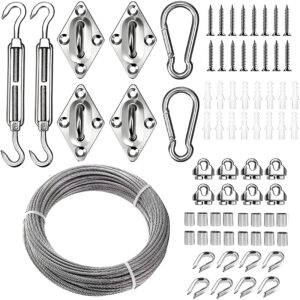
This contrast reveals clear market segmentation. Consumer-focused DIY kits heavily promote 304 stainless with “easy” pre-drilled features for low-skill assembly. Industrial aluminum systems are designed for professional installation as part of a coordinated build. The strategic takeaway: for small, low-traffic retrofits, stainless DIY kits can be cost-effective by minimizing skilled labor. In contrast, for large greenfield projects, aluminum’s logistical and pre-fabrication advantages dominate, reducing the overall project timeline. In my experience, the ability to install longer runs of aluminum rail with fewer connections not only speeds up the job but also creates a cleaner, more consistent visual line.
Maintenance and Long-Term Durability in High-Traffic Areas
Surface Durability Under Stress
In high-traffic zones, maintenance needs are dictated by surface hardness. Stainless steel is generally low-maintenance, easily cleaned with standard agents, and its high abrasion resistance preserves its appearance under frequent contact. Aluminum has a softer surface, making it more susceptible to scratching and wear. Therefore, durable anodized (e.g., AA M10-C22-A41) or powder-coated finishes are typically specified to enhance surface durability and provide color options.
The Long-Term Strategic Bet
The choice becomes a strategic bet on facility management capabilities. Stainless may offer lower upkeep in harsh, wet environments where its inherent corrosion resistance is a constant asset. Coated aluminum is optimized for controlled industrial settings where its finish can be maintained, but deep scratches that penetrate the coating may require touch-ups to prevent localized oxidation. Standards like the ANSI/BHMA A156.18 American National Standard for Materials and Finishes provide essential guidelines for evaluating these protective coatings.
Maintenance Profile Comparison
Understanding the long-term care profile is essential for facility planning and budgeting.
| Consideration | Stainless Steel | Aluminum |
|---|---|---|
| Surface Hardness | High | Softer, more scratch-prone |
| Abrasion Resistance | Excellent | Requires protective finish |
| Typical Finish | Mill finish, polished | Anodized or powder-coated |
| Cleaning Agents | Standard cleaners | Compatible standard cleaners |
| Scratch Damage Impact | Minimal appearance change | May require touch-up coating |
Source: ANSI/BHMA A156.18 American National Standard for Materials and Finishes. This standard provides essential guidelines for evaluating and specifying protective finishes, such as anodizing or powder coating, which are critical for the long-term durability and appearance of aluminum handrails.
Compliance and Safety Standards: Meeting OSHA & IBC Codes
The Non-Negotiable Benchmark
Meeting OSHA 1910.29 and IBC 1015 requirements is mandatory. Systems must withstand the specified loads and prevent the passage of a 21-inch sphere. Compliance is proven through one of two paths: certified engineering calculations based on accepted standards or independent laboratory testing. For engineered aluminum systems, this validation is provided upfront by the manufacturer, shifting the legal and technical liability upstream and off the project’s critical path.
The “Approved Equal” Clause
This process is often facilitated by the “approved equal” clause in project specifications. This clause names a proprietary system but allows for competitive bidding. However, it introduces both vendor leverage and contractor risk. Contractors must prepare detailed comparative submittals to prove functional and compliance equivalence, or risk being locked into a single supplier and facing potential approval delays. Navigating this clause successfully requires thorough documentation and an understanding of the core performance requirements, not just cosmetic similarities.
Decision Framework: How to Choose the Right Material
Matching Material to Condition
The final decision is not about a universally “better” material but the optimal fit for specific conditions. Choose stainless steel when the primary drivers are harsh chemicals, chlorides, high-impact risk, or coastal locations (using Grade 316). Its lifecycle value shines where minimal upkeep under aggressive conditions is the priority. Choose aluminum for typical industrial environments like general manufacturing or warehousing, where lightweight advantages, lower total installed cost at scale, and pre-certified compliance are critical, provided proper isolation from dissimilar metals is guaranteed.
The Mandatory Pre-Selection Audit
A site-specific environmental audit is a mandatory step before selection. This should assess chemical exposure, atmospheric conditions, proximity to coastlines, and the facility’s long-term maintenance philosophy. Forward-thinking manufacturers aid this process through digital integration, offering BIM libraries and digital twins for virtual compliance checking, thus reducing procurement friction.
Decision Framework Table
This framework synthesizes the primary decision drivers into an actionable guide.
| Primary Driver | Recommended Material | Key Condition |
|---|---|---|
| Harsh Chemicals/Chlorides | Stainless Steel (316) | Coastal (<10 miles) |
| High-Impact Risk | Stainless Steel | Critical deformation resistance |
| Total Installed Cost (Large Scale) | Aluminum | Pre-certified compliance needed |
| Standard Industrial Environment | Aluminum | Proper metal isolation guaranteed |
| Low-Traffic Retrofit | Stainless Steel (304 kits) | Skilled labor cost reduction |
Source: Technical documentation and industry specifications.
The optimal handrail material balances immediate project constraints with long-term operational reality. Prioritize stainless steel for its corrosion performance in aggressive settings and aluminum for its logistical and compliance efficiency in standard environments. The manufacturer’s role is pivotal; their ability to provide pre-certified systems and engineering support transforms them from a supplier into a risk-management partner.
Need professional guidance to specify the right handrail system for your facility’s unique challenges? The experts at Esang specialize in engineered safety solutions that meet both code and cost objectives. Review detailed specifications and engineered system options for industrial handrail and guardrail systems to inform your next project. For direct consultation, you can also Contact Us.
Frequently Asked Questions
Q: How does the compliance certification process differ between stainless steel and aluminum handrail systems?
A: Engineered aluminum systems typically come with pre-certified compliance from the manufacturer, including validated engineering calculations or independent lab testing to meet OSHA and IBC load requirements. This shifts technical liability upstream. For stainless steel, compliance often requires project-specific validation. This means large, code-intensive projects benefit from aluminum’s streamlined approval, while smaller retrofits using stainless kits must budget for separate engineering review. The ANSI/BHMA A156.18 standard provides essential guidelines for evaluating finishes that contribute to long-term compliance.
Q: What are the specific corrosion risks for aluminum handrails in industrial settings, and how are they mitigated?
A: Aluminum faces galvanic corrosion when in direct contact with concrete or dissimilar metals like carbon steel. Specifications mandate isolation using bituminous paint or Mylar sleeves at these interfaces. Furthermore, all mechanical fasteners and anchors must be stainless steel (types 303 or 304) to prevent bimetallic corrosion and ensure framework integrity. This means your installation plan must include these protective details; neglecting them risks premature system failure, especially in environments with moisture or conductive residues.
Q: When should we specify Grade 316 stainless steel over the more common Grade 304 for handrails?
A: You must specify Grade 316 for environments with chlorides, such as coastal facilities within 10 miles of the ocean, chemical processing areas, or locations with frequent acidic washdowns. Grade 304 is not suitable for these conditions. This decision requires a site-specific environmental audit; facilities in harsh, wet environments should prioritize 316 stainless for its superior chloride resistance to minimize lifecycle maintenance. The ASTM A270 specification references these austenitic stainless grades commonly used for such applications.
Q: How does material choice impact the total installed cost for a large-scale facility handrail project?
A: While stainless steel DIY kits can have a lower unit cost, engineered aluminum systems often deliver a lower total installed cost for large projects. Aluminum’s lighter weight reduces shipping, handling, and structural support expenses. Crucially, its pre-certified compliance removes costly engineering validation from the critical path. For projects where schedule and predictable budgeting are priorities, an engineered aluminum system from a certified manufacturer provides better cost control and risk management.
Q: What load performance specifications must industrial handrails meet, and how do the materials achieve them?
A: Codes require handrails to withstand a 200-pound concentrated load and a 50 pounds per linear foot uniform load on the top rail. Stainless steel’s high inherent strength meets this with standard pipe sizes. Aluminum alloys like 6105-T5 often need larger diameters or thicker wall schedules (e.g., Schedule 40 for rails) to achieve equivalent deflection limits. This means for guaranteed, code-compliant performance, specifying a certified aluminum system with documented load ratings is the most straightforward path. The ASTM B429 standard governs the extruded aluminum pipe used in these structural applications.
Q: What are the key maintenance considerations for handrails in high-traffic industrial areas?
A: Stainless steel offers high abrasion resistance and is easily cleaned, making it low-maintenance in harsh, wet environments. Aluminum has a softer surface more prone to scratching, so durable anodized or powder-coated finishes per ANSI/BHMA A156.18 are essential. Deep scratches in these coatings may require touch-ups to prevent oxidation. Your choice is a strategic bet on facility upkeep capabilities; stainless suits aggressive conditions where minimal touch is critical, while coated aluminum is optimal for controlled settings where its finish can be maintained.
Q: How does the “approved equal” clause in handrail specifications affect contractor bidding and project risk?
A: This clause names a proprietary system but allows bids on functionally equivalent products. It introduces both opportunity and risk for contractors. To use it, you must prepare detailed submittals proving your alternative meets all compliance and performance specs. Failure to do this adequately can lock you into a single supplier or cause approval delays. For contractors, this means factoring in the time and expertise needed for a rigorous comparative analysis during the bidding phase.