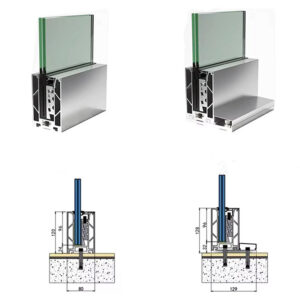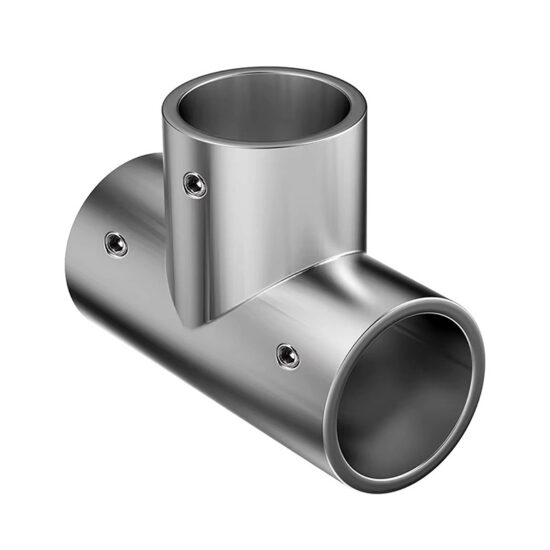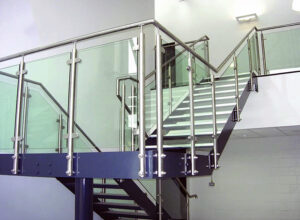
Selecting the wrong material for posts in a corrosive environment is a capital budgeting error. The initial cost savings from aluminum can evaporate into decades of maintenance liabilities, while the premium for stainless steel may be unnecessary for your specific site conditions. Professionals must move beyond simple material comparisons to a lifecycle analysis that accounts for environmental severity, maintenance protocols, and total financial exposure.
This decision is critical now as building codes and owner expectations for durability intensify. The “install-and-forget” myth leads directly to premature failure and unbudgeted capital replacement. A rigorous, specification-driven approach is the only way to ensure your project pays for decades of service, not a cycle of repairs.
Stainless Steel vs Aluminum: Core Material Differences Explained
Material Composition & Inherent Properties
The fundamental divergence lies in corrosion resistance mechanisms. Stainless steel relies on a self-repairing chromium oxide passive layer. Marine-grade alloys like Type 316 include molybdenum to resist chloride-induced pitting. It offers high strength and stiffness, permitting slender, code-compliant profiles. Aluminum naturally forms a protective aluminum oxide layer and is valued for its low density—about one-third that of steel. For structural posts, it is typically extruded from 6000-series alloys like 6061-T6.
Corrosion Defense Strategy
This is the critical distinction: stainless steel’s defense is inherent to the alloy, while aluminum’s depends on an applied barrier. A high-performance powder coat or anodization is not optional for aluminum in harsh environments; it is the primary corrosion protection system. Material selection is climate-specific. In our analysis of coastal projects, stainless steel is mandated for direct salt spray zones, while a properly coated aluminum system can be engineered for other harsh conditions.
Structural Performance & Engineering
The lower modulus of elasticity of aluminum means it deflects more under load than an identical stainless steel section. Industry experts recommend that to meet the same load requirements, manufacturers increase aluminum wall thickness by 20-40%. This engineering compensation creates a lighter final assembly that still meets structural codes, a detail often overlooked in initial material comparisons.
Total Lifecycle Cost Comparison: Initial vs Long-Term
Understanding Cost Components
The financial analysis must extend beyond the purchase invoice. Aluminum posts generally present a lower initial material and installed cost due to lighter weight and simpler handling. Stainless steel typically commands a 60-100% premium upfront. However, the total lifecycle cost over 20-30 years integrates maintenance, repair, and potential replacement. The strategic budget trade-off is clear: a higher upfront investment can fund other project elements, but the long-term cost leader is not predetermined.
The Lifecycle Cost Model
Industry studies indicate that using high-corrosion-resistant materials can reduce lifecycle costs by 62-80% over standard, non-specified options. The model must account for the present value of all future expenditures. A common mistake is underestimating the cost and frequency of maintenance interventions or failing to budget for mid-life refurbishment like recoating aluminum or repassivating steel.
Analyzing the Financial Trade-off
The following table breaks down the key financial drivers in the stainless steel vs. aluminum decision, highlighting where costs are incurred over the asset’s life.
Total Lifecycle Cost Comparison: Initial vs Long-Term
| Cost Component | Stainless Steel | Aluminum |
|---|---|---|
| Initial Material Cost | 60-100% premium | Lower base cost |
| Long-Term Maintenance Cost | Lower with discipline | Variable; depends on coating |
| Lifecycle Cost Reduction Potential | 62-80% over standard | High with proper specification |
| Key Financial Trade-off | High upfront, low long-term | Lower upfront, variable long-term |
Source: Technical documentation and industry specifications.
Which Performs Better in Coastal Corrosion Environments?
Defining the Corrosive Forces
Performance is dictated by the specific agents: salt spray, immersion, humidity, and pollutants. Marine-grade stainless steel (Type 316/316L or duplex 2205) is the benchmark for direct saltwater splash and immersion due to its robust passive layer. Its performance is not corrosion-proof; it depends on maintaining that layer through environmental interaction and care. Aluminum’s performance hinges entirely on the integrity of its coating system.
The Coating as a Decisive Variable
For aluminum, a marine-grade powder coat meeting the AAMA 2605 Voluntary Specification, Performance Requirements and Test Procedures for Superior Performing Organic Coatings on Aluminum Extrusions and Panels acts as a superb barrier. However, any scratch or chip exposing the substrate can initiate localized corrosion. The coating quality and application are aluminum’s decisive performance variables. For severe, direct-exposure zones, stainless steel’s inherent resistance is often non-negotiable.
Performance Comparison Framework
This table outlines the fundamental performance characteristics of each material system in corrosive settings, providing a clear basis for selection.
Which Performs Better in Coastal Corrosion Environments?
| Performance Factor | Stainless Steel (Marine Grade) | Aluminum (Coated) |
|---|---|---|
| Primary Defense | Chromium oxide passive layer | Applied coating barrier (e.g., AAMA 2605) |
| Key Alloy/Grade | Type 316/316L, Duplex 2205 | 6000-series (e.g., 6061-T6) |
| Critical Failure Mode | Passive layer breakdown | Coating damage (scratch/chip) |
| Best For | Direct salt spray/immersion | Harsh, non-direct splash zones |
Source: AAMA 2605 Voluntary Specification, Performance Requirements and Test Procedures for Superior Performing Organic Coatings on Aluminum Extrusions and Panels. This standard defines the high-performance coating requirements critical for aluminum’s durability in corrosive environments, directly impacting the performance data in the “coated” column.
Maintenance Requirements & Operational Cost Analysis
Routine vs. Critical Maintenance
Maintenance is the primary driver of operational costs and realized lifespan. Stainless steel requires proactive preservation of its passive layer through regular freshwater rinsing and, in harsh zones, application of passivating cleaners. Neglect leads to tea-staining and potential pitting. Aluminum maintenance focuses on preserving the powder-coated finish with routine cleaning and immediate repair of any coating damage. The discipline of the maintenance regimen determines the realized lifespan for both materials.
Operational Cost Drivers
Aluminum often has lower routine costs, but its simpler regimen is more consistently followed, making its theoretical lifecycle cost more reliably achievable for many owners. Stainless steel procedures require more specific knowledge; incorrect chemical use can damage the passive layer. We compared maintenance logs from similar facilities and found that adherence to scheduled washing was the single largest predictor of coating integrity on aluminum and surface condition on steel.
Maintenance Regimen Comparison
The ISO 9223 Corrosion of metals and alloys — Corrosivity of atmospheres — Classification, determination and estimation standard provides the framework for classifying environmental severity, which dictates maintenance intervals. The following table details the operational focus for each material.
Maintenance Requirements & Operational Cost Analysis
| Maintenance Aspect | Stainless Steel | Aluminum |
|---|---|---|
| Routine Action | Freshwater rinsing, passivating cleaners | Routine cleaning, coating inspection |
| Critical Focus | Preserve passive layer | Repair coating damage immediately |
| Cost Driver Complexity | Higher procedure knowledge | Simpler regimen |
| Realized Lifespan Determinant | Strict maintenance discipline | Consistent regimen adherence |
Source: ISO 9223 Corrosion of metals and alloys — Corrosivity of atmospheres — Classification, determination and estimation. This standard provides the framework for classifying environmental corrosivity, which is the foundational basis for determining the specific maintenance requirements and intervals for each material.
Galvanic Corrosion Risks & Mitigation Strategies
The Mechanism of Accelerated Failure
When dissimilar metals are in contact in a conductive electrolyte like saltwater, galvanic corrosion occurs. In a common railing scenario, aluminum posts with stainless steel fasteners can sacrificially corrode if not properly isolated. This is a design-flaw failure mode, not a material defect. The anode (less noble metal, often aluminum) corrodes to protect the cathode (more noble metal, like stainless steel).
Non-Negotiable Mitigation Specifications
Preventing this requires explicit specifications. All fasteners must be Type 316 stainless steel. More critically, specifications must mandate the use of non-conductive, UV-stable polymer washers or sleeves to isolate all dissimilar metal contacts. Any field-cut ends on aluminum must be sealed with a compatible compound to protect the exposed substrate. Proper system engineering from the manufacturer is essential to prevent this accelerated degradation.
The Role of Professional Detailing
Easily overlooked details include the isolation of hidden connections within post bases or sleeve connections. I’ve seen projects where a single un-isolated set screw inside a post sleeve initiated corrosion that compromised the entire assembly within two seasons. Mitigation is a system-wide requirement, not a point detail.
Key Specification & Installation Considerations
Material Specification Lock-In
Precise specification is the contract for long-term performance. For stainless steel, specify Type 316/316L or higher with a smooth surface finish (e.g., #4 brush or better) to aid cleaning. The ASTM A240/A240M Standard Specification for Chromium and Chromium-Nickel Stainless Steel Plate, Sheet, and Strip for Pressure Vessels and for General Applications defines the chemical and mechanical requirements for these grades. For aluminum, specify structural alloy 6061-T6 and a certified coating system like AAMA 2605.
Installation Protocols for Durability
Installation must follow specifications exactly. Avoid field modifications that compromise protective finishes or create crevices where moisture can be trapped. For stainless, use stainless steel tools to prevent iron contamination. For aluminum, ensure all protective films are removed post-installation and that no abrasive debris remains on coated surfaces. The connection between proper specification and flawless installation is where long-term durability is secured.
Specification Comparison Guide
This table provides a concise checklist for specifying and installing each material system correctly.
Key Specification & Installation Considerations
| Consideration | Stainless Steel Specification | Aluminum Specification |
|---|---|---|
| Material Grade | Type 316/316L, smooth finish | Alloy 6061-T6 |
| Coating Standard | Not applicable | AAMA 2605 certification |
| Structural Compensation | High inherent stiffness | 20-40% thicker walls |
| Critical Installation Rule | Avoid crevices, proper finish | Isolate dissimilar metals, seal cuts |
Source: ASTM A240/A240M Standard Specification for Chromium and Chromium-Nickel Stainless Steel Plate, Sheet, and Strip for Pressure Vessels and for General Applications. This standard defines the chemical and mechanical requirements for stainless steel grades like 316, forming the basis for the material specification and performance expectations listed.
Stainless Steel vs Aluminum: Decision Framework for Buyers
Step 1: Site-Specific Corrosivity Assessment
Begin with a detailed site assessment. Classify the environment using standards like ISO 9223. Is it direct salt spray (C5-M), splash zone, or a harsh atmospheric (C4) zone? Map micro-environments on the project site. This objective assessment moves the decision from preference to engineering necessity. For severe, direct salt spray with guaranteed maintenance, stainless steel justifies its premium.
Step 2: Align with Project Constraints & Values
Evaluate budget, maintenance capability, and sustainability goals. For harsh but not direct-splash zones, especially where budget or maintenance consistency is a concern, a properly specified aluminum system offers compelling value. The market is evolving toward engineered hybrid systems, shifting competition to integrated design and comprehensive warranties. Furthermore, aluminum’s superior recyclability and efficient scrap loop offer a growing sustainability advantage for green-building projects.
Step 3: Validate with System Warranty & Support
The final filter is the manufacturer’s warranty and technical support. A 20-year non-prorated warranty on a coated aluminum system signals confidence in the specification. For stainless, seek suppliers who provide passivation and care guidelines. The right partner provides not just components, but a corrosion management system for your specific railing posts and components.
How to Calculate Your Project’s Total Cost of Ownership
Building the TCO Model
A rigorous Total Cost of Ownership (TCO) model projects costs over the intended service life, typically 25+ years. Calculate four core components: 1) Initial Installed Cost (materials, labor), 2) Present Value of Recurring Maintenance (cleaning, inspections, products), 3) Present Value of Major Refurbishment (recoating aluminum, repassivating steel), and 4) Potential Replacement Cost discounted to present value. Factor in the probability and cost of premature failure due to neglect or specification error.
Incorporating Risk & Probability
The “install-and-forget” myth leads to neglect, creating future liability. A robust TCO model assigns probabilities to different maintenance scenarios (optimal, typical, neglectful) based on your organization’s historical performance. This creates a range of potential financial outcomes, not a single point estimate. It transforms lifecycle cost from a theoretical exercise into a risk management tool.
TCO Component Breakdown
Use the following framework to structure your calculation and ensure no cost element is omitted.
How to Calculate Your Project’s Total Cost of Ownership
| TCO Model Component | Description | Key Consideration |
|---|---|---|
| 1. Initial Installed Cost | Materials + labor | Base for all calculations |
| 2. Recurring Maintenance PV | Cleaning, inspections, products | Discount future costs to present value |
| 3. Major Refurbishment PV | Recoating, repassivating | Plan for mid-life interventions |
| 4. Replacement Cost PV | Premature failure probability | Factor in risk of specification error |
Note: PV = Present Value.
Source: Technical documentation and industry specifications.
The most cost-effective outcome comes from matching the material system to the environment and committing to its prescribed care. This ensures you pay for decades of service, not premature replacement.
Your material decision must balance first cost with lifetime liability. Prioritize a site-specific corrosivity assessment, lock in performance through precise specifications, and commit to the required maintenance protocol. The lowest lifetime cost belongs to the system engineered for your environment, not the cheapest invoice.
Need professional guidance specifying corrosion-resistant railing systems for your coastal or industrial project? The engineers at Esang can help you develop a TCO model and select the optimal material specification to meet your performance and budgetary requirements. Contact Us to discuss your project parameters and receive detailed system data.
Frequently Asked Questions
Q: How do you specify the correct stainless steel grade for direct saltwater exposure?
A: For direct salt splash or immersion, you must specify marine-grade stainless steel like Type 316/316L or duplex 2205. These alloys contain molybdenum to resist chloride-induced pitting and maintain a self-repairing passive layer, as defined by material standards like ASTM A240/A240M. This means projects in severe coastal zones should mandate these grades and avoid lower-cost alternatives like Type 304, which lacks sufficient corrosion resistance.
Q: What coating specification ensures aluminum posts survive in harsh coastal environments?
A: Aluminum’s durability in corrosive zones depends entirely on a certified high-performance coating system. You must specify a marine-grade powder coat that meets the AAMA 2605 voluntary specification for superior performance, which tests for color retention and chalk resistance. If your project is in a harsh but not direct-splash zone, this specification is the minimum baseline to achieve a viable service life and control long-term maintenance costs.
Q: How do you prevent galvanic corrosion when connecting aluminum posts with stainless steel hardware?
A: You prevent this accelerated failure by mandating complete electrical isolation between the dissimilar metals. Specifications must require non-conductive, UV-stable polymer washers or sleeves at all contact points, and all fasteners should be Type 316 stainless steel. This means your procurement and installation oversight must verify these isolation details are included, as a design flaw here will lead to sacrificial corrosion of the aluminum regardless of the coating quality.
Q: What is the key factor in calculating total cost of ownership for these material systems?
A: The decisive factor is integrating the present value of all future maintenance and potential refurbishment costs over a 20-30 year horizon, not just the initial installed cost. You must model expenses for routine cleaning, coating repairs, and major interventions like repassivation or recoating. For operations with inconsistent maintenance discipline, the simpler care regimen of aluminum often makes its projected lifecycle cost more reliably achievable than stainless steel’s higher-maintenance profile.
Q: How should we assess our site’s corrosivity to choose between stainless steel and aluminum?
A: Conduct a detailed site assessment using a standardized classification system like ISO 9223, which categorizes atmospheric corrosivity based on environmental parameters. This framework provides a data-driven method to predict material degradation rates. If your assessment confirms a C5-M “very high” marine corrosivity level, stainless steel’s inherent resistance typically becomes the necessary choice over coated aluminum.
Q: Why does aluminum sometimes have a thicker profile than stainless steel for the same load?
A: Aluminum has lower intrinsic stiffness, so manufacturers compensate through engineering by increasing wall thickness by 20-40% to meet structural load and deflection requirements. This creates a code-compliant system that remains lighter overall than steel. For your project, this means comparing “as-engineered” systems, not raw material properties, and evaluating delivered dimensions and weights for handling and aesthetic impact.
Q: When does the higher upfront cost of stainless steel become justifiable?
A: The premium is justified in environments with guaranteed, direct salt spray exposure and where you can commit to a disciplined maintenance program to preserve the passive layer. The 60-100% higher initial cost buys inherent corrosion resistance that coated aluminum cannot match under constant saltwater assault. This means for critical infrastructure in severe marine zones with a dedicated operations budget, stainless steel offers lower long-term risk despite the capital outlay.