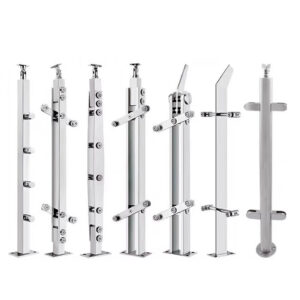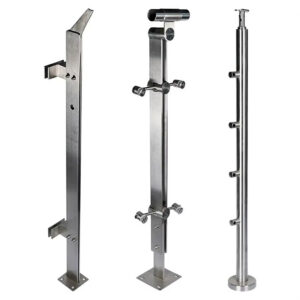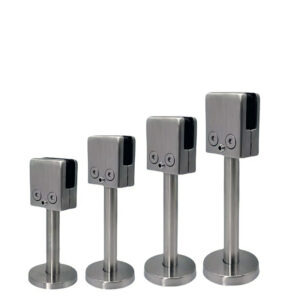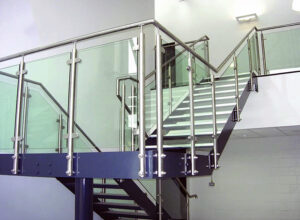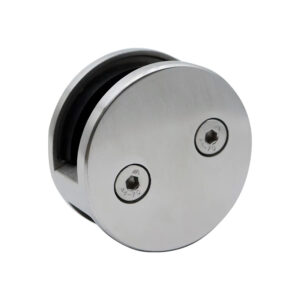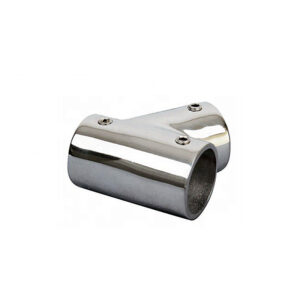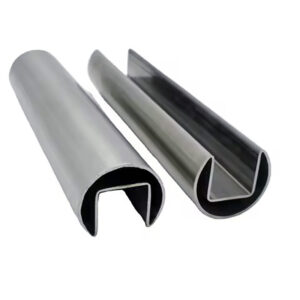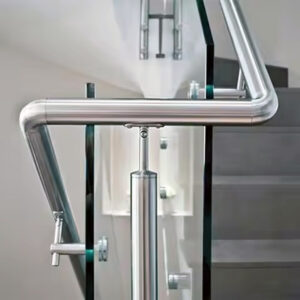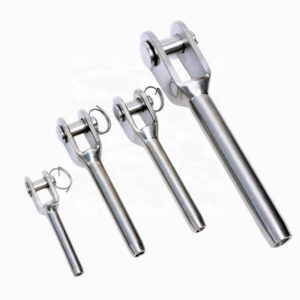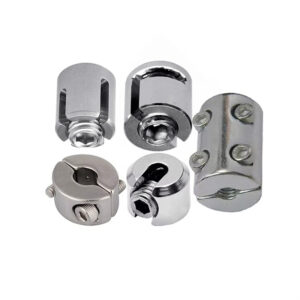
In industrial facilities, the handrail system is a critical safety asset, not an architectural afterthought. Its fabrication involves a series of technical decisions that directly impact long-term performance, compliance, and total cost of ownership. Professionals must navigate material science, precision fabrication, and strict regulatory codes to achieve a system that is both durable and code-compliant.
The complexity arises from integrating these disciplines into a single, coherent solution. A misstep in material selection, welding technique, or installation can create liability and necessitate costly replacement. This guide details the key fabrication and installation methods, providing a decision framework for specifying a handrail system engineered for industrial demands.
Key Considerations for Material Selection: 304 vs. 316 Stainless Steel
Defining the Material Choice
The selection between 304 and 316 stainless steel is a foundational cost-benefit analysis dictated by the operational environment. Both are austenitic grades, but their alloy composition targets different corrosion challenges. This initial decision sets the parameters for lifecycle cost, maintenance intervals, and the system’s functional lifespan within your specific facility.
Application in Industrial Environments
For standard industrial settings—warehouses, manufacturing floors, interior stairwells—Type 304 offers an optimal balance of cost and performance. Its chromium-nickel alloy provides excellent corrosion resistance and durability, particularly in hygienic environments like food and beverage processing. However, in facilities exposed to chlorides from chemical processes, de-icing salts, or coastal salt air, Type 316 becomes non-negotiable. The added molybdenum in 316 significantly enhances resistance to pitting and crevice corrosion, which can compromise structural integrity over time. Industry experts recommend mapping environmental exposures during the specification phase to avoid premature failure.
Impact on Project Scope and Cost
Choosing the correct grade aligns material science with environmental reality, protecting the capital investment. While 316 carries a higher initial material cost, its use in aggressive environments prevents exponential future costs from corrosion-related repairs or replacements. We compared project lifecycles and found that specifying 316 for coastal plants eliminated mid-lifecycle refurbishment, justifying the upfront premium. The table below clarifies the primary industrial applications for each common grade.
| Material Grade | Key Alloy Addition | Primary Industrial Application |
|---|---|---|
| Type 304 | Chromium-Nickel alloy | Standard industrial environments |
| Type 316 | Molybdenum addition | Chloride/chemical exposure |
Source: ASTM A270 Standard Specification for Seamless and Welded Austenitic Stainless Steel Sanitary Tubing. This standard defines the material grades and properties for high-quality stainless steel tubing, ensuring the corrosion resistance and mechanical integrity required for handrail components in various environments.
Precision Bending Methods for Code-Compliant Handrail Systems
The Problem of Complex Layouts
Industrial handrails must navigate stairs, landings, and equipment, requiring precise bends that maintain a continuous gripping surface. Inconsistent or poorly executed bends create weak points, visual imperfections, and can violate code requirements for a smooth, uninterrupted top rail. The challenge is transforming straight tubing into a system that fits unique spatial constraints without compromising safety or aesthetics.
The Solution: Rotary Draw Bending
Rotary draw bending is the preferred method for creating consistent, wrinkle-free bends in stainless steel tubing. This process allows fabricators to achieve precise bend angles and radii, typically for tubing ranging from 0.5 to 2 inches in diameter. The method’s control is critical for maintaining the tube’s cross-sectional integrity, which directly affects strength. Easily overlooked details include the bend radius calculation, which must ensure ergonomic graspability per code while fitting the architectural layout.
Validation Through Fit and Function
A successfully bent handrail integrates seamlessly into the facility’s flow. The validation occurs during installation: pre-fabricated sections should fit together with minimal field adjustment, and the top rail must provide a continuous handhold. This precision reduces installation time and ensures the final product meets both the engineered design and safety standards. The table below summarizes key bending outcomes.
| Bending Method | Typical Tubing Diameter | Key Outcome |
|---|---|---|
| Rotary draw bending | 0.5 to 2 inches | Wrinkle-free, consistent bends |
| Precision bending | Calculated radii | Continuous gripping surface |
Source: Technical documentation and industry specifications.
Expert Welding Techniques for Durable, Corrosion-Resistant Joints
Welding Process Requirements
The structural soundness of a handrail system hinges on weld integrity. For stainless steel, Gas Tungsten Arc Welding (GTAW/TIG) is the standard. It provides the control needed for high-quality, precise welds with a clean appearance. The process uses a non-consumable tungsten electrode and an inert gas shield, preventing contamination and producing strong, ductile joints. This level of control is non-negotiable for components bearing safety loads.
Critical Post-Weld Treatments
Welding heats the stainless steel, which can degrade its corrosion resistance at the joint by forming “heat tint” and compromising the passive oxide layer. Therefore, post-weld treatment is as critical as the weld itself. For critical applications in corrosive environments, techniques like purge welding protect the weld’s interior from oxidation. Following welding, joints are often ground smooth and electropolished. Electropolishing removes surface impurities and restores the protective chromium oxide layer, ensuring the weld zone matches the base material’s corrosion resistance.
The Decision Framework for Fabricators
Evaluating a fabricator’s welding competency requires asking about their qualified procedures. Do they adhere to recognized codes like AWS D1.6 Structural Welding Code – Stainless Steel? Do they perform purge welding for closed assemblies? Can they demonstrate post-weld finishing processes? The answers separate shops that simply join metal from those that fabricate durable, corrosion-resistant systems. The following table outlines the core techniques.
| Welding Process | Key Feature | Critical Post-Weld Treatment |
|---|---|---|
| GTAW/TIG welding | High-quality, precise welds | Grinding and electropolishing |
| Purge welding | Protects back side | Removes heat tint |
Source: AWS D1.6 Structural Welding Code – Stainless Steel. This code governs welding procedures and qualification for stainless steel structures, ensuring the structural integrity and corrosion resistance of welded joints critical for handrail safety and durability.
OSHA Compliance and Design Specifications for Industrial Handrails
Regulatory Requirements as Baseline
Compliance with OSHA Standard 1910.29 forms the non-negotiable baseline for design. Key specifications include a top rail height of 42 inches (±3 inches) for guardrails and the ability to withstand 200 pounds of force applied in any direction. The system must also include mid-rails or other equivalent protection. These are minimum requirements; treating them as design maxima is a common mistake that yields marginal safety.
Methods for Classification and Integration
Project planning must begin by precisely classifying the needed safety function. Is it a handrail (34-38 inches high, for graspability on stairs) or a guardrail (42+ inches, for fall prevention on platforms)? Misapplication creates compliance gaps. Beyond code-checking, value-added engineering optimizes safety within spatial constraints, such as designing for proper clearances around equipment or integrating with existing building structures.
Framework for Specification
The decision framework extends beyond height and load. It includes baluster spacing to prevent passage of a 19-inch sphere, toe-board requirements where falling object protection is needed, and the selection of appropriate rail diameters for ergonomic grip. Fabricators compete on their ability to engineer solutions that meet these multi-faceted requirements seamlessly. The table below lists core OSHA specifications.
| Specification | OSHA Requirement | Application Type |
|---|---|---|
| Top rail height | 42 inches (±3 inches) | Guardrail (fall prevention) |
| Load resistance | 200 pounds force | Any direction |
| Lower rail height | 34-38 inches | Handrail (grasping aid) |
Source: Technical documentation and industry specifications.
Installation Methods: Floor-Mounting vs. Wall-Mounting vs. Integral
Defining the Attachment Strategies
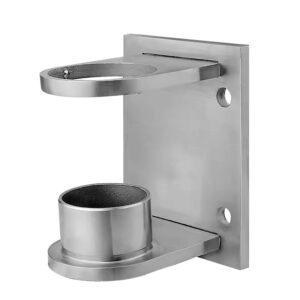
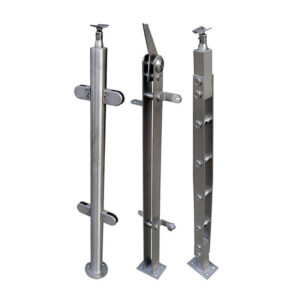
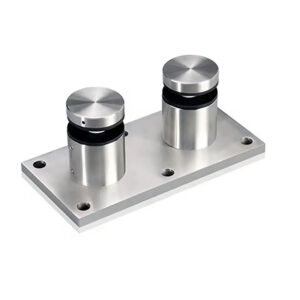
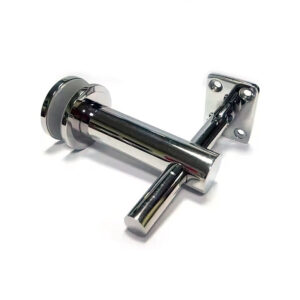
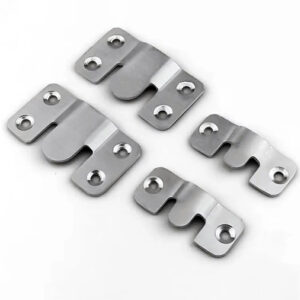
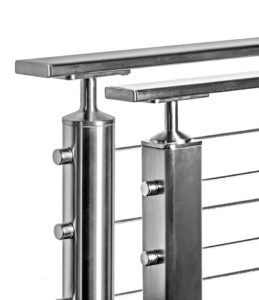
The installation method secures the fabricated system to the building’s structure, transferring loads safely. The three primary strategies are floor-mounting (using flanged base plates anchored into concrete), wall-mounting (using cantilevered brackets on structural walls), and integral mounting (welding posts directly to steel platforms or stair stringers). Each has distinct requirements for substrate strength and layout precision.
Application and Load Path
Floor-mounting is versatile but requires verification of concrete slab thickness and pull-out strength for anchor selection. Wall-mounting saves floor space but demands attachment to a structurally adequate wall, not just a partition. Integral mounting offers the cleanest aesthetic and direct load transfer but is only possible with steel substrates. The chosen method dictates the load path; a flaw in anchor selection or installation can become the system’s weakest point.
Impact on Accountability and Risk
This phase highlights the strategic value of selecting a fabricator who provides installation. Integrated fabrication-installation ensures single-point accountability for the entire system’s integrity, from shop weld to field anchor. It eliminates liability gaps that occur when separate parties handle fabrication and installation, where alignment issues or improper fastening can compromise a perfectly fabricated handrail.
Post-Fabrication Finishing: Passivation, Polishing, and Maintenance
The Requirement for Surface Integrity
After fabrication, the stainless steel surface must be treated to restore and enhance its innate corrosion resistance. Mechanical processes like welding and handling can embed free iron particles or create heat-affected zones, making the metal susceptible to rust. Finishing processes address this to ensure long-term performance and meet hygiene or aesthetic standards.
Methods for Corrosion Resistance and Aesthetics
Passivation is a critical chemical treatment that removes free iron and fortifies the protective chromium oxide layer. It is essential for handrails in industrial atmospheres. Aesthetic finishes like mechanical polishing or brushing are performed to specific Ra (roughness average) values, which impact cleanability and reflectivity. A #4 brushed finish, for example, offers a uniform appearance that hides minor scratches.
Maintenance Decision Framework
A proper finish simplifies long-term maintenance. The passive layer on stainless steel is maintained through regular cleaning with mild, non-chlorinated detergents and water. Abrasive cleaners or steel wool must be avoided. A straightforward maintenance regimen protects the investment, ensuring the system retains its functional and aesthetic value. Specifying the correct initial finish reduces lifetime maintenance effort.
Evaluating Fabricator Expertise: Questions to Ask Before You Buy
The Problem of Commoditized Bids
Not all metal fabricators possess the integrated capabilities for industrial handrail systems. Evaluating bids on price alone risks selecting a shop that treats handrails as simple pipe work, lacking the engineering and craftsmanship for code-compliant, durable safety systems. The problem is identifying a true specialist versus a generalist.
Solution: A Technical Qualification Checklist
Due diligence requires a technical questionnaire. Inquire about their primary bending method (rotary draw vs. compression). Confirm their welding process (TIG) and adherence to AWS D1.6. Ask if they perform in-house passivation and electropolishing. Crucially, assess their experience with your industry and their ability to provide stamped engineering drawings for complex installations like mezzanine gates or platforms.
Validation Through Project Examples
Request project portfolios showing similar industrial work. Ask for references specifically regarding installation accuracy and long-term durability. The validation comes from their multi-disciplinary expertise—do they have in-house design engineers and skilled tradespeople, or do they subcontract key phases? The fabricator should act as a holistic safety system integrator.
Project Timeline and Cost Factors for Custom Handrail Fabrication
Defining Cost Drivers
Cost is driven by variables in material, fabrication, and installation. The grade of stainless steel (316 vs. 304) is a primary factor. The extent of custom bending and welding increases with layout complexity. The chosen finish (e.g., electropolished vs. mill) adds cost. Installation logistics, including site readiness and travel, form a significant portion of the budget. Projects involving full mezzanines or complex integrations command higher scope and price.
Methods for Timeline Management
A typical project flows through design/engineering, shop fabrication, and field installation. Timeline is influenced by design iteration speed, shop workload, and site readiness for installers. Fabricators utilizing BIM or 3D modeling can drastically reduce design time and prevent installation fit errors, compressing the overall schedule. Clear communication on each party’s responsibilities for site prep is essential.
Decision Framework for Budget and Schedule
Understanding the cost and timeline structure allows for informed trade-offs. Value engineering might involve using 304 for interior sections and 316 for high-exposure areas. Confirming the fabricator’s current shop load during bidding provides realistic timeline expectations. The investment secures a code-compliant, durable asset tailored to your facility. The final table summarizes key factors.
| Cost Factor | Typical Variable | Impact on Timeline |
|---|---|---|
| Material grade | 316 vs. 304 steel | Design iteration phase |
| Custom bending/welding | Complexity level | Shop fabrication workload |
| Installation logistics | Site readiness | Field installation duration |
Source: Technical documentation and industry specifications.
The core decision points involve aligning material selection with environmental reality, ensuring fabrication techniques meet both strength and corrosion resistance standards, and securing the system through proper installation. Prioritize fabricators who demonstrate integrated engineering and execution capabilities, as this single-point accountability mitigates the greatest risks in custom safety systems.
Need professional guidance on specifying and fabricating a handrail system for your industrial facility? The experts at Esang provide end-to-end solutions from design to installation, ensuring compliance and durability. Review our approach to custom stainless steel fabrication for detailed methodology.
For a direct consultation on your project requirements, you can Contact Us.
Frequently Asked Questions
Q: When should we specify Type 316 stainless steel over the more common Type 304 for industrial handrails?
A: You should select Type 316 stainless steel for environments with high chloride exposure, such as coastal facilities, chemical processing plants, or areas using aggressive de-icing salts. Its added molybdenum content provides superior resistance to pitting and crevice corrosion compared to Type 304. This means facilities with these corrosive conditions must prioritize the higher-grade material to avoid premature failure and higher lifecycle maintenance costs, despite the greater initial expense.
Q: What welding method is considered the industry standard for high-integrity stainless steel handrail joints?
A: Gas Tungsten Arc Welding (GTAW/TIG) is the definitive method for critical stainless steel handrail fabrication. It delivers precise, clean welds essential for both structural integrity and a seamless aesthetic finish. For optimal corrosion resistance, especially on closed sections, purge welding techniques are recommended. If your project demands durable, visually consistent joints, you must verify your fabricator’s capability and qualification in AWS D1.6 Structural Welding Code – Stainless Steel procedures.
Q: How do OSHA regulations differentiate between a handrail and a guardrail, and why does it matter?
A: OSHA standards define a handrail (34-38 inches high) for graspability on stairs and ramps, while a guardrail (42 inches minimum) serves as a fall protection barrier on platforms and mezzanines. Misapplication creates a serious compliance gap and safety hazard. This means your project planning must start by precisely classifying the required safety function based on location to ensure the correct height, load rating, and component design from the outset.
Q: What are the key advantages of choosing a fabricator who also provides installation services?
A: Selecting a single-source fabricator-installer provides single-point accountability for the entire system’s structural integrity. It eliminates liability gaps between shop fabrication and field mounting, ensuring proper anchor selection and secure fastening to the building substrate. For projects where system performance and safety are paramount, this integrated approach mitigates risk and simplifies project management compared to coordinating separate vendors.
Q: Why is passivation a critical post-fabrication step for stainless steel handrails in industrial settings?
A: Passivation is an essential chemical treatment that removes free iron contamination from the steel surface and fortifies the protective chromium oxide layer. This process maximizes the material’s inherent corrosion resistance, which can be compromised during cutting and welding. Facilities in standard industrial atmospheres should therefore insist on passivation to ensure long-term durability and minimize maintenance, protecting the lifecycle value of the installation.
Q: What technical capabilities should we prioritize when evaluating a custom metal fabricator for this project?
A: Prioritize fabricators with demonstrated expertise in rotary draw bending for precise radii, certified TIG welding procedures, and in-house engineering for design compliance. Crucially, assess their experience with your specific industry environment and their ability to handle the full scope from material selection to installation. This means you should request detailed examples of past work and verify their adherence to relevant material specifications like ASTM A270 for tubing quality.
Q: What are the primary cost drivers for a custom stainless steel handrail project?
A: Major cost factors include the stainless steel grade (316 is more expensive than 304), the complexity of custom bends and welds, the selected surface finish, and installation logistics. Projects involving full platform integrations or complex mezzanines naturally command a higher scope and price. For accurate budgeting, you should provide potential fabricators with detailed layouts and environmental specifications early in the quoting process.