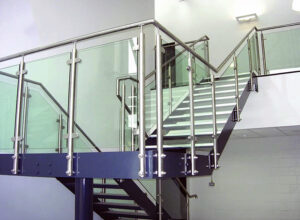
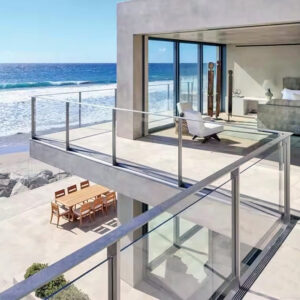
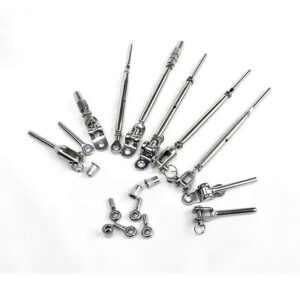
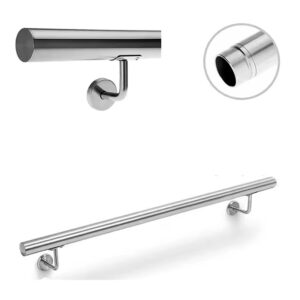
Handrail finish mismatches discovered at handover — different sheens across stairwells that sourced from the same specification — are one of the more avoidable punch-list problems in commercial construction, yet they appear on projects repeatedly because procurement decisions happen in isolation from the original hardware family lock. The cost is not abstract: resolving visible inconsistency against finished surfaces can mean refinishing, reordering, or renegotiating acceptance with an owner who approved a single standard at design sign-off. The decision that prevents it is earlier than most teams treat it — locking grade, finish, and component family before procurement begins, not after the first delivery arrives on site. What follows gives architects, specifiers, contractors, and procurement teams the grounding to evaluate traffic conditions, facility priorities, material trade-offs, and component fit before committing a hardware family to a full building package.
Commercial building traffic before handrail system selection
Code dimensions are not the starting point for handrail selection — they are the boundary within which selection happens. Treating them as a checklist applied after the design is set is a reliable path to rework: 1.5-inch wall clearance requirements can conflict with already-detailed wall returns, and extension dimensions beyond top and bottom risers can force bracket repositioning against finished surfaces. The right sequence is to confirm all dimensional constraints before bracket layout and surface prep begin.
The figures in the table below reflect requirements drawn from IBC 2021 Chapter 10 and the 2010 ADA Standards for Accessible Design as they apply to most U.S. commercial projects — jurisdiction-specific amendments should always be verified against the authority having jurisdiction before specifications are finalized.
| Requirement | Specification | Purpose |
|---|---|---|
| Handrail placement | Required on both sides of stairways and ramps where rise >6 in | Ensures means of egress compliance per IBC |
| Height | 34–38 in measured from stair nosing or walking surface | Critical for user safety and accessibility |
| Grip security | Handrails cannot rotate within their fittings | Rotation compromises stability and creates a safety hazard |
| Clearance | Minimum 1.5 in from adjacent surface; no sharp elements | Prevents hand injuries and ensures adequate grip |
| Extensions | ≥12 in beyond top riser; one tread depth beyond bottom riser | Provides continuous support at stair transitions |
| ADA minimum standard | Handrails must meet all applicable ADA accessibility requirements | Legal obligation beyond IBC; non‑compliance risks lawsuits and barriers |
| Circular diameter (IBC) | Outside diameter must be 1.25–2 in | Ensures proper grip across age and ability ranges |
| Continuity | Full length of each stair flight; ends returned to wall, newel, or post | Prevents snagging and supplies consistent support |
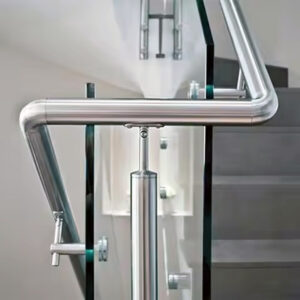
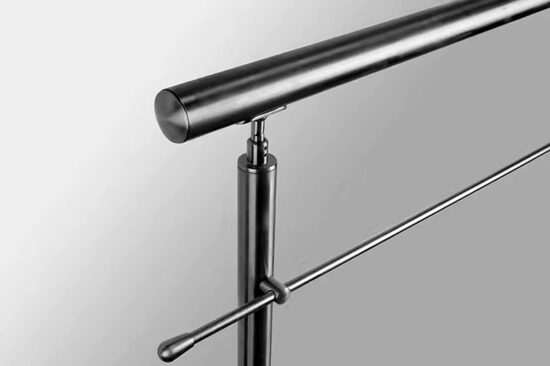
Two points in that table deserve attention beyond the numbers themselves. Continuity — the requirement that handrails run the full length of each stair flight with ends returned to a wall, newel, or post — directly affects how a modular component family needs to be specified. A system that cannot deliver code-compliant returns and connectors without field welding creates fabrication risk and finish inconsistency at the connection points most likely to be inspected. Grip security is the other installation-stage concern: rotation within fittings is not a dimension that shows up on drawings but is a verification point that belongs in the installation review, not the punch list. By the time rotation is discovered during a walkthrough, the bracket and tube have often been finish-coated or painted over.
Office, hospital, school, and public-building priorities compared
The same IBC height and clearance thresholds apply across building types, but the operational pressure behind those thresholds varies significantly by use. Understanding which pressures are dominant for each facility type is what determines whether a standard commercial specification is adequate or whether it needs to be qualified against owner expectations that go beyond minimum code.
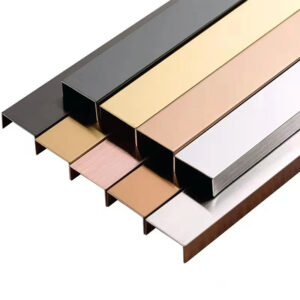
In office buildings, the primary driver is appearance consistency across a space that is also a branded environment. Handrails run through lobbies, elevator corridors, and open stairwells where finish visibility is high and owner sign-off is often tied to design intent as much as function. The procurement risk here is sourcing across multiple batches or suppliers and discovering a sheen difference only after installation — a problem that is difficult to correct without removing and replacing material that otherwise meets every code requirement.
Hospitals and clinical facilities operate under a different constraint set. Hygiene protocol is ongoing, cleaning agents are more aggressive than general commercial use, and surface condition is treated as part of infection control practice. A finish that holds up to daily disinfection without pitting, discoloration, or surface degradation is not a premium consideration in this context — it is an operational requirement that facility managers and infection control teams will enforce. The implication for specification is that finish durability under repeated chemical exposure, not appearance alone, should drive the surface finish selection and, in some environments, the alloy grade.
Schools and educational facilities generate high-contact, repetitive loading across narrow corridors, stairwells, and entry routes. Handrails in these environments accumulate physical wear from continuous gripping, impacts, and cleaning cycles across a long service life. The procurement priority is component standardization: a facility that cannot source a matching bracket or tube section from the same family five years after original installation will face visible patchwork repairs. Specifying a product line with confirmed long-term availability — not just a catalog entry — is a planning criterion worth building into procurement.
Public buildings, transit facilities, and civic spaces add a further dimension: diverse users across age, mobility, and physical ability. The ADA standards that are already a legal minimum in commercial occupancies become especially operationally visible in these settings. Handrail diameter, grip clearance, and extension lengths that technically meet code minimums may not adequately serve the actual user population, and facility owners in public-sector projects are often more exposed to accessibility complaints than private commercial operators. Specifying toward the conservative end of code-compliant ranges — rather than minimum dimensions — is a defensible planning position.
Stainless steel value against aluminum in high-contact routes
The unit cost comparison between stainless steel and aluminum tends to favor aluminum at the line-item level, and that is often where the trade-off gets resolved. In low-traffic interior applications with limited cleaning frequency and stable environmental conditions, that decision may hold. In high-contact commercial routes — hospital corridors, school stairwells, transit entry points — it underweights the durability gap in ways that show up in maintenance cost, surface condition, and appearance over the building’s service life.
The structural distinction matters in routes where loading is continuous and repeated. Stainless steel’s higher strength-to-weight ratio means it resists deformation from repeated bending loads better than aluminum across an equivalent wall thickness — this is an engineering trade-off for lifecycle and maintenance planning, not a tested load-rating comparison. In practical terms, a handrail that maintains dimensional stability and surface integrity across years of high-contact use requires fewer inspections, fewer replacements, and less remediation of surface damage that can otherwise create liability exposure in public-facing spaces.
Grade selection within stainless steel is the decision that carries the most consequence after material class is settled. In standard interior commercial environments with controlled humidity and no exposure to chlorides or industrial cleaning agents, 304 stainless steel is the common specification. In coastal installations, humid mechanical rooms, pool-adjacent corridors, or any environment where chloride exposure is confirmed, 304 may develop surface pitting within a few years — visible degradation that requires remediation and undermines the finish consistency the material was specified to maintain. 316 stainless steel, which contains molybdenum, is the recommended grade for those environments. This is not a universal code requirement — it is a planning criterion that changes the recommendation when environmental conditions are confirmed, and getting it wrong is difficult to correct after installation without a full replacement.
The finish durability gap between the two materials is also relevant where cleaning is frequent and chemical. Aluminum can be anodized to improve surface hardness, but it remains more susceptible to chemical attack from disinfectants and alkaline cleaners than properly specified stainless steel. In hospital and institutional environments where cleaning agents are selected for biological efficacy rather than material compatibility, this distinction has a real maintenance implication.
Cleaning, durability, and approval expectations by facility type
For most commercial interior applications, routine maintenance of stainless steel handrails does not require specialized products or procedures. Warm water, mild soap, and a soft cloth are sufficient for regular cleaning cycles — a low-maintenance profile that appeals to facility managers across office, educational, and civic building types where custodial protocols are standardized and not chemically aggressive.
The gap between general commercial cleaning and institutional cleaning is significant enough to treat as a separate planning criterion. Hospital and clinical facilities use disinfectant agents — including bleach-based and quaternary ammonium compounds — on a schedule that can run multiple times per day across high-touch surfaces. Stainless steel with an appropriate surface finish will withstand these cycles without visible degradation under normal conditions, but the surface finish itself is not incidental: a brushed finish that holds surface contaminants in the grain pattern is a different cleaning proposition than a smooth or electropolished finish that offers fewer surface irregularities for biological material to adhere to. For projects where infection control teams are involved in approval, the finish selection may need to be reviewed against their protocol, not just against the architect’s specification.
For schools and educational facilities, the durability concern is cumulative wear rather than chemical exposure. Handrails in these environments are gripped and impacted continuously across a long service cycle. The surface finish should be selected with the expectation that it will be cleaned with a range of commercial custodial products over time, and that surface scratches and contact marks will accumulate. A finish that is too refined for the environment will show wear within the first few years; a more durable brushed or satin finish is easier to maintain in appearance over the building’s service life.
Approval expectations also vary by facility type and project delivery model. In public-sector and institutional projects, the handrail system may need to be reviewed not just by the architect and contractor but by a facility operations team, an infection control officer, or a procurement standards committee. This extends the approval timeline and can create friction if the specified system requires substitutions or is sourced from a supplier without prior approval on that owner’s vendor list. Treating approval scope as a project-stage planning input — rather than an assumed sign-off — reduces the risk of late-stage respecification against an already-committed procurement schedule.
Project fit after traffic, hygiene, and maintenance conditions are clear
A commercial handrail package is only ready for procurement when the same finish, grade, and component family can cover every required route in the building without substitution. That condition is harder to satisfy than it sounds. Across a building with stairwells, corridors, ramps, and elevator lobbies specified at different stages or by different trades, it is possible to arrive at handover with handrails that individually meet every code dimension but collectively create a visible finish mismatch — different sheens, slightly different tube diameters, or bracket profiles from incompatible product lines. The mistake is not individual; it is the result of each procurement decision being made locally rather than against a single approved family lock.
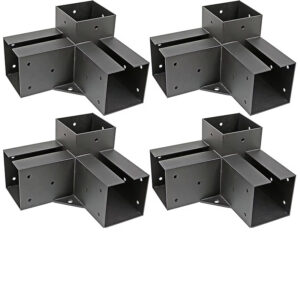
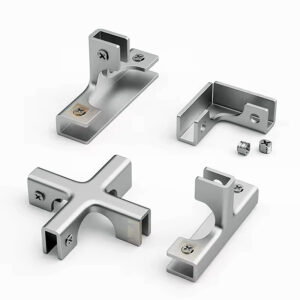
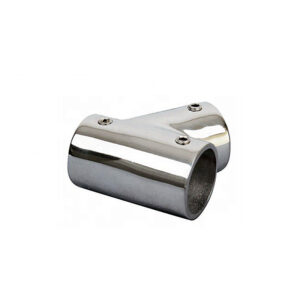
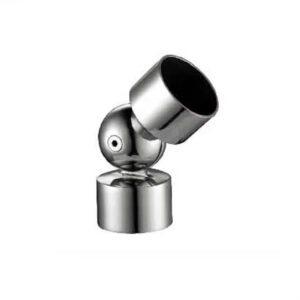
Modular, no-weld systems reduce this risk by building component compatibility into the system architecture. When returns, connectors, brackets, and tube are sourced from the same product line, installation consistency and future replacement are both simplified — the ADA-compliant interior systems and commercial interior rails categories at Esang are organized around this kind of component-family logic for exactly this reason. The downstream consequence of not using a modular system is that field fabrication or mixed-source procurement becomes the default, and field fabrication introduces finish variability at every connection point.
The procurement readiness checklist for a commercial package should confirm three things before commitment:
| Checkpoint | Why It Matters | What to Confirm |
|---|---|---|
| Modular (no‑weld) system | Prevents batch finish mismatch and punch‑list disputes; simplifies replacements | Confirm supplier can supply the same finish and component family across the entire building |
| Returns and continuous‑run connectors | Satisfies IBC continuity requirements while keeping design flexible | Verify all connections meet code without field welding |
| Standard diameters (1.5 in, 2 in) | Simplifies specification; ensures grip compliance and compatibility with common US fittings | Confirm chosen diameter meets code and aligns with standard fixture availability |
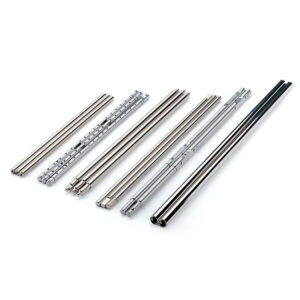
One dimension that runs through all three checkpoints is diameter. Standard U.S. commercial specifications commonly use 1.5-inch and 2-inch outside diameters — both within the IBC-compliant range and both compatible with the broad range of standard fittings available in the domestic market. Confirming diameter early simplifies bracket selection, fitting compatibility, and code review, and avoids the coordination problem of discovering mid-procurement that a preferred tube size requires a non-standard bracket that the same supplier cannot match in the same finish.
The coordination failure that drives most commercial handrail punch-list disputes is not technical — it is organizational. Architects, contractors, installers, and procurement teams each make decisions that look locally reasonable, and the mismatch only becomes visible at the scale of the completed building. Treating the hardware family lock as a project-stage deliverable — with the same grade, finish, and component line confirmed and shared across all parties before procurement begins — is the process change that prevents it.
A commercial handrail project is in a defensible procurement position when three things are confirmed in sequence: the dimensional requirements from IBC and ADA have been reviewed against the actual building conditions before layout begins, the material grade is matched to the environment rather than defaulting to the lowest-cost option, and a single component family — same finish, same grade, same modular line — is locked before any purchase orders are issued. Each of those steps can be abbreviated under schedule pressure, and each abbreviation creates a corresponding risk: rework against finished surfaces, premature surface degradation in aggressive environments, or visible inconsistency that triggers handover disputes.
Before committing a specification, the practical questions to resolve are: which supplier can confirm batch consistency across the full building quantity, what finish tolerances are documented across the product line, and whether returns and connectors are included within the same product family or sourced separately. Those answers determine whether the package is genuinely ready or whether it carries substitution risk that will surface at the worst point in the project schedule.
Frequently Asked Questions
Q: What happens if our project spans multiple procurement phases — can finish consistency still be guaranteed across batches ordered months apart?
A: Only if the supplier can document batch consistency across the full building quantity before the first order is placed. Stainless steel finishes can vary between production runs even within the same product line, so the practical safeguard is to confirm in writing — before committing to any purchase order — what finish tolerances the supplier holds across multiple batches and whether the same production process applies to reorders. If that confirmation cannot be provided, splitting procurement across phases introduces visible mismatch risk that is difficult to correct against finished surfaces.
Q: Does the advice about 316 stainless steel for coastal or chloride-exposed environments change if the handrails are interior-only?
A: Not automatically. Interior location does not eliminate chloride exposure if the environment includes pool-adjacent corridors, humid mechanical rooms, or institutional cleaning agents that contain chlorides or aggressive alkaline compounds. The relevant condition is chemical environment, not indoor versus outdoor placement. If any of those conditions are confirmed for a specific route — even an interior one — 316 grade remains the appropriate specification. Defaulting to 304 based on interior location alone, without verifying the cleaning protocol and environmental conditions, is the planning shortcut that tends to produce surface pitting that requires full replacement to correct.
Q: Once the hardware family is locked and procurement is approved, what is the first coordination step that prevents installation-stage mismatches?
A: Distribute the approved family specification — grade, finish, tube diameter, and component line — to all trades before installation begins, not just to the primary contractor. The organizational failure behind most commercial handrail punch-list disputes is that procurement decisions are made locally by each party. A single shared reference document, confirmed against the architect’s specification and issued to installers and procurement contacts simultaneously, is what keeps bracket selection, fitting compatibility, and finish consistent across stairwells and corridors that may be installed by different crews at different project stages.
Q: Is a modular no-weld system the right choice for every commercial project, or are there conditions where field fabrication is more appropriate?
A: Modular systems are the lower-risk default for most commercial projects because they build component compatibility in and reduce finish variability at connection points. Field fabrication becomes more appropriate when the design requires custom geometry — non-standard angles, bespoke profiles, or architectural details that a modular system cannot accommodate within its standard fitting range. The trade-off is coordination cost and finish consistency: every field weld or mixed-source connection is a point where finish variation can appear, and those points are exactly what inspection teams examine at handover. Custom fabrication is a legitimate path when design intent requires it, but it should be a deliberate choice made with that risk acknowledged, not the default outcome of a procurement process that ran out of modular options mid-project.
Q: How should a project team decide whether to specify toward the conservative end of code-compliant dimensions rather than the minimum allowed?
A: The deciding factor is user population, not building type alone. Where the facility regularly serves older adults, people with mobility impairments, or users across a wide physical ability range — as in public buildings, civic spaces, or healthcare facilities — specifying at minimum code dimensions increases the practical likelihood of accessibility complaints and owner exposure even when every dimension technically passes review. Conservative specification within the compliant range costs little at design stage and is significantly harder to correct after installation. If the actual user population is uncertain, the safer planning position is to treat minimum dimensions as a floor, not a target.