Specifying handrail hardware for a hotel or apartment block looks straightforward until the building is occupied and maintenance complaints begin arriving — loose brackets, uneven finishes between stair runs, surface wear that cleaning crews are making worse. Those complaints trace back to decisions made at procurement, when grade, finish type, fastener specification, and component modularity were still low-cost to get right. The consequence of underspecifying is rarely visible at handover; it shows up three to six months later when vibration has worked connections loose, polished surfaces have started collecting scratches that don’t blend, and facilities teams discover that replacing a single bracket means disrupting an entire rail section. The sections below give you the criteria to judge grade selection, finish risk, installation method trade-offs, and system modularity before those decisions close.
High-traffic stairway conditions in hotels and apartments
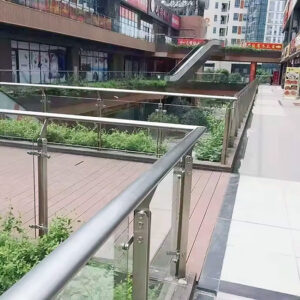
Hotel stairways and apartment common corridors subject handrail systems to a combination of stresses that don’t appear in light-commercial or residential specifications: continuous grip-and-release cycling, lateral load from crowding on landings, cleaning chemical exposure several times per week, and vibration transmitted through the structure as foot traffic peaks. None of these individually causes immediate failure, but together they create conditions where standard-duty hardware begins degrading in predictable ways — and earlier than most facilities teams expect.
The failure pattern most commonly overlooked at procurement is fastener loosening. Brackets and wall anchors in high-vibration environments work against their threads over time, particularly where standard screws are used without any mechanical lock. In hotel corridors and public stairwells, tampering compounds the problem: screws accessible with a common tool tend to get turned, intentionally or not, by occupants, cleaning staff, and maintenance crews unfamiliar with the original specification. Proprietary locking fasteners — the type that require a dedicated tool to drive or remove and engage a mechanical deadlock at full seat — address both the vibration and tampering vectors. This is a planning criterion based on observed maintenance patterns in high-occupancy buildings, not a code-mandated fastener type, but the maintenance case for it is strong enough that omitting it from the specification creates a foreseeable callback risk.
The threshold that matters here is the nature of the stair’s use, not the building’s occupancy classification. A back-of-house hotel stairway used by housekeeping staff twice a day carries a different load profile than a grand stair connecting a lobby to a mezzanine event space. Public-facing stairs, transit-route corridors in apartment blocks, and any stair serving as a primary egress path for more than two floors should be treated as high-traffic regardless of design intent. Applying high-traffic hardware logic to those routes — locking fasteners, heavier bracket gauge, finish chosen for wear tolerance — costs more upfront and pays for itself before the first service contract renewal.
Wear, cleaning, and replacement tradeoffs against aluminum systems
The material comparison between stainless steel and aluminum in high-traffic environments often gets framed as a cost question, when the more accurate frame is a maintenance timing question: at what point does the cheaper material require intervention, and what does that intervention cost once the building is occupied?
Aluminum handrail extrusions handle moderate interior environments reasonably well. The risk profile changes when the building introduces aggressive cleaning agents, coastal salt air, or consistent hand oil transfer to the rail surface — conditions that describe most hotel and apartment installations accurately. Aluminum’s passive oxide layer is less stable under repeated exposure to alkaline cleaners and chloride-containing environments than the chromium oxide layer that protects stainless steel, and surface degradation that begins as cosmetic dulling can progress to pitting that traps contamination and accelerates further corrosion. Early replacement in an occupied building carries access costs that rarely appear in the original material comparison.
For environments where cleaning frequency is high or coastal exposure is a factor, 316 stainless steel is the appropriate starting point. Its molybdenum content extends corrosion resistance into conditions where 304 begins to pit, and the performance differential in aggressive environments is large enough that suppliers of marine-grade 316 systems frequently offer long-term product warranties as a commercial signal of expected service life. NAAMM AMP 500-06 provides a useful process reference for matching material grade to exposure conditions during finish and material selection.
| Matériau | Corrosion Resistance & Maintenance | Warranty & Lifecycle |
|---|---|---|
| Acier inoxydable 316 | Resists cleaning chemicals, hand oils, and salt air; minimal maintenance | 50-year warranty; long service life even in coastal or corrosive conditions |
| Aluminium | Prone to corrosion from frequent cleaning and coastal air; likely to require early replacement | Typically shorter warranties; not designed for aggressive high-traffic environments |
The comparison above should inform the procurement conversation, not just the specification document. If an aluminum alternative is being submitted as a value-engineering substitution, the evaluation needs to include projected cleaning chemical compatibility, the building’s proximity to coastal or industrial air, and the realistic cost of a post-occupancy replacement — not just the unit price delta at time of order.
For a closer look at how these two material families perform under real commercial conditions, the analysis in Mains courantes en acier inoxydable ou en aluminium : Comparaison des coûts, de la durabilité et de l'entretien pour les projets commerciaux covers the structural and corrosion considerations in useful detail.
Mounting and finish choices that reduce maintenance callbacks
Finish selection is where specification teams most consistently leave maintenance callbacks on the table. The instinct in hotel and prestige apartment projects is toward polished stainless — it photographs well, reads as high-quality, and satisfies design intent at handover. The problem is that polished finishes on high-contact surfaces show fingerprints within hours of occupancy, reveal directional grinding marks when lit obliquely, and make surface inconsistency between fabricated sections immediately visible. Cleaning crews using abrasive compounds to manage fingerprint buildup on polished rails accelerate micro-scratching that compounds the appearance problem over time.
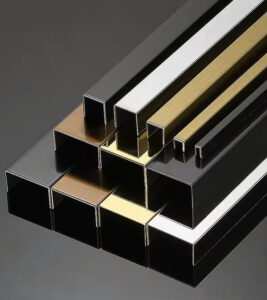
Bead-blasted finishes behave differently under the same conditions. The non-directional matte surface scatters light rather than reflecting it, which means fingerprints diffuse rather than concentrate, minor surface contact marks blend with the existing texture, and the rail maintains a consistent appearance across cleaning cycles without requiring specialist products. For high-traffic stair and corridor applications, the maintenance logic strongly favors bead-blasted or equivalent low-reflectivity finishes over polished alternatives.
| Type de finition | Surface Appearance | Fingerprint & Wear Visibility |
|---|---|---|
| Sablé aux billes | Non-directional, low-reflectivity matte | Hides fingerprints and minor wear effectively |
| Polished | High-reflectivity, often directional | Shows fingerprints, scratches, and daily wear more prominently |
The less obvious risk is finish variation between fabricators or between production batches from the same fabricator. Bead blasting produces different surface profiles depending on media size, pressure, and nozzle angle — variables that shift across runs unless tightly controlled. On a project with multiple stair runs or a phased supply schedule, rails fabricated at different times can display visible tonal differences under the same lighting conditions. The practical control is simple but frequently skipped: obtain a physical finish sample from each fabricator at the start of supply, retain it as a reference piece on site, and require incoming sections to be checked against it before installation proceeds. Waiting until sections are installed to identify a mismatch creates rework that is disruptive, expensive, and nearly impossible to justify to a client whose opening date is fixed.
| Issue | Conséquence | Ce qu'il faut clarifier |
|---|---|---|
| Finish variation between fabricators | Visible mismatch across handrail sections, leading to costly rework and occupant complaints | Obtain samples from each fabricator and maintain a control sample on site to ensure consistent appearance |
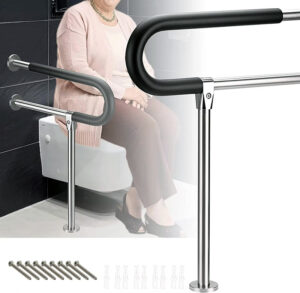
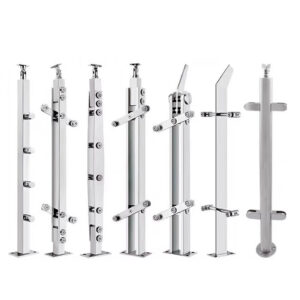
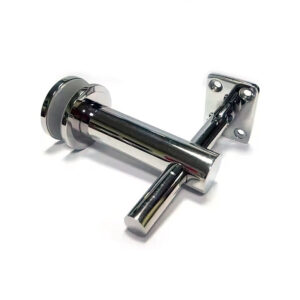
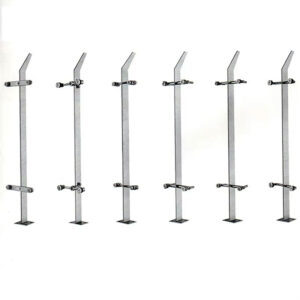
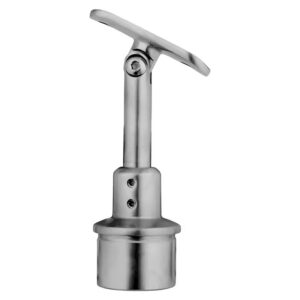
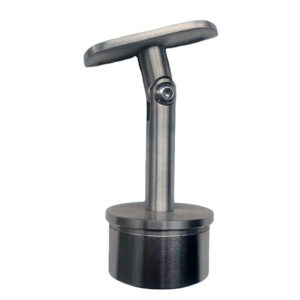
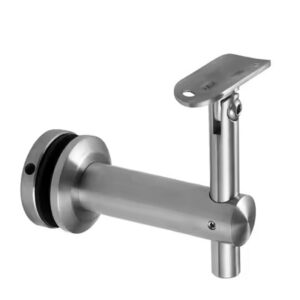
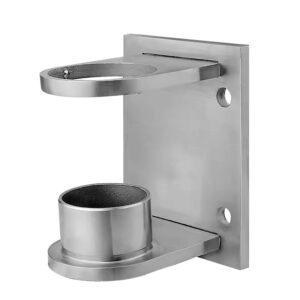
Mounting hardware deserves equal attention. Bracket gauge, wall anchor type, and the accessibility of fixing points after installation all affect callback frequency. Mains courantes murales robustes designed for high-occupancy environments typically use heavier bracket castings and fewer field-adjustable connections that can work loose — a meaningful specification difference compared to standard commercial fittings that share a similar profile.
Budget pressure between initial price and lifecycle service cost
The upfront price comparison between a pre-engineered kit system and a site-welded handrail installation almost always shows the kit system as more expensive in materials. Procurement decisions made on that comparison alone routinely produce outcomes that cost more over a five-year period than the higher-spec option would have.
The installation method is where the economic gap closes fastest. Pre-engineered kit systems eliminate on-site welding, which removes a cluster of costs that rarely appear as explicit line items in a welded installation quote: hot work permits, skilled welder time and supervision, crane or scissor lift rental where welding height requires it, weather protection or schedule delays when welding conditions are marginal, and the grinding and finishing work required after every weld to restore the surface to an acceptable appearance. These costs are real but conditional — they depend on project context, site access, and local labor rates. What is consistent is that they exist in welded installations and are absent from kit-set alternatives.
| Facteur d'installation | Pre-Engineered Kit System | On-Site Welding |
|---|---|---|
| Temps d'installation | Approximately half the time of welding | Significantly longer; welding and fitting add hours |
| On-Site Labor & Skill | Minimal; no welding required | Requires skilled welders and associated supervision |
| Hidden Costs | Few; no crane, fewer weather delays | Crane rental, weather protection, and schedule disruptions may be needed |
| Safety Risk | Lower; no hot work, fewer fall-from-height exposures | Higher; hot work permits, fumes, and elevated work risks |
| Replacement & Maintenance | Sections and components easily swapped without cutting | Damaged sections often require cutting and re-welding |
The installation time comparison is product-level data, not an independently benchmarked industry figure, so it should be treated as directional rather than precise. The useful procurement exercise is to request a welding-specific cost breakdown in any comparative bid — crane requirements, hot work provisions, post-weld surface treatment — and model that against the kit system’s material premium before making a selection. Most procurement teams that run this calculation find the gap is smaller than the material price difference suggested.
| Lifecycle Factor | Impact sur le coût total | Ce qu'il faut confirmer |
|---|---|---|
| 50-year warranty on marine-grade 316 | Drastically reduces risk of premature replacement costs | Warranty scope covers high-traffic public and coastal environments |
| Half installation time with pre-engineered kits | Lowers on-site labor cost and shortens schedule | Verify typical installation time against welded alternatives in bids |
| Elimination of welding overhead | Removes crane, weather delays, and safety-related hidden costs | Request line items for welding-related expenses in comparative quotes |
| Modular brackets and pre-installed end caps | Simplifies future section replacement, cutting long-term service cost | Ensure these components are standard in the kit specification |
The lifecycle factor that procurement teams most consistently undervalue is post-occupancy component replacement. In a welded installation, a damaged bracket or corroded end cap often requires cutting into the rail run, grinding, rewelding, and refinishing — work that is disruptive in an occupied building and difficult to schedule without affecting resident or guest access. Pre-engineered systems with modular brackets and pre-installed end caps allow individual components to be swapped without disturbing adjacent sections. That modularity is worth modeling as a maintenance cost reduction, not just a convenience feature.
System selection after traffic level and maintenance responsibility are defined
The specification decisions that matter most — material grade, fastener type, system format, and component design — have a window. Once the project moves from design development into procurement, changing any of them carries cost and schedule consequences. The article’s practical purpose is to help that window close on the right specification rather than the cheapest one.
Material grade selection should follow the traffic and environment logic established earlier. For public-facing stairways in hotels, apartment common areas, and any corridor with consistent daily use, 304 stainless steel is the appropriate floor-level specification for interior applications in controlled environments. Where coastal exposure, frequent chemical cleaning, or humid conditions are present, 2205 duplex or 316 provides a meaningful performance margin. ASTM E985-24 covers performance expectations and testing frameworks for permanent metal railing systems and is a useful reference when reviewing what a system is designed to withstand — though it does not prescribe specific grades for specific occupancy types.
Tamper-proof fasteners and proprietary locking screws should be treated as standard specification items for any high-traffic public stair, not as upgrades. The maintenance cost of a rail with loose connections in an occupied building is high and largely avoidable. The specification table below consolidates the criteria that change based on traffic level and maintenance responsibility.
| Specification Area | Exigence | Pourquoi c'est important |
|---|---|---|
| Qualité des matériaux | 304 or 2205 duplex stainless steel | Withstands frequent cleaning, body oils, and corrosive conditions without degrading |
| Fixations | Tamper-proof locking screws (proprietary deadlock type) | Prevents loosening from vibration and deliberate tampering, cutting maintenance callbacks |
| Type de système | Pre-engineered kit-set with on-site adjustment capability | Allows installation adjustments without voiding warranties, crucial for retrofit conditions |
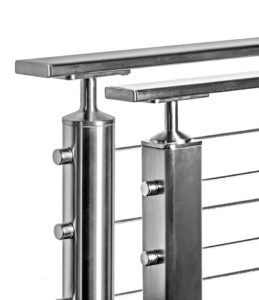
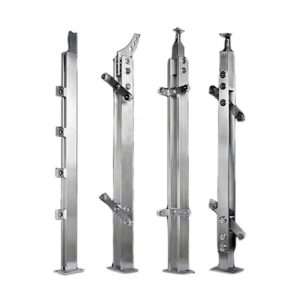
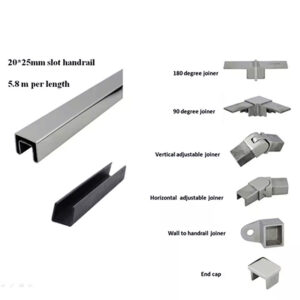
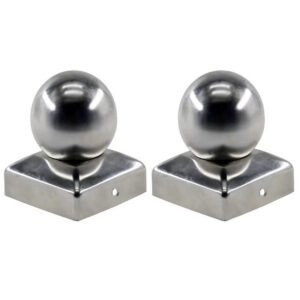
| Component Design | Pre-installed end caps and modular bracket systems | Damaged components can be replaced without removing entire handrail sections, simplifying post-occupancy repairs |
Retrofit projects carry an additional constraint that new construction does not: existing structural conditions are unpredictable until the wall substrate is exposed, and standard-length brackets or fixed-position wall anchors may not align with available fixing points. Pre-engineered kit-set systems that allow on-site dimensional adjustments — bracket position, rail height, end fitting trim — address this without requiring field welding or custom fabrication that voids warranty coverage. For retrofit installations in occupied hotels or staged apartment buildings, that adjustment capability is a practical necessity, not a design preference.
Post-occupancy access is the criterion that gets omitted from specifications most frequently because it has no visible consequence at handover. If the system uses pre-installed end caps and modular bracket connections, a maintenance team can replace a damaged component in under an hour without affecting adjacent sections or requiring specialist tools beyond the proprietary fastener driver. If the system does not, the same repair becomes a half-day disruption that may require a railing specialist rather than the building’s facilities team. That downstream difference is entirely a function of how the system was specified, and it is invisible until something needs replacing. Systèmes de mains courantes à paroi continue designed with modular bracket integration can carry this maintainability characteristic through the full installation.
The decision window for grade, finish, fastener specification, and component modularity closes at procurement. The consequences of underspecifying don’t appear at handover — they accumulate over the first year of occupancy as connections work loose, finishes degrade unevenly, and maintenance teams discover that component-level repairs require rail-section removal. Before finalizing a handrail specification for a hotel, apartment block, or high-traffic stair application, define the traffic level explicitly, confirm whether post-occupancy maintenance responsibility sits with a facilities team or a specialist contractor, and run a lifecycle cost comparison that includes installation method overhead and component replacement access — not just unit material price. Those three inputs will determine whether the specification you’re signing off on holds up or generates callbacks.
Questions fréquemment posées
Q: Does the high-traffic specification logic apply to a mixed-use building where only some stair runs see heavy use?
A: Apply high-traffic criteria selectively by route, not by building type. A mixed-use building with a public lobby stair and a back-of-house service stair warrants different specifications for each. The determining factor is whether the stair serves as a primary access or egress path with consistent daily use — if it does, treat it as high-traffic regardless of how the rest of the building is classified. Using standard-duty hardware on a lower-volume route is a legitimate cost decision; applying it to a public-facing route because the building also contains lower-use areas is where maintenance problems originate.
Q: At what point does a polished finish become acceptable, and is there a setting where it holds up better than bead-blasted?
A: Polished finishes are appropriate where hand contact is infrequent and cleaning frequency is low — a decorative guardrail on a private terrace or a low-use ceremonial stair, for example. The finish degrades under the specific combination of high grip-and-release cycling, repeated chemical cleaning, and variable lighting that characterizes hotel corridors and apartment common stairs. In those conditions, polished surfaces accumulate visible wear faster than bead-blasted alternatives regardless of steel grade. If design intent requires a polished finish on a high-traffic route, factor in more frequent professional cleaning and a shorter appearance lifecycle into the maintenance plan from the start.
Q: If a value-engineering substitution is already on the table mid-procurement, what is the fastest way to evaluate whether it changes the lifecycle cost picture?
A: Request three specific line items from the submitting contractor before accepting the substitution: the cleaning chemical compatibility data for the proposed material, any coastal or environmental exposure restrictions the manufacturer states, and the per-component replacement procedure and cost once the building is occupied. Those three data points surface the conditions under which the cheaper material fails and what it costs to intervene after handover. If the submitting contractor cannot provide all three, that absence is itself useful information about how the substitution will perform over time.
Q: Who typically holds post-occupancy maintenance responsibility for handrail systems in hotels and apartments, and does it change what should be specified?
A: Yes, maintenance responsibility changes the specification in a practical way. Where a dedicated facilities team manages the building, modular bracket designs and proprietary fastener drivers can be kept on-site and repairs handled in-house. Where maintenance is contracted out to a specialist on a reactive basis, the cost of each call-out is higher and response times longer — which raises the value of specifying systems that simply require fewer interventions. Buildings relying on reactive specialist contractors have a stronger economic case for tamper-proof fasteners, heavier bracket gauge, and pre-installed end caps, because the alternative is paying specialist labor rates for repairs that would have been avoidable.
Q: Are pre-engineered kit systems a workable option for projects where rail geometry is complex — curved stairs, intermediate landings, or irregular wall angles?
A: Pre-engineered systems accommodate most standard geometric conditions through adjustable bracket positions, trim-to-length rail sections, and angled fittings, but genuinely complex geometry — tight helical stairs, compound curves, or non-standard tread angles — can exhaust the adjustment range of a kit system and require custom fabrication. The practical test is to confirm with the manufacturer whether your specific geometry falls within the system’s adjustment envelope before committing to it. For retrofit projects, this review should happen after existing dimensions are verified on site, not from drawings, because structural conditions frequently differ from plan once substrate is exposed.