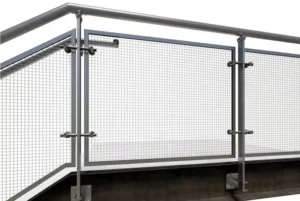
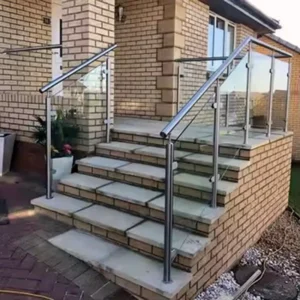
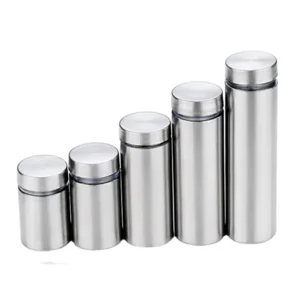
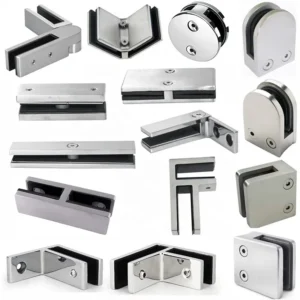
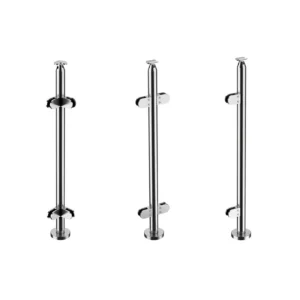
Use round top rails to finish and connect a railing run when the rail profile, post supports, infill and route have been selected as one assembly. Start an inquiry with a marked-up drawing, a photo or sketch of the railing, the approximate run length and the required round profile. Exact dimensions can be confirmed after the connection and support details are known.
Decide what the round rail must do
A round member can be the upper rail of a guard, a separate graspable handrail, a glass-edge cap rail or a visual trim member. These are different duties. A top rail does not automatically become a code-compliant handrail, and a handrail profile does not automatically complete the load path of a guard. State both duties if the same member is expected to perform both, so its profile, height, continuity, supports and returns can be checked for the project.
- Guard top rail: coordinate it with posts, infill attachments, corners and end conditions.
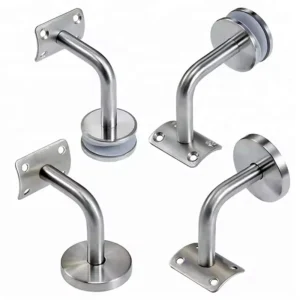
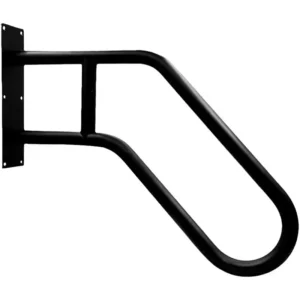
- Separate handrail: identify the required grip profile, wall or post brackets, clearances, returns and continuity.
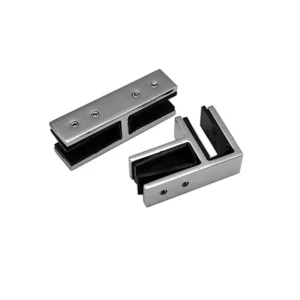
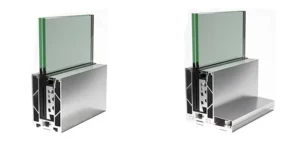
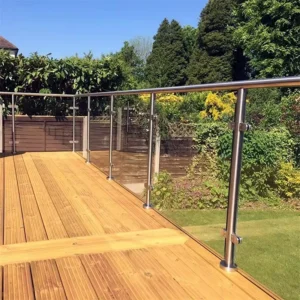
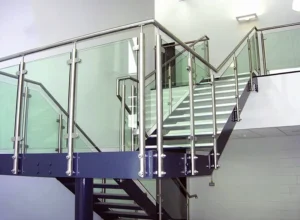
- Glass-edge rail: identify the glass make-up and the slot, liner, gasket or setting material expected between the metal profile and glass.
- Trim or secondary rail: make clear that it is not being relied on as the primary structural or graspable member.
Five choices that control fit
1. Round profile and wall
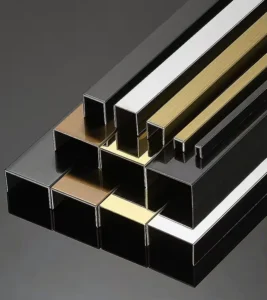
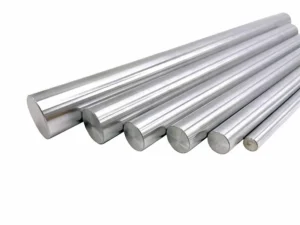
Specify the outside diameter, wall thickness, cut length and any open slot. Diameter alone is not enough: a connector sleeve must suit the rail’s inside clearance, while a post saddle or wall bracket must suit its outside curvature. Rolled seam, weld bead, end preparation and corner radius can also affect insertion and alignment.
2. Support interface
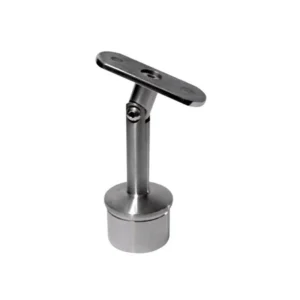
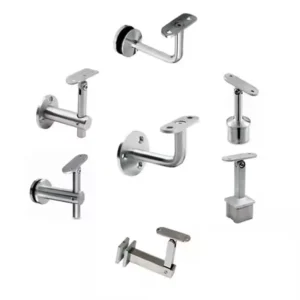
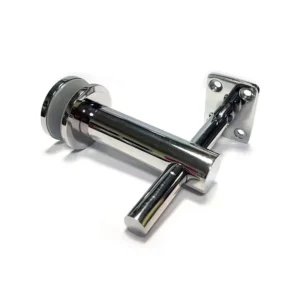
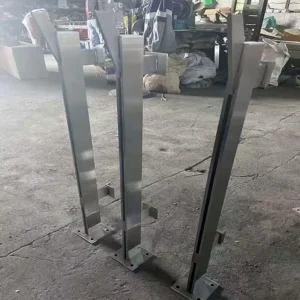
Show whether the rail sits on round posts, square posts, wall brackets, glass or another support. Include the support centreline, saddle shape, hole or stud pattern and the intended fixing method. A level rail supported on posts is a different package from a wall-mounted handrail even when both use a round tube.
3. Route and joint strategy
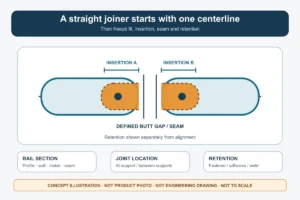
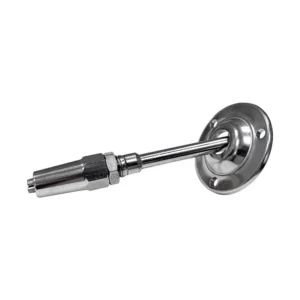
Mark straight joints, corners, stair transitions, returns, wall terminations and any change in level. Straight sleeves, fixed elbows, adjustable connectors and fabricated mitres create different joint lines and require different rail preparation. Do not assume a mechanical connector produces an invisible or seamless joint; the proposed connection should state how the joint is aligned, retained and finished.
4. Infill relationship
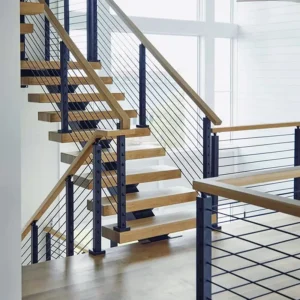
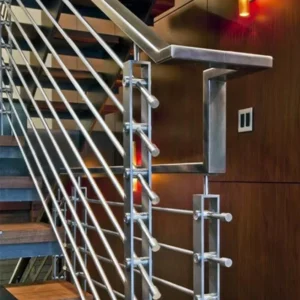
Identify glass, pickets, horizontal bars, cable or panel infill and show where each one meets the rail or posts. Some infill terminates at the posts and only sits below the top rail; other infill needs a channel, bracket or drilled interface at the rail. Those details affect the rail section, hole pattern, drainage and installation sequence.
5. Exposure and appearance
Describe indoor or outdoor use, salt or chemical exposure, cleaning conditions and nearby metals. Request the material grade and finish needed for the project, but treat the quotation as the confirmation of what ESANG proposes to supply. Visible batches, welded areas and mechanically joined pieces should be reviewed together when finish consistency is important.
Match the full connection chain
A useful comparison should identify every interface, not only the rail:
- rail profile and cut lengths;
- post or wall support and its rail-facing saddle;
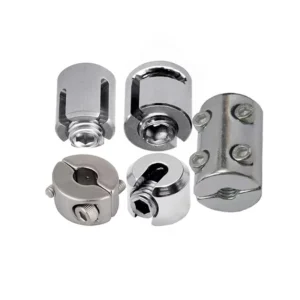
- straight joiners, corners, slope connectors, returns and end caps;
- infill attachment or glass-edge liner system;
- fasteners, adhesive or weld preparation included in the proposed package;
- field drilling, trimming, welding, polishing, sealing and touch-up left to the installer.
Rail strength cannot be separated from span, post spacing, support stiffness, connection detail, infill forces and substrate. Required loads and code criteria therefore belong on the project drawing or specification and must be confirmed for the complete installed system.
Prepare the route before ordering
Dimension the run by centreline and break it into straight lengths, corners, stair flights and returns. Place joints where they can be assembled and inspected, not merely where stock lengths end. For long exterior runs, tell the supplier how movement is to be handled; a rigid straight sleeve is not automatically an expansion joint. At stairs and landings, supply the actual rise, run and transition angle rather than asking for a generic stair connector.
The installation handoff should also state who verifies the substrate, anchors the posts or wall brackets, cuts the rail, prepares holes, applies bonding material, tightens mechanical fixings and restores the finish. This prevents a correct rail profile arriving without the operations needed to assemble it.
What to send for a comparable quotation
You can begin with incomplete information. Send the following first:
- a drawing, sketch or site photo with approximate run lengths;
- level, stair and corner locations;
- required round outside diameter, wall or mating component if known;
- post and infill type;
- environment, finish direction and approximate quantity;
- destination and any packing or phased-delivery constraints.
Before release, the proposed supply should identify the profile, material/finish, piece lengths, each connector and end condition, included fasteners or liners, fabrication performed before shipment and installer responsibilities. This is the information needed to compare two offers without assuming that similarly named round rails are interchangeable.
Perguntas frequentes
Can one round rail serve as both the guard top rail and the handrail?
Possibly, but not from shape alone. The project must verify the required grip geometry, height, continuity, clearance, returns, loads and complete support arrangement. If those duties differ, specify a separate handrail.
Can I select a straight connector from rail diameter only?
No. Confirm the host rail’s inside clearance, wall, seam or weld bead, connector engagement, retention method and permitted joint gap. Two rails with the same nominal outside diameter can accept different inserts.
Can the rail be cut and joined entirely on site?
That depends on the selected connection and finish. State available tools and whether welding, drilling, adhesive curing or finish restoration is acceptable. The quotation should separate factory preparation from field work.
Start with the route, not a guessed part number
Share the layout and mating components first. ESANG can then propose a round rail configuration for comparison, with the profile, connectors, supports and field responsibilities listed rather than implied.