A railing submittal can list the right grade, the right finish, and a tested configuration, and still fail a code review if nobody confirmed which jurisdiction, edition, and occupancy condition actually govern the project. The review question is not whether the hardware is good; it is whether the right project inputs were gathered before anyone opened a code book.
Project information required before a railing code review can start
A code review is only as useful as the project information that frames it. Before a reviewer can say whether a railing run satisfies anything, the project team needs to establish where the project sits, who is reviewing it, what edition applies, what the rail is for, and what physical conditions it will face. Skipping this step does not make the review faster; it makes the review’s conclusions unreliable, because every later determination depends on these starting facts being correct.
This matters because a code review is not a single test against a single document. It is a layered comparison: jurisdiction against adopted edition, adopted edition against local amendment, occupancy against applicable provision, and proposed assembly against the resulting requirement set. If any one layer is assumed rather than confirmed, the layers above it inherit the error. A reviewer who assumes an edition without checking adoption, or assumes an occupancy without checking the project program, is not performing a shorter review — they are performing a review of a different, hypothetical project.
The information gathered at this stage also determines who can act on the review later. A responsible designer cannot evaluate a proposed railing assembly against requirements that have not yet been identified. An authority cannot accept a submission that has not stated its own jurisdiction and occupancy basis. Even a supplier reviewing a quotation request depends on the same starting facts: the geometry, function, and location the customer provides are what allow a proposed assembly to be matched to a project condition in the first place, rather than matched only to a general product description.
Where a project changes location mid-design, or where a railing run serves more than one function along its length, the starting information has to be re-confirmed rather than carried forward from an earlier assumption. A rail that transitions from a guard condition to a handrail condition, or that crosses from one occupancy area into another, does not carry a single answer for its entire length. The starting-information step exists precisely to catch this before geometry, openings, and system interfaces are reviewed in detail, because re-running those later steps against a corrected jurisdiction or occupancy is more disruptive than confirming them once at the outset.
Jurisdiction, authority, adopted edition, and local amendment check
| Project item | Confirmation needed | Limite de decisão |
|---|---|---|
| Project location | Confirm the jurisdiction for the project | Identifies where the adoption and amendment check must be made |
| Reviewing authority | Confirm the authority responsible for project review | Identifies the review context; naming an authority does not by itself establish the applicable criteria |
| Adopted edition | Confirm the edition adopted for the project | Prevents a source edition from being assumed to apply without an adoption check |
| Local amendments | Confirm whether relevant local amendments apply | Establishes whether the adopted base text has project-relevant changes |
Jurisdiction, authority, edition, and amendment are four separate confirmations, and treating any one of them as a stand-in for another is where many code reviews go wrong. A project’s location establishes which jurisdiction has authority, but the jurisdiction itself does not state which edition is in force; that requires a separate adoption check. Similarly, naming a reviewing authority tells the project team who will evaluate the submission, but it does not by itself tell them which code text that authority is applying, because adoption and amendment decisions are made separately from the act of review.
O 2021 International Building Code, Chapter 10, Means of Egress, is a source frequently referenced for commercial handrail and guard provisions, and it establishes subject relevance for that review context. But a chapter’s existence in a published model code does not establish that a given jurisdiction has adopted that edition, or adopted it without amendment. Local jurisdictions commonly adopt a model code with local modifications, and those modifications can add, remove, or alter provisions relevant to railing geometry, function, or location. A reviewer who cites the model code text without confirming the local amendment record is citing a document that may not match what the local authority will actually apply.
This is also where public standards and adopted requirements diverge. A standard such as ASTM E985, which addresses permanent metal railing systems and rails for buildings, has a public scope describing what the standard covers in general. That public scope is not the same as a project’s adopted requirement, because adoption depends on the jurisdiction’s own code references, and because the standard’s general criteria still require project-specific review to apply them to a particular assembly. A published scope statement tells the reader what subject the standard addresses; it does not tell the reader what a specific jurisdiction requires or whether a specific supplied assembly satisfies that requirement.
Where a project sits in a jurisdiction with no local amendments beyond the adopted model code, the review can proceed largely on the base text, confirmed edition by edition. Where local amendments exist, the review must identify which provisions they touch, because an amendment that changes a geometry or function requirement changes the criteria the rest of the review will apply, independent of what the unamended base text says.
Function, occupancy, location, and accessible-route or workplace scope
| Scope factor | Project question | What the answer frames |
|---|---|---|
| Rail function | What function is the railing run intended to perform? | The function-specific part of the review |
| Occupancy | What occupancy applies to the project area? | The occupancy context for the applicability review |
| Localização | Where is the railing run located within the project? | The location context that must be checked against the adopted requirements |
| Accessible-route status | Is the run part of an accessible route? | Whether accessible-route provisions need project review |
| Workplace condition | Is the run part of a workplace condition? | Whether workplace provisions need project review |
Once jurisdiction and edition are fixed, the next task is classifying what the railing run actually does and where it sits, because these classifications determine which provisions within the adopted code apply to it. A railing’s function is not a fixed label attached to a product; it is a project determination based on how the run is used — whether it serves as a guard at an open edge, a handrail along a means of egress, or some combination along its length. The same physical hardware can serve different functions in different parts of a project, and the function determines which requirement set governs that segment.
Occupancy works the same way: the same railing geometry can sit in a space classified one way for one project and another way for a different project, and the applicable provisions can differ accordingly. Location within the project adds a further layer, because interior and exterior conditions, or conditions along different paths of travel, can each carry distinct requirements even under the same occupancy classification.
Accessible-route status is a separate determination that does not follow automatically from occupancy or function. A run can serve a guard function and still sit along, or apart from, an accessible route, and that status is what triggers accessible-design provisions rather than the guard function itself. The Access Board’s guidance on stairways explains covered accessible-stair handrail continuity, gripping-surface, clearance, and extension provisions for US accessible-stair conditions, but that guidance applies within its accessible-route context; it does not establish that every railing condition on a project is an accessible-route condition, and the project team still has to confirm coverage against the currently adopted code.
Workplace condition is a further, independent scope question. A location can be a workplace condition in addition to, or separate from, its occupancy classification under the building code, and workplace-specific provisions can apply on that separate basis. A reviewer who confirms occupancy and location but never asks whether a workplace condition also applies has left a scope question unanswered, and that question can change which provisions need to be checked even though the building occupancy classification itself has not changed.
Geometry, openings, actions, substrate, exposure, and system interfaces
| Condição do projeto | Information to define | How it is used in review |
|---|---|---|
| Geometry | Project-specific layout and dimensions | Provides the geometry to check against the applicable project criteria |
| Vagas | Project-specific opening arrangement and dimensions | Provides the openings to check against the applicable project criteria |
| Required actions | Actions the assembly must address for the project | Provides an input for the responsible designer’s project evaluation |
| Substrato | Supporting substrate and attachment condition | Defines a project interface for design review |
| Exposição | Exposure conditions at the installation location | Defines a project condition that must be considered before suitability is concluded |
| System interfaces | Connections and transitions with adjoining systems | Identifies coordination boundaries for the project review |
With jurisdiction, function, and scope established, the review moves to the physical project conditions the responsible designer needs in order to evaluate a specific assembly. Geometry — the layout and dimensions of the actual run as built or proposed — is project-specific and cannot be inferred from a product’s general dimensions alone, because the same component can be installed at different spacings, heights, or configurations depending on the project.
Openings are a related but distinct condition: the arrangement and dimensions of gaps within the assembly, which depend on how the components are spaced and fastened in that specific installation, not on the components’ individual dimensions in isolation. Required actions describe what the assembly has to resist or accommodate in service, and these actions are an input to the responsible designer’s evaluation rather than a property that can be read off a product data sheet.
Substrate and exposure describe the conditions the assembly interfaces with and operates within. The supporting substrate and its attachment condition determine how the assembly transfers its actions into the structure, and this interface is a project-specific condition that depends on what the railing is actually fastened to, not on the railing hardware alone. Exposure — the environmental conditions at the installation location — is a separate consideration that affects material and finish suitability independent of the structural geometry; a component found and reviewed for an interior condition does not carry the same exposure performance into an exterior or corrosive-environment condition without separate confirmation.
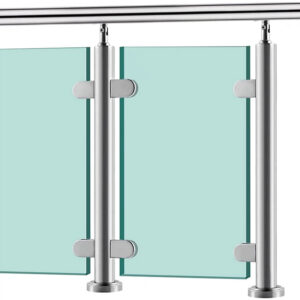
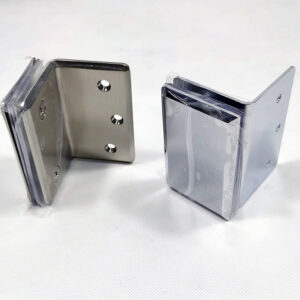
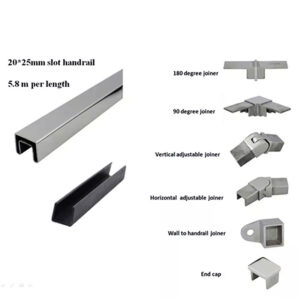
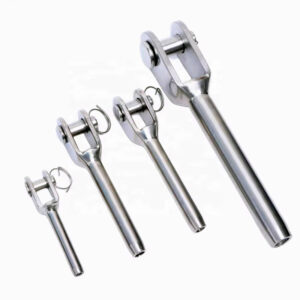
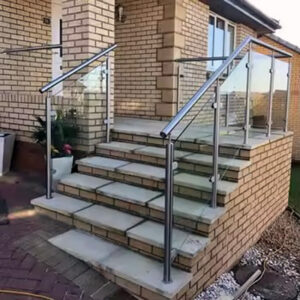
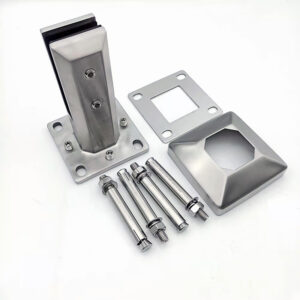
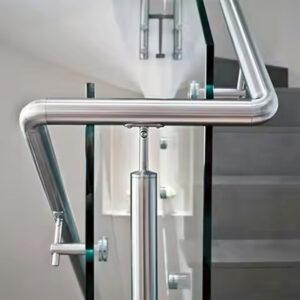
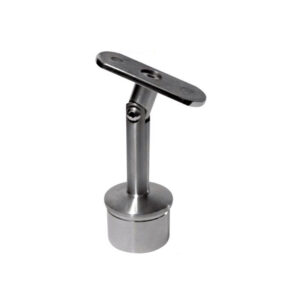
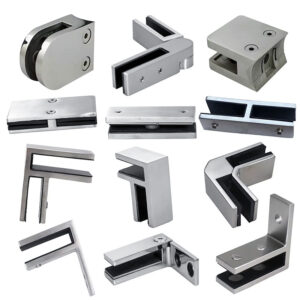
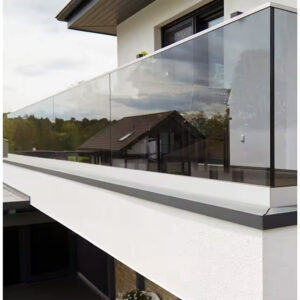
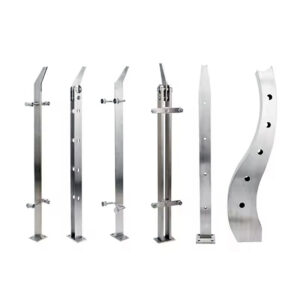
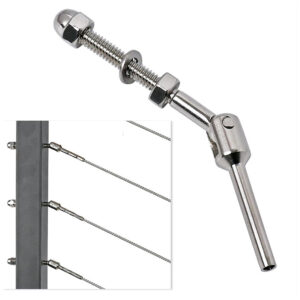
System interfaces close the condition register: the connections and transitions where the railing meets adjoining systems — flooring, glazing, structural framing, or other building elements — define coordination boundaries that the review has to identify even where each individual system is otherwise compliant on its own terms. Where a project substitutes one substrate or exposure condition for another partway through a design, the geometry and opening review does not automatically carry over, because the substrate and exposure conditions can change what attachment and material choices are viable even if the visible geometry stays the same. ESANG’s sistemas de corrimãos, ferragens para guarda-corpo de vidro, e cable railing systems each depend on this same set of project-specific conditions — geometry, substrate, exposure, and interface — being defined by the project team before a proposed assembly can be matched to them.
Evidence roles for supplier data, tests, calculations, installation records, and approval
| Evidence type | Evidence role | What it does not establish by itself |
|---|---|---|
| Supplier drawings | Describes the proposed supplied assembly, geometry, and interfaces shown for review | Final project compliance or authority acceptance |
| Product data | Documents stated information for the proposed product or components | That the named assembly satisfies every project requirement |
| Test reports | Records test results and the conditions of the tested specimen or configuration | That different project conditions or configurations have the same result |
| Cálculos de engenharia | Records the responsible designer’s evaluation for the project inputs and proposed assembly | Authority acceptance or a general claim for every configuration |
| Installation records | Documents the installed work and recorded installation condition | That installation records alone prove code compliance |
| Authority acceptance | Records the authority’s review outcome for the named project submission | A blanket approval for other projects or configurations |
A code review draws on several distinct kinds of evidence, and conflating their roles is a common source of overstated conclusions. Supplier drawings describe a proposed supplied assembly — its geometry and interfaces as drawn for review — but a drawing shows what is proposed, not what has been evaluated or accepted. Product data documents stated information about a product or its components, which is useful as an input but does not itself demonstrate that the named assembly satisfies a project’s specific requirements.
Test reports record results for a tested specimen under tested conditions. That record is evidence about the configuration actually tested; it does not automatically extend to a different project’s geometry, substrate, or exposure condition without a separate evaluation of whether the tested configuration matches the proposed one. Engineering calculations record the responsible designer’s evaluation of the project’s specific inputs against the proposed assembly, and this is the evidence type that actually connects project conditions to a conclusion about suitability — but a calculation reflects the inputs given to it, and it does not substitute for authority acceptance.
Installation records document what was actually installed and under what recorded condition, which matters for verifying that built work matches the reviewed design, but installation records alone do not prove that the design itself was code-compliant; they confirm execution, not the underlying evaluation. Authority acceptance records the authority’s review outcome for a specific named submission, and that outcome is tied to the submission reviewed — it is not a general approval that transfers to a different project or a different configuration of the same hardware.
Where a project assembles its submittal from several of these evidence types, the review has to keep their roles separate rather than letting one type stand in for another. A product data sheet cannot substitute for engineering calculations addressing the actual project inputs, and a test report on one configuration cannot substitute for a calculation addressing a different one. Within ESANG’s scope, the project information supplied by the customer — geometry, substrate, exposure, and function — is what allows a quotation or configuration review to be matched against a specific proposed assembly rather than against a general product listing, but that matching step is distinct from the responsible designer’s own code evaluation and from any authority’s acceptance decision.
Review handoff to the responsible designer and authority
Once jurisdiction, scope, physical conditions, and evidence have been assembled, the review reaches a handoff point rather than a conclusion. The project team’s role in gathering this information is to produce a complete, accurate input set; it is not to render the code determination itself. That determination belongs to the responsible designer, who evaluates the assembled project inputs and proposed assembly against the applicable requirements, and to the authority, who reviews the submission against its own adopted criteria and records an acceptance outcome for that specific submission.
This handoff matters because the earlier sections produce inputs and evidence, not approvals. A well-documented jurisdiction check, a clear occupancy and function classification, a complete condition register, and a properly separated evidence package all support the responsible designer’s evaluation, but none of them, individually or together, is itself the code determination. Where a project team treats a complete evidence package as equivalent to an approval, it has confused preparation with the decision that preparation is meant to support.
The handoff also runs in the other direction: a responsible designer’s calculations and an authority’s acceptance are themselves scoped to the submission reviewed. If the project’s geometry, substrate, exposure, or function changes after that review, the prior determination does not automatically extend to the changed condition, and the project team needs to recognize when a change requires the designer and authority to review the submission again rather than relying on an earlier acceptance. Further background on how specific US standards — ADA, IBC, IRC, and OSHA — relate to stainless steel railing projects can inform how a project team frames these questions for the responsible designer, but that framing still has to be confirmed against the specific jurisdiction, edition, and project conditions established earlier in the review.
Perguntas frequentes
P: Does choosing an ESANG handrail, glass railing, or cable railing system establish code compliance?
A: No. Product selection identifies the proposed system, but project compliance still depends on the applicable jurisdiction, adopted requirements, rail function, occupancy, location, geometry, supporting conditions, design evaluation, and authority review.
P: When should supplier drawings and product data be requested for a railing code review?
A: Request them after the project team has defined the intended rail function, layout, openings, required actions, substrate, exposure, and adjoining interfaces. This gives the supplier a clear project basis for describing the proposed assembly and lets the responsible designer identify unresolved conditions.
P: Can a test report be used when the proposed railing differs from the tested configuration?
A: Use the report only for the specimen, configuration, test conditions, and results it documents. Record every relevant difference between that basis and the proposed project conditions for evaluation rather than assuming the same result applies.
P: Does guidance for accessible stair handrails automatically apply to every railing run?
A: No. First determine whether the run is within the guidance’s coverage, including whether it is part of an accessible route, and then confirm the project’s jurisdiction, adopted edition, and local amendments before applying detailed criteria.
P: Who should make the final project-specific railing code determination?
A: The responsible designer should evaluate the proposed assembly against the confirmed project inputs and applicable requirements, and the reviewing authority should determine acceptance for the submitted project. Supplier information, calculations, installation records, and test reports each support that process but do not replace those decisions.