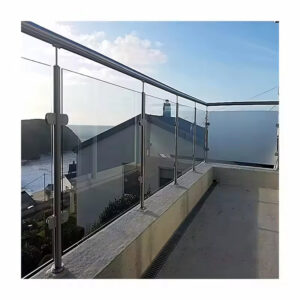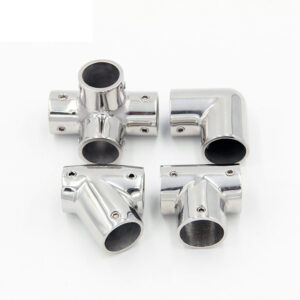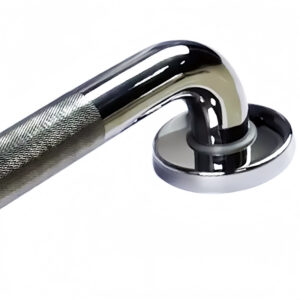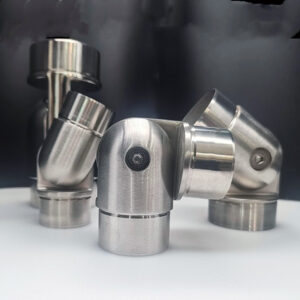
Selecting handrail materials for high-traffic commercial buildings is a critical infrastructure decision often reduced to a simple cost comparison. This oversimplification leads to long-term operational liabilities, unexpected maintenance cycles, and premature system failure. The real choice is between a permanent, low-maintenance asset and a component requiring ongoing capital investment.
The distinction becomes urgent in today’s construction climate, where building codes are stringent, and owner expectations for durability and lifecycle cost are higher than ever. A material’s performance under constant public use, exposure to harsh environments, and compliance with safety standards directly impacts operational budgets and long-term asset value. This analysis moves beyond initial price to examine total cost of ownership and performance certainty.
Stainless Steel vs. Aluminum: Core Material Differences
Atomic-Level Composition Dictates Performance
The fundamental divergence between stainless steel and aluminum originates in their density and alloy structure. Stainless steel’s higher density—approximately 8 g/cm³ versus aluminum’s 2.7 g/cm³—provides inherently greater yield and tensile strength. This core property dictates the entire engineering approach. Stainless steel achieves required structural performance with slimmer, more elegant profiles, while aluminum must compensate with significantly thicker walls and larger cross-sections, often 20-40% greater.
The Trade-Off: Visual Mass vs. Handling Weight
This material disparity creates a direct trade-off. Stainless steel offers a sleek, material-efficient aesthetic that conveys permanence and quality, ideal for modern architectural statements. Aluminum’s lower density makes it lighter, which can simplify handling and installation logistics on some projects. However, the bulkier profiles required for strength can impact the visual lightness of the final installation. In our fabrication experience, the choice often hinges on whether the design priority is ultimate minimalism or logistical ease with a more substantial visual presence.
Cost Analysis: Initial Investment vs. Total Cost of Ownership
Upfront Cost is a Misleading Metric
A narrow focus on initial material cost presents an incomplete financial picture. Stainless steel typically commands a higher upfront investment. The critical analysis, however, examines total cost of ownership (TCO) over the asset’s lifespan, often 30 years or more. An inverse relationship exists between initial cost and long-term maintenance: stainless steel’s premium is offset by minimal upkeep, while aluminum’s lower entry price is coupled with scheduled, costly maintenance cycles.
The Lifecycle Cost Breakdown
Evaluating TCO requires factoring in all expenses beyond purchase and installation. For powder-coated aluminum, this includes periodic inspections, touch-ups for coating chips, and eventual full refinishing to combat corrosion and UV degradation. Grade 316 stainless steel, in contrast, requires only routine cleaning. In corrosive environments like coastal areas, this disparity widens significantly. The industry’s “5-mile rule” often mandates premium stainless steel near saltwater, erasing any initial aluminum savings due to code compliance and liability mitigation.
| Cost Factor | Stainless Steel | Aluminum |
|---|---|---|
| Initial Material Cost | Higher | Lower |
| Maintenance Cost | Minimal (cleaning only) | Higher (refinishing cycles) |
| Corrosion-Related TCO | Lower (inherent resistance) | Higher (coating maintenance) |
| Critical Application Threshold | 5-mile coastal rule | Not recommended for rule zone |
| Long-Term (30+ year) Value | Lower total cost of ownership | Higher total cost of ownership |
Source: Technical documentation and industry specifications.
Which Material Offers Superior Strength and Load Capacity?
Inherent Strength and Code Compliance
Stainless steel provides superior inherent strength and load-bearing capacity. This allows it to meet and exceed commercial building codes, such as the International Building Code’s (IBC) 200-pound concentrated load requirement for handrails, with greater reliability, especially over long spans. The material’s density and alloy composition provide a higher safety margin against dynamic loads like crowd surges or impact.
Engineering Compensations for Aluminum
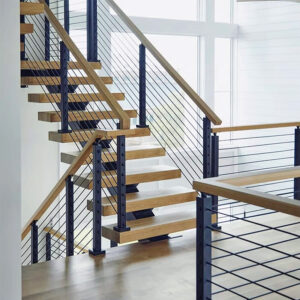
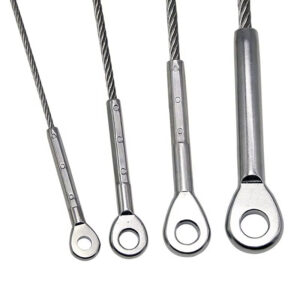
Load capacity is a function of span, profile design, and reinforcement—not just material. Aluminum systems can be engineered to meet code requirements, but this often involves design compromises. These include specifying shorter spans between supports or incorporating internal steel inserts for reinforcement, which adds complexity and potential failure points. For applications like horizontal cable infill, the tensile requirements make stainless steel non-negotiable; even aluminum-framed systems become hybrid at this point, locking in stainless steel costs for critical components.
| Parameter | Stainless Steel | Aluminum |
|---|---|---|
| Material Density | ~8 g/cm³ | ~2.7 g/cm³ |
| Profile Thickness for Strength | Slimmer profiles | 20-40% thicker walls |
| Inherent Load Capacity | Superior, exceeds 200-lb IBC load | Requires engineering reinforcement |
| Long-Span Performance | Reliable | Requires shorter spans/inserts |
| Cable Infill Requirement | Non-negotiable (tensile needs) | Requires hybrid steel inserts |
Source: IBC/ICC International Building Code Chapter 10 Means of Egress. This code specifies the 200-pound concentrated load requirement for handrails in commercial buildings, which is a key performance benchmark for comparing material strength and design.
Corrosion Resistance Compared for Harsh Environments
The Mechanism of Protection
In corrosive settings, the protective mechanism defines long-term integrity. Stainless steel, particularly Grade 316 with added molybdenum, possesses a self-repairing chromium oxide layer that provides inherent, permanent resistance to chlorides, pollutants, and moisture. Aluminum relies on a powder-coated barrier. This coating is effective until compromised by impact, abrasion, or UV degradation, which exposes the aluminum substrate to galvanic corrosion and pitting.
Fail-Safe vs. Barrier-Dependent Performance
This distinction makes stainless steel the fail-safe choice for harsh environments like coastal zones, industrial facilities, or high-pollution urban areas. Its resistance is integral to the alloy, not an applied layer. For aluminum, once the powder coat is breached, corrosion begins at the breach point and can spread underneath the coating. This risk positions stainless steel as permanent infrastructure and aluminum as a solution with higher long-term liability in aggressive conditions.
| Environment | Stainless Steel (Grade 316) | Powder-Coated Aluminum |
|---|---|---|
| Corrosion Mechanism | Self-repairing chromium oxide layer | Barrier coating (powder coat) |
| Chloride Resistance (Coastal) | Inherent, permanent resistance | Vulnerable if coating compromised |
| Substrate Exposure Risk | None (inherent alloy) | Pitting upon coating damage |
| Maintenance Trigger | Routine cleaning | Impact, abrasion, UV degradation |
| Long-Term Integrity | Fail-safe, permanent infrastructure | Risk of premature failure |
Source: ASTM A967 Standard Specification for Chemical Passivation Treatments for Stainless Steel Parts. This standard defines the passivation process that enhances stainless steel’s inherent corrosion resistance by removing contaminants, a critical treatment for performance in harsh environments.
Durability and Maintenance Requirements Side-by-Side
Performance Under Constant Abuse
Durability in high-traffic public spaces is non-negotiable. Stainless steel’s superior surface hardness and wear resistance make it exceptionally durable against the millions of contacts, scratches, and incidental impacts common in commercial settings. It maintains its appearance and structural integrity with minimal intervention. Aluminum, with a softer substrate, is more prone to denting and visible wear patterns, even with a durable powder coat.
Divergent Maintenance Philosophies
Maintenance requirements diverge sharply. Stainless steel needs only periodic cleaning with appropriate solutions to maintain its appearance and passive layer. Powder-coated aluminum demands a scheduled maintenance protocol to inspect for and repair coating damage before substrate corrosion begins. This often involves disruptive touch-up work or full refinishing cycles. For owners, this translates to predictable, low-cost upkeep for stainless steel versus variable, higher-cost, and disruptive maintenance for aluminum.
| Aspect | Stainless Steel | Aluminum |
|---|---|---|
| Surface Hardness | Superior, resists wear | Softer, prone to dents/scratches |
| Primary Maintenance | Cleaning only | Scheduled touch-ups |
| Performance in High-Traffic | Excels under constant abuse | Hits performance ceiling |
| Custom/Demanding Applications | Reliable | “Cookie-cutter” kits risk failure |
| Maintenance Disruption Cost | Low | High |
Source: Technical documentation and industry specifications.
Safety, Code Compliance, and Fire Rating Comparison
Engineering for Safety Margins
Both materials can be engineered to comply with IBC/ICC International Building Code Chapter 10 Means of Egress and other safety standards. However, stainless steel’s inherent properties provide a larger engineering safety margin. Its consistent strength ensures reliable performance under unexpected dynamic loads. Furthermore, its non-combustible nature and performance in high heat make it preferable for fire-rated wall and stair assemblies, where maintaining egress integrity is critical.
Hygiene and Specialized Environments
The non-porous, easily sterilized surface of stainless steel offers a significant advantage in environments where hygiene is paramount, such as healthcare facilities, laboratories, and food service areas. It resists bacterial growth and can withstand harsh cleaning chemicals without degrading. This material certainty reduces reliance on compensatory design to achieve safety and hygiene goals, providing architects and engineers with a predictable performance baseline.
Aesthetic and Design Flexibility for Commercial Spaces
The Minimalist Advantage of Stainless
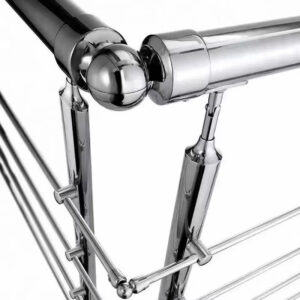
Stainless steel enables sleek, contemporary designs with slender profiles that convey precision and permanence. It can be finished in various ways—brushed, polished, satin, or bead-blasted—to achieve specific visual effects and light reflectance. This versatility supports bold architectural statements where the handrail is a featured design element. For projects requiring integrated features like concealed LED lighting systems, stainless steel’s fabrication flexibility allows for seamless incorporation of wiring channels and fixtures.
Color Versatility vs. Structural Bulk
Aluminum offers extensive color versatility through powder coating, which can match corporate branding or interior design schemes. However, to achieve necessary strength, aluminum profiles are often bulkier, which can impact the desired visual lightness of a balustrade. The trend toward integrated lighting and technology favors systems designed with these complexities in mind from the outset, an area where fabrication expertise becomes as critical as material selection.
Decision Framework: Choosing the Right Material for Your Project
Environment and Application Drive Specification
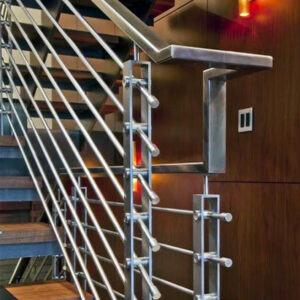
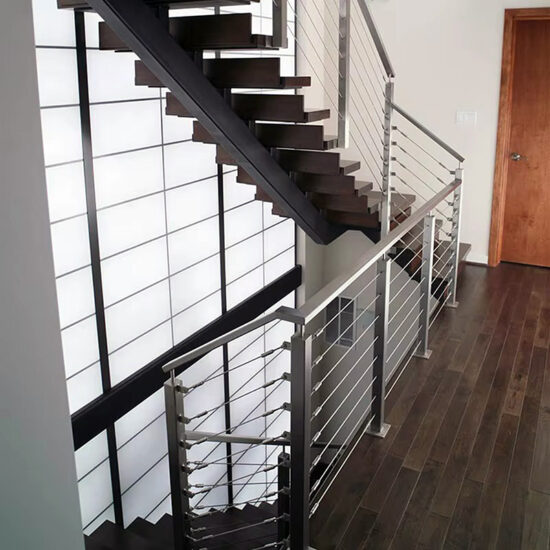
Selecting the correct material requires a strategic framework aligned with project non-negotiables. For coastal or harsh industrial environments within 5 miles of saltwater, specify Grade 316 or 2205 duplex stainless steel. For any system employing tensioned cable infill, stainless steel is mandatory due to tensile requirements. The analysis period must extend to 30+ years, honestly factoring in all maintenance and potential refinishing cycles for aluminum.
Aligning Material with Owner Paradigm
The choice must also match the owner’s operational and financial paradigm. Aluminum can be a suitable choice for cost-flexible, shorter-term leased properties where the tenant may bear long-term maintenance costs. For permanent, legacy institutional buildings—hospitals, universities, transportation hubs—the investment in stainless steel for its durability and low TCO is justified. Finally, prioritize fabricators with proven engineering expertise, especially for custom, hybrid, or complex systems, to ensure performance transcends material selection alone.
| Decision Criteria | Specification / Action |
|---|---|
| Coastal/Harsh Environment (<5 mi) | Specify 316 or 2205 stainless steel |
| Cable Infill Systems | Stainless steel is non-negotiable |
| Analysis Period | Evaluate TCO over 30+ years |
| Owner Paradigm (Leased Property) | Consider aluminum for cost-flexibility |
| Owner Paradigm (Legacy Building) | Invest in stainless steel for permanence |
| System Complexity | Prioritize fabricators with engineering expertise |
Source: Technical documentation and industry specifications.
The decision pivots on three core priorities: environmental aggression, total lifecycle cost, and the project’s definition as temporary asset or permanent infrastructure. For high-traffic commercial buildings, the reliability, safety margin, and lower lifetime cost of stainless steel typically outweigh its higher initial investment. Aluminum serves specific applications where initial budget constraints are absolute and environmental conditions are controlled.
Need professional guidance specifying the right handrail system for your commercial project? The engineering team at Esang provides material analysis, custom fabrication, and integration support to ensure code compliance, durability, and design intent are fully realized. For a detailed consultation on your specific requirements, you can also Contact Us.
Frequently Asked Questions
Q: How does the fundamental strength difference affect the design of stainless steel versus aluminum handrail systems?
A: Stainless steel’s higher density provides greater yield and tensile strength, enabling structural requirements to be met with slimmer, minimalist profiles. Aluminum must compensate for its lower strength with thicker wall sections and larger diameters, often increasing size by 20-40%. This means projects prioritizing a sleek, modern aesthetic with less visual mass should specify stainless steel, while those where minimal weight is the absolute top priority may consider aluminum’s bulkier profiles.
Q: What is the “5-mile rule” for coastal projects, and how does it impact material selection and cost?
A: The “5-mile rule” is a critical threshold for projects near saltwater, often mandating the use of premium stainless steel like Grade 316 for long-term integrity and code compliance. Within this zone, the liability risks and required corrosion performance erode any initial cost savings from using powder-coated aluminum. For projects in harsh coastal or industrial environments, you should plan for the higher initial investment in stainless steel to avoid excessive maintenance and premature failure, as outlined in egress safety standards like the IBC Chapter 10 Means of Egress.
Q: Can aluminum handrails meet the same load capacity codes as stainless steel?
A: Yes, aluminum systems can be engineered to meet commercial codes, such as the IBC’s 200-pound concentrated load requirement, but often through compensatory design. This typically involves using shorter support spans or incorporating internal steel reinforcements, which adds engineering complexity and potential failure points. If your project involves long spans or dynamic crowd loads, specifying stainless steel provides a higher inherent safety margin and reduces reliance on complex engineering workarounds.
Q: Why is stainless steel considered mandatory for horizontal cable rail infill systems?
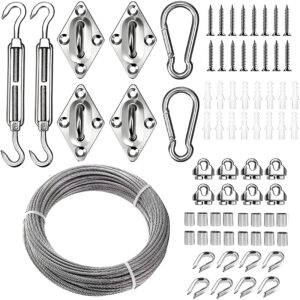
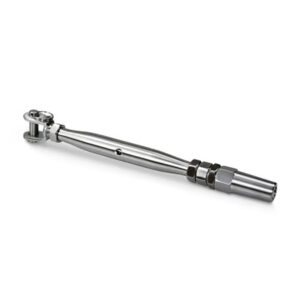
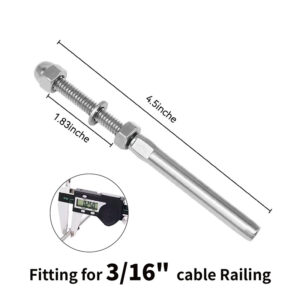
A: Stainless steel is non-negotiable for cable infill due to its superior tensile strength, which is essential for maintaining tension and safety over time. Even aluminum-framed systems with cable infill become hybrid constructions, as they require stainless steel cables and fittings, locking in the associated material costs. This means if your design calls for cable rails, you should budget for and specify stainless steel components to ensure reliable, long-term performance and code compliance.
Q: How do maintenance protocols differ fundamentally between stainless steel and powder-coated aluminum handrails?
A: Maintenance diverges sharply: grade 316 stainless steel requires only routine cleaning with appropriate agents to maintain its self-repairing passive layer. Powder-coated aluminum demands scheduled inspections and touch-ups to repair chips or scratches in the coating barrier, which if exposed leads to substrate corrosion. For high-traffic commercial buildings where maintenance disruption is costly, you should choose stainless steel for its predictable, low-intervention upkeep, as supported by treatments defined in standards like ASTM A967 for passivation.
Q: When evaluating total cost of ownership, what factors shift the balance in favor of stainless steel?
A: The total cost of ownership favors stainless steel when you factor in decades of service, especially in corrosive environments. While aluminum has a lower upfront cost, its need for vigilant coating maintenance and eventual full refinishing adds significant long-term expense. For permanent, legacy institutional buildings, you should calculate costs over a 30+ year horizon, where stainless steel’s durability and minimal upkeep typically result in a lower overall financial outlay.
Q: What key specification should we look for in aluminum to ensure a suitable base material for handrails?
A: Ensure the aluminum alloy meets ASTM B209 Standard Specification for Aluminum and Aluminum-Alloy Sheet and Plate, which defines the chemical composition, mechanical properties, and tolerances for the base material. This specification provides the foundational quality needed before any finishing or fabrication. When sourcing aluminum systems, verify that the fabricator uses ASTM B209-compliant material as a minimum starting point for performance and consistency.