Specifying the correct stainless steel grade for handrails is not a simple material preference—it’s a critical durability decision with decades-long financial and safety implications. The common misconception that “stainless” means universally corrosion-proof leads to the widespread misapplication of Type 304 in environments that demand Type 316, resulting in premature pitting, unsightly staining, and compromised structural integrity.
This specification error is particularly costly in coastal regions, industrial zones, and areas using deicing salts. The financial penalty extends beyond material replacement to include frequent maintenance, public safety concerns, and reputational damage for projects. Getting this decision right from the outset is the single most effective way to ensure a handrail system delivers on its promise of lasting, low-maintenance performance.
316 vs. 304 Stainless Steel: The Core Difference Explained
The Molybdenum Imperative
The fundamental difference between 304 and 316 stainless steel is the deliberate addition of 2-3% molybdenum in Type 316. Both grades rely on a chromium-rich passive oxide layer for corrosion resistance. However, molybdenum dramatically strengthens this layer’s stability against chloride ion attack, the primary corrosive agent in coastal and chemical environments. Without molybdenum, the passive layer on Type 304 is more susceptible to localized breakdown, leading to pitting corrosion.
Beyond Basic Stainlessness
This alloying distinction moves the conversation from general “stainlessness” to targeted performance. The industry shorthand that “316 is marine grade” is accurate but incomplete. Its superior performance stems from molybdenum’s ability to resist pitting and crevice corrosion, which are accelerated in the presence of chlorides. A common oversight is assuming that if 304 works for indoor applications, it’s suitable for all exteriors. In our experience, this assumption is the root cause of most premature handrail failures in aggressive environments.
Material Selection as Risk Management
Choosing 316 over 304 is an exercise in risk mitigation. The molybdenum content provides a crucial performance buffer against unpredictable environmental factors like salt spray drift, pollutant concentration, and humidity cycles. For specifiers, this means treating 316 not as a premium upgrade but as the baseline for any project where chlorides are present or the maintenance regime is uncertain. The decision framework shifts from initial cost to long-term liability.
| Alloying Element | 304 Stainless Steel | 316 Stainless Steel |
|---|---|---|
| Molybdenum (Mo) Content | 0% (Trace) | 2-3% |
| Primary Corrosion Defense | Chromium oxide layer | Chromium + molybdenum layer |
| Key Performance Benefit | General corrosion resistance | Superior chloride ion resistance |
| Common Failure Mode | Pitting & crevice corrosion | Highly resistant to pitting |
Source: ASTM A276/A276M Standard Specification for Stainless Steel Bars and Shapes. This fundamental material standard defines the chemical composition requirements for grades like 304 and 316, specifying the critical 2-3% molybdenum content that differentiates Type 316 for enhanced corrosion resistance.
Cost Analysis: Initial Price vs. Long-Term Value (TCO)
Unpacking Total Cost of Ownership
Evaluating handrail materials on purchase price alone is a fundamental error. A true financial analysis requires a Total Cost of Ownership (TCO) model that accounts for installation, maintenance, and replacement costs over the asset’s expected lifespan. While 316 stainless commands a higher initial material cost than 304 or coated carbon steel, its value is realized through the near-elimination of recurring expenses.
The Hidden Expense of Maintenance Cycles
Coated carbon steel systems initiate a predictable and costly cycle of repainting, spot repair, and eventual replacement. Type 304, while more durable than carbon steel, often requires frequent, labor-intensive cleaning in moderate environments to remove rust stains and prevent progressive pitting. For projects in public infrastructure or high-rise buildings where maintenance access is difficult and expensive, these ongoing costs quickly eclipse any initial savings.
The Financial Case for 316
The TCO advantage of Type 316 is most pronounced in aggressive environments. Its resistance to corrosion translates directly into decades of service with minimal intervention—typically just periodic rinsing with fresh water. This makes the upfront premium a sound capital investment, particularly for projects with design lives of 25 years or more. The financial return is measured in avoided downtime, eliminated maintenance contracts, and preserved aesthetic value.
| Material | Initial Cost | Long-Term Maintenance | Service Life Expectancy |
|---|---|---|---|
| Coated Carbon Steel | Lowest | High (repainting cycles) | Years |
| Type 304 Stainless | Moderate | Moderate (frequent cleaning) | Decades (in mild env.) |
| Type 316 Stainless | Higher premium | Very low (fresh water rinse) | Decades (in aggressive env.) |
Note: TCO advantage is greatest in projects with limited maintenance access or high labor costs.
Source: Technical documentation and industry specifications.
Performance in Chloride Environments: Pitting & Crevice Corrosion
The Chloride Challenge
Chloride ions, whether from sea spray, deicing salts, or industrial processes, are the arch-nemesis of stainless steel. They aggressively attack the passive oxide layer, particularly in areas where the layer is weak or damaged. In Type 304, this attack often manifests as pitting corrosion—small, deep holes that concentrate stress and can lead to structural failure. Crevice corrosion occurs in shielded areas like welded joints, under fasteners, or where debris accumulates, creating an oxygen-depleted zone that prevents the passive layer from self-repairing.
Why Deicing Salts Are Often Worse Than Seawater
A critical insight for specifiers in colder climates is that deicing salt exposure can be more corrosive than coastal spray. Salt crystals accumulate on surfaces and in crevices, forming persistent, highly concentrated chloride slurries when combined with moisture from rain or humidity. This creates a constant, aggressive corrosive environment that rapidly tests the limits of the material. We’ve observed that handrails on inland bridges and highway overpasses often fail faster than those in some coastal boardwalks due to this concentrated salt load.
The 316 Performance Buffer
The molybdenum in Type 316 directly inhibits these localized corrosion mechanisms. It enhances the passive layer’s ability to resist chloride penetration and stabilizes it in low-oxygen conditions typical of crevices. This provides a necessary performance buffer against variable and often underestimated environmental severity. Specifying 316 is not about guaranteeing immortality; it’s about providing sufficient corrosion resistance to achieve the project’s intended service life with predictable maintenance.
| Environment Type | Risk Level for 304 | Recommended Grade | Critical Consideration |
|---|---|---|---|
| Coastal Salt Spray | High | 316 | Wind patterns affect exposure |
| Deicing Salt Exposure | Very High | 316 | Accumulated salt slurries are aggressive |
| Dry Inland (Low Pollution) | Low | 304 | Acceptable beyond 1-mile coastal rule |
| Industrial Chemical Pollutants | High | 316 | Airborne chlorides present risk |
Source: Technical documentation and industry specifications.
When Is 304 Stainless Steel Acceptable for Handrails?
Defining the Mild Environment
Type 304 remains a perfectly suitable and cost-effective material for handrails in genuinely mild environments. These are typically dry, inland regions with low atmospheric pollution, no exposure to chlorides from coastlines or roadways, and controlled interior climates. For purely aesthetic, low-traffic interior applications like office building stairwells where corrosion is not a concern, Type 304 provides a durable, polished solution without the molybdenum premium.
Interpreting the “One-Mile Rule”
The industry often cites a “one-mile rule” as a simple threshold for using 304 versus 316. While useful for initial screening, this rule is a dangerous oversimplification for final specification. Wind patterns, topography, and the presence of other chloride sources like swimming pools or industrial facilities can dramatically alter exposure at a given site. A project two miles inland but downwind from a major highway may experience more chloride loading than a project half a mile from a calm coastline.
The Acceptability Test
The decision to use 304 should be based on a affirmative “yes” to all following criteria: the site is beyond one mile from a coast with no other chloride sources, the project is not subject to deicing salts, the environment is not industrially polluted, and the design allows for easy cleaning and maintenance. If any criterion is uncertain or negative, the specification should default to Type 316. This conservative approach minimizes risk and ensures long-term performance.
Key Specification Criteria for 316 Stainless Steel Handrails
Mandatory Environmental Triggers
Specification must be driven by objective, project-specific criteria. Mandatory triggers for Type 316 include: proximity within one mile of a saltwater coast, exposure to deicing salts on adjacent roadways or walkways, and locations with airborne industrial pollutants containing chlorides or other aggressive chemicals. These are non-negotiable conditions where the performance of 304 is demonstrably inadequate for a long-service-life application.
Design and Intent Considerations
Beyond environmental triggers, the project’s design intent should influence the specification. If the goal is a low-maintenance or virtually maintenance-free system, specifying 316 is prudent even in moderately aggressive environments. Similarly, complex handrail designs with numerous welds, joints, or moisture-trapping features increase the risk of crevice corrosion, making 316 the more reliable choice. The industry is increasingly viewing 316 as part of a complete, resilient architectural metal system.
The Full Ecosystem Requirement
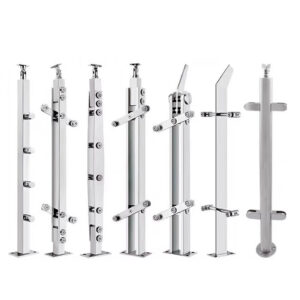
Specifying 316 for the handrail tubing is only half the battle. To ensure performance, the specification must extend to the entire “ecosystem”: posts, brackets, fasteners, and welds. Using 316 tubing with carbon steel fasteners or 304 brackets creates galvanic couples and weak points. The specification must explicitly call for all components to be fabricated from Type 316 material, as governed by standards like ASTM A554 for mechanical tubing.
| Specification Trigger | Mandatory? | Design & Finish Requirement |
|---|---|---|
| Within 1 mile of coast | Yes | Smooth, polished finish (#4 brush) |
| Exposure to deicing salts | Yes | Design for full drainage |
| Industrial pollutant exposure | Yes | Specify full 316 ecosystem |
| Low-maintenance design intent | Prudent | Avoid moisture-trapping crevices |
Source: ASTM A554 Standard Specification for Welded Stainless Steel Mechanical Tubing. This standard governs the welded tubing used for rails and posts, allowing specifiers to select Grade 316 to meet the material requirements triggered by the environmental criteria listed.
Installation & Maintenance Best Practices for Maximum Lifespan
Design for Drainage and Cleanability
Optimal longevity is achieved by pairing the correct alloy with intelligent design. A smooth, polished finish (such as a #4 brushed finish) is superior to a rough, mill finish. The smoother surface traps fewer corrosive salts and is easier to clean. The handrail profile and detailing must facilitate drainage, preventing standing water and debris accumulation at joints and horizontal surfaces. A well-detailed 316 system will use its environment—rainwater—to self-clean.
A Simple, Effective Maintenance Regime
For 316 stainless in most aggressive environments, maintenance is straightforward and infrequent. Periodic rinsing with fresh water to remove salt and pollutant deposits is typically sufficient. For heavier soiling, a mild soap solution can be used. Abrasive cleaners, steel wool, or chloride-containing cleaners must be avoided, as they can scratch the surface or deposit corrosive ions, damaging the passive layer. This simple regime underscores that the highest lifetime value comes from a system designed for easy upkeep.
The Finish vs. Grade Trade-Off
An often-overlooked strategic insight is that finish quality can sometimes trump material grade for maintenance frequency. A poorly detailed, rough-finished 316 system may require more cleaning than a beautifully detailed, smooth-finished 304 system in a mild environment. However, in truly aggressive settings, the combination of 316 alloy and a smooth finish delivers the lowest possible lifetime cost and the highest certainty of performance. For expert guidance on specifying systems that balance these factors, review the technical resources for coastal and chemical environment handrails.
Galvanic Corrosion: Risks and Prevention During Installation
The Silent Installation Failure
A handrail specified and fabricated from 316 stainless can still fail prematurely due to installation errors, with galvanic corrosion being the primary risk. When dissimilar metals contact each other in the presence of an electrolyte (like saltwater or humidity), an electrochemical cell forms. The less noble metal (e.g., carbon steel) corrodes rapidly. Using carbon steel anchors or fasteners with a 316 handrail is a guaranteed failure point.
Iron Contamination: An Invisible Threat
More insidious than dissimilar metal contact is iron contamination. When carbon steel tools are used to cut or grind near stainless components, or when stainless is stored with carbon steel, microscopic iron particles can embed in the stainless surface. These particles rust, creating unsightly staining and, more critically, locally disrupting the passive oxide layer, initiating pitting. This contamination is often not visible until rust stains appear months after installation.
Non-Negotiable Installation Protocols
Prevention is straightforward but requires strict jobsite discipline. Project specifications must mandate that only stainless steel tools be used for fabrication and installation. All fasteners, anchors, and support brackets must be specified as Type 316 or higher. Furthermore, a post-installation passivation treatment using a nitric or citric acid-based cleaner should be required to remove any embedded iron and restore the full protective oxide layer. These protocols protect the material investment.
| Risk Factor | Consequence | Prevention Mandate |
|---|---|---|
| Dissimilar metal contact | Rapid fastener corrosion | Stainless steel fasteners only |
| Carbon steel tool use | Iron contamination & rust | Dedicated stainless steel tools |
| Jobsite segregation failure | Embedded iron particles | Separate work areas from carbon steel |
| Missing post-installation passivation | Weakened passive layer | Require chemical passivation step |
Source: ISO 3506-1 Mechanical properties of corrosion-resistant stainless steel fasteners. This standard ensures fasteners (e.g., property class A4) have matching corrosion resistance to 316 handrails, preventing galvanic corrosion which is a primary installation risk.
Creating Your Project Specification and Decision Checklist
Conduct a Site Corrosion Audit
Begin the specification process with a formal site assessment. Document all potential chloride sources: proximity to coastline, prevailing wind direction, use of deicing salts on adjacent roads or walkways, and presence of industrial or pool chemicals. This audit moves the decision from guesswork to evidence-based specification, providing a defensible rationale for material selection.
Lock in Material and Traceability
The project specification must be explicit and traceable. State: “All handrail components, including tubing, posts, brackets, and fasteners, shall be fabricated from ASTM A276 Type 316 stainless steel.” Require Mill Test Reports (MTRs) from the material supplier for all batches to verify chemistry and grade. This step is crucial to prevent undetectable substitution with lower-grade material, a common cost-cutting tactic.
Enforce Installation and Finish Quality
Detail the required finish (e.g., #4 brush polish) and design for drainage. Mandate that installers use only stainless steel tools and hardware. Include a mandatory post-installation passivation step. Finally, require a cleaning and maintenance manual be provided to the building owner. This comprehensive checklist transforms a simple material callout into a guaranteed performance system, ensuring the handrail delivers decades of safe, low-maintenance service.
The decision pivots on environmental severity, total cost of ownership, and installation integrity. Mandate 316 stainless for any site with chloride exposure—coastal, deicing salt, or industrial. View the initial cost premium as capital invested against decades of maintenance savings. Crucially, enforce a specification that covers the full material ecosystem and installation protocols to prevent galvanic failure.
Need professional specification support or a durable handrail system engineered for harsh environments? The technical team at Esang can provide material validation, detailing guidance, and project-specific solutions to ensure long-term performance.
For a direct consultation on your project requirements, you can also Contact Us.
Frequently Asked Questions
Q: How do we specify 316 stainless steel handrails to ensure we get the correct alloy and avoid material substitution?
A: Your project specification must explicitly call out ASTM A276 Type 316 for all bar and shape components and ASTM A554 for welded tubing. Crucially, require suppliers to provide Mill Test Reports (MTRs) for material traceability and verification of the 2-3% molybdenum content. This means for any project where long-term integrity is critical, you should build this documentation requirement into your procurement process to lock in the corrosion-resistant performance you are paying for.
Q: What are the critical installation practices to prevent corrosion on 316 stainless steel handrails?
A: The most vital practices are preventing galvanic corrosion and iron contamination. Mandate the exclusive use of stainless steel fasteners, specified to ISO 3506-1 for Grade A4 (316), and require installers to use only stainless steel tools. You must also enforce jobsite segregation from carbon steel grinding or cutting work. For projects in coastal or salted environments, plan to include a post-installation passivation cleaning step in your specification to restore the protective oxide layer.
Q: When is it acceptable to use the lower-cost 304 stainless steel for exterior handrails?
A: Type 304 is suitable only for mild, inland environments with no exposure to chlorides from saltwater or deicing chemicals. While the “one-mile rule” from a coast is a common initial screen, a final decision requires a site audit considering wind patterns and other pollution sources. This means for purely interior, dry applications or in regions with proven low atmospheric chlorides, you can safely select 304 to meet budget constraints without significant corrosion risk.
Q: How does the performance of 316 stainless steel justify its higher initial cost in a total cost of ownership analysis?
A: The molybdenum-enhanced alloy eliminates the recurring maintenance cycles associated with coated carbon steel or the frequent cleaning and potential early replacement of Type 304 in corrosive settings. Its decades-long service life without repainting or major repair provides the greatest financial return for projects with limited maintenance access or in public spaces. For facilities managing long-term operational budgets, you should evaluate the upfront premium against decades of avoided upkeep costs.
Q: What design and finish criteria maximize the lifespan of 316 stainless steel handrails?
A: Specify a smooth, polished finish like a #4 brush, as it traps fewer corrosive salts and is easier to clean than rough textures. The design must also facilitate drainage to allow rainwater to wash away contaminants. This strategic insight means that for maximum durability, you should pair the correct alloy with design details that support maintenance, as a well-configured 316 system will deliver the lowest lifetime operational cost.
Q: Are European material standards comparable to ASTM for specifying coastal handrail components?
A: Yes, the key European standard for semi-finished products and sections is EN 10088-3, which specifies grades like 1.4401, the equivalent of Type 316. This standard provides the technical delivery conditions for bars and shapes, ensuring the base materials meet general structural purposes in aggressive environments. For projects following European norms, you must reference this standard to guarantee the specified corrosion resistance is met.