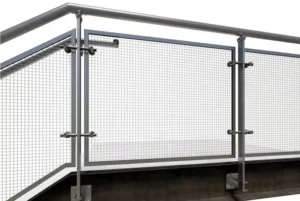
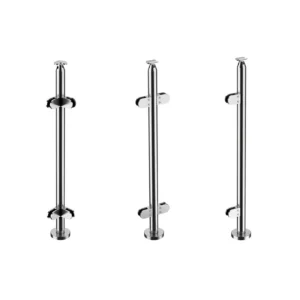
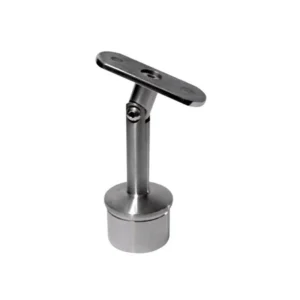
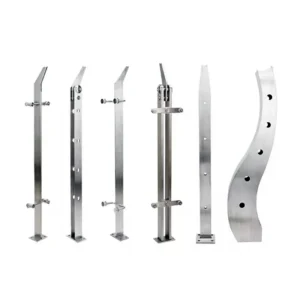
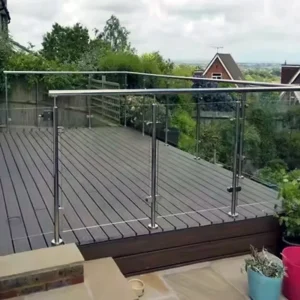
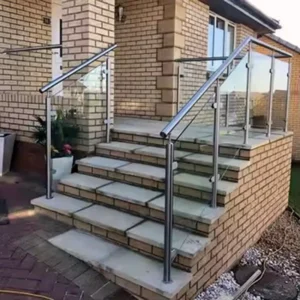
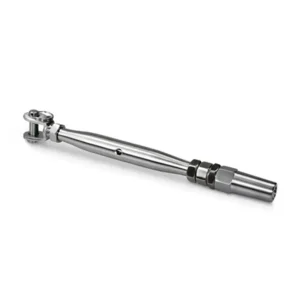
A quoted railing component can change dimensions, interfaces, or clearances that affect every part connected to it, not just the part itself. Deciding whether a quote can move straight to production or needs an assembly-level review first is a judgment call that shapes schedule, coordination effort, and how much risk the buyer carries into installation.
Spot RFQ changes that alter the railing assembly interface
| RFQ change or unresolved point | Assembly review trigger |
|---|---|
| A quoted component changes mating geometry | Review every affected interface among posts, rails, anchors, glass, cables, fasteners, and the substrate. |
| A quoted component changes the load path or anchorage | Review the full configuration together with project loads and the substrate interface. |
| A quoted component changes a glass or cable interface | Review its interaction with posts, anchors, fasteners, and the related railing hardware. |
| Mating dimensions or hole and edge locations remain unresolved | Keep the assembly interface open for review before the reviewed boundary is frozen. |
| Cable corner routing or tensioning access remains unresolved | Review the cable route and the access needed within the full configuration. |
| Drainage or installation clearance remains unresolved | Review the affected component, anchorage, and substrate interfaces before quotation and production. |
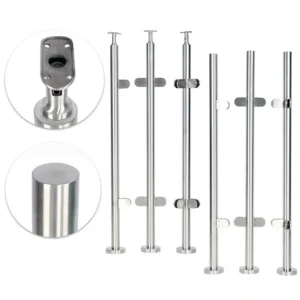
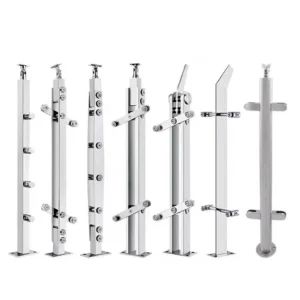
A quoted part rarely exists in isolation. A post, bracket, spigot, or termination fitting sits inside a chain of connections that includes the substrate, the anchorage, the adjoining rail or glass panel, and in cable systems the corner and tensioning hardware. When a quoted item changes a dimension, a mounting pattern, or a mating surface, that change does not stop at the part itself; it propagates into every interface the part touches.
The practical screening question is not “does this part meet its own specification” but “does this part still fit the assembly it was designed into.” Where a substitution changes only a finish or a lead time, the interface is usually unaffected and the review can stay at component level. Where a substitution changes a hole location, an edge distance, a mating thickness, or a load path through the anchorage, the review has to move to the assembly level, because the consequence of the change is not contained within the one part.
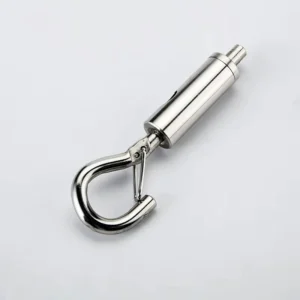
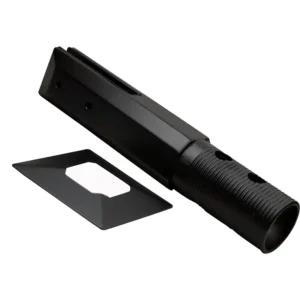
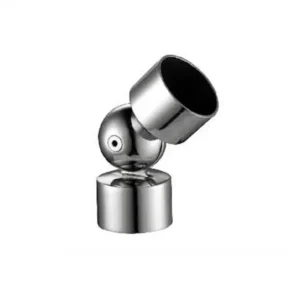
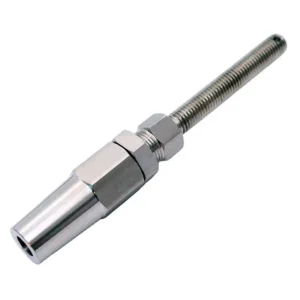
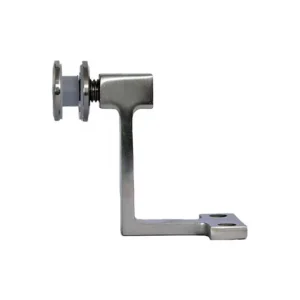
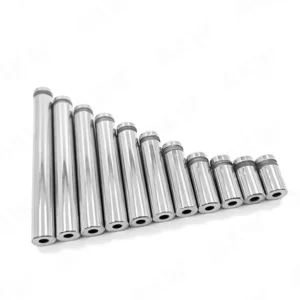
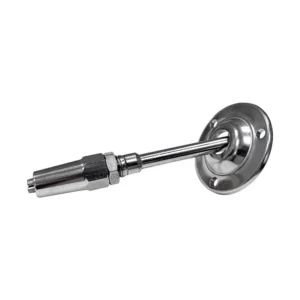
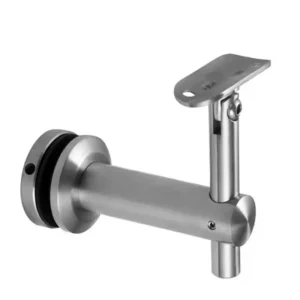
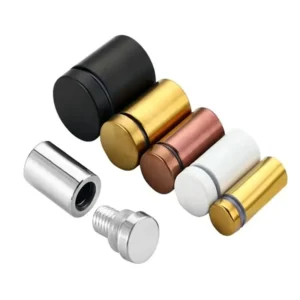
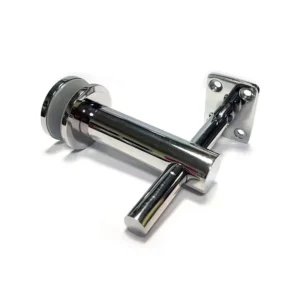
This distinction matters most when a quote arrives as a like-for-like replacement on paper but carries a different mounting geometry underneath. A glass clamp, spigot, handrail bracket, or cable terminal can look interchangeable in a photograph or a product name while differing in the dimensions that actually control fit. Visual similarity does not establish that a replacement part will mate correctly with the posts, rails, anchors, or glass already specified for the project. The buyer has to trace the quoted change back to the specific interfaces it touches before deciding whether the original shop drawing assumptions still hold.
Unresolved details carry the same weight as outright changes. Where mating dimensions, hole or edge locations, cable corner routing, tensioning access, drainage, or installation clearance have not been confirmed, the assembly interface is still open even if no part has changed yet. Treating an unresolved detail as settled because no one has raised an objection is a common way for an interface mismatch to surface only at installation, when it is harder to correct. The screening step at RFQ stage exists to catch both kinds of trigger: the change that has already happened in the quote, and the question that has never been closed.
Gather mating-part, substrate, load, exposure, and jurisdiction inputs
| Review input | Information to provide | Review question supported |
|---|---|---|
| Mating parts | The relevant posts, rails, anchors, glass, cables, handrails, fasteners, and their mating dimensions | Which component interfaces and geometry are included in the review? |
| Substrate | The substrate and its interface with the anchorage | Where does the anchorage connect to the project condition? |
| Project loads | The loads for the full railing configuration | Which load-path questions must be addressed for the complete assembly? |
| Exposure | The project exposure for the reviewed configuration | Which exposure condition is inside the reviewed boundary? |
| Jurisdiction | The jurisdiction that applies to the project | Which compliance questions require project-specific engineering and regulatory review? |
| Installation conditions | Hole and edge locations, cable corner routing, tensioning access, drainage, and installation clearance | Which installation interfaces remain unresolved before the configuration can be frozen? |
Once a quoted change is identified as an assembly-level trigger, the review depends on inputs that no single component drawing can supply on its own. The first of these is the full set of mating parts: the posts, rails, anchors, glass, cables, handrails, and fasteners that surround the quoted item, along with their mating dimensions. Without this set, a reviewer can confirm that the quoted part meets its own specification but cannot confirm that it will function inside the assembly it is meant to join.
The substrate is a separate input from the component itself. Anchorage performance depends on what the anchor is fastening into, not only on the anchor’s own rated capacity. A bracket or post base that is adequate for one substrate condition can be inadequate for another, even where the hardware itself is unchanged. The project has to identify the substrate and the interface between it and the anchorage before the review can treat the anchorage question as closed.
Project loads and exposure are inputs the component supplier cannot infer from a part number. The same hardware can sit inside configurations with different load paths depending on span, post spacing, and how the rail or glass is supported along its length, and it can sit inside different exposure conditions depending on whether the installation is interior, sheltered, or fully exposed to weather. Where exposure changes, the review question changes with it, even if no dimension on the quoted part has moved.
Jurisdiction is the input that routes compliance questions to the right place. A reviewed assembly boundary can confirm that interfaces are geometrically compatible and that inputs have been gathered, but it cannot by itself confirm that the configuration satisfies the code requirements of a given jurisdiction; that determination needs project-specific engineering and regulatory review.
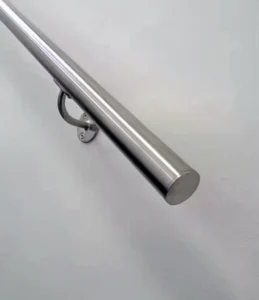
Installation conditions close the input set: hole and edge locations, cable corner routing, tensioning access, drainage, and installation clearance. These are the same unresolved points that triggered the review stage, now treated as inputs the review has to resolve or explicitly carry forward. An article on handrail hardware describes matching tube grade, brackets, and mounting details before shop drawings freeze; the same logic applies here, extended to the full set of mating parts rather than one bracket family.
Trace interactions among posts, anchors, glass, cables, and handrails
| Assembly interaction | Path to trace | Questions to keep visible |
|---|---|---|
| Posts, rails, anchors, and substrate | From rail and post geometry through the anchorage to the substrate interface | Mating dimensions, hole and edge locations, drainage, and the assembly load path |
| Glass, posts, anchors, and fasteners | Across the glazing support and its attachment interfaces | Mating geometry, hole and edge locations, and installation clearance |
| Cables, posts, and corners | Along the cable route through corners and the locations that need tensioning access | Corner routing, tensioning access, and installation clearance |
| Handrails, posts, and fasteners | Across the handrail-to-post geometry and fastener interfaces | Mating dimensions, hole locations, and installation access |
Gathering the inputs is not the same as tracing how they interact. A railing assembly review has to follow specific paths through the configuration, because a change at one point in the path can surface as a problem at a different point that was never directly touched by the quoted part.
The path from rail and post geometry through the anchorage to the substrate carries the structural load path. A change in post spacing, rail height, or bracket geometry changes the forces the anchorage has to resist, and the anchorage’s adequacy depends on the substrate it connects to. Reviewing the post or the anchor in isolation, without tracing this path to the substrate, leaves the load-path question unanswered even if each component individually meets its own specification.
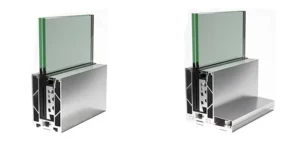
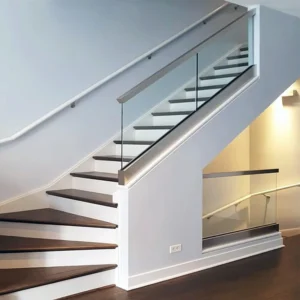
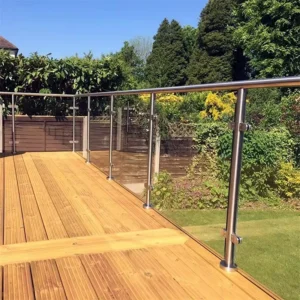
Glass introduces a different path. Glass panel support brackets and adapters raise compatibility questions that depend on the glazing support’s attachment interfaces, not only on the glass thickness the clamp or spigot nominally accepts. A clamp or spigot that lists compatibility with a glass thickness still has to be checked against the hole and edge locations and the installation clearance around the specific post and anchor it will be mounted to; glass thickness compatibility and the suitability of the complete installed assembly are separate questions.
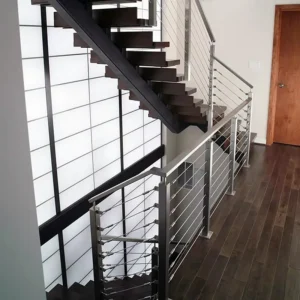
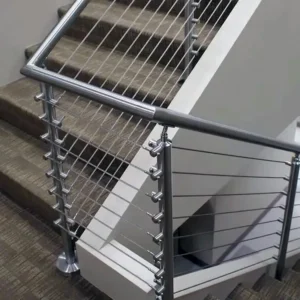
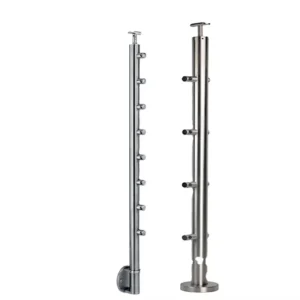
Cable systems add a routing dimension that posts and glass do not share. The cable has to travel through corner posts and terminations, and each corner and termination needs access for tensioning. A corner post and termination hardware selection made without tracing the cable route and the tensioning access it requires can leave a configuration that is correct at each termination point individually but unworkable once the full run is installed.
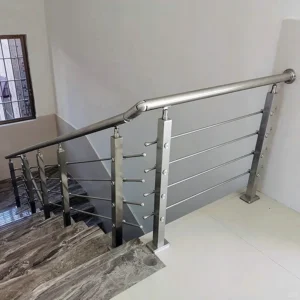
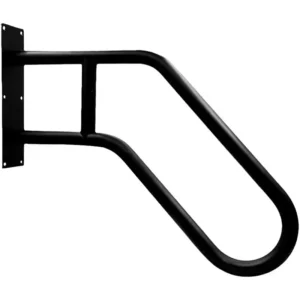
Handrail-to-post geometry and fastener interfaces form a fourth path, distinct from the structural rail-to-anchor path, because mounting dimensions and hole locations for a handrail bracket depend on the post profile and the fastener interface rather than on load path alone. Where any one of these paths changes, the review has to retrace it rather than assume the remaining paths are unaffected.
Escalate unresolved load-path and compliance questions to project engineering
| Question requiring escalation | Evidence boundary | Information to pass to project engineering |
|---|---|---|
| Permanent metal railing system design, load, or deflection criteria | ASTM E985-24 covers permanent metal railing systems and basic design, load, and deflection criteria; specific field conditions and project design remain outside the public scope summary. | Full configuration, project loads, exposure, jurisdiction, and the unresolved assembly question |
| Glazing performance in a permanent railing system | ASTM E2358-24 covers classification, design, and performance for glazing in permanent railing systems; its public scope does not establish ESANG or project compliance. | Full glazing and railing configuration, project loads, exposure, jurisdiction, and the evidence needed for project and regulatory review |
| Cable system, terminal capacity, post spacing, or local code questions | ISO 2408:2017 covers steel wire ropes within its stated product scope; it is not a cable-railing system, terminal-capacity, post-spacing, or local-code standard. | Full cable and railing configuration, project loads, corner routing, tensioning access, exposure, and jurisdiction |
| Any unresolved assembly load path or compliance question | Component data for one quoted part alone cannot establish system compliance. | The complete reviewed configuration, its project conditions, the open question, the responsible party, and the required evidence |
Some questions surfaced during an assembly review cannot be closed with component data alone, and recognizing which ones fall into that category is itself a decision the buyer has to make before quotation proceeds.
Design, load, and deflection criteria for permanent metal railing systems fall within the scope of ASTM E985-24, which covers basic design, load, and deflection criteria for permanent metal railing systems and rails for buildings. Its public scope summary establishes that this criteria exists as a referenceable standard; it does not substitute for the specific field conditions and project design that determine whether a given configuration satisfies that criteria. Where a load-path question remains open after tracing the assembly, the full configuration, the project loads, and the open question have to be passed to the party responsible for project engineering, because the standard’s scope does not extend to confirming any single project’s compliance.
Glazing performance in permanent railing systems, guards, and balustrades falls within the scope of ASTM E2358-24, which addresses classification, design, and performance for glazing in these systems. As with the railing standard, the public scope summary identifies what the standard classifies and governs; it does not establish that a specific glazing and hardware combination complies, and it does not establish ESANG compliance. Where a glazing interface question remains open, it needs the same escalation path: the full glazing and railing configuration, the project loads, exposure, and jurisdiction passed to project engineering and regulatory review.
Cable systems carry a distinct boundary. ISO 2408:2017 sets requirements for steel wire ropes within its stated product scope, but it is not a cable-railing system standard, not a terminal-capacity standard, not a post-spacing standard, and not a local-code standard. A cable that meets ISO 2408:2017 for the wire rope itself has not thereby demonstrated terminal capacity, correct post spacing, or compliance with a local code; those questions sit outside what the wire-rope standard covers and need their own escalation with the full cable and railing configuration, corner routing, and tensioning access included.
The underlying principle across all three boundaries is the same: component data describing one quoted part, by itself, cannot establish that the assembled system complies with a load, deflection, glazing, or cable requirement. Escalation means passing the complete reviewed configuration, its project conditions, the specific open question, the responsible party, and the evidence needed to close it.
Freeze the reviewed assembly boundary before quotation and production
| Freeze-control item | Required entry | Decision it controls |
|---|---|---|
| Reviewed assembly boundary | The configuration, components, interfaces, project conditions, and questions included in the review | Identifies the assembly boundary covered by the review |
| Open questions | Each unresolved mating-geometry, load-path, anchorage, glass, cable, drainage, installation-access, or compliance question | Shows which issues remain outside a closed decision |
| Responsible party | The party assigned to each open question | Identifies who is responsible for resolving the question |
| Required evidence | The evidence needed to close each open question | Defines what must support closure |
| Freeze point | The reviewed configuration and the stated point at which it is frozen before quotation and production | Ties quotation and production to the reviewed assembly boundary |
Closing a review means recording what was reviewed, not simply confirming that no objection was raised. A reviewed assembly boundary states which configuration, which components, which interfaces, and which project conditions were included in the review, so that anyone reading the record afterward can see what was actually checked rather than inferring it from the absence of a flagged problem.
Open questions belong in the same record, kept visibly separate from the reviewed boundary rather than folded into it. A mating-geometry question that was identified but not resolved, a load-path question still awaiting project engineering input, or an installation-clearance detail still pending confirmation are all decisions that remain open; recording them as open, rather than letting them default to closed by omission, is what lets quotation and production proceed on the parts that are genuinely settled without silently carrying the unresolved parts forward.
Each open question needs a responsible party attached to it. An unresolved jurisdiction question belongs with whoever is handling project-specific regulatory review; an unresolved cable corner or tensioning-access question belongs with whoever controls the corner post and termination selection. Leaving responsibility unassigned is how an open question stays open past the point where it should have been closed.
Required evidence is the condition under which each open question can move from open to closed. A load-path question closes when the responsible engineering party supplies the project-specific analysis; a jurisdiction question closes when the applicable code review is complete. Recording what evidence is required, rather than only that a question exists, gives the party closing it a defined target.
The freeze point is the moment the reviewed configuration is locked against further change for the purpose of quotation and production, while the open items continue to be tracked separately. Where the full configuration, loads, exposure, and jurisdiction have been gathered and traced through posts, anchors, glass, cables, and handrails, and the remaining open questions have been escalated to project engineering with a responsible party and required evidence attached, the boundary can be frozen with those open items still pending resolution rather than mistaken for closed. Where tracing is incomplete or inputs are still missing, freezing the boundary at that point only locks in the gap rather than resolving it, and the configuration that reaches production carries the same unresolved interface it had at the RFQ stage.
Frequently Asked Questions
Q: Can a railing component be quoted without an assembly review?
A: Only when the quoted part leaves the reviewed interfaces and project conditions unchanged. If it alters mating geometry, anchorage, the load path, a glass or cable interface, drainage, or installation access, reopen the affected assembly questions before quotation.
Q: What should we provide when some railing dimensions are still unresolved?
A: Provide the current full configuration and clearly mark every open mating dimension, hole or edge location, cable route, access constraint, and substrate interface. Assign a responsible party and the evidence needed to close each item so an unresolved detail is not mistaken for a frozen condition.
Q: Does a component datasheet establish that the complete railing system complies?
A: No. Component data alone cannot establish system compliance; the responsible designer needs the full configuration, project loads, exposure, jurisdiction, substrate and anchorage conditions, and any unresolved load-path or interface questions.
Q: How should the RFQ handle the ASTM and ISO standards listed for the project?
A: Use each standard only within its stated scope and identify the project-specific evidence still required. ASTM E985-24 does not resolve the field design, ASTM E2358-24 does not by itself establish project or ESANG compliance, and ISO 2408:2017 does not establish cable-railing terminal capacity, post spacing, or local-code acceptance.
Q: What happens if a component changes after the assembly boundary has been reviewed?
A: Trace the change through every affected post, rail, anchor, fastener, glass, cable, handrail, and substrate interface, then update the open questions and required evidence. Quotation and production should use the newly reviewed configuration and its recorded freeze point.