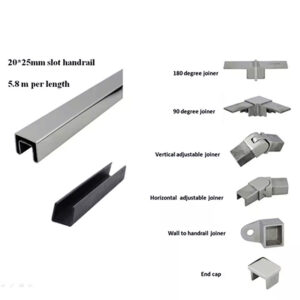
Most coordination failures on handrail projects don’t announce themselves during design review. They surface during installation when a bracket saddle won’t seat properly on the tube, when a fitting from one supplier runs undersized against a tube from another, or when the substrate condition that was assumed in the drawing turns out to require a completely different anchor pattern. By that point, the cost isn’t a redline on a submittal—it’s unplanned field welding, replacement parts on back-order, and a schedule that no longer closes. The decision that prevents those failures isn’t a single specification choice; it’s the discipline of freezing tube size, grade, bracket geometry, mounting offset, and connector family as one coordinated package before shop drawings are released. Contractors who work through that sequence in the right order leave the drawing phase with far fewer variables still open in the field.
Why handrail hardware should be frozen as one coordinated package
The instinct on most projects is to approve the handrail tube profile early and treat bracket selection as a secondary procurement step. That sequence creates a structural coordination problem: once the tube geometry is locked, bracket saddle dimensions, wall projections, and connector families all have to conform to it—but those downstream components often weren’t evaluated when the tube was approved. If they were sourced separately, or if their geometry was assumed rather than confirmed, the mismatches don’t appear until the hardware arrives on site.
Two procurement risks drive most of the rework in this pattern. The first is assembly method: whether custom slip fittings or offsets are pre-welded at the shop or assembled in the field is not a minor logistics question. If that decision isn’t confirmed before fabrication begins, the manufacturer may ship components that require on-site welding the installer isn’t set up to perform, or pre-welded assemblies that can’t be handled safely in transit. The second risk is procurement timing: if handrail tube and brackets are ordered on separate timelines because they weren’t treated as a package, a delay in one component stalls the entire installation regardless of whether everything else is ready.
| What to Clarify | Risk if Unclear | Consequence |
|---|---|---|
| Whether custom slip fittings or offsets must be pre-welded or can be assembled on-site | Unplanned on-site welding or assembly required | Creates project delays and quality control risks on site |
| Whether all required brackets are available for purchase at the same time as the handrail tube | Separate procurement timelines for components | Can stall the entire installation if one part is delayed |
The practical discipline here is straightforward: hardware should be reviewed and approved as a complete system before any individual component is released to procurement. That means bracket model, tube size, connector family, and mounting detail must all be on the same submittal, not spread across separate RFIs closed at different stages of design.
What tube size grade and bracket data must be confirmed first
Before any bracket can be selected, three tube-level specifications need to be confirmed as fixed inputs—not approximated, and not assumed from a previous similar project.
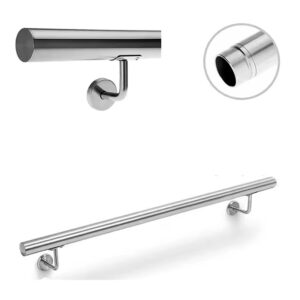
Wall thickness is the most frequently underspecified. Bracket saddle geometry and connector compatibility are determined by the tube’s outer diameter and wall thickness together. A 16 gauge wall (nominally 1/16 inch) and a heavier gauge tube may share the same outer diameter but behave very differently at the saddle interface: the saddle radius that fits cleanly on one may create contact stress or clearance problems on the other. ASTM A554-21, which covers welded stainless steel mechanical tubing, provides the dimensional and tolerance classification framework that makes it possible to cross-check tube dimensions against fitting specifications systematically. The principle isn’t that bracket selection is governed by the standard directly, but that confirming tube dimensions against a documented classification prevents the kind of assumption drift that creates interface failures later.
Grade matching between tube and hardware carries its own distinct risk. A 304 tube paired with 316 brackets, or vice versa, creates two problems simultaneously: a potential galvanic corrosion risk at contact points in wet or coastal environments, and visible finish discrepancy in architectural applications where the two grades polish differently. The confirmation step isn’t complex—it’s simply making sure the grade called out on the tube specification matches the grade on the bracket submittal before either is approved.
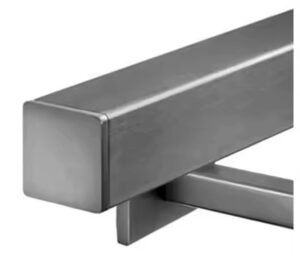
End detail is the third confirmation that’s frequently deferred and then becomes a field problem. Whether handrail ends are finished, left open, or pre-installed with plugs must align with the bracket type selected and the mounting method used. An open end that later needs a plug, or a pre-welded end cap that conflicts with a bracket’s anchor geometry, typically results in a last-minute part order that pulls the installation off schedule.
| What to Confirm | Why It Matters | Example / Evidence |
|---|---|---|
| Exact wall thickness (gauge) of the handrail tube | Determines bracket saddle geometry and connector compatibility | 16 gauge / 1/16″ |
| Stainless steel grade (304, 316, 2205) matches between tube and hardware | Prevents galvanic corrosion and visible finish differences | Match tube and bracket grades (e.g., 304 to 304) |
| Handrail end detail (finished, open, or pre-installed plugs) | Must align with the chosen bracket type and mounting method | Specify in plans to avoid last-minute part orders or field mods |
These three inputs—wall thickness, grade, and end detail—function as the foundation of hardware selection. Treating them as planning criteria that must be confirmed before bracket evaluation begins, rather than details to be resolved during fabrication, is what keeps the rest of the coordination sequence from compressing into the wrong phase.
How substrate and projection limits change hardware choice
Substrate type is a hardware-selection input that belongs in the earliest stage of bracket specification, not in a field question during installation. Wood post, wall-mount, and concrete anchoring conditions require bracket bases with geometrically distinct footprints, different fastener patterns, and different load-transfer assumptions. A bracket specified for wood blocking cannot simply be repositioned for concrete anchorage—the base geometry, anchor embedment, and projection offset are all different enough that swapping one for the other requires respecifying the bracket from the beginning.
Projection limits compound this. The distance a bracket projects from the wall or post surface determines the clearance between the handrail centerline and the mounting surface, which in turn affects ADA compliance for graspability and clearance under the 2010 ADA Standards for Accessible Design. Getting that offset wrong at the specification stage means either a non-compliant installation or a rework to the bracket selection that reopens decisions already made about fastener patterns and substrate preparation.
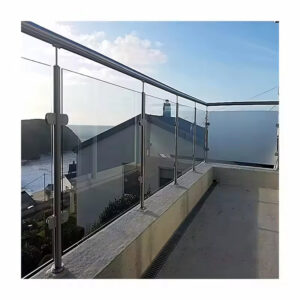
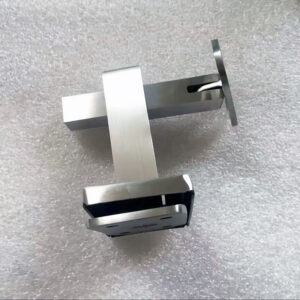
The hidden mount condition is where early sourcing identification matters most. Achieving an uninterrupted visual flow across a wall surface, or concealing the mounting entirely, requires bracket models that aren’t interchangeable with standard wall-mount hardware—the geometry is specific to the application, and lead times for those models may differ from the rest of the hardware package. If those bracket models aren’t identified and ordered early, their procurement timeline can hold up an installation where everything else is already staged. The practical implication is that the substrate condition and projection goal should both be confirmed before the bracket submittal is assembled, not after a preferred bracket model has already been selected.
Where connector tolerance and finish mismatches create rework
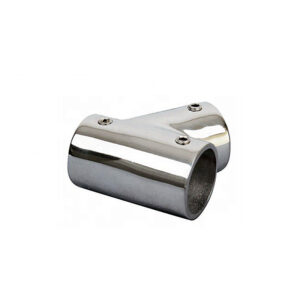
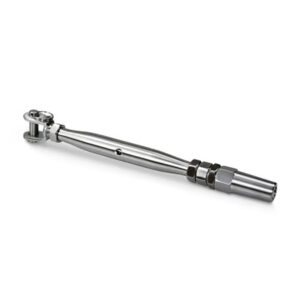
Mixed tube and fitting sources are a procurement shortcut that creates a field problem. When fittings are sourced from one supplier and tube from another, dimensional tolerances are compared against each supplier’s own specifications—but those specifications don’t guarantee interoperability. A fitting that is dimensionally acceptable against its own supplier’s tolerance band may run undersized relative to a tube from a different source, making slip-fit assembly impossible without forcing, grinding, or substitution. None of those field solutions produce the finish quality or dimensional accuracy that was assumed at the drawing stage.
The tolerance mismatch risk is compounded by finish. Even when tube and fittings are both stainless steel and both nominally the same grade, surface finish can differ enough between suppliers to be visible in a polished or brushed architectural installation. A 304 tube with a No. 4 brushed finish from one source paired with a 304 fitting finished to a slightly different grit direction or depth from another will show the difference in direct light. That’s a quality problem that can’t be corrected without replacing one of the components—which means the “savings” from splitting the procurement didn’t survive contact with the finished installation. The principle at work here is similar to the material-grade matching logic that governs fastener specifications under ISO 3506-1:2020: consistent material and finish performance requires that components be sourced and confirmed as a compatible system, not assembled from individually acceptable parts that haven’t been checked against each other.
The confirmation step is not complicated, but it requires intentionality: before mixing tube and fitting sources, verify that the dimensional tolerances from both suppliers have been cross-checked for the specific OD and wall thickness combination in use. If that check hasn’t been done, the safer path is to source the tube and fittings from the same hardware family.
How to standardize details without losing field flexibility
The choice between a modular hardware set and a standardized kit is a genuine engineering and procurement trade-off, not a preference question. Both approaches solve real problems, and both create real constraints.
Modular sets give installers room to adapt in the field. On projects with varied run conditions—mixed substrates, non-standard angles, curved sections, or field-measured offsets—a broader component inventory means problems that would otherwise require a change order can often be resolved with hardware already on site. That adaptability is valuable when the project conditions aren’t fully predictable at the drawing stage. The cost is finish consistency and procurement speed: more component SKUs mean more potential for grade or finish variation between parts, and a larger purchase across multiple bracket types takes longer to assemble and confirm than a single standardized order.
Standardized kits protect repeatability. On projects where the handrail detail is consistent across all runs—same substrate, same projection, same tube size, same end condition—a tighter hardware family reduces the number of decisions that have to be made in the field, accelerates procurement because the same components repeat, and makes finish consistency easier to control because fewer part types are in the system. The constraint is inflexibility: if a condition arises that falls outside the standardized kit’s range, the solution isn’t already on site.
| Hardware Approach | Key Advantage | Typical Application |
|---|---|---|
| Modular hardware set | Offers field adaptability for complex or non-standard railing runs | Projects with varied conditions requiring on-site adjustment |
| Standardized kit | Protects finish consistency and speeds procurement | Repeat details or projects with consistent, predictable conditions |
The signal that points toward one path or the other is usually the project’s condition variability. Curved handrail sections are a useful diagnostic: if sections fall within the manufacturer’s standard radius restrictions, a standardized kit can handle them without escalation. If curves fall outside standard limits, custom fabrication is required, and that requirement must be verified against plans before shop drawings are finalized—it’s not a field adjustment. Projects where that kind of variation is expected at multiple points in the run are usually better served by a modular approach, even at the cost of tighter finish management.
Which ESANG hardware path fits repeatable project delivery
The coordination logic that runs through this article points toward a consistent procurement principle: hardware that is specified, sourced, and confirmed as a system performs better across the full project arc than hardware assembled from individually acceptable components that haven’t been checked together. That principle applies directly to hardware selection strategy.
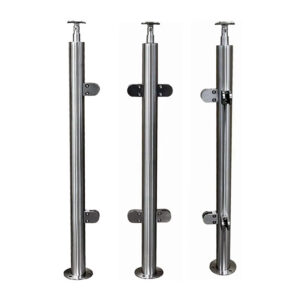
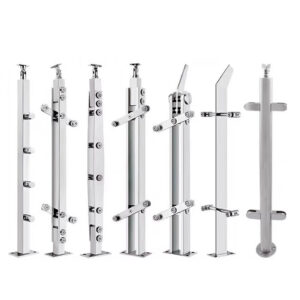
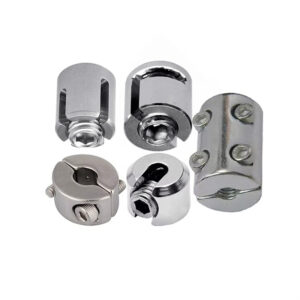
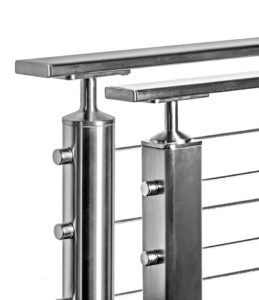
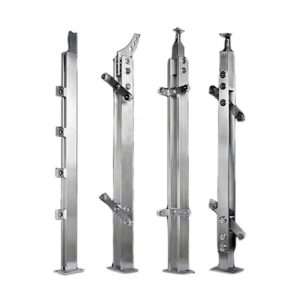
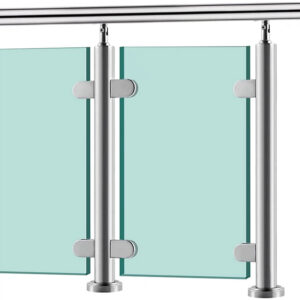
For contractors running repeat details—consistent tube size, consistent substrate, consistent projection—ESANG’s handrail systems are structured to support a standardized procurement path where tube, brackets, and connectors are part of the same coordinated hardware family. That alignment reduces the tolerance and finish mismatch risks that arise when components are sourced independently, and it makes the submittal package easier to assemble because the dimensional relationships between components are already confirmed at the product level.
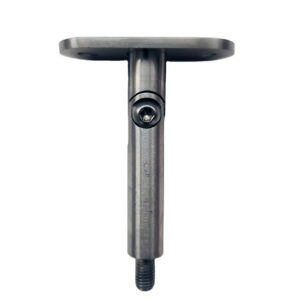
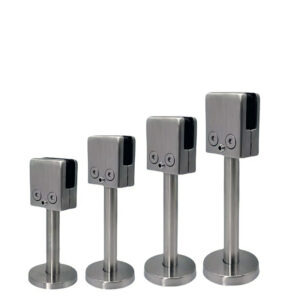
For projects where mounting conditions vary across runs, or where substrate types change between locations, adjustable wall handrail brackets provide the projection flexibility that standardized fixed-geometry brackets can’t offer without respecification. The practical value of adjustable brackets isn’t field improvisation—it’s absorbing the dimensional variation that exists between drawing-phase assumptions and actual field conditions without triggering a hardware substitution.
The decision between these paths should be made at the same time the tube and grade are confirmed, not after the drawing is nearly complete. Hardware family selection is a drawing-phase decision, and treating it as one protects the rest of the coordination sequence.
What should be closed before shop drawings are released
Shop drawings that freeze before all hardware variables are resolved convert drawing-phase gaps into field-phase problems. The three closure items that most often remain open when drawings are released—custom dimensions, hidden mounting details, and curved section radii—each carry fabrication or assembly consequences that can’t be corrected quickly once production has started.
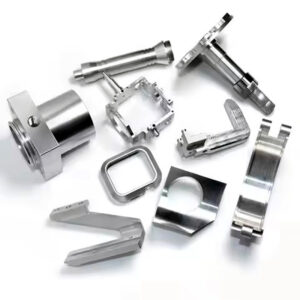
Custom lengths and non-standard dimensions are the most straightforward. Production cannot begin on a custom item until exact specifications are provided. When teams assume standard sizes and those assumptions are wrong, the result is incorrect parts that either can’t be modified without scrapping and reordering, or require field cuts that compromise end finish and dimensional accuracy. Confirming all custom dimensions before drawing release isn’t additional process overhead—it’s the step that makes the production timeline reliable.
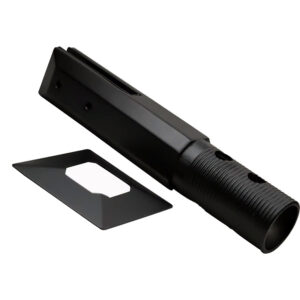
Hidden mounting details and complex angled connections are higher-stakes closures because the solutions may require custom engineering or specific part numbers that aren’t part of the standard hardware catalog. Leaving those conditions open and expecting field improvisation typically means the installer encounters the problem after standard hardware has already been shipped—and the fix requires either a change order for custom parts or a field workaround that compromises the finished installation. Manufacturer consultation before drawings are frozen is a required verification step for those conditions, not optional guidance. The manufacturer is the only party who can confirm whether the intended detail is achievable with catalog components or requires custom engineering, and that answer needs to be in hand before the drawing is released.
| What to Close | Risk if Left Open | What to Confirm with Manufacturer |
|---|---|---|
| All custom lengths or non-standard dimensions | Production of incorrect parts, assuming standard sizes | Provide exact specifications for any custom items |
| Hidden mounting details or complex angled connections | Field improvisation with unsuitable parts, requiring rework | Confirm required custom engineering or specific part numbers via consultation |
| Curved handrail section radius | Need for custom fabrication if outside standard limits | Verify radius against manufacturer’s standard restrictions using plans/pictures |
Curved section radii are the third closure point that benefits from early verification. If the project has curved handrail runs, those radii need to be checked against the manufacturer’s standard fabrication limits before shop drawings are finalized. Curves outside standard limits require custom fabrication with its own lead time and pricing—and that requirement is easiest to accommodate before drawings are frozen, not after a submittal has already been submitted for approval.
For additional specification depth on how these closure checks fit into a broader commercial project framework, the Complete Stainless Steel Handrail Specification Guide covers the material, dimensional, and compliance inputs that inform hardware selection at the project level.
The consistent theme across every coordination failure described here is sequence: decisions that are deferred to a later phase don’t disappear, they get resolved under pressure and with fewer options. Freezing the hardware package as a single coordinated unit—tube size, grade, bracket saddle geometry, substrate and projection condition, and connector family—before shop drawings are released is what keeps those decisions in the phase where they’re cheapest to make. Any one of those variables left open is a decision the field will make for you, usually under conditions that don’t favor quality or schedule.
Before the next submittal package is assembled, the concrete confirmation step is to verify that tube and bracket specifications are on the same document, that grades match, that substrate and projection conditions are resolved, and that any custom dimensions or hidden mount details have been consulted with the manufacturer. That review takes less time at the drawing stage than any of the rework patterns it prevents.
Frequently Asked Questions
Q: What happens if the stainless steel grade on the tube specification doesn’t match what the bracket supplier defaults to?
A: Mismatched grades must be resolved before procurement, not after delivery. A 304 tube paired with 316 brackets—or the reverse—creates two simultaneous problems: a galvanic corrosion risk at contact points in wet or coastal environments, and a visible finish discrepancy in polished or brushed applications, since the two grades polish differently. The correction requires replacing one component, which means the original cost savings from the mismatch don’t survive the finished installation.
Q: At what point in the project sequence should the choice between a modular hardware set and a standardized kit actually be made?
A: That decision belongs in the drawing phase, at the same time tube size and grade are confirmed—not after the handrail profile has already been approved. Deferring it means bracket geometry, projection offsets, and connector families get evaluated against a tube that’s already locked, which compresses the coordination sequence into the phase where changes are most expensive. Making the hardware family decision early keeps all five package variables—tube, grade, bracket saddle, substrate condition, and connector family—open for review at the same time.
Q: If the project has only one or two curved handrail runs, is custom fabrication always required, or is there a threshold where standard components still apply?
A: Whether standard components apply depends entirely on whether the specified radii fall within the manufacturer’s documented fabrication limits—there is no universal threshold. Curves within standard limits can be handled without escalation; curves outside them require custom fabrication with its own lead time and pricing. That distinction has to be verified against actual plans before shop drawings are finalized, because it’s a fabrication constraint, not a field adjustment. Assuming standard limits apply without confirming it is one of the closure gaps that most reliably produces a change order after submittal.
Q: Is a contractor running a single project with non-repeating conditions still served by sourcing tube and brackets from the same hardware family, or does that only matter for repeat details?
A: Sourcing from the same hardware family matters on any project where tolerance and finish interoperability haven’t been independently verified between suppliers. On a single non-repeating project, the risk isn’t reduced—a fitting that runs undersized against a tube from a different source creates the same impossible field assembly regardless of how many times that detail recurs. The value of a coordinated hardware family is that dimensional relationships between components are already confirmed at the product level, which removes the verification burden the contractor would otherwise have to carry. ESANG’s mounting hardware and brackets are structured around that same coordination principle for both single-project and repeat-detail applications.
Q: What is the practical consequence of leaving hidden mount details unresolved until after shop drawings are released?
A: Hidden mounting details that aren’t closed before drawing release typically require custom engineering or specific part numbers that fall outside the standard hardware catalog. When those conditions surface after standard hardware has already shipped, the installer encounters the problem with no catalog solution on site—the fix becomes either a change order for custom parts or a field workaround that compromises the finished installation. Manufacturer consultation before drawings are frozen is the only way to confirm whether the intended detail is achievable with catalog components or requires custom engineering, and that answer needs to be in hand before the drawing is released, not after a submittal has already been approved.