Specifying commercial stainless steel handrails requires navigating a complex web of safety codes. The International Building Code (IBC) provides the baseline, but its requirements for height, load, and installation are often misinterpreted or applied incorrectly. A single miscalculation in handrail height or bracket spacing can lead to failed inspections, costly rework, and, critically, compromised user safety.
Understanding IBC 1014 is not optional for architects, contractors, and facility managers. Compliance is a legal and liability imperative. This guide distills the technical specifications of IBC 1014 into actionable decision points, focusing on the precise requirements for stainless steel systems to ensure your project meets code from design through final inspection.
IBC Handrail vs. Guard: Defining the Key Difference
The Functional Distinction
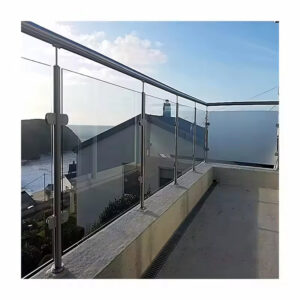
A handrail and a guard serve fundamentally different purposes, a distinction that dictates their design. The IBC defines a handrail as a graspable component for guidance and support on stairs, ramps, and walking surfaces. Its primary function is to aid balance. A guard, however, is a barrier system designed to prevent falls from elevated areas like landings, balconies, or mezzanines where a drop of 30 inches or more exists. This functional split is the cornerstone of compliant design.
Impact on Specification and Design
This separation means each element has non-interchangeable height and structural requirements. A common and costly mistake is assuming a single top rail can serve both as a handrail and a guard. It can only do so if installed within the lower handrail height range of 34-38 inches, which would fail to provide adequate 42-inch fall protection. Therefore, in commercial stair and ramp applications, designers must plan for two distinct components: a structural guard and a separate, graspable handrail. This directly impacts material selection, cost, and aesthetic detailing from the project’s outset.
The Strategic Implication for Stainless Steel
For stainless steel systems, this duality influences specification strategy. You’re not just selecting a railing profile; you’re engineering a dual-component safety system. The guard requires robust structural integrity, while the handrail demands precise ergonomic geometry. We often see projects where this distinction wasn’t clarified early, leading to last-minute value engineering that compromises either safety or design intent.
Core IBC 1014 Height Requirements for Handrails
The Mandatory Height Range
For commercial stainless steel handrails, IBC Section 1014 mandates that the top of the gripping surface be mounted between 34 inches (865 mm) and 38 inches (965 mm) vertically above the stair nosing or ramp walking surface. This height must be maintained consistently for the entire run. It’s a precise range, not a suggestion, and it is measured from the leading edge of the stair tread or the ramp surface itself.
Guard Height and Integration
Where a guard is required for fall protection (IBC Section 1013), the minimum height is 42 inches (1065 mm). The integration point is critical: the top rail of a 42-inch guard can also serve as the handrail only if it is installed within the 34- to 38-inch range. If the guard’s top rail is at 42 inches, a separate, lower handrail must be provided. This table clarifies the core requirements:
Core IBC 1014 Height Requirements for Handrails
| Component | IBC Height Requirement | Key Application |
|---|---|---|
| Handrail (top surface) | 34 to 38 inches | Stairs, ramps, walking surfaces |
| Guard (minimum height) | 42 inches | Fall protection (30″+ drop) |
| Integrated top rail | Must be 34-38 inches | Can serve as handrail only |
Source: IBC Section 1014 Handrail Height Requirements. This code section establishes the mandatory vertical mounting range for handrail gripping surfaces and the minimum height for guard barriers in commercial buildings, forming the baseline for compliance.
Navigating the Code Labyrinth
The IBC figures are a starting point, not a universal guarantee. While ADA guidelines align with the 34-38 inch handrail height, other standards like OSHA for workplace environments introduce different ranges. The first and most critical strategic step is verifying the project’s specific governing code set with the local Authority Having Jurisdiction (AHJ). Assuming IBC compliance without checking local amendments is a high-risk approach.
Essential Technical Specifications for Gripping Surfaces
The Geometry of Graspability
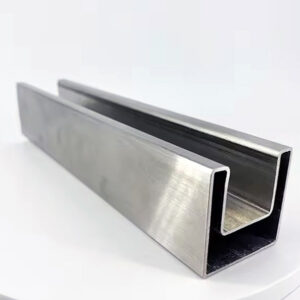
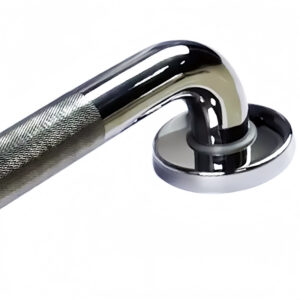
Code compliance hinges on ergonomic “graspability,” which dictates precise handrail geometry. For a circular cross-section, the outside diameter must be between 1.25 inches (32 mm) and 2 inches (51 mm). This range prioritizes a secure “power grip” over a precarious “pinch grip,” directly linking user safety to fabrication tolerances. Non-circular profiles require a perimeter of 4 to 6.25 inches to achieve the same functional grasp.
Required Clearances and Continuity
Beyond diameter, a minimum 1.5 inches (38 mm) of clearance is required between the handrail and any adjacent wall. This ensures adequate space for hand encircling. Furthermore, the gripping surface must be continuous, without obstructions, along the entire run and through all fittings. These are non-negotiable functional specifications where aesthetic choices become secondary.
The following table outlines the key dimensional criteria that govern handrail design for both IBC and ADA compliance:
Essential Technical Specifications for Gripping Surfaces
| Parameter | Specification | Purpose |
|---|---|---|
| Circular cross-section diameter | 1.25 to 2 inches | Ensures secure power grip |
| Non-circular profile perimeter | 4 to 6.25 inches | Alternative graspable shape |
| Minimum wall clearance | 1.5 inches | Allows full hand encircling |
Source: 2010 ADA Standards for Accessible Design and ICC A117.1 Accessible and Usable Buildings and Facilities. These accessibility standards provide the precise dimensional criteria for handrail graspability and clearance, which are incorporated by reference into the IBC for compliant design.
Critical Load Capacity and Structural Requirements
Understanding the Applied Loads
Handrails and guards are structural safety components, not just decorative elements. IBC Section 1607.8 requires them to withstand two primary load tests: a concentrated load of 200 pounds (890 N) applied in any direction at any point, and a uniform load of 50 pounds per linear foot (plf) applied to the top rail. These simulate the forces exerted during a slip, fall, or crowd pressure.
Material Selection as Risk Mitigation
This is not a theoretical exercise but a direct calculation of the forces a railing must transfer to the building substrate. The strategic implication for material choice is significant. Specifying premium materials like Type 304 or 316 stainless steel, which consistently exceed these load requirements with appropriate bracketing, is a risk-mitigation strategy. It justifies higher upfront capital expenditure through reduced long-term liability from material degradation or structural failure.
The load requirements form the engineering basis for the entire support system, as summarized below:
Critical Load Capacity and Structural Requirements
| Load Type | IBC Requirement | Application Point |
|---|---|---|
| Concentrated load | 200 pounds | Any point, any direction |
| Uniform load | 50 plf | Applied to top rail |
Note: Loads are per IBC Section 1607.8.
Source: Technical documentation and industry specifications. While ASCE/SEI 7 provides foundational load criteria for structures, the specific 200 lb concentrated and 50 plf uniform loads for handrails and guards are mandated directly by the International Building Code.
Proper Installation: Bracket Spacing and Anchoring
Bracket Spacing as a Structural Calculation
Proper installation transforms a compliant component into a reliable system. Bracket spacing is a structural, not aesthetic, calculation. To meet the 200-pound concentrated load requirement, brackets must be spaced per engineering analysis—typically a maximum of 4 to 5 feet on center. Placement within 12 inches of rail ends is critical to prevent dangerous deflection or detachment at termination points.
The Imperative of Substrate Coordination
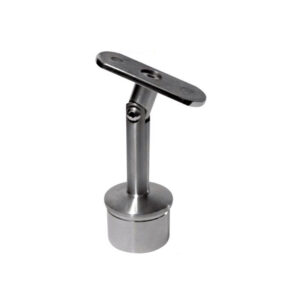
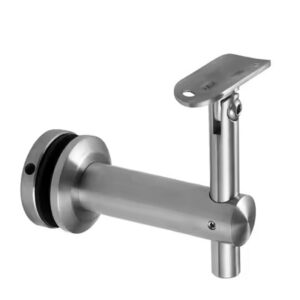
The bracket’s primary function is to transfer user force to the building substrate. This necessitates pre-construction coordination to align bracket locations with wall studs, concrete reinforcement, or dedicated structural steel. Anchoring into drywall or weak masonry is a common and critical failure point. Early collaboration between the design team, installer, and structural engineer is essential to specify the correct anchor type and verify substrate adequacy.
Installation specifications must be derived from the load requirements, as this framework dictates:
Proper Installation: Bracket Spacing and Anchoring
| Installation Factor | Specification | Rationale |
|---|---|---|
| Maximum bracket spacing | 4 to 5 feet o.c. | Meets 200 lb load requirement |
| End bracket placement | Within 12 inches | Prevents rail end deflection |
| Anchor substrate | Wall studs / reinforced concrete | Ensures structural force transfer |
Source: Technical documentation and industry specifications. Bracket spacing and anchoring methodologies are derived from engineering calculations to meet the IBC’s structural load requirements, emphasizing the need for pre-construction coordination.
Navigating Local Code Amendments and ADA Compliance
The Authority Having Jurisdiction (AHJ) is the Client
The IBC is a model code adopted and amended by state and local jurisdictions. Therefore, the ultimate design client is the local AHJ—the building department or code official. Local codes can supersede the base IBC, use older versions, or add stricter amendments. Successful project teams proactively engage the AHJ during design development, submitting details for preliminary review to avoid rejection during final inspection.
The ADA Compliance Overlay
For virtually all commercial projects, ADA compliance is mandatory and enforced alongside building codes. The 2010 ADA Standards generally align with IBC handrail height (34-38 inches) and gripping specifications. However, ADA also governs requirements for extensions at stair tops and bottoms, which are frequently overlooked. Navigating this multi-code landscape requires a verification process: first confirm the applicable IBC edition with local amendments, then ensure ADA requirements are met, especially for extensions and clear floor space at ramp landings.
Common Installation Mistakes and How to Avoid Them
Transition Zone Errors
Common mistakes stem from misunderstanding code intent, particularly at transition zones. These include failing to provide the required 12-inch horizontal extension at stair tops and one-tread-depth extension at bottoms. These zones are high-risk points where user support must be maintained before and after the stair flight. Proper detailing here is as important as the main run.
Dimensional and Anchoring Oversights
Other frequent errors are installing handrails outside the 34-38 inch height range, providing insufficient wall clearance, and inadequate bracket anchoring into non-structural substrates. These are primary inspection failure points. To avoid them, installation budgets must explicitly account for transition extensions and custom return details. Using field templates to verify height at every tread during installation is a simple, effective quality control step.
Leveraging Pre-Engineered Systems
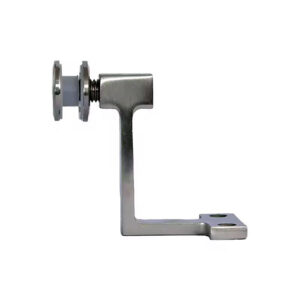
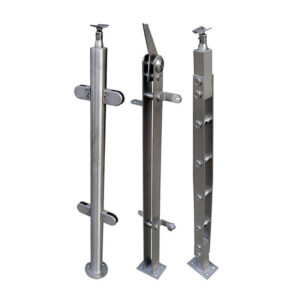
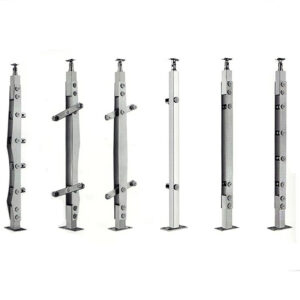
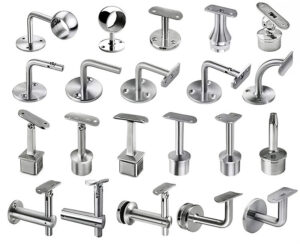
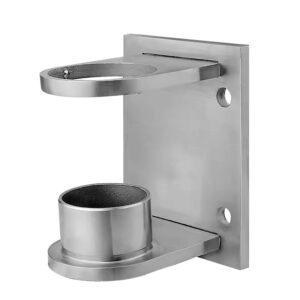
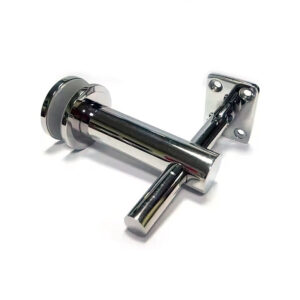
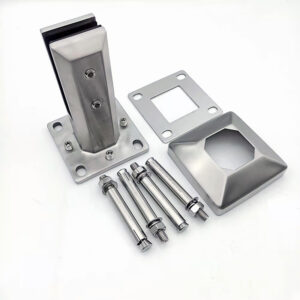
Utilizing pre-engineered stainless steel systems from reputable manufacturers can shift part of the compliance and engineering liability. These systems are designed and tested as complete assemblies (rails, brackets, fittings) to meet code requirements for load, geometry, and continuity. This streamlines approval and reduces the margin for field error, making them a strategic choice for complex or high-liability projects.
Selecting and Specifying Compliant Stainless Steel Systems
Beyond Finish: Specifying an Integrated System
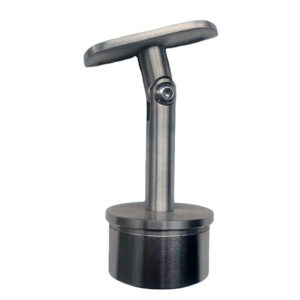
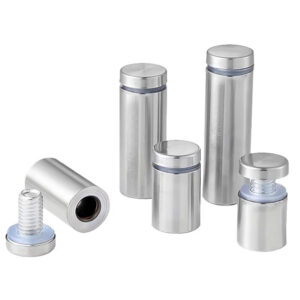
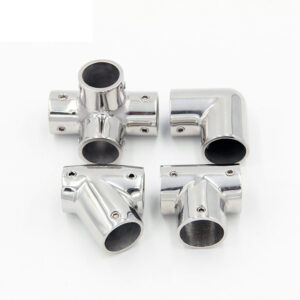
Selecting a compliant system involves more than choosing a satin or polished finish. It requires specifying integrated components—rails, brackets, anchors, and fittings—designed to work together to meet all dimensional, structural, and continuity requirements. The strategic shift toward pre-engineered systems allows architects and contractors to transfer part of the compliance liability to the manufacturer through product selection and specified performance data.
The Opportunity in Engineered Fabrication
Code evolution continuously drives material and method innovation. This creates a market opportunity for fabricators and specifiers who master integrating bespoke design with certified engineering. For projects where standard systems won’t suffice, the focus must be on collaboration with fabricators who can provide engineering calculations (stamped by a licensed professional, if required) proving their custom solution meets IBC load and safety requirements. This allows compliance constraints to be transformed into distinctive design features.
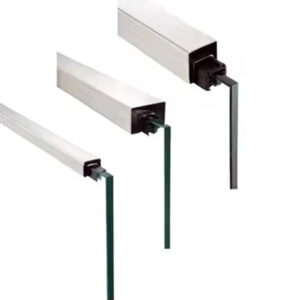
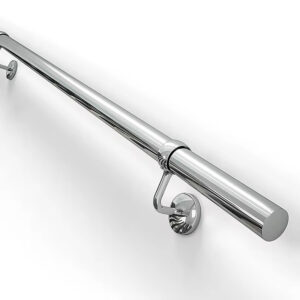
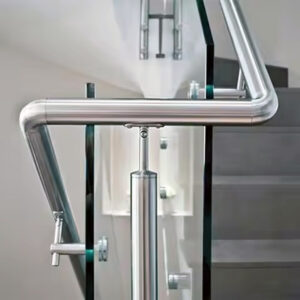
For projects requiring durability and a clean aesthetic, specifying a complete stainless steel handrail system that includes pre-certified brackets and engineered anchoring details can streamline this process significantly.
Successful specification hinges on three priorities: verifying the exact code landscape with the AHJ first, selecting materials and systems with documented compliance testing, and detailing installation to meet both dimensional and structural mandates. This triage approach turns code compliance from a reactive hurdle into a proactive design parameter.
Need professional guidance on specifying or sourcing code-compliant stainless steel handrail systems? The technical team at Esang can provide specification support and engineered details for your next project. For specific inquiries, you can also Contact Us directly.
Frequently Asked Questions
Q: What is the functional difference between a handrail and a guard, and why does it matter for specification?
A: A handrail is a graspable component for guidance, while a guard is a fall-prevention barrier for elevated areas with a 30-inch or greater drop. Their IBC height requirements differ and are not interchangeable. This means your stair design must typically include both a structural guard and a separate, graspable handrail, which directly impacts material selection, system cost, and aesthetic planning from the project’s start.
Q: What is the required height range for a commercial stainless steel handrail on a stair?
A: The top of the gripping surface must be installed between 34 and 38 inches vertically above the stair nosing. This range is mandated by IBC Section 1014 Handrail Height Requirements and aligns with accessibility standards like the 2010 ADA Standards for Accessible Design. For projects where the top rail of a guard also serves as the handrail, it must fall within this lower range, which can compromise optimal guard height for fall protection.
Q: How do you determine the correct load capacity for a handrail system?
A: Handrails and guards must be designed to withstand a concentrated load of 200 pounds applied at any point and a uniform load of 50 pounds per linear foot on the top rail, as referenced in standards like ASCE/SEI 7. This is a critical structural calculation that transfers user force to the building. Specifying high-strength materials like Type 304 stainless steel becomes a risk-mitigation strategy, justifying a higher initial cost through reduced long-term liability from potential failure.
Q: What are the key technical specs for a compliant handrail gripping surface?
A: Code compliance requires specific geometry for secure grasping. A circular handrail must have an outside diameter between 1.25 and 2 inches, while non-circular profiles need a perimeter of 4 to 6.25 inches, as detailed in standards like ICC A117.1 Accessible and Usable Buildings and Facilities. You must also maintain at least 1.5 inches of clearance from any wall. This means aesthetic choices for custom profiles are secondary to achieving these non-negotiable, inspectable dimensions.
Q: How should we approach local code variations and ADA requirements during design?
A: Treat the local Authority Having Jurisdiction (AHJ) as a key client and engage them early, as local amendments can supersede the base IBC model code. For public accommodations, ADA compliance is mandatory and generally aligns with IBC handrail specs. This triage verification process is essential risk mitigation. If your project serves the public, you must plan for this multi-code landscape from the outset to avoid costly redesign or inspection failures.
Q: What is a strategic advantage of specifying a pre-engineered stainless steel handrail system?
A: Selecting an integrated, pre-engineered system from a reputable manufacturer allows you to transfer part of the compliance and structural engineering liability. These systems are designed and tested as complete assemblies to meet code requirements for dimensions, load capacity, and continuity. For projects with tight timelines or complex compliance needs, this approach streamlines AHJ approval and reduces the risk of installation errors from mismatched components.