Specifying a stainless steel handrail system isn’t a catalog selection task—it’s a risk allocation decision that locks in performance obligations for decades. The wrong material grade in a coastal facility triggers accelerated corrosion within 36 months. An improperly anchored system fails the first liability audit. A non-compliant rail height voids occupancy permits and delays project handover. These failures trace directly to specification gaps where critical environmental factors, code mandates, and structural requirements were treated as secondary considerations rather than primary selection criteria. The gap between generic product selection and engineered system specification determines whether you’re delivering a compliant, durable asset or inheriting a maintenance liability.
The 2025 code cycle introduces tightened load testing protocols and updated accessibility provisions that invalidate prior assumptions. Simultaneously, post-pandemic hygiene standards now treat surface cleanability as a baseline performance requirement, not an optional upgrade. Material costs for 316 stainless have compressed relative to 304, narrowing the price gap that historically drove inappropriate grade selection. These converging factors demand a systematic framework that matches material properties, fabrication methods, and finishing specifications to actual environmental conditions and regulatory mandates. This guide structures that decision process across eight critical specification domains.
Stainless Steel Handrail Grades: 304 vs 316 Material Selection
Chemical Composition Drives Environmental Performance
The 2-3% molybdenum addition in 316 stainless fundamentally alters corrosion resistance in chloride environments. Grade 304 contains 18% chromium and 8% nickel with no molybdenum, providing adequate performance in benign interior conditions. Grade 316 adds molybdenum to the 16-18% chromium and 10-14% nickel base, creating superior resistance to pitting and crevice corrosion. This compositional difference isn’t incremental—it’s categorical. In coastal installations or anywhere de-icing salts contact the system, 304 will pit within the first maintenance cycle. I’ve inspected 304 systems in parking garages where winter salt exposure created through-thickness pitting in under five years, requiring complete replacement.
| Property | Grade 304/304L | Grade 316/316L |
|---|---|---|
| Chromium content | 18% | 16-18% |
| Molybdenum content | 0% | 2-3% |
| Corrosion resistance | Good, general use | Superior, chloride environments |
| Typical applications | Interior, sheltered exterior | Coastal, chemical, food processing |
| Cost premium | Baseline | +25-40% material |
Source: ASTM A240/A240M. This standard defines the chemical composition and mechanical properties for 304 and 316 stainless steel grades used in architectural handrail fabrication.
Low-Carbon Variants Prevent Weld Decay
The “L” designation (304L, 316L) indicates low carbon content below 0.03%, preventing chromium carbide precipitation during welding. Standard grades contain up to 0.08% carbon, which can migrate to grain boundaries during the welding thermal cycle, depleting chromium locally and creating sensitization—a precursor to intergranular corrosion. For welded assemblies, the low-carbon variant is mandatory unless post-weld solution annealing is performed. Most architectural fabricators lack heat-treating capabilities, making 304L and 316L the default specifications for any system requiring field or shop welding.
Material Selection as Lifecycle Risk Transfer
Specifying 304 where 316 is environmentally required transfers future replacement costs directly to the owner. The 25-40% material premium for 316 represents a fraction of total installed cost when labor, engineering, and project overhead are factored. In harsh environments, this upfront investment extends service life from 15-20 years to 25-30 years, fundamentally altering lifecycle economics. The specification decision isn’t about initial budget—it’s about who bears the risk of premature failure and unplanned capital expenditure.
IBC, ADA & OSHA Compliance Requirements for 2025
Dimensional Tolerances Define Legal Compliance
Code compliance operates within precise dimensional windows with zero tolerance for field interpretation. Handrail height must fall between 34 and 38 inches for IBC and ADA applications, measured vertically from the nosing or walking surface. The graspable diameter must be between 1¼ and 2 inches to ensure proper hand grip. Wall clearance must provide a minimum 1½-inch finger recess space. These aren’t guidelines—they’re pass/fail criteria that building officials measure with calibrated tools during final inspection. A 33¾-inch rail height fails, regardless of how close it appears to compliance.
| Requirement | IBC/ADA Standard | OSHA 1910.23 Standard |
|---|---|---|
| Handrail height | 34-38 inches | 42 inches ±3 |
| Graspable diameter | 1¼-2 inches | Similar requirements |
| Wall clearance | Minimum 1½ inches | Minimum clearance required |
| Load capacity | 200 lbs concentrated | 200 lbs any direction |
| Infill sphere test | 4-inch sphere passage | 4-inch sphere passage |
Source: Technical documentation and industry specifications.
Structural Load Requirements Override Aesthetic Priorities
Every handrail system must withstand a concentrated 200-pound load applied in any direction at any point without permanent deformation. This single requirement drives the entire structural calculation—post spacing, base plate sizing, anchor selection, and substrate reinforcement. The load isn’t distributed or theoretical; it simulates a person falling and grabbing the rail to arrest movement. Testing protocols now require physical load application, not just calculation submission. Systems that appear robust but lack proper engineering fail catastrophically under this concentrated force application.
OSHA Standards Create Parallel Requirements for Industrial Settings
Industrial facilities face OSHA 1910.23 requirements that differ from IBC provisions. OSHA mandates a 42-inch top rail height (±3 inches), creating a distinct specification for manufacturing, warehousing, and processing environments. The midrail must be approximately halfway between the top rail and the walking surface. These dimensional differences prevent using standard IBC-compliant systems in OSHA-regulated spaces without modification. Dual-occupancy buildings with public and industrial areas require parallel specifications, each meeting its governing standard.
Handrail System Components: Rails, Posts, Infill & Fittings
Top Rail Continuity and Graspability
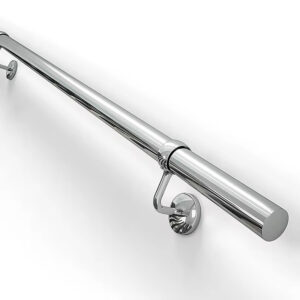
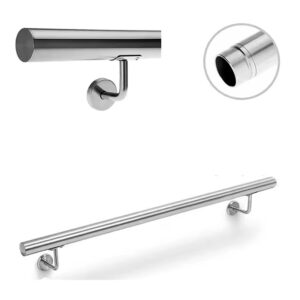
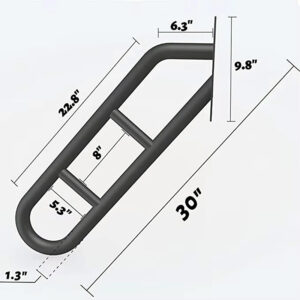
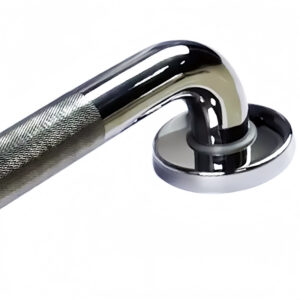
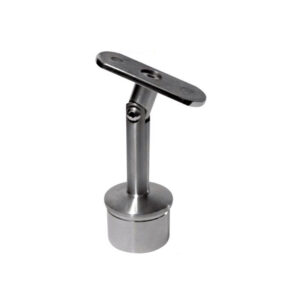
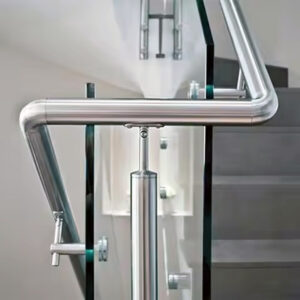
The top rail provides the primary graspable element and must be continuous along stairs and ramps, with prescribed extensions at top and bottom transitions. Circular profiles between 1¼ and 2 inches diameter meet graspability standards most readily. Non-circular profiles require perimeter calculations to ensure equivalent graspability. Wall-mounted rails must return to the wall or terminate in a manner that doesn’t create clothing snag hazards. Our team specifies returns for all exposed rail ends to eliminate projection risks in high-traffic areas.
| Component | Function | Material Options |
|---|---|---|
| Top rail | Continuous graspable surface | 1¼-2 inch diameter |
| Posts/newels | Primary structural support | Anchored load transfer |
| Infill panels | 4-inch sphere barrier | Pickets, cable, glass |
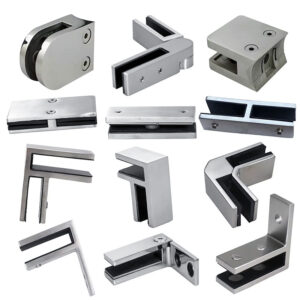
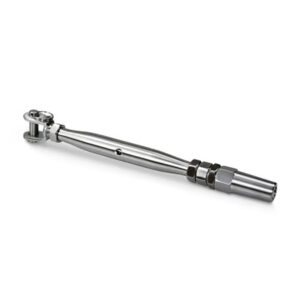
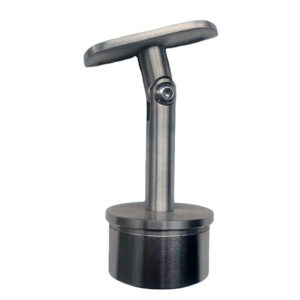
| Fittings | Connection/transition elements | Welded or mechanical |
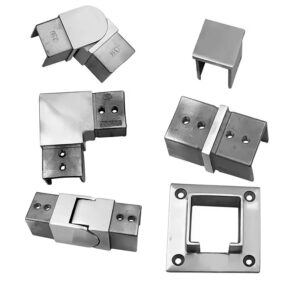
| Modular systems | Pre-certified engineered kits | Reduced labor dependency |
Source: Technical documentation and industry specifications.
Post Spacing and Structural Load Paths
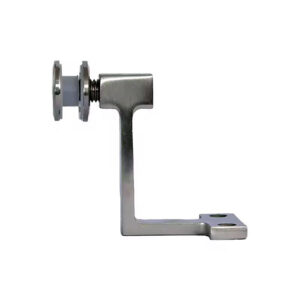
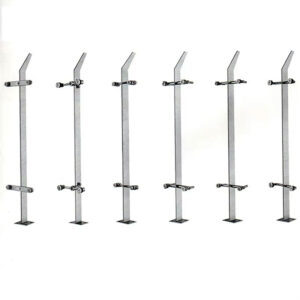
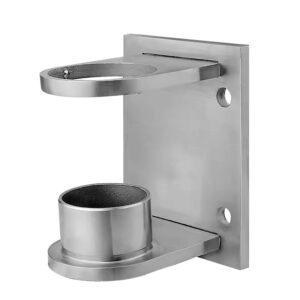
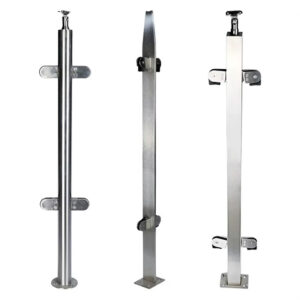
Posts or newels function as the primary vertical load-bearing members, transferring lateral and vertical forces to the substrate. Post spacing is determined by the top rail’s section modulus and the 200-pound concentrated load requirement. Typical spacing ranges from 4 to 6 feet on-center, with closer spacing required for lighter-gauge rails. Each post must be independently anchored with capacity to resist the full design load, as the concentrated load can occur at any single post location. The load path from rail to post to anchor to substrate must be continuous and calculable.
Infill Selection Balances Safety and Design Intent
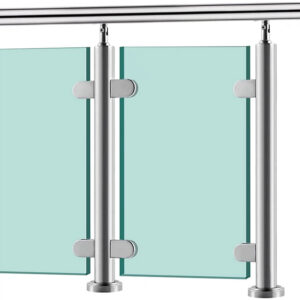
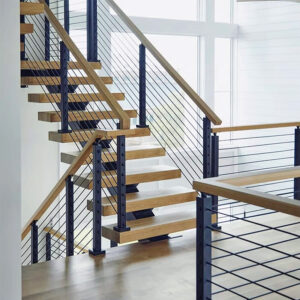
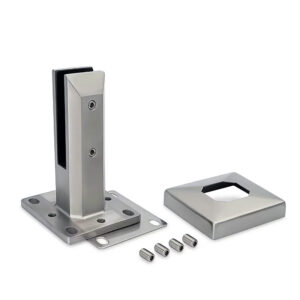
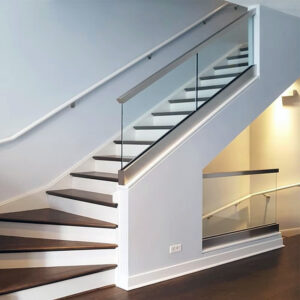
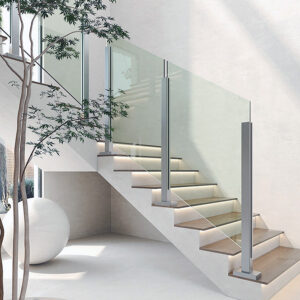
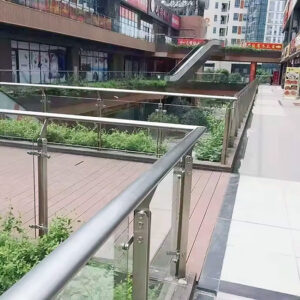
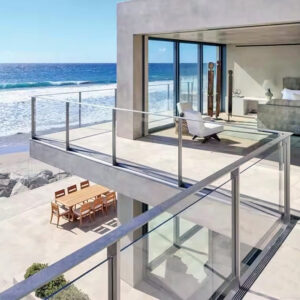
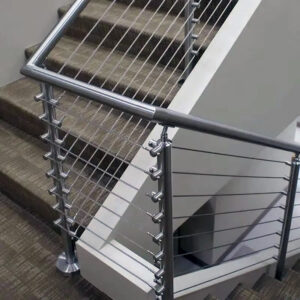
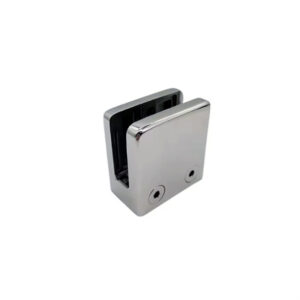
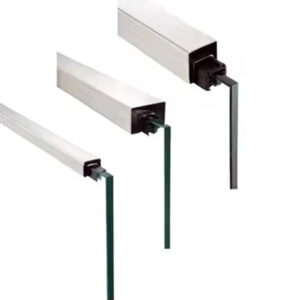
Infill prevents the passage of a 4-inch diameter sphere, measured through the largest opening. Vertical pickets at 4-inch maximum spacing meet this requirement most economically. Cable infill creates a lighter visual profile but requires tensioning specifications and intermediate posts to prevent cable deflection that could allow sphere passage under load. Glass infill provides unobstructed views but adds weight, requires tempered or laminated safety glass, and needs careful detailing to prevent water accumulation and staining. Your engineered stainless steel handrail systems selection must integrate infill structural requirements from the initial design phase, not as an afterthought.
Structural Anchoring & Load-Bearing Engineering Specifications
Substrate Analysis Precedes Anchor Selection
Anchor performance depends entirely on substrate strength and condition. Concrete must be minimum 2,500 psi compressive strength for mechanical anchors, with higher strengths required for adhesive anchors. Cracked concrete zones require specialized crack-tolerant anchor systems. Masonry substrates need solid grouted cells at anchor locations. Structural steel substrates allow direct welding or bolted connections with calculable capacity. The substrate assessment drives every subsequent structural decision—attempting to install high-capacity anchors in inadequate concrete guarantees pull-out failure under load testing.
| Anchor Type | Base Material | Load Capacity |
|---|---|---|
| Wedge anchors | Concrete, masonry | High pull-out resistance |
| Sleeve anchors | Concrete, block | Medium-heavy duty |
| Epoxy anchors | Concrete, stone | Maximum shear/tension |
| Welded connections | Steel substrates | Seamless load transfer |
| Minimum load requirement | All applications | 200 lbs concentrated |
Source: Technical documentation and industry specifications.
Anchor Embedment and Edge Distance Requirements
Mechanical anchors require minimum embedment depths to develop rated capacity—typically 4 to 6 inches for structural applications. Edge distance (anchor distance from concrete edges) must be maintained to prevent concrete breakout cones from intersecting, which drastically reduces capacity. Spacing between anchors must prevent overlapping stress cones. These geometric constraints often require substrate reinforcement or thickening in retrofit applications where existing slab edges don’t provide adequate dimensional margins. I’ve seen numerous installations fail inspection because installers placed anchors too close to edges, violating manufacturer specifications.
Welded vs. Mechanical Assembly Strategy
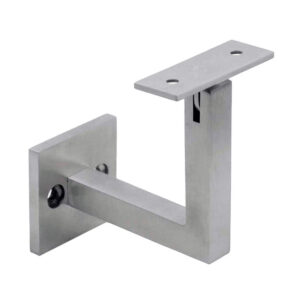
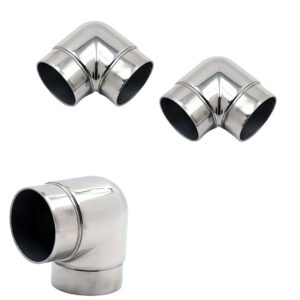
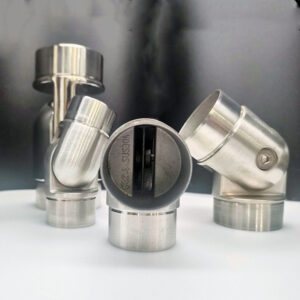
Welded fabrication creates seamless connections with excellent load transfer but introduces heat-affected zones that require post-weld treatment to restore corrosion resistance. Field welding demands certified welders, proper shielding gas, weather protection, and quality control that’s difficult to maintain on active construction sites. Mechanical assembly systems using cast fittings, set screws, or compression connections eliminate welding variables, provide adjustability during installation, and simplify future modifications. The trade-off is visible connection hardware that may conflict with architectural intent for seamless aesthetics.
Surface Finishes Compared: Durability, Cleanability & Aesthetics
Mill Finish Standards and Functional Implications
Standard 2B mill finish provides a bright, moderately reflective surface suitable for general commercial applications. No. 4 brushed finish creates a directional satin appearance that hides fingerprints and minor scratches, making it the most common architectural specification. No. 8 mirror polish delivers high reflectivity for premium interiors but shows every fingerprint and requires constant maintenance. Bright Annealed (BA) finish offers a smooth, scale-free surface preferred in cleanroom and pharmaceutical environments. Finish selection must align with maintenance capabilities and expected soiling rates, not just initial appearance.
| Finish Type | Appearance | Best Application |
|---|---|---|
| 2B mill | Standard bright | General commercial use |
| No. 4 brushed | Directional satin | Hides fingerprints well |
| No. 8 mirror | Highly reflective | Premium interiors only |
| Bright Annealed | Smooth, clean | Laboratory, pharmaceutical environments |
| Electropolished | Enhanced corrosion resistance | Healthcare, food processing |
Source: Technical documentation and industry specifications.
Electropolishing for Hygiene-Critical Environments
Electropolishing removes surface material through controlled anodic dissolution, creating a microscopically smooth surface with enhanced chromium oxide layer. This process improves corrosion resistance by 30-40% and creates a surface that resists bacterial adhesion and simplifies cleaning protocols. Healthcare, food processing, and pharmaceutical facilities now specify electropolished finishes as baseline requirements, not premium upgrades. The process also removes embedded contaminants from prior fabrication steps—grinding debris, welding oxides, and handling residues—that would otherwise compromise long-term performance.
Glare and Safety Considerations
Highly polished finishes in high-daylight environments create glare that poses safety risks for building occupants. Atriums, stair towers with glazed walls, and outdoor applications require matte or brushed finishes to prevent disorienting reflections. Conversely, low-light environments benefit from brighter finishes that enhance visibility. Finish specification must include photometric analysis of the installation environment, considering natural and artificial light sources at different times of day and seasons.
Fabrication & Welding Quality Standards for Long-Term Performance
Filler Metal Compatibility and Weld Integrity
Welding stainless steel requires matching filler metals to prevent galvanic corrosion and ensure corrosion resistance continuity. ER308L filler is specified for 304L base metal, while ER316L is required for 316L material. Using incorrect filler metals creates localized corrosion cells at weld interfaces that propagate failure. Full-penetration welds are mandatory for structural connections, requiring proper joint preparation, fit-up, and multi-pass techniques for heavy-section materials. Partial-penetration welds appear acceptable on surface inspection but fail under load testing, creating catastrophic liability.
| Specification | Grade 304 Requirements | Grade 316 Requirements |
|---|---|---|
| Filler metal | ER308/L | ER316/L |
| Weld type | Full-penetration continuous | Full-penetration continuous |
| Post-weld treatment | Ground, polished, passivated | Ground, polished, passivated |
| Welder certification | AWS certified required | AWS certified required |
| Quality assurance | Alignment tolerances documented | Alignment tolerances documented |
Source: Technical documentation and industry specifications.
Post-Weld Cleaning and Passivation
Welding destroys the passive chromium oxide layer in the heat-affected zone and deposits iron contaminants from welding equipment. Post-weld treatment must grind and polish welds smooth, remove discoloration and oxidation, then chemically passivate to restore the protective layer. Passivation involves treating the surface with citric or nitric acid solutions that dissolve free iron and promote chromium oxide reformation. Skipping passivation leaves welds vulnerable to rapid corrosion initiation, particularly in chloride environments. The specification must mandate passivation as a required step, not an optional finish.
Welder Certification and Quality Control
AWS (American Welding Society) certification ensures welders have demonstrated proficiency in the specified welding processes and positions. Structural stainless steel welding requires certification in GTAW (TIG) or GMAW (MIG) processes for the specific material grade and joint configuration. Quality control protocols must include visual inspection of every weld, dimensional verification of alignment and spacing, and destructive testing of qualification samples. The fabrication specification should require welder identification stamps on each assembly and retention of welding procedure specifications (WPS) for future reference.
Environment-Based Selection Framework: Matching Grade to Conditions
Corrosivity Classification Determines Minimum Grade
Environmental assessment precedes material selection. Interior corridors in climate-controlled buildings represent low-corrosivity environments where 304L performs adequately. Sheltered exterior locations under canopies or roof overhangs without direct weather exposure fall into the same category. Coastal locations within five miles of saltwater, any area subject to de-icing salt exposure, and industrial environments with chemical exposure require 316L as the minimum acceptable grade. Food processing facilities with regular washdowns and sanitizer exposure mandate 316L. Attempting to economize by specifying 304L in high-corrosivity environments transfers 100% of accelerated replacement costs to the owner.
| Environment Type | Corrosivity Level | Minimum Required Grade |
|---|---|---|
| Interior corridor | Low | 304/304L |
| Sheltered exterior | Low-moderate | 304/304L |
| Coastal location | High chloride | 316/316L mandatory |
| Food processing | High washdown | 316/316L mandatory |
| Chemical facility | Very high | 316/316L minimum |
Source: ASTM A240/A240M. Material selection must align with environmental corrosivity to ensure performance meets the chemical composition requirements defined for each grade.
Microclimate Analysis for Border Conditions
Border conditions require detailed microclimate analysis. A covered parking structure is sheltered from direct rain but experiences salt spray, exhaust gases, and temperature cycling that elevate corrosivity beyond simple “sheltered exterior” classification. Rooftop mechanical areas face extreme temperature differentials and condensation even though technically exterior. Swimming pool environments combine chlorine vapor with high humidity—one of the most aggressive conditions for stainless steel. These nuanced environments demand site-specific evaluation rather than category-based specification.
Sustainability and Supply Chain Transparency
Environmental Product Declarations (EPDs) quantify embodied carbon, recycled content, and manufacturing energy consumption, allowing specification based on sustainability metrics. Stainless steel typically contains 60-90% recycled content, providing inherent sustainability advantages. However, production methods vary significantly—electric arc furnace melting uses substantially less energy than integrated steel production. Specifiers are beginning to weight EPD data alongside traditional performance and cost factors, requiring suppliers to demonstrate verified sustainability credentials for projects targeting LEED, BREEAM, or similar certifications.
Total Cost Analysis: Material, Installation & Maintenance Factors
Lifecycle Costing Reveals True Economic Impact
Initial material cost represents 30-40% of total installed cost once labor, engineering, anchoring, and project overhead are included. The 25-40% premium for 316L material translates to only 10-15% increase in total installed cost. Over a 25-year building lifecycle, maintenance and replacement costs dwarf this differential. A 304L system requiring replacement at year 15 due to corrosion failure incurs full reinstallation costs—material, labor, occupant disruption, and lost facility use. A 316L system lasting 25+ years avoids this expenditure entirely. The TCO analysis overwhelmingly favors appropriate grade selection over lowest initial cost.
| Cost Factor | Grade 304 System | Grade 316 System |
|---|---|---|
| Material cost | Baseline | +25-40% premium |
| Installation cost | Standard skilled labor | Standard skilled labor |
| Maintenance frequency | Moderate, environment-dependent | Low, extended intervals |
| Replacement timeline | 15-20 years typical | 25-30 years typical |
| Total lifecycle TCO | Higher harsh environments | Lower harsh environments |
Source: Technical documentation and industry specifications.
Installation Quality as Cost Determinant
Premium fabrication and installation quality costs 15-20% more upfront but eliminates rework, callbacks, and compliance failures that multiply costs. Skilled installers properly embed anchors, maintain tolerances, and execute passivation protocols that generic contractors omit. The specification must define quality standards explicitly—weld acceptance criteria, alignment tolerances, finish requirements, and passivation procedures—not rely on “industry standard” ambiguity. Detailed specifications enable accurate bidding and reduce disputes over what constitutes acceptable work.
Digital Asset Management and Predictive Maintenance
Building Information Modeling (BIM) integration embeds specification data, installation dates, maintenance records, and component certifications into digital twin models. This enables condition monitoring, predictive maintenance scheduling, and lifecycle performance tracking that optimizes TCO. Facilities can schedule passivation treatments before corrosion initiates, track warranty periods, and plan capital replacement based on actual condition data rather than generic service life assumptions. The specification should require as-built documentation in digital formats compatible with owner asset management systems.
Successful handrail specification synthesizes code compliance, material science, environmental analysis, and lifecycle economics into a single coherent framework. The specification isn’t a procurement document—it’s a risk management instrument that allocates performance obligations between designer, fabricator, installer, and owner. Grade selection based on environmental corrosivity, dimensional compliance with governing codes, and structural adequacy for mandated loads form the non-negotiable foundation. Finish selection, fabrication quality, and installation standards determine whether the system meets its design life or fails prematurely.
Projects requiring engineered stainless steel systems that balance compliance, durability, and lifecycle value benefit from working with specialists who understand the complete specification framework. Esang delivers integrated handrail solutions with material traceability, code compliance documentation, and installation support that eliminates specification gaps.
For project-specific guidance on material selection, code compliance, or fabrication requirements, Contact Us to discuss your application parameters and performance objectives.
Frequently Asked Questions
Q: How do you decide between 304 and 316 stainless steel for a handrail project?
A: The choice is a risk-based decision driven by environmental corrosivity. Use 304 for general interior or sheltered exterior applications, but specify 316 with its molybdenum content for coastal zones, chemical plants, or areas using de-icing salts. The base material must meet the requirements of ASTM A240/A240M. This means facilities with high chloride exposure must prioritize 316 to avoid accelerated degradation and hidden future replacement costs.
Q: What are the critical compliance dimensions for commercial handrails in 2025?
A: Compliance is governed by a combination of codes with precise, non-negotiable tolerances. Handrail height must be 34 to 38 inches for most applications, with a graspable diameter between 1¼ and 2 inches and at least 1½ inches of clearance from the wall. The entire assembly must withstand a concentrated load of 200 pounds applied in any direction. For projects where skilled trade expertise is limited, expect installation bottlenecks and potential certification issues if these specs are not met precisely in the field.
Q: Why is anchorage engineering a non-negotiable part of handrail specification?
A: A system’s ultimate strength is determined by its connection to the building substrate, not just the rail components. Engineers must calculate pull-out and shear values for anchors based on the concrete, steel, or masonry base to meet the 200-pound load mandate, which often requires slab reinforcement. This means facilities with structural constraints or retrofit projects should plan for a detailed engineering review and potential substrate modifications during the design phase.
Q: How does fabrication quality directly impact long-term maintenance costs?
A: Premium fabrication is the linchpin of lifecycle performance, where upfront investment yields definitive operational savings. Welds must be full-penetration, performed with correct filler metals, and then ground, polished, and passivated to restore corrosion resistance. This eliminates potential failure initiation points. For projects where minimizing future operational expenditures is a priority, you should specify explicit weld quality and passivation criteria as a form of quality assurance during procurement.
Q: What is the strategic advantage of using a modular handrail system?
A: Engineered modular systems offer a strategic shift by reducing design ambiguity and skilled labor dependency. These pre-certified kits of rails, posts, and standardized fittings simplify compliance, accelerate installation, and allow for easier future reconfiguration. If your project has standard requirements and tight timelines, a modular approach can provide greater cost control and reduce the risk of field modifications that compromise structural integrity.
Q: How should you select a surface finish for a handrail in a hygienic environment?
A: Finish selection must prioritize cleanability and pathogen control over aesthetics alone. A smooth, non-porous finish like a high-grade polished or Bright Annealed (BA) finish is easier to decontaminate. Electropolishing, which enhances both cleanability and corrosion resistance, is becoming a baseline specification. This means healthcare, laboratory, or food processing facilities should plan for this process to meet institutional hygiene standards and reduce long-term sanitation effort.
Q: What does a Total Cost of Ownership (TCO) analysis reveal about handrail selection?
A: A TCO framework creates a direct link between upfront material choices and long-term financial liability. Selecting a higher-grade 316 stainless for a harsh environment prevents exorbitant future replacement costs, while investing in quality fabrication and installation minimizes rework. If your organization manages assets over a long lifecycle, you should model these decisions to transform handrails from passive structures into intelligently managed assets with optimized lifetime cost.