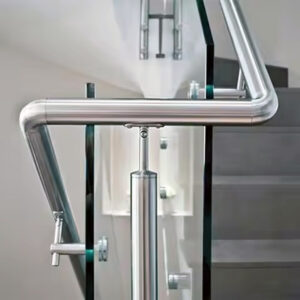
For commercial architects, facility managers, and general contractors, selecting handrail materials is a high-stakes specification. The choice between stainless steel and aluminum extends far beyond aesthetics, directly impacting project budgets, long-term maintenance liabilities, and structural integrity. A misstep in material selection can lead to premature corrosion, unexpected lifecycle costs, and significant reputational damage.
This decision is increasingly critical as building codes evolve and owners demand greater durability with lower operational burdens. Understanding the nuanced performance, cost, and installation implications of each material is essential for delivering projects that stand the test of time and budget.
Stainless Steel vs Aluminum: Core Material Differences
Atomic Composition and Protective Mechanisms
The divergence begins at the elemental level. Stainless steel is an iron-based alloy requiring a minimum of 10.5% chromium. This chromium forms a passive, self-healing chromium oxide layer on the surface, which is the source of its corrosion resistance. Common commercial grades are 304 for standard applications and 316, which includes molybdenum for enhanced resistance to chlorides. With a density of approximately 8 g/cm³, it is inherently heavy and strong. Aluminum, typically from the 6000-series like 6061-T6, relies on a naturally forming aluminum oxide layer for protection. Its density of 2.7 g/cm³ makes it roughly one-third the weight of steel. This fundamental difference in protection mechanism—alloyed chromium versus innate oxide—dictates all subsequent performance in various environments.
Performance Implications of Core Properties
The material composition dictates the performance envelope. Stainless steel’s protection is grade-dependent; specifying 304 in a coastal environment is a common and costly error. Aluminum’s oxide layer provides uniform resistance but is more vulnerable to degradation from chlorides and alkaline substances. Industry experts recommend that material selection always starts with an environmental analysis, as the climate dictates material dominance. For harsh, corrosive settings, the alloy-based, self-healing protection of stainless steel is non-negotiable. For most inland commercial applications, aluminum’s combination of lighter weight and good general corrosion resistance presents a viable solution.
Cost Comparison: Initial Investment vs Lifecycle Value
Analyzing Upfront Expenditures
Financial analysis must separate initial purchase price from total installed cost. Stainless steel commands a higher raw material cost and typically requires more specialized fabrication, including precise welding and finishing. Installed costs are generally 25-50% higher than comparable aluminum systems. Aluminum benefits from lower commodity pricing, and its lightweight nature reduces shipping costs. Furthermore, extruded aluminum systems often utilize pre-fabricated components that minimize on-site labor and complexity, contributing to a lower baseline bid for contractors.
Evaluating Total Cost of Ownership (TCO)
The long-term financial picture often differs from the initial quote. Stainless steel’s exceptional longevity in harsh environments—potentially exceeding 50 years with minimal intervention—can justify its premium over decades. For aluminum, the lower upfront cost must be balanced against potential future expenditures. A high-quality architectural powder coating (meeting AAMA 2604/2605 standards) is critical, but even the best coatings may require recoating after 25-30 years in exterior applications. In our project comparisons, we found that for moderate environments, aluminum’s combination of lower initial outlay and good durability typically offers the optimal TCO balance over a 30-40 year horizon.
The following table breaks down the key cost factors across the lifecycle of each material.
| Cost Factor | Stainless Steel | Aluminum |
|---|---|---|
| Initial Installed Cost | 25-50% higher | Lower baseline |
| Material & Fabrication | Higher raw cost | Lower commodity pricing |
| Transportation & Handling | Heavy, higher cost | Lightweight, cheaper |
| Longevity (Harsh Env.) | 50+ years potential | 25-30 years before recoating |
| Optimal TCO Horizon | Justifies premium long-term | 30-40 year balance |
Source: Technical documentation and industry specifications.
Which Is More Durable and Corrosion Resistant?
Environmental Dictates Material Performance
Durability is not an absolute metric but is entirely environment-specific. For harsh coastal or industrial settings with salt spray and chemical pollutants, Grade 316 stainless steel is superior. Its passive layer can self-heal from minor scratches, maintaining protection. Aluminum, even with coatings, is susceptible to galvanic and pitting corrosion in constant saltwater exposure and is generally not recommended for direct splash zones. Easily overlooked details include the need for proper isolation to prevent galvanic corrosion when aluminum contacts dissimilar metals, a common issue in mixed-material buildings.
Beyond Corrosion: Physical and Thermal Properties
Corrosion resistance is only one facet of durability. Stainless steel offers higher impact resistance and is less prone to denting, a key consideration for high-traffic or secure facilities. Conversely, aluminum possesses unique advantages. Its face-centred cubic atomic structure prevents cold-weather embrittlement, and its yield strength can actually increase at low temperatures. Aluminum also dissipates heat more efficiently than steel, staying cooler to the touch in high-UV environments, which can be a safety and comfort benefit.
The performance data below highlights how each material responds to different stressors.
| Performance Factor | Stainless Steel (Grade 316) | Aluminum (Powder Coated) |
|---|---|---|
| Corrosion Resistance | Superior, self-healing | Excellent general, coating-dependent |
| Salt Spray/Coastal | Mandatory for direct exposure | Not recommended for splash zones |
| Impact/Dent Resistance | Higher | Lower |
| Low-Temperature Performance | Standard | Increased yield strength |
| UV/Heat Tolerance | Standard | Efficient heat dissipation |
Source: ASTM A967 Standard Specification for Chemical Passivation Treatments for Stainless Steel Parts. This standard defines the critical post-fabrication passivation process that ensures stainless steel’s corrosion resistance by enhancing its protective oxide layer, directly relevant to its performance in harsh environments compared to aluminum.
Maintenance Requirements for Commercial Facilities
Routine and Long-Term Care Protocols
Maintenance profiles create divergent operational burdens for facility teams. Properly specified stainless steel is generally low-maintenance, requiring only routine cleaning with mild, non-abrasive soaps and water to preserve its appearance; it does not require protective coatings. In highly corrosive settings, more frequent cleaning to remove salt or pollutant deposits may be necessary to maintain the passive layer. Aluminum, when specified with architectural-grade powder coating, is also low-maintenance for cleaning. However, the strategic difference is that aluminum maintenance is largely passive, while uncoated or poorly specified steel can demand active rust prevention and remediation.
The Critical Role of Initial Specification
The longevity and ease of maintenance are overwhelmingly determined during specification. For stainless steel, selecting the correct grade (304 vs. 316) for the environment is paramount. For aluminum, the quality and thickness of the powder coat, adhering to standards like AAMA 2604, is the primary longevity driver. The vulnerability of any powder coat to severe impact chipping necessitates established touch-up protocols to prevent substrate exposure and corrosion. Industry experts recommend specifying finish systems with readily available touch-up kits from the manufacturer to ensure cosmetic and protective longevity.
| Maintenance Aspect | Stainless Steel | Powder-Coated Aluminum |
|---|---|---|
| Routine Cleaning | Mild soap & water | Mild soap & water |
| Protective Coatings | Not required | Required (AAMA 2604/2605) |
| Vulnerability | Active rust prevention if poor spec | Coating chip touch-ups |
| Operational Burden | Low, passive in spec | Low, passive with quality finish |
| Longevity Driver | Correct grade specification | Initial finish quality |
Source: ANSI/BHMA A156.18 American National Standard for Materials and Finishes. This standard provides authoritative guidance on the durability and performance testing of finishes, which is central to evaluating the maintenance needs and longevity of protective coatings on aluminum handrail systems.
Installation Complexity and Labor Cost Differences
Weight and Handling Implications
Installation logistics are heavily dictated by material weight. Stainless steel’s significant mass complicates every stage: transportation, on-site maneuvering, and final placement. A typical stainless steel post can weigh 18-20 lbs, requiring more personnel or equipment for handling and increasing the risk of worker injury. This weight often necessitates more robust substructure support, adding to material and labor costs. Aluminum’s lightweight nature transforms site logistics; a comparable post may weigh only 7-8 lbs. This reduces physical strain, accelerates installation pace, and allows for simpler support structures.
Fabrication Methods and Labor Efficiency
The method of fabrication further divides the two materials. Stainless steel installations frequently require skilled, specialized welding labor on-site, followed by grinding and polishing to restore the finish and corrosion resistance at weld points—a time-consuming and costly process. Aluminum systems often leverage extrusion technology governed by standards like ASTM B221 Standard Specification for Aluminum and Aluminum-Alloy Extruded Bars, Rods, Wire, Profiles, and Tubes, allowing for pre-fabricated components that simply bolt together. This predictability enables contractors to bid more competitively on large-scale aluminum projects due to faster, more predictable installation timelines.
| Installation Factor | Stainless Steel | Aluminum |
|---|---|---|
| Material Weight (Post) | 18-20 lbs | 7-8 lbs |
| Handling & Logistics | Complex, heavy | Simplified, lightweight |
| Fabrication | Specialized welding often needed | Often pre-fabricated, extruded |
| On-site Labor | Higher time & cost | Faster, lower cost |
| Substructure Support | More robust required | Reduced requirement |
| Project Scalability | Lower for large projects | Higher, predictable timelines |
Source: ASTM B221 Standard Specification for Aluminum and Aluminum-Alloy Extruded Bars, Rods, Wire, Profiles, and Tubes. This standard governs the specifications for extruded aluminum products, which enable the pre-fabricated, lightweight components that significantly reduce on-site installation labor and complexity compared to stainless steel.
Aesthetic and Design Flexibility Compared
Inherent Finish vs. Applied Color
The aesthetic choice is fundamental: a permanent metallic statement versus integrated color. Stainless steel offers a sleek, weld-polished, integral metallic finish synonymous with modern, industrial, or high-tech applications. Its appearance is the material itself. Aluminum’s primary advantage is its immense design flexibility through finishing. It can be powder-coated in virtually any color (RAL, Pantone) for seamless integration with a building’s facade or interior design scheme. This capability is often a necessity for commercial, healthcare, and multi-family projects where brand colors or architectural cohesion are required.
Form and Profile Capabilities
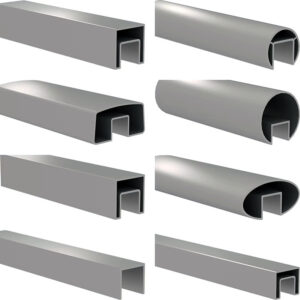
Beyond color, aluminum’s malleability and extrusion capability allow for intricate custom shapes and profiles that are difficult or prohibitively expensive to achieve with steel. Architects gain decisive creative freedom with aluminum, enabling unique cross-sections, integrated cable channels, or custom cap details. This positions aluminum as the preferred material for premium, design-led projects where aesthetics drive specification as much as functionality. For projects requiring the look of stainless steel with the weight and cost benefits of aluminum, anodized aluminum finishes can provide a metallic appearance, though with different visual characteristics.
Which Material Is Better for Coastal Environments?
The Unambiguous Hierarchy for Salt Spray
Coastal environments with salt spray represent the most demanding common use case, creating a clear, non-negotiable hierarchy. Stainless steel, specifically Grade 316 with its added molybdenum, is the unequivocal premium choice for direct salt spray zones, boardwalks, and piers. Its alloy-based protection system and ability to re-passivate after minor damage make it supremely durable with only routine cleaning. Specifying 304 stainless in these environments is a fundamental error that leads to rapid corrosion and failure.
Limitations and Mitigations for Aluminum
Aluminum, even with the highest-quality marine-grade coatings, is more susceptible to galvanic and pitting corrosion in constant saltwater immersion or direct, frequent splash zones. It is generally not recommended for these applications. In coastal-adjacent areas with salt air but no direct spray, a meticulously specified aluminum system with a superior coating and proper isolation from dissimilar metals can perform adequately, but it carries higher long-term risk and may void warranties. The principle is absolute: for harsh coastal exposure, material selection is a performance-driven decision, not an aesthetic or initial cost one.
Decision Framework: Selecting the Right Handrail Material
Step 1: Non-Negotiable Environmental Analysis
Begin with a rigorous site analysis. For coastal, industrial, high-vandalism, or chemical exposure areas, specify Grade 316 stainless steel. For inland commercial, office, institutional, or residential projects, powder-coated aluminum (AAMA 2604/2605) typically offers optimal value. This first step eliminates inappropriate materials before cost is even considered.
Step 2: Structural and Logistical Requirements
Evaluate the project’s physical demands. Where maximum load-bearing, impact resistance, or minimal deflection is critical, steel’s strength is paramount. For high-rise buildings, seismic zones, or retrofit projects where adding weight to the structure is a concern, aluminum’s superior strength-to-weight ratio provides a significant advantage. Consider installation access and schedule; aluminum’s lighter weight and pre-fabrication can be decisive for tight timelines or complex sites.
Step 3: Financial and Lifecycle Synthesis
Factor in the complete financial picture using a Total Cost of Ownership model. For long-term holdings (40+ years) in moderate to harsh environments, stainless steel’s durability often justifies its premium. For projects with a 30-year horizon or where capital costs are paramount, aluminum presents a strong case. Always request and compare detailed lifecycle cost projections from suppliers of both durable handrail and guardrail systems. Finally, integrate sustainability drivers, as aluminum’s high recyclability and lower embodied energy in transportation are increasingly important in project specifications.
The decision between stainless steel and aluminum handrails hinges on a disciplined evaluation of environment, structural needs, lifecycle cost, and design intent. There is no universal best material, only the optimal material for a specific set of project parameters. Prioritize environmental analysis over initial cost, and ensure specifications for finish and grade are explicit and enforceable.
Need professional guidance to specify the right handrail system for your next commercial project? The experts at Esang can help you navigate these material decisions based on your project’s unique location, budget, and design goals. For a direct consultation, you can also Contact Us.
Frequently Asked Questions
Q: How do you select between stainless steel grades for a coastal handrail project?
A: For direct salt spray zones, Grade 316 stainless steel is mandatory due to its molybdenum content, which provides superior resistance to pitting and crevice corrosion. Grade 304 is suitable for standard inland commercial use. The material’s performance relies on its alloy-based, self-healing passive layer, as detailed in processes like those covered by ASTM A967. This means specifying the wrong grade for a harsh environment guarantees premature failure and voids warranties, making material selection a critical, non-negotiable first step.
Q: What are the key differences in total cost of ownership between aluminum and stainless steel handrails?
A: Stainless steel typically has a 25-50% higher initial installed cost but offers a longer service life with minimal upkeep, justifying its premium over a 50+ year horizon in harsh settings. Aluminum has a lower upfront cost due to material pricing and easier installation, but may require recoating after 25-30 years, impacting its lifecycle value. For projects with a 30-40 year horizon in moderate environments, aluminum often presents the optimal total cost balance when factoring in both initial investment and future maintenance.
Q: How does the installation process differ for aluminum versus stainless steel handrail systems?
A: Stainless steel’s significant weight complicates handling, requires more robust structural support, and needs specialized welding, increasing labor time and cost. Aluminum’s lightweight nature—posts can be one-third the weight—simplifies transport, on-site maneuvering, and reduces physical strain. Many aluminum systems use pre-fabricated extruded components governed by standards like ASTM B221, which further cuts on-site labor. For large-scale projects, this allows contractors to bid more competitively due to predictable, faster installation timelines and lower labor costs.
Q: What maintenance should we plan for powder-coated aluminum handrails in a high-traffic commercial facility?
A: Architectural-grade powder-coated aluminum requires routine cleaning and occasional bolt retightening. Its primary vulnerability is impact damage that chips the coating, necessitating a touch-up protocol to prevent substrate corrosion and maintain aesthetics. The quality of the initial finish, which should meet high-performance standards, is a critical driver of long-term maintenance costs. This means facilities managers should budget for periodic cosmetic touch-ups and specify the highest quality coating during procurement to minimize lifecycle interventions.
Q: When is aluminum a better technical choice than stainless steel for handrail design flexibility?
A: Aluminum is superior when seamless architectural color integration or complex custom profiles are required. Its extrusion capability allows for intricate shapes, and it can be powder-coated in virtually any color. Stainless steel offers a polished metallic aesthetic but lacks this color versatility. For premium, design-led commercial or multi-family projects where aesthetics are a primary driver beyond mere functionality, aluminum provides architects with decisive creative freedom, positioning it as the growth material for such applications.
Q: How do environmental factors definitively dictate the choice between aluminum and stainless steel?
A: Climate is the non-negotiable first filter. Stainless steel, especially Grade 316, is mandatory for harsh coastal splash zones and industrial areas with pollutants. Aluminum with high-performance coatings excels in inland commercial settings but is not recommended for constant saltwater exposure due to galvanic corrosion risks. This principle of environmental dominance means a site’s specific exposure conditions, not just material preference, should dictate the specification to ensure durability and avoid premature system failure.
Q: What standards govern the materials and finishes used in commercial handrail systems?
A: Key standards include ASTM B221 for aluminum extrusion specifications and ANSI/BHMA A156.18 for materials and finishes on builders’ hardware, which provides guidance on durability and performance testing for coatings. For stainless steel, post-fabrication treatments to enhance corrosion resistance are covered under standards like ASTM A967. This means procurement specifications must reference these standards to ensure material quality and finish longevity, directly impacting the system’s lifecycle performance.