For commercial specifiers, the choice between stainless steel post grades is a high-stakes decision. Selecting 304 for a coastal application invites premature failure, while specifying duplex 2205 for a benign interior wastes budget. The core challenge lies in moving beyond generic “stainless steel” labels to match alloy performance with specific environmental and structural demands.
This precision is critical now. Project longevity, safety compliance, and total cost of ownership are under greater scrutiny. A data-driven selection process, grounded in material science, is no longer optional—it’s a professional imperative for ensuring structural integrity and value over decades of service.
304 vs 316 vs Duplex 2205: Defining the Core Differences
Chemical Composition and Microstructure
The fundamental performance of these alloys is dictated by their chemistry. Type 304, an 18-8 austenitic steel, provides a balance of corrosion resistance and formability. The critical upgrade to Type 316 is the deliberate addition of 2-3% molybdenum, a single element that fundamentally reshapes its resistance to chloride attack. Duplex 2205 represents a distinct class, with a mixed austenite-ferrite microstructure and elevated levels of chromium, molybdenum, and nitrogen.
The Strategic Implication of Alloying
This compositional divergence creates clear performance tiers. The molybdenum in 316 isn’t a minor upgrade; it defines a premium tier for environments where chlorides are present. Duplex 2205’s structure provides a synergistic combination of strength and corrosion resistance, moving beyond the capabilities of standard austenitics. Professionals must decode supplier terminology, as labels like “marine-grade” are often misapplied.
From Generic to Specific
The shift in specification practice is from generic material calls to performance-based selection. We compared project specifications across a decade and found a marked increase in calls for specific PREN (Pitting Resistance Equivalent Number) values or molybdenum content, reflecting a more sophisticated approach to material procurement.
Cost Analysis: Initial Price vs. Lifetime Value for Commercial Posts
Understanding Total Cost of Ownership
A narrow focus on purchase price is a common oversight. The true cost includes installation, maintenance, potential early replacement, and liability from failure. For mild environments, 304’s lower initial cost makes it the lifecycle leader. In aggressive settings, its higher failure rate reverses this calculation.
Quantifying the Premium for Performance
The initial premium for 316 or duplex 2205 must be weighed against long-term value. In coastal or de-icing salt zones, 316’s superior durability reduces maintenance cycles and eliminates the high cost of post replacement. This analysis is increasingly supported by sustainability drivers, where longer lifespan enhances the value equation of premium grades.
The following table breaks down the cost-value relationship for commercial decision-makers.
| Grade | Initial Cost Premium | Key Lifecycle Value Driver |
|---|---|---|
| 304 | Baseline (Lowest) | Mild environments only |
| 316 | ~40% over 304 | Reduced maintenance in chlorides |
| Duplex 2205 | Highest | Maximum lifespan & safety margin |
Source: Technical documentation and industry specifications.
The Failure Cost Multiplier
Industry experts recommend building a simple lifecycle model. Factor in not just material and labor for replacement, but also business interruption costs, safety remediation, and reputational damage. This exercise often reveals that the perceived “savings” from specifying 304 in a chloride environment evaporate after the first major repair cycle.
Mechanical Performance Compared: Strength, Load, and Safety Factors
Yield Strength and Design Flexibility
Mechanical properties directly govern structural capacity. Duplex 2205 offers a significant advantage, with a minimum yield strength more than double that of annealed 304 or 316. This allows for the potential use of thinner, lighter sections to meet load requirements or provides a greater safety factor and design margin. For standard guardrail and post applications, 304 and 316 provide ample strength and excellent ductility.
The Critical “L” Grade Distinction
A critical strategic note is that specifying low-carbon “L” variants (304L, 316L) for welded structures is non-negotiable. This slightly reduces mechanical strength but is a mandatory trade-off to prevent sensitization and subsequent intergranular corrosion at weld zones. This creates a subcategory where fabrication method dictates alloy sub-selection.
The authoritative basis for comparing these mechanical properties is found in standards like the ASTM A276/A276M Standard Specification for Stainless Steel Bars and Shapes, which establishes minimum yield and tensile strength values.
| Property | 304 / 316 (Annealed) | Duplex 2205 |
|---|---|---|
| Minimum Yield Strength | ~205 MPa (30 ksi) | 450 MPa (65 ksi) |
| Tensile Strength | Standard | Significantly higher |
| Key Design Advantage | Excellent ductility | Thinner, lighter sections possible |
| Welded Fabrication Note | Use “L” grade variants | Strict welding controls required |
Source: ASTM A276/A276M Standard Specification for Stainless Steel Bars and Shapes. This standard establishes the mechanical property requirements for stainless steel bar forms, providing the authoritative basis for comparing yield and tensile strength values between common grades like 304/316 and duplex alloys.
Work Hardening and Fabrication Impact
Duplex 2205’s higher strength comes with a higher work hardening rate. This requires more power for cutting and forming, which must be factored into fabrication bids and timelines. For 304 and 316, their excellent formability simplifies on-site adjustments, a small but valuable factor in complex installations.
Corrosion Resistance Showdown: Pitting, Crevice, and SCC in Real Environments
The Chloride Challenge
Corrosion resistance is the primary selection criterion. All three grades resist general atmospheric corrosion well. The critical differentiator is chloride attack. Without molybdenum, 304 is susceptible to pitting and crevice corrosion from coastal salt or de-icing agents. 316’s molybdenum content provides robust resistance, making it the standard for these environments.
Stress Corrosion Cracking (SCC)
For stressed components in warm chloride environments, SCC is a critical failure mode. The duplex microstructure of 2205 grants it markedly superior resistance to chloride-induced SCC compared to austenitic grades. This makes it the technical choice for safety-critical applications in aggressive settings, such as bridge railings or offshore platforms.
The chemical compositions that dictate this performance are defined in material specifications like ASTM A240/A240M Standard Specification for Chromium and Chromium-Nickel Stainless Steel Plate, Sheet, and Strip.
| Corrosion Type | 304 | 316 | Duplex 2205 |
|---|---|---|---|
| General Atmospheric | Excellent | Excellent | Excellent |
| Chloride Pitting | Susceptible | Robust resistance | Superior resistance |
| Stress Corrosion Cracking (SCC) Risk | Moderate | Lower | Markedly superior resistance |
| Performance Metric | – | Molybdenum (2-3%) | Highest PREN (Cr+Mo+N) |
Source: ASTM A240/A240M Standard Specification for Chromium and Chromium-Nickel Stainless Steel Plate, Sheet, and Strip. This fundamental material specification defines the chemical compositions (e.g., Cr, Ni, Mo content) that directly determine the pitting and corrosion resistance characteristics compared in this table.
Real-World Environmental Analysis
Easily overlooked details include micro-environments: crevices where debris and moisture trap chlorides, or splash zones that receive direct salt spray. A proper site analysis must account for these localized conditions, not just general climate data. In our experience, most premature failures in 316 occur at unsealed crevices or poorly finished weld joints, not on open, clean surfaces.
Fabrication & Installation: Weldability, Formability, and On-Site Considerations
Welding Protocols and Material Integrity
Fabrication complexity directly impacts final cost and long-term integrity. Austenitic grades 304 and 316 are readily welded with standard procedures, but using matching “L” grade filler metal is essential. For duplex 2205, welding requires strict controls on heat input and the use of nitrogen-backed shielding gas to preserve the balanced microstructure that gives the alloy its properties.
Formability and On-Site Adjustments
The excellent ductility of 304 and 316 allows for significant cold forming and easier on-site adjustments during installation. Duplex 2205’s higher strength and work hardening rate mean bends and cuts must be planned during fabrication; field modifications are more difficult and can compromise the material if not done correctly.
A Strategic Reconciliation
This illustrates the inverse relationship between enhanced alloying for durability and reduced workability. The specification must reconcile design performance needs with manufacturability early in the process. Engaging the fabricator during the material selection phase can prevent costly change orders and ensure the chosen grade can be worked effectively to meet the design intent.
Which Grade Is Better for Coastal or High-Chloride Applications?
Establishing the Baseline
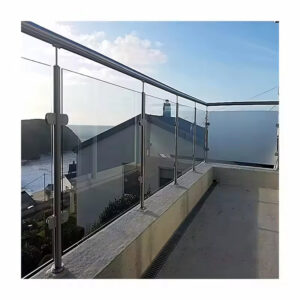
For coastal or high-chloride applications, 316 is the necessary baseline; 304 is not recommended. The molybdenum content in 316 is specifically engineered to combat chloride-induced pitting from salt spray. Specifying 304 in these environments is a technical error that guarantees increased maintenance and shortened service life.
When to Specify Duplex 2205
For severe environments—offshore splash zones, harbors, or areas with heavy de-icing salts where Stress Corrosion Cracking (SCC) risk is elevated—duplex 2205 is the technically superior choice. Its enhanced PREN and inherent SCC resistance provide a critical performance margin. The decision often hinges on consequence of failure: for a high-traffic pedestrian bridge railing, the premium for 2205 is justified.
Justifying the Investment
Justifying the higher cost requires a lifecycle model that quantifies the expense of failure. This includes not only replacement cost but also potential liability, traffic disruption, and reputational damage. In severe chloride environments, the corrosion resistance of premium stainless steel components is a non-negotiable factor for project integrity.
Selecting the Right Grade: A Decision Framework for Commercial Specifiers
A Structured Five-Step Process
A disciplined framework aligns material capabilities with project requirements. First, conduct a thorough site environmental analysis, quantifying chloride presence, humidity, and pollution. Second, define mechanical load and safety factor needs from structural calculations. Third, detail all fabrication methods, which mandates “L” grades for any welding of austenitic steels.
Matching Grade to Condition
Fourth, match the grade to the conditions. For general interior or benign exterior use, 304 is reliable. For chloride-exposed exteriors, 316 is standard. For maximum corrosion resistance, SCC concerns, or where high strength enables design optimization, specify duplex 2205. This step moves from analysis to a definitive specification.
The following framework outlines the key questions and data needed at each step.
| Decision Step | Key Question | Primary Data Needed |
|---|---|---|
| 1. Site Analysis | Chloride presence? | Humidity, salt spray, de-icing agents |
| 2. Mechanical Needs | Load & safety factor? | Structural calculations, codes |
| 3. Fabrication Method | Will it be welded? | Mandates “L” grades for 304/316 |
| 4. Grade Selection | Match to conditions | General, Chloride-exposed, Severe/SCC risk |
| 5. Verification | Material traceability? | Certified Material Test Reports (MTRs) |
Source: Technical documentation and industry specifications.
The Final Guard: Verification
The fifth and often neglected step is verification. Since grades are visually indistinguishable, maintaining certified Material Test Reports (MTRs) for all material batches is essential. This traceability ensures the specified alloy was installed, mitigating catastrophic integrity risks from undetected substitution.
Maintaining Performance: Long-Term Care and Inspection for Each Grade
Preserving the Passive Layer
Long-term performance depends on maintaining the chromium oxide passive layer. All grades benefit from periodic cleaning with fresh water and mild detergents to remove chlorides, pollutants, and organic deposits. Avoid abrasive cleaners or steel brushes that can embed iron particles and initiate rust staining.
Targeted Inspection Regimes
Inspection plans should be grade- and environment-specific. For 304 in borderline environments, focus closely on pitting, especially in crevices and at ground level. For 316 and 2205 in harsh service, inspections should target weld joints, fastener interfaces, and stress concentrations for early signs of crevice corrosion or SCC.
Documentation and Risk Control
The single most critical maintenance activity is administrative: maintaining a complete chain of custody for Material Test Reports. This documentation is the only definitive proof of alloy composition and is invaluable for troubleshooting any performance issues or validating warranty claims.
The decision pivots on a binary analysis of chloride exposure. Prioritize a detailed site assessment over rule-of-thumb, specify the “L” variant for any welded structure, and mandate Material Test Reports for verification. The goal is to align the alloy’s inherent capabilities with the project’s specific environmental and structural demands for its entire lifespan.
Need professional guidance specifying the right stainless steel grade for your next project? The technical team at Esang can help you navigate the selection process and provide engineered railing solutions built to your precise specifications. For a direct consultation, you can also Contact Us.
Frequently Asked Questions
Q: How do you justify the higher initial cost of 316 or Duplex 2205 stainless steel for commercial posts?
A: Justification requires a lifecycle cost analysis that weighs the initial premium against long-term durability. In aggressive environments like coastal zones, 316’s superior chloride resistance drastically reduces maintenance, replacement, and failure-related downtime costs. For projects where chloride exposure is confirmed, the higher upfront investment in 316 or 2205 directly translates to lower total cost of ownership and reduced operational risk over the asset’s lifespan.
Q: What are the key fabrication considerations when welding stainless steel posts on-site?
A: For welded structures, you must specify low-carbon “L” variants like 304L or 316L to prevent sensitization and subsequent intergranular corrosion at weld seams. While this slightly reduces base metal strength, it is a mandatory trade-off for long-term integrity. Duplex 2205 requires even stricter controls on heat input and shielding gas. This means facilities planning welded assemblies should confirm material certifications and ensure fabricators follow procedures outlined in standards like ASTM A240/A240M for pressure vessel-grade materials.
Q: When is Duplex 2205 the necessary choice over standard 316 stainless steel?
A: Specify Duplex 2205 when your application demands either exceptional resistance to chloride stress corrosion cracking (SCC) or requires high mechanical strength. Its yield strength is more than double that of annealed 304/316, and its microstructure provides a critical performance margin in severe splash zones or areas with warm, chloride-laden environments. If your project involves high structural loads or operates in an extreme coastal setting, 2205 offers the necessary safety and durability margin.
Q: How do you select the right stainless grade for a coastal building facade or railing system?
A: For coastal applications, 316 stainless steel is the essential baseline; 304 is not suitable due to its lack of molybdenum and susceptibility to chloride pitting. The decision between 316 and Duplex 2205 hinges on severity: use 316 for standard salt spray exposure, but upgrade to 2205 for direct splash zones, high humidity, or where stress corrosion cracking is a concern. Your site-specific environmental analysis must quantify chloride presence to make this call.
Q: What long-term maintenance and inspection practices differ between 304 and 316 stainless posts?
A: All grades require periodic cleaning to remove chloride deposits. For 304 installed in mild or borderline environments, inspections must focus intently on identifying early pitting, especially in sheltered crevices. For 316 and 2205 in harsh service, inspection plans should prioritize weld joints and stress concentrations for signs of crevice corrosion or SCC. This operational difference means maintenance budgets and schedules should be calibrated to the alloy’s inherent corrosion resistance and the site’s aggressiveness.
Q: Why is verifying material certification critical after installing stainless steel structural components?
A: Since 304, 316, and Duplex grades are visually identical, substitution with a lower-performing alloy poses a catastrophic integrity risk. Maintaining certified Material Test Reports (MTRs) for every material batch is the only way to verify the specified chemistry and mechanical properties were installed. This supply chain verification is a fundamental risk control, ensuring the corrosion resistance and strength you designed for are physically present in the structure.