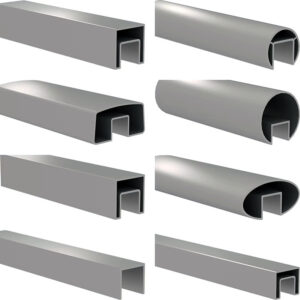
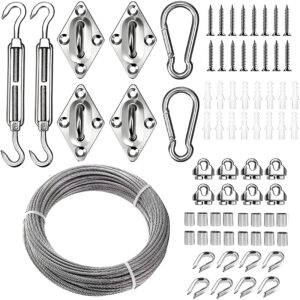
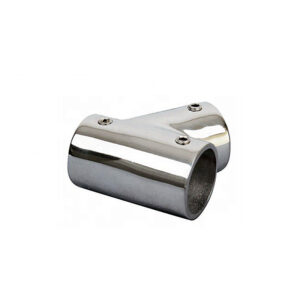
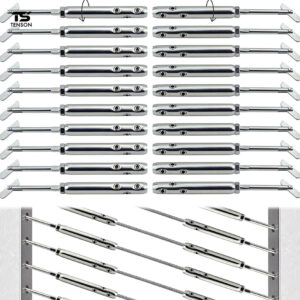
Buyers who use shortened search terms to draft RFQ documents rarely intend to invite grade substitution — but that is often what happens. When “SS railing balcony” moves unchanged from a search bar into a scope document, suppliers fill the missing detail with their own cost assumptions, and the result is a quote spread that looks like a pricing disagreement but is actually a specification gap. By the time the difference between 201, 304, and 316 becomes visible — sometimes only at delivery, sometimes only when corrosion appears in a coastal installation two years later — the cost of correction has multiplied well beyond what a tighter pre-RFQ review would have required. The judgment that matters most happens before the first supplier is contacted: translating abbreviated search language into grade, finish, and fabrication scope precise enough that every supplier prices against the same assumptions.
Search shorthand that must be converted into full specs
A search query like “SS railing balcony” is useful for discovery and completely unreliable as a procurement document. The shorthand works because it returns relevant results; it fails because it defines nothing a fabricator can price against with confidence. “SS” leaves grade unresolved. “Railing” leaves infill type, post spacing, and mounting method open. “Balcony” establishes location context but says nothing about corrosive exposure, load requirements, or finish durability expectations. Each of those gaps is an assumption some supplier will fill independently, which is why quote spreads on vague requests routinely reflect different products rather than different prices for the same one.
The conversion step is not a compliance formality — it is a practical pre-RFQ filter. Before any supplier receives a request, each shorthand element should be mapped to a purchasable attribute. Grade should become a named designation: AISI 304, AISI 316, or AISI 201, each with different corrosion resistance profiles and different cost positions. Finish should become a defined surface treatment: brushed #4, mirror polished, or satin, not “stainless finish.” Fabrication scope should identify whether the requirement is supply-only components, a complete system with hardware, or a supply-and-install package. Dimensions and layout should be fixed enough that linear meter calculations and corner configurations cannot be interpreted differently by different suppliers.
The downstream consequence of skipping this conversion is not just a wider quote spread — it is a structurally unreliable comparison. If Supplier A prices 316 tube with a #4 brush finish and all mounting hardware, and Supplier B prices 304 tube with mill finish and posts only, the lower number does not represent a better price; it represents a different product. Choosing on price alone under those conditions transfers material and scope risk to the buyer, and that risk may not surface until fabrication, installation, or inspection.
Grade confusion created by loose SS terminology
Loose SS terminology creates a specific kind of procurement risk: it gives suppliers the latitude to price against their own cost defaults rather than a defined material standard. A supplier who defaults to 201 may return a quote that is meaningfully lower than one who defaults to 304, but both responses look like valid bids on “SS railing.” The buyer sees a pricing problem; the actual problem is that neither quote confirms what material is being offered.
The cost and durability gap between grades is real and consequential. Grade substitution from 304 to 201 can create cost differences that exceed 30% — treated here as a planning indicator rather than a fixed market statistic — and the durability difference becomes significant in environments with humidity, salt exposure, or chemical contact. Grade 316 carries molybdenum content that improves resistance in coastal and industrial environments; 304 does not. Neither formal grade designation replaces site-specific judgment, but the difference is material enough that leaving grade undefined in an RFQ actively invites a substitution the buyer may not detect until a corrosion issue emerges.
Formal grade designations exist precisely to make this verifiable. GB/T 20878-2024 and ASTM A554-21 both provide the kind of structured grade designations that allow buyers to request, and suppliers to confirm, a specific alloy composition — rather than relying on commercial shorthand like “high-quality SS” or “marine grade,” which carry no consistent technical definition across suppliers. Requesting a mill test certificate against a named standard shifts the verification burden to the supplier and creates a record the buyer can audit against delivery.
| Vague SS Reference | Risk if Left Unclear | What to Confirm |
|---|---|---|
| “SS” or “stainless steel” without grade | Suppliers may assume 201, 304, or 316 based on own cost defaults; quotes vary significantly | Specify exact grade (e.g., AISI 304 or 316) and ask for mill test certificate if critical |
| “High-quality SS” or “marine grade” | No industry-standard definition; may be interpreted as 304 or 316 but 201 could be substituted | Define minimum grade (e.g., 316) and relevant corrosion-resistance requirements |
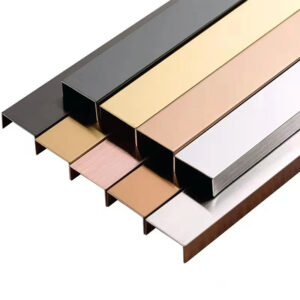
| “SS railing” without finish description | Finish could be supplied as mill finish, brush, mirror, or electropolished, affecting appearance and durability | Request explicit surface finish type and, if needed, grit standard (e.g., #4 brush) |
| “SS” as material only | Suppliers may exclude hardware, fasteners, or fabrication that the buyer assumed were included | Clarify that the quote includes all brackets, posts, infill, and any required fabrication |
The pattern worth recognizing is that the ambiguity in loose SS terminology does not affect all projects equally. For interior applications with low corrosive exposure, grade substitution may produce no visible consequence for years. For coastal installations, rooftop balconies, or projects near chemical environments, the same substitution can produce visible degradation within a short service period. Because the failure is deferred, it is rarely traced back to the RFQ language that allowed it.
Scope wording that narrows quote variation
Adding more suppliers to an under-specified RFQ does not reduce quote variation — it increases it, because each additional supplier brings an additional set of cost assumptions into the comparison. The instinct to widen the supplier pool in search of competitive pricing is reasonable in principle, but it only works when the scope is tight enough that all suppliers are genuinely pricing the same thing. When scope is vague, a wider pool deepens ambiguity rather than resolving it.
The elements most likely to produce quote divergence when left undefined are grade and finish, dimensions and layout, mounting method, hardware and accessories, and supply versus installation scope. Each of these can be interpreted differently without any supplier acting in bad faith — they are simply filling gaps the RFQ left open. The practical consequence is that quote comparison becomes structurally unreliable: the lowest bid may exclude hardware the buyer assumed was included, or price a mounting method that requires additional site work not captured in the number.
| Scope Element | Risk if Vague | What to Clarify |
|---|---|---|
| Material grade and finish | Grade substitution (201 vs 304) can create price differences of 30%+ and durability risks | Confirm exact grade, finish type, and thickness/gauge if relevant |
| Dimensions and layout | Linear meters, heights, corner details, and infill patterns may be interpreted differently, causing mismatched pricing | Provide shop drawings or list clear rail length, height, and infill style per elevation |
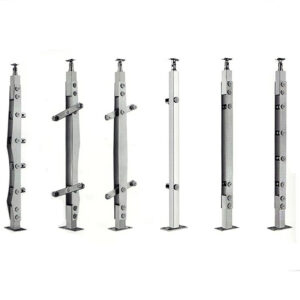
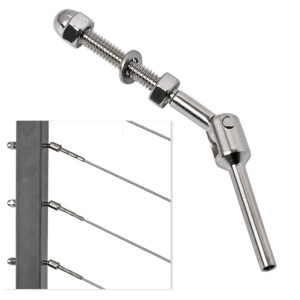
| Mounting method | Surface-mount, fascia-mount, core-drilled, or side-fixed assumptions change labor and hardware cost | Specify mounting type and whether templates or site measurements are required |
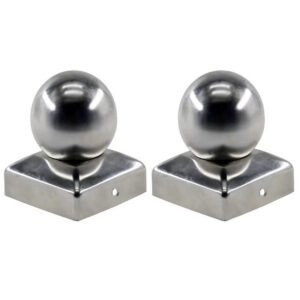
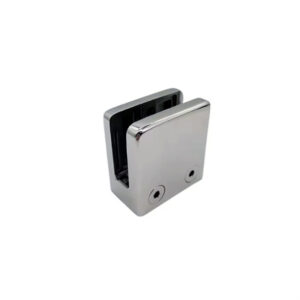
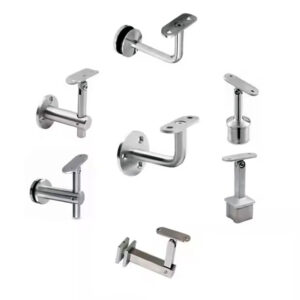
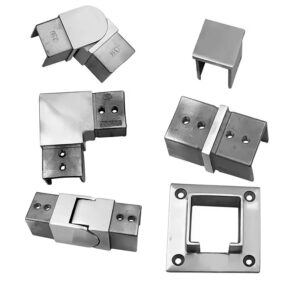
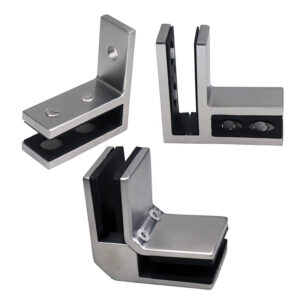
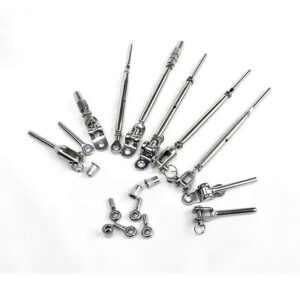
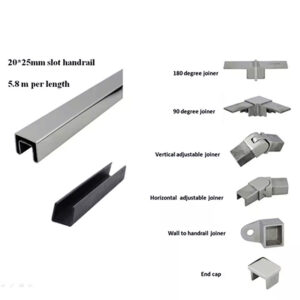
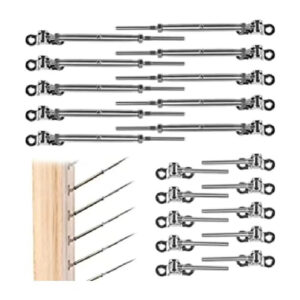
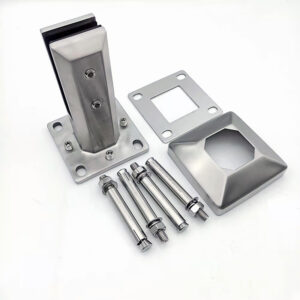
| Hardware and accessories | Brackets, end caps, base plates, and fasteners are sometimes excluded from base quotes | List all hardware items to be included and confirm they match the design |
| Supply vs. installation scope | One supplier may quote supply-only, another supply-and-install, making total cost comparison impossible | Clearly state if installation, delivery, or site handling is part of the RFQ |
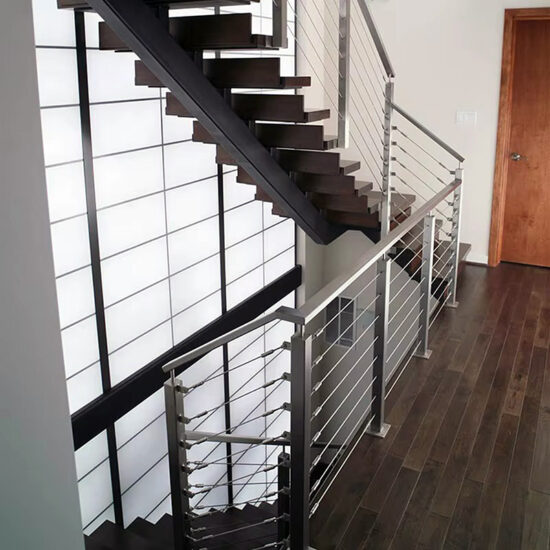
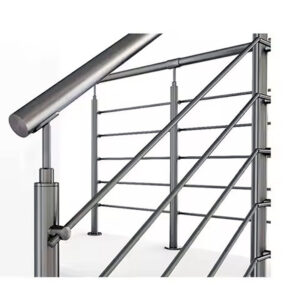
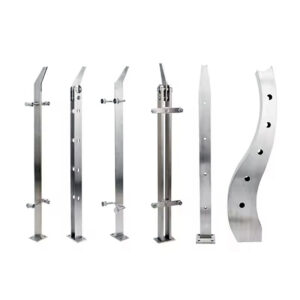
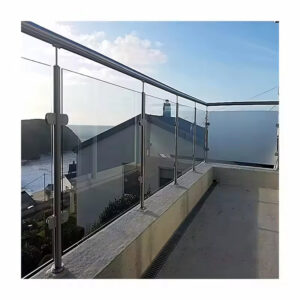
A scope document that defines all five elements does more to compress quote variation than any other single procurement action. It also makes the comparison meaningful: when suppliers price against the same grade, the same finish, the same hardware list, and the same supply scope, the differences that remain reflect actual pricing and capability rather than interpretation gaps. Buyers who have used stainless steel balcony railing specifications that define post type, infill, and mounting method upfront consistently report narrower quote ranges than those who describe the project in general terms and resolve detail in follow-up.
Sales and engineering language mismatches
The terminology gap between procurement language, sales language, and engineering language is not a communication problem that resolves itself through goodwill — it is a structural mismatch that creates real scope errors when it is not reconciled before RFQ submission. Each group uses the same words with different referents. “Complete railing system” means something different to a sales team quoting a product package than it does to a project engineer building a bill of materials. Neither definition is wrong in context; the problem is that the buyer assumes alignment without checking for it.
This mismatch is most consequential when it affects grade identification and finish specification, because those are the two attributes that most directly determine material cost and long-term performance. When a sales team refers to “304 stainless steel” without reference to a formal designation, they may be describing a product that meets ASTM A240 or A554 requirements — or they may be using a commercial shorthand that includes material sourced to a different specification. The engineering expectation is that grade designation is traceable to a formal standard; the commercial expectation is often that the named grade is sufficient identification. Closing that gap before award, rather than discovering it at delivery, requires a specific written request: the ASTM designation, the applicable standard, and whether a low-carbon variant (such as 304L) is required for the fabrication method being used.
| Term Used | What Sales Often Means | What Engineering Requires | Clarification to Request |
|---|---|---|---|
| “SS railing” | A stainless-steel balcony railing package, often defaulting to 304 with brush finish | Must define grade, finish, structural load, and fabrication details | Ask for a specification sheet with ASTM grade and finish standard |
| “Complete railing system” | May include posts and infill but could exclude anchors or installation hardware | Expects a bill of materials listing every component | Request a detailed scope-of-supply list and confirm missing items |
| “Brush finish” | A generic aesthetic term; may not differentiate between satin, hairline, or specific grit | Requires a defined finish number (e.g., #4, #6) or surface roughness | Specify the required finish grade and, if needed, polishing orientation |
| “304 stainless steel” | Often used loosely; sometimes marketed as “marine grade” even though 316 is better for coastal environments | Needs ASTM A240 / A554 designation and possibly low-carbon variant (304L) | Confirm full ASTM standard and whether low-carbon version is necessary |
The structural reason this gap persists is that sales teams and engineering teams are often working from different documents at different project stages. Sales responds to commercial inquiries with commercial language; engineers specify with designation language. If procurement is the interface between them and does not translate one into the other before the RFQ goes out, the translation happens at the supplier — who resolves ambiguity in favor of their own cost position. Understanding how to evaluate a stainless steel railing supplier before the first bulk order includes recognizing whether a supplier’s sales language is backed by engineering documentation — and whether they can produce it on request.
Clarification steps that prevent grade substitution
Grade substitution is most easily prevented before the RFQ is issued, not after a quote is received. Once suppliers have priced against their own assumptions, the conversation about grade correction becomes a negotiation about price increases, delivery delays, or — in the worst case — a dispute over what was actually ordered. The buyer who builds verification into the pre-RFQ process avoids that conversation entirely.
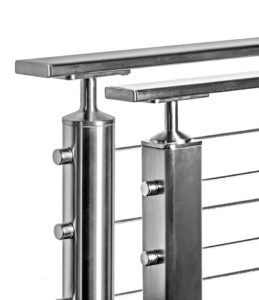
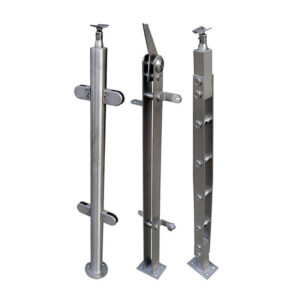
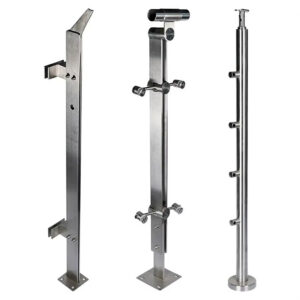
The first clarification step is naming the grade explicitly in the RFQ document using a recognized designation rather than a commercial shorthand. AISI 304 and AISI 316 are specific enough to be verified; “high-quality stainless steel” is not. If the project environment raises the question of whether 304 or 316 is appropriate — coastal location, chemical exposure, high-humidity application — that condition should appear in the scope document so all suppliers price the same grade assumption. Round and square post selections, such as round stainless steel posts in 304 or 316, should be identified by both form and grade in the line items, not described generically.
The second step is requesting grade confirmation in writing as a condition of the quote. This means asking suppliers to state the ASTM designation of the material they are quoting — ASTM A554-21 covers welded stainless steel mechanical tubing and provides a traceable framework for that confirmation — and, where the project warrants it, to indicate willingness to provide a mill test certificate at time of delivery. This request is not a legal mandate; it is a buyer-side verification practice that shifts the burden of proof to the supplier before any purchase commitment is made. A supplier who cannot or will not name the standard they are working to has given the buyer important information about how the project will be documented.
The third step is a scope completeness review before submission — a line-by-line check confirming that grade, finish, dimensions, mounting method, hardware list, and supply scope are all defined and that no element is described in terms that could be interpreted differently by different suppliers. This review is most useful as a pre-submission discipline rather than a post-award correction, because the cost of correcting a scope gap grows substantially once fabrication has begun.
The most preventable procurement errors in balcony railing projects are not supplier problems — they are specification problems that were carried into the RFQ uncorrected. Translating “SS railing balcony” from a search shorthand into a defined grade, a named finish, a listed hardware scope, and a stated mounting method is the specific step that makes quote comparison meaningful and reduces grade substitution risk before it can become a delivery or durability problem.
Before the next RFQ goes out, confirm that every supplier will be pricing the same material designation, the same finish standard, and the same scope of supply. If those three conditions are not met by the written scope document, the resulting quotes will reflect supplier assumptions as much as supplier pricing — and the choice made from them will carry more risk than the spread suggests.
Frequently Asked Questions
Q: Does this guidance still apply if the project is purely interior with no coastal or chemical exposure?
A: Yes, but the stakes for grade selection are lower, which changes how much specification effort is justified. For interior balconies with minimal corrosive exposure, the performance gap between 304 and 201 may not produce visible consequences for years — meaning a loose scope is less likely to cause an obvious failure. The risk shifts from corrosion to cost: without a named grade in the RFQ, suppliers can still price against different material assumptions, and the quote spread will still reflect different products rather than different prices. Grade clarification remains worthwhile; the urgency of insisting on 316 over 304 is reduced when the environment doesn’t warrant it.
Q: What should a buyer do immediately after submitting a tightened RFQ to make sure suppliers don’t revert to their own assumptions anyway?
A: Ask each supplier to confirm in writing, as part of their quote response, the ASTM designation of the material they are pricing and whether a mill test certificate will accompany delivery. This single written confirmation request — before any award decision — functions as an early filter: a supplier who quotes against the named grade and standard signals traceability; one who responds with commercial shorthand signals that the specification gap the RFQ tried to close may reopen at fabrication. Making this confirmation a stated condition of a valid quote response means non-conforming submissions are identified before commitment rather than at delivery.
Q: At what point does specifying 316 over 304 stop being worth the cost premium?
A: When the installation environment carries no meaningful chloride, chemical, or sustained humidity exposure, 304 typically delivers adequate service life and the molybdenum-enhanced corrosion resistance of 316 adds cost without proportional benefit. The threshold is site-specific rather than absolute: coastal locations, rooftop installations with standing water risk, and environments near industrial or chemical sources are the conditions where 316’s resistance profile justifies the premium. For a sheltered interior balcony or a low-humidity inland location, 304 specified explicitly by designation — rather than left to supplier default — is usually the more defensible cost position.
Q: How does a supplier’s inability to produce a mill test certificate on request compare to one who can, when evaluating quotes at similar price points?
A: Treat it as a material risk difference, not a minor administrative gap. A mill test certificate is the mechanism that ties delivered material to a named alloy composition and a traceable standard; without it, the buyer’s only confirmation that the installed grade matches the specified grade is the supplier’s verbal assurance. At similar price points, a supplier who can produce documentation on request offers a verifiably lower substitution risk — which matters most in coastal, rooftop, or chemically exposed installations where the cost of grade-related failures accumulates long after the project closes.
Q: Is a five-element scope document realistic to produce before a first engagement with a new supplier, or is it something that develops over multiple project cycles?
A: It is realistic before a first engagement, and it is most valuable there precisely because no prior relationship exists to catch gaps informally. The five elements — grade and finish, dimensions and layout, mounting method, hardware and accessories, and supply versus installation scope — do not require engineering drawings to define; they require decisions the buyer should be making before any supplier conversation begins. A buyer who cannot answer those five questions before contacting suppliers has not yet finished defining the project. Producing this scope document on a first engagement also signals to suppliers that substitution and scope interpretation are not available as cost levers, which tends to attract responses from suppliers with stronger documentation practices.