For professionals specifying coastal railings, docks, or boardwalks, the primary challenge is not aesthetic design but material failure. The corrosive power of saltwater rapidly degrades standard materials, leading to safety hazards, costly repairs, and diminished property value. A common and costly misconception is that any “stainless steel” will suffice, overlooking the critical alloy differences that separate adequate performance from guaranteed longevity.
Attention to marine-grade specifications is now a non-negotiable aspect of coastal construction and renovation. With increasing code scrutiny and a focus on lifecycle value, selecting the correct 316 stainless steel cable system transitions from a material choice to a strategic asset preservation decision. This ensures safety, maintains aesthetics, and protects investment against a relentless environment.
What Is Marine-Grade 316 Stainless Steel?
The Defining Alloy for Harsh Environments
Marine-grade 316 stainless steel is the engineered response to chloride aggression. Its designation stems from a specific chemistry mandated for structural components in saltwater exposure. The alloy’s performance is not incidental but built upon the deliberate inclusion of molybdenum, which fundamentally alters its corrosion resistance profile. This makes it the established standard for cable railings on docks, coastal balconies, and waterfront structures where failure is not an option.
Beyond “Stainless”: The Molybdenum Advantage
The core differentiator between marine-grade and standard stainless steels is the 2-3% molybdenum content. This element integrates into the material’s passive oxide layer, dramatically increasing its stability against chloride ion attack. Without it, materials are susceptible to pitting and crevice corrosion—the primary failure modes in marine settings. Industry experts consistently specify 316 not as an upgrade but as the baseline for any application with direct salt spray or immersion, creating a clear, two-tier market for performance.
The Lifecycle Value Proposition
Specifying 316 stainless steel is a decision centered on total cost of ownership. Its higher initial cost is justified by long-term reliability and dramatically reduced maintenance. In our analysis of coastal projects, systems using inferior grades required component replacement in as little as 3-5 years, while 316 systems showed no significant degradation over a decade with proper care. This translates directly to preserved property value and eliminates the safety and liability risks of premature failure.
Key Material Composition and Corrosion Resistance
Decoding the Alloy Chemistry
The superior performance of 316 stainless is dictated by a precise elemental recipe. Chromium (16-18%) enables the formation of the self-repairing passive layer, while nickel (10-14%) provides ductility and toughness. The defining 2-3% molybdenum is the key to chloride resistance. For welded structures, the 316L variant with lower carbon content is specified to prevent sensitization and maintain corrosion resistance at weld points.
The Mechanism of Corrosion Defense
Corrosion resistance in 316 is an active, not passive, property. The molybdenum-enhanced oxide layer acts as a barrier that reforms if damaged, given oxygen and a clean surface. This directly combats the localized pitting caused by chloride ions, which can penetrate weaker barriers and lead to structural compromise. The performance gap between 304 and 316 in saltwater is not incremental but fundamental; 304 lacks this defensive mechanism entirely.
Enhancing Performance with Surface Treatment
Beyond base composition, surface finishing is a strategic performance enhancer. Electropolishing is a critical process that smooths the microscopic surface, improving the integrity of the passive oxide layer and making it easier to clean. This treatment removes impurities and creates a more uniform surface, which industry experts recommend for the most severe marine exposures to maximize the material’s inherent corrosion resistance.
The following table details the specific alloy composition that defines 316 stainless steel and the role of each element.
| Element | Composition (%) | Primary Role |
|---|---|---|
| Chromium | 16-18% | Forms passive oxide layer |
| Nickel | 10-14% | Enhances ductility, toughness |
| Molybdenum | 2-3% | Resists chloride pitting |
| Carbon (316L) | Lower content | Prevents weld sensitization |
Source: ASTM A276/A276M Standard Specification for Stainless Steel Bars and Shapes. This standard establishes the chemical composition requirements for stainless steel grades, including Type 316, ensuring the specified alloy content for corrosion resistance in marine components like posts and fittings.
Marine Cable Specifications: Diameter, Construction, and Load
Engineered Cable, Not Just Wire
The cable in a railing system is a critical load-bearing component. For marine applications, a 1×19 construction—a single strand of 19 wires—is the standard. This configuration offers an optimal balance of high tensile strength, necessary rigidity to limit deflection, and minimal stretch under sustained tension. Selecting the correct construction is the first step in transforming a cable from a simple wire into a governed safety component.
Diameter and Tension: The Safety Metrics
Cable diameter, typically ranging from 1/8 inch (3mm) to 3/16 inch (5mm), is selected based on span, aesthetic preference, and load requirements. However, tension is the quantifiable performance metric. Industry standards and building codes mandate a minimum tension, often 200 pounds or more, in the cable infill to limit deflection to safe levels. Leading engineered systems are designed to maintain tensions of 225 pounds or higher, ensuring the railing meets rigorous safety codes for rigidity.
Verifying System Performance
A common oversight is treating cable tension as a subjective “feel” during installation. Proper specification requires verifiable engineering data. This includes the cable’s minimum breaking strength, which is many times higher than the working tension, and the system’s designed working load limit. Requesting this data from suppliers separates marketed products from genuinely engineered solutions that provide documented safety margins.
The specifications for marine cable are governed by precise standards to ensure performance and safety.
| Specification | Typical Range | Key Performance Metric |
|---|---|---|
| Cable Diameter | 1/8″ to 3/16″ | Aesthetics and strength |
| Wire Construction | 1×19 strand | Balance of rigidity, strength |
| Minimum Tension | 200 lbs | Code-mandated for deflection |
| Engineered Tension | 225+ lbs | Enhanced system rigidity |
Source: ASTM A580/A580M Standard Specification for Stainless Steel Wire. This standard specifies requirements for stainless steel wire, directly governing the quality, mechanical properties, and corrosion resistance of the cable used in marine railing systems.
Essential Hardware: Turnbuckles, Fittings, and Tensioners
The “316 Ecosystem” Requirement
System integrity depends on the weakest link. Every piece of hardware—turnbuckles, fittings, tensioners, fasteners—must be specified in marine-grade 316 stainless steel to create a compatible corrosion-resistant ecosystem. Mixing grades, such as using 304 fittings with 316 cable, creates galvanic couples that can accelerate corrosion at the connection points, leading to premature failure.
Hardware Specifications and Selection
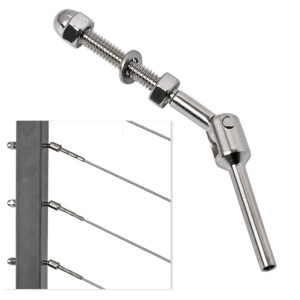
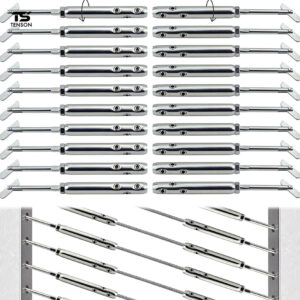
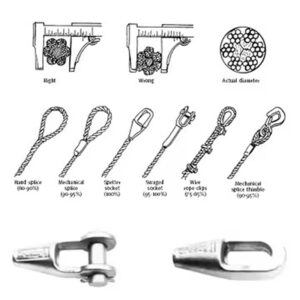
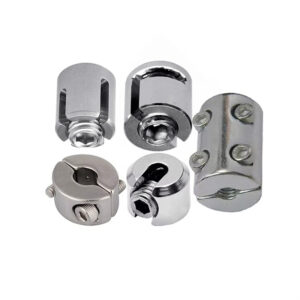
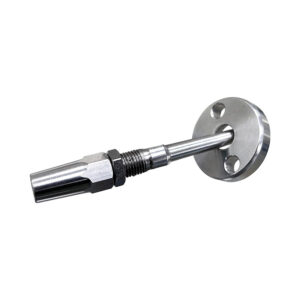
Turnbuckles for tension adjustment are typically jaw-to-jaw configurations, with Working Load Limits (WLL) ranging from 330 to over 2,200 pounds, selected to match the system’s load requirements. Termination hardware is equally vital. Swageless fittings provide high-integrity permanent ends, while wire rope clips (U-bolt clamps) must be installed correctly. The industry adage “never saddle a dead horse” means the saddle rests on the load-bearing (live) cable segment, not the tail.
The Shift to Integrated System Kits
The strategic trend is toward sourcing complete, compatible kits from specialized providers. This approach reduces design risk by ensuring all components—from the main cable to the smallest set screw—are engineered to work together. It simplifies procurement, guarantees total system compatibility, and is a non-negotiable requirement for preventing premature failure. We have observed that projects using integrated kits experience fewer callbacks and maintain tension integrity longer.
Proper hardware selection is critical for maintaining the system’s corrosion resistance and mechanical integrity.
| Hardware Type | Key Specification | Critical Installation Note |
|---|---|---|
| Turnbuckles | WLL: 330-2,200+ lbs | Jaw-to-jaw configuration |
| Swageless Fittings | Permanent termination | High-integrity cable ends |
| Wire Rope Clips | U-bolt type | “Saddle on live cable” |
Source: Technical documentation and industry specifications.
Installation Best Practices for Saltwater Environments
Preventing Galvanic Corrosion
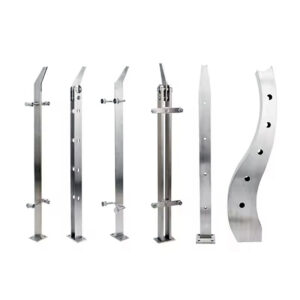
A fundamental installation rule is the isolation of dissimilar metals. If using aluminum posts with stainless steel cable and hardware, non-conductive plastic or composite pads or sleeves are mandatory at all contact points. This prevents galvanic corrosion, where the more active metal (aluminum) sacrificially corrodes when electrically connected to a less active metal (stainless steel) in the presence of an electrolyte like saltwater.
Fastener and Bracket Compliance
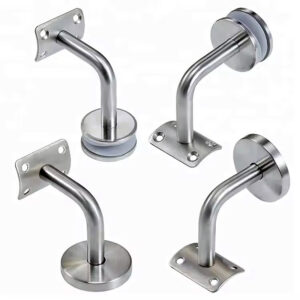
All fasteners, brackets, and screws must also be 316 grade. Using inferior stainless or coated steel fasteners is a critical error that compromises the entire system’s corrosion resistance. Torque specifications should be followed to achieve proper clamping force without galling the stainless steel threads. Applying a marine-grade anti-seize compound on threads is a recommended practice to prevent seizing and facilitate future maintenance.
The Advantage of Code-Compliant Kits
The growing availability of complete, engineered kits signals an industry shift. Contractors benefit from bundled expertise, as these kits are pre-designed to meet relevant codes and include all necessary compatible components. This simplifies the installation process, reduces the risk of field errors, and ensures the final installation performs as intended. It also future-proofs projects against increasingly strict municipal codes mandating marine-grade materials.
Long-Term Maintenance and Cleaning Procedures
Preserving the Passive Layer
Maintenance is not optional; it is the practice required to realize the material’s promised longevity. The protective oxide layer on 316 stainless is self-repairing but requires oxygen and a clean surface to function. A prescribed, simple maintenance protocol is therefore essential to performance. Neglect allows salt deposits to concentrate and potentially breach the passive layer.
Recommended Cleaning Protocol
Routine rinsing with fresh water is the most effective maintenance, removing salt deposits before they can cause harm. For deeper cleaning, use a mild, non-chlorinated detergent and warm water, wiping in the direction of the cable grain with a soft cloth or sponge. It is critical to avoid chloride-based cleaners, bleach, hydrochloric acid, or abrasive pads and tools, as these will damage the surface and initiate corrosion.
Warranty and Strategic Upkeep
Adhering to a maintenance schedule is often a requirement to keep manufacturer warranties valid. Some leading manufacturers explicitly include saltwater exposure in their warranty coverage, using this as a key market differentiator. This type of warranty directly addresses the primary customer risk and serves as a strong indicator of product confidence. Structured upkeep preserves aesthetics, ensures safety, and protects the financial investment in the system.
How 316 Stainless Steel Compares to 304 and Alternatives
The Molybdenum Divide
The choice between 304 and 316 stainless is the most common and consequential crossroad. Cost-effective 304 (18-20% chromium, 8-10.5% nickel) is suitable for general outdoor use but lacks molybdenum. This absence makes it fundamentally vulnerable to chloride attack, rendering it inadequate for true marine environments. The performance gap is substantial; 304 will exhibit visible pitting and corrosion in salt spray conditions where 316 remains intact.
Application Dictates Specification
The specification is dictated by exposure, not budget. For inland or sheltered applications without direct salt spray, 304 may be acceptable. For any application with direct salt spray, immersion, or consistent salt-laden air—such as oceanfront railings, dock systems, or coastal boardwalks—316 is the necessary, non-negotiable specification. This clear technical distinction provides a reliable decision framework for specifiers.
Evaluating Other Alternatives
While coated carbon steel or aluminum may offer lower upfront cost, they introduce different failure modes and maintenance burdens. Coatings degrade and require reapplication, while aluminum corrodes unless anodized and isolated. For a permanent, low-maintenance solution in saltwater, 316 stainless steel presents the most reliable lifecycle value. The aesthetic demand for unobstructed views drives the choice of cable railings, but this aesthetic forcibly necessitates the technical superiority of 316 for lasting performance.
The material selection decision is clarified by understanding the fundamental alloy differences.
| Material Grade | Key Alloy Difference | Suitability for Saltwater |
|---|---|---|
| 316 Stainless Steel | Contains 2-3% Molybdenum | Essential for direct exposure |
| 304 Stainless Steel | No Molybdenum | Inadequate for marine use |
| 316L Variant | Lower Carbon Content | Optimal for welded structures |
Source: ASTM A276/A276M Standard Specification for Stainless Steel Bars and Shapes. This standard defines the chemical compositions that differentiate grades like 304 and 316, providing the technical basis for material selection in corrosive environments.
Selecting the Right Cable System for Your Application
Mandate Full System Compatibility
Selection must begin with a mandate for full 316 stainless steel specification across every component—cable, fittings, turnbuckles, and fasteners. Verify material certifications where possible. The goal is to create a uniform corrosion-resistant ecosystem. This holistic approach prevents the localized failures that occur when a single inferior component compromises the entire assembly.
Prioritize Engineered System Providers
Move beyond component sourcing. Prioritize suppliers that offer integrated, engineered systems complete with code compliance documentation, tension performance data, and clear installation guidelines. These providers bundle engineering expertise into the product, reducing design liability and ensuring all parts work synergistically. Evaluate their technical support and their understanding of marine application challenges.
Analyze the Long-Term Value Proposition
Evaluate the total lifecycle value. Consider suppliers that offer performance enhancements like electropolishing. Scrutinize warranty terms meticulously; a warranty that explicitly covers saltwater damage is a powerful indicator of product confidence and reduces long-term risk. The right system connects technical specifications directly to strategic outcomes: guaranteed safety, preserved property value, and minimized lifetime maintenance. For projects requiring this level of performance, exploring specialized marine-grade cable railing systems from a technical provider is a logical step in the specification process.
The decision framework prioritizes three core points: full 316 specification, integrated system sourcing, and lifecycle value analysis. This approach moves past initial cost to focus on performance, safety, and long-term asset preservation. Implementation requires verifying material certifications, demanding engineering data, and establishing a proactive maintenance routine from day one.
Need a professional, engineered solution for your coastal project? The technical specifications and integrated kits from Esang are designed to meet the exacting demands of saltwater environments, ensuring durability and code compliance. For direct consultation on your specific application requirements, you can also Contact Us.
Frequently Asked Questions
Q: What is the critical material difference between 304 and 316 stainless steel for marine cable systems?
A: The defining difference is the addition of 2-3% molybdenum in marine-grade 316 stainless steel. This element integrates into the protective oxide layer, dramatically increasing its stability against chloride ions from seawater, which directly combats pitting and crevice corrosion. For any application with direct salt spray or immersion, 316 is a fundamental requirement, not an incremental upgrade. This means specifying 304 for a coastal project introduces a fundamental risk of premature failure and should be avoided.
Q: How do you ensure the entire cable railing system is compatible and won’t fail at the hardware?
A: You must specify a complete “316 ecosystem,” where every component from the main cable to the smallest screw is marine-grade 316 stainless steel. This includes turnbuckles, swageless fittings, and all fasteners to prevent galvanic corrosion. The strategic approach is to source integrated, engineered kits from a single supplier. For projects where longevity is critical, plan to procure a complete system from a specialist to guarantee total compatibility and eliminate the weakest-link risk.
Q: What are the proper installation practices to prevent galvanic corrosion with stainless steel cables?
A: A core rule is to electrically isolate stainless steel from dissimilar metals like aluminum using non-conductive pads or sleeves. All mounting brackets and fasteners must also be 316 grade. Following these practices is essential for real-world performance. This means contractors should proactively design for isolation and verify fastener specifications, as this approach future-proofs installations against increasingly strict municipal codes for coastal construction.
Q: What maintenance protocol preserves the corrosion resistance of 316 stainless steel in saltwater?
A: A prescribed protocol is essential to support the material’s self-repairing oxide layer. Routinely rinse with fresh water to remove salt and use mild detergent with warm water for deeper cleaning, wiping in the cable’s grain direction. Critically, avoid chloride-based cleaners, bleach, and abrasive tools. This structured upkeep is a strategic imperative to realize the promised longevity and is often required to keep warranties valid for marine applications.
Q: What cable construction and tension are required for a code-compliant safety railing?
A: A 1×19 wire strand construction is standard, providing optimal strength and rigidity. Performance is governed by verifiable tension, not aesthetics; industry standards mandate a minimum of 200 pounds in the cable to limit deflection, with leading systems engineered for 225 pounds or more. This means selecting a system requires documented tension performance data to ensure it meets safety codes for rigidity, transforming an aesthetic component into a governed safety system.
Q: How do material standards like ASTM A580 ensure the quality of stainless steel wire for cables?
A: The ASTM A580/A580M standard specifies requirements for stainless steel wire, including its chemical composition and mechanical properties. This ensures the wire used for tensioned cables meets defined quality and performance benchmarks. For specifiers, this means you should verify that cable suppliers reference this or similar material standards to guarantee the base wire has the necessary properties for structural integrity in harsh environments.
Q: What should you look for in a warranty when selecting a marine cable system?
A: Scrutinize warranty terms for exclusions related to saltwater or coastal exposure. A warranty that explicitly covers saltwater damage is a powerful indicator of the manufacturer’s confidence in their 316 stainless steel system. This means evaluating long-term value should prioritize suppliers who offer this coverage, as it directly addresses the primary corrosion risk and aligns the supplier’s guarantee with your project’s performance requirements.