Many projects that begin with a clean architectural sketch of a flowing glass balcony line run into fabrication problems that were entirely avoidable — not because the design was wrong, but because radius feasibility and panel segmentation decisions were never confirmed before geometry was forwarded to the fabricator. The practical cost of that gap is a full rework cycle: glass panels that cannot be bent to the intended radius, bracket positions that are drilled to a geometry that has since shifted, and a 35-day fabrication window that restarts from zero. The judgment that prevents this is not aesthetic — it is procurement sequencing, starting with whether the project will use hot-bent laminated panels or faceted segments and whether the structural layout is stable enough to survive a fixed approval gate. What follows will help you assess whether a curved glazing scope is procurable within your schedule, and where the points of no return actually fall.
Radius limits that reshape the design intent
Glass thickness is not purely a structural variable in curved railing applications — it is a geometric constraint that directly governs what curve is achievable. Thinner panels within the typical fabrication range of 8 to 12mm allow for tighter radii, but even within that window, the minimum bend radius must be confirmed with the fabricator before the design is fixed, not after. At 15mm, the minimum achievable radius increases meaningfully, which can make sharp or compound curves impractical without redesigning the railing line or segmenting the run into shorter flat panels.
Laminated configurations introduce a separate constraint. A build-up such as 5+1.14+5mm produces a panel of roughly 11mm total thickness, but the interlayer material affects how the assembly behaves under bending stress. Interlayer compatibility often limits the achievable radius further than a monolithic panel of equivalent thickness, which means the design cannot simply substitute laminated glass to gain structural performance without first checking whether the curve geometry still works.
The practical implication is that radius confirmation must happen before elevation drawings are finalized. Sending a concept curve to a fabricator and asking whether it can be produced is not confirmation — it is the beginning of a negotiation that may result in a redesign. The fabrication table below reflects how thickness and configuration interact with bend feasibility.
| Glass Configuration | Typical Thickness | Feasibility Consideration |
|---|---|---|
| Tempered monolithic | 8–12 mm | Thinner panels permit tighter radii; confirm minimum bend radius with fabricator early. |
| Tempered monolithic | 15 mm | Larger minimum radius likely; may not suit sharp curves without redesign. |
| Laminated tempered (e.g., 5+1.14+5 mm) | ~11.14 mm total | Interlayer compatibility can limit bend radius; often requires gentler arcs than monolithic glass. |
Once a radius is confirmed as feasible for a given thickness, that combination becomes a fixed constraint for the rest of the project. Changing panel thickness later to improve structural performance or reduce cost often changes the minimum radius, which ripples back into bracket positioning, post spacing, and the top rail geometry.
Segmented layouts versus true curved panels
The decision between faceted segments and true curved panels is not primarily aesthetic — it is a procurement and lifecycle decision that determines tooling cost, lead time, replacement exposure, and freight risk before any other planning variable is resolved. Forwarding a concept curve to a supplier without specifying which approach the project will use is one of the most common early failures in curved glazing scopes, because the two methods require fundamentally different supply chains.
True curved panels require custom bending tooling and a longer procurement cycle. They produce the clean, continuous sight line that most design briefs are targeting, but that visual outcome comes with a set of downstream exposures that segmented layouts largely avoid. If a curved panel is damaged during transport or installation, replacement requires re-bending a custom form — not pulling a flat panel from stock. That combination of longer lead time and higher remake complexity means a single damaged panel on a curved run can hold up an entire installation for weeks.
Segmented glass uses standard flat tempering, which keeps lead times shorter and replacement straightforward. The trade-off is visible joints between segments and a faceted line rather than a fluid arc. Whether that visual difference matters depends on the project: for a high-exposure facade or a premium residential terrace where the railing line is a design feature, the faceted appearance may be architecturally unacceptable. For a mid-market residential balcony where the curve is modest and the view is the priority, segmented panels may deliver an acceptable result at meaningfully lower procurement risk.
| Aspect | Segmented (Faceted) Glass | True Curved Panels |
|---|---|---|
| Aesthetics | Creates a faceted line; joints are visible between segments | Delivers a cleaner, continuous curve with fewer visual interruptions |
| Tooling & Lead Time | Uses standard flat tempering; shorter lead time | Requires custom bending tooling; longer procurement cycle |
| Replacement Complexity | Easier to replace a single flat panel | Replacement demands re-bending; higher complexity and longer downtime |
| Freight Risk | Standard packaging; lower in-transit damage risk | Irregular shape increases risk of transport damage and handling cost |
Neither approach is universally preferable. The correct choice depends on the tightness of the curve, the project’s tolerance for schedule disruption if a panel is damaged, and whether the visual continuity of a true curved line is worth the tooling premium and replacement complexity. Projects where structural decisions are still in motion when fabrication should be starting are generally poor candidates for true curved panels, because the consequences of a late revision compound across tooling, glass, and hardware simultaneously.
Template approvals that lock fabrication timing
Template approval is the point in a curved glazing project where the schedule becomes irreversible. Once drawing confirmation is issued and bending is released, the fabrication clock starts — and based on supplier practice, that window is typically around 35 days. That figure is not an industry standard or a contractual norm; it is a planning threshold that controls every downstream decision about site readiness, trade sequencing, and installation scheduling.
The more consequential lock-in happens after design sign-off, when holes are drilled and bracket positions are fixed to the approved geometry. At that point, a late structural change — a shift in the slab edge, a revised balustrade height requirement, a post relocation — does not create a minor revision. It invalidates both the glass panel geometry and the bracket positions simultaneously, requiring a full rework cycle that restarts the fabrication lead time and replaces hardware that has already been positioned to a geometry that no longer exists.
This is not a process refinement problem. It is a project sequencing problem, and it is most acute on projects where structural or architectural decisions are still moving at the point when fabrication release should be happening. The appropriate response is not to issue a tentative approval and manage changes informally — it is to defer bending release until structural geometry is genuinely stable, and to treat template approval as a contractual milestone rather than an administrative step.
| Gate / Action | What is Locked | Risk if Changed Later |
|---|---|---|
| Drawing confirmation & template approval | Starts 35-day fabrication lead time | Any delay pushes the entire delivery schedule; approved geometry becomes fixed |
| Drilling and bracket installation after design sign-off | Hole positions, bracket locations | Late structural changes invalidate both glass panel and bracket positions, requiring full rework |
Projects that treat template approval as a paperwork formality rather than a fabrication gate consistently encounter this failure. The 35-day lead time has no slack built into it for mid-cycle revisions, which means any structural change after sign-off adds the full rework period on top of the original schedule, not just the delta between the old and new geometry.
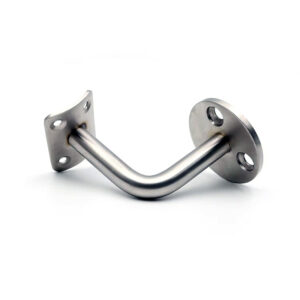
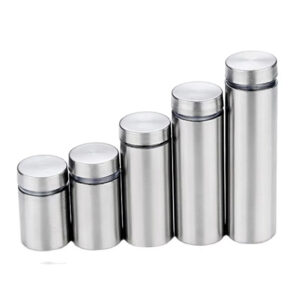
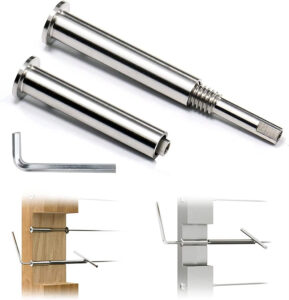
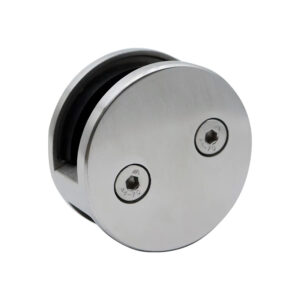
For hardware selection at this stage, adjustable glass standoffs can offer limited field tolerance for minor positional variation, but they are not a substitute for accurate approved geometry — and they do not accommodate the kind of bracket-position change that results from a post-approval structural revision.
Freight and replacement risks for custom bends
Bent glass panels are not difficult to freight because of their fragility — flat tempered glass is comparably fragile. The elevated risk comes from geometry. Irregular curved panels require non-standard crating, are harder to stack efficiently, and create contact-point challenges during transport that increase the likelihood of edge damage or surface stress concentrations that may not be immediately visible but can compromise the panel under load.
Custom packaging for curved glass typically adds cost and handling complexity, and the irregular form means fewer panels can be shipped per crate without stacking risk. For large curved runs — multiple panels across an extended balcony face — the cumulative freight exposure is proportionally higher than for an equivalent flat-panel installation. Transit damage on a single curved panel in a matched set raises the complexity of replacement, because a replacement panel must be bent to the same radius as the surviving panels, which requires re-engaging the custom tooling and restarting a fabrication cycle.
The replacement difficulty is not just logistical — it has lifecycle cost implications. A flat panel damaged during maintenance, renovation, or an impact event can generally be replaced from a current product range or re-ordered without special tooling. A curved panel that is no longer in active production may require a tooling re-setup charge on top of the panel cost, and the lead time for that replacement will follow the same 35-day window as the original order. For building owners and facilities managers, this is a long-term carrying cost that is rarely factored into the initial value comparison between curved and flat glazing.
The practical check for any curved glazing specification is to confirm before procurement whether replacement panels will be available as a standard re-order or will require tooling re-engagement each time. That distinction has a direct bearing on total cost of ownership and should be documented as part of the project specification, not left as an assumption.
Premium value needed to support curved glazing
Curved glazing justifies its cost premium in a narrow set of conditions: when the facade line is a defining architectural feature, when the railing is part of a premium brand environment where visual continuity carries direct commercial value, or when the project geometry makes a flat segmented alternative genuinely unacceptable. Outside those conditions, the cumulative premium of custom bending tooling, extended lead time, elevated freight handling, and higher replacement complexity is difficult to defend on procurement grounds alone.
The cost case for curved glazing is not just the unit price of bent panels versus flat panels. It is the aggregate of tooling setup, extended procurement windows, custom freight packaging, potential rework if a late structural change invalidates approved geometry, and the long-term replacement carrying cost for a panel type that cannot be sourced from standard inventory. Each of those elements adds a layer of schedule rigidity and financial exposure that only makes sense if the visual or commercial outcome is proportionally strong.
It is also worth noting that curved glass railings must still meet the same structural performance expectations as any permanent railing system. ASTM E985-24 provides the testing framework for permanent metal railing systems and rails for buildings, and curved glazing installations — regardless of their aesthetic complexity — are expected to perform to the same load requirements as standard designs. This matters for the value argument because a premium installation that cannot be verified against applicable performance expectations is not delivering on its cost. The premium must support verified performance, not just an aesthetic outcome.
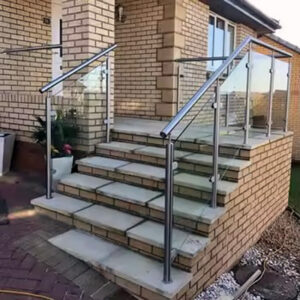
For projects where the facade value case is genuinely strong, the specification should account for the full glass balcony railing system from the outset — not as an upgrade to a flat-panel base specification, but as a distinct procurement scope with its own lead time, approval gating, and replacement logistics. Treating it as a variation on a standard railing package is how projects absorb the cost of curved glazing without capturing the design value that was supposed to justify it.
The clearest pre-procurement judgment for a curved glass railing scope is whether the structural layout is stable enough to survive a fixed template approval gate. If post positions, slab edges, or balustrade heights are still subject to revision when fabrication should be starting, the project is not ready for bent glass — regardless of how resolved the design appears on screen. Confirm the curve radius against the intended glass thickness before fixing the elevation, resolve the segmented-versus-true-curve decision before engaging any supplier, and treat template approval as the point of no return it actually is. Those three sequencing decisions determine whether the curved glazing delivers its intended value or becomes the source of the project’s most expensive rework cycle.
Frequently Asked Questions
Q: What happens if the structural layout changes after template approval but before installation begins?
A: A post-approval structural change triggers a full rework cycle, not a partial revision. Once holes are drilled and bracket positions are fixed to the approved geometry, any shift in slab edge, post location, or balustrade height simultaneously invalidates both the glass panel geometry and the bracket positions. The fabrication lead time restarts from zero, and hardware already positioned to the original geometry must be replaced. The only reliable mitigation is to defer bending release until structural decisions are genuinely stable and to treat template approval as a contractual milestone rather than an administrative step.
Q: Is curved glass railing a viable option if the project schedule has limited float?
A: It is viable only if template approval can be issued while the fabrication window still fits within the schedule — and only if no structural changes are anticipated after that point. The fabrication lead time for custom curved glazing runs approximately 35 days from drawing confirmation, with no slack built in for mid-cycle revisions. Projects where structural or architectural decisions are still moving at the point when bending should be released are poor candidates for true curved panels, because a single late change adds the full rework period on top of the original lead time, not just the difference between old and new geometry.
Q: How does the long-term replacement cost of curved panels compare to flat glass railing over a building’s lifecycle?
A: Curved panels carry a materially higher long-term replacement cost than flat glass, and that difference is rarely factored into the initial value comparison. A flat panel damaged during maintenance or an impact event can typically be re-ordered from current inventory without special tooling. A curved panel that is no longer in active production requires tooling re-engagement on top of the panel cost, and the replacement follows the same fabrication lead time as the original order. Building owners and facilities managers should confirm before procurement whether replacement panels will be available as a standard re-order or will require tooling re-setup each time, and that answer should be documented in the project specification.
Q: At what point does segmented glass become the more defensible choice over true curved panels?
A: Segmented glass becomes the stronger procurement choice when the curve is modest enough that visible joints between segments are architecturally acceptable, when the project has low tolerance for schedule disruption if a panel is damaged in transit, or when structural decisions are still in motion close to the fabrication release date. True curved panels are difficult to justify when the visual continuity they provide is not a defined design priority, because the tooling premium, extended lead time, custom freight handling, and higher remake complexity all remain regardless of how simple the curve appears. The tighter the schedule and the lower the facade’s design exposure, the stronger the case for segmented layouts.
Q: Does a curved glass railing still need to meet the same structural performance requirements as a standard railing?
A: Yes, and this has direct bearing on how the cost premium should be evaluated. ASTM E985-24 governs permanent metal railing systems and rails for buildings, and curved glazing installations are expected to meet the same load requirements as standard designs regardless of their geometric or aesthetic complexity. A curved railing specification that cannot be verified against applicable performance expectations is not delivering on its cost — the premium must support confirmed structural performance, not only a visual outcome. This means curved glazing should be treated as a distinct procurement scope from the outset, with performance verification built into the specification rather than assumed.