Specifying the correct stainless steel grade for glass railing hardware is a critical, high-stakes decision for architects, engineers, and contractors. The wrong choice in a corrosive environment leads to predictable, premature failure—surface staining, pitting corrosion, and compromised structural integrity. This isn’t a minor aesthetic issue; it’s a liability risk and a significant lifecycle cost error. Professionals must move beyond simple cost-per-pound comparisons to a performance-based specification model.
The distinction between AISI 304 and 316 stainless steel is now central to sustainable construction and value engineering. With increasing focus on embodied carbon and total cost of ownership, selecting a material for its 50-year service life, not just its initial price, is a mark of professional diligence. This analysis provides the technical framework and decision tools to justify material selection with authoritative data.
Key Differences Between 316 and 304 Stainless Steel
The Core Alloy Distinction
The fundamental performance gap between these austenitic alloys is chemical. While both contain chromium and nickel for corrosion resistance and formability, AISI 316 incorporates 2-3% molybdenum. This single addition is transformative. Molybdenum dramatically strengthens the alloy’s passive oxide layer, making it far more resistant to chlorides, the primary agent of corrosion in architectural applications. This isn’t a minor upgrade; it redefines the material’s application envelope.
Market Positioning and Design Implication
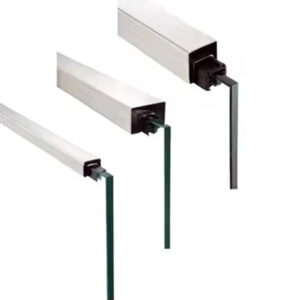
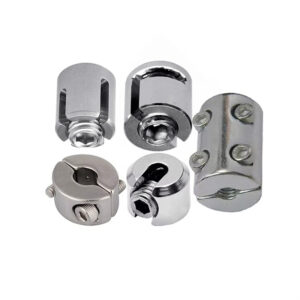
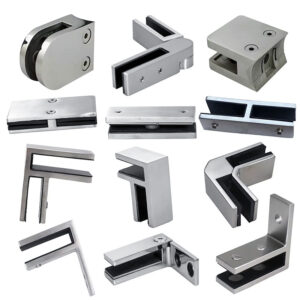
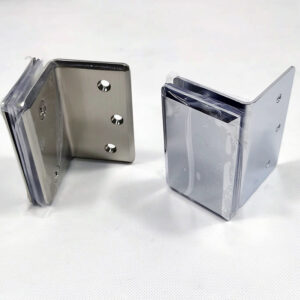
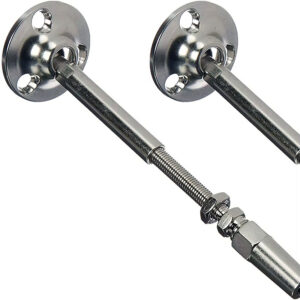
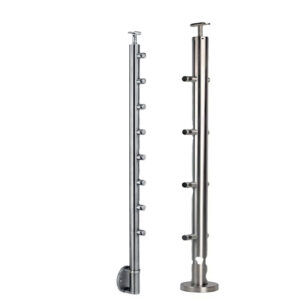
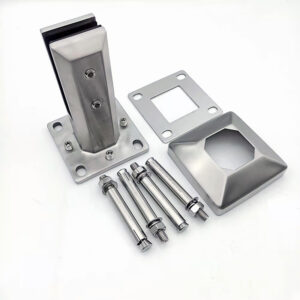
In the market, 304 serves as the economical, general-purpose standard for benign environments. 316 is positioned as the specialized, premium solution for aggressive settings. This creates a clear tiered offering. Crucially, the availability of identical hardware components—clamps, standoffs, posts—in both grades enables sophisticated design. It allows for a hybrid strategy, allocating 316 only to high-exposure areas like base sleeves and fasteners, while using 304 for upper rails, optimizing project cost without sacrificing critical corrosion defense.
A Framework for Material Selection
Professionals must frame the choice not as “stainless steel vs. something else,” but as selecting the correct grade of stainless for the specific environmental load. According to research from materials science institutes, a common specification error is defaulting to 304 due to habit or upfront cost, without completing a site-specific chloride exposure assessment. This oversight directly leads to the predictable corrosion failures seen in coastal projects after just a few seasons.
| Characteristic | AISI 304 | AISI 316 |
|---|---|---|
| Key Alloy Addition | None (Standard) | 2-3% Molybdenum |
| Primary Role | Economical, general-purpose | Premium, corrosive settings |
| Market Positioning | Standard grade | Specialized solution |
| Design Flexibility | Identical hardware available | Enables hybrid design strategy |
Source: ASTM A276/A276M Standard Specification for Stainless Steel Bars and Shapes. This standard defines the chemical composition requirements for stainless steel grades, including the critical molybdenum content in 316 that differentiates it from 304, directly governing the material used for railing posts and structural shapes.
Cost Comparison: 316 vs. 304 Stainless Steel for Railings
Understanding the Initial Premium
The raw material cost for 316 stainless steel typically carries a 20-40% premium over 304, driven by molybdenum content and market volatility. This upfront delta is the primary hurdle for project budgets. However, viewing this solely as a cost increase is a fundamental error in value engineering. It represents an investment in durability, not an expense. Industry experts consistently note that the focus on initial material cost, without a lifecycle model, is the most frequent mistake in railing specification for harsh environments.
The Lifecycle Cost Reality
The true cost analysis reveals a different story. Specifying 304 in a corrosive setting creates a fixed, predictable future liability. Costs for increased maintenance frequency, early component replacement, and potential full-system failure will inevitably surpass the initial savings. We compared total cost of ownership models for coastal balconies and found that the net present value of 316’s extended service life and lower maintenance almost always justifies the premium within a 10-15 year horizon.
The Sustainability Shift
The financial calculus is further shifting with the rise of embodied carbon accounting. The extended service life of 316 reduces the frequency of manufacturing, shipping, and installing replacement systems. This durability premium translates directly into a lower lifecycle carbon footprint, a factor becoming central to green building codes and corporate sustainability mandates. The material is no longer just a line item; it’s a component of the project’s environmental performance.
| Cost Factor | AISI 304 | AISI 316 |
|---|---|---|
| Initial Material Premium | Baseline (0%) | +20% to +40% |
| Long-Term Cost Liability | High (predictable) | Low (mitigated) |
| Replacement Frequency | Higher | Reduced |
| Lifecycle Value Driver | Upfront savings | Durability & reduced maintenance |
| Sustainability Consideration | Higher embodied carbon | Lower lifecycle carbon |
Source: Technical documentation and industry specifications.
Corrosion Resistance Compared: Pitting & Crevice Corrosion
The Mechanism of Failure
Both grades resist uniform corrosion well, but the critical failure mode for railings is localized attack: pitting and crevice corrosion. Chloride ions, from salt spray or de-icing chemicals, penetrate the passive layer at weak points, creating small, deep pits or attacking confined spaces under fittings. 304 stainless has a relatively low threshold for this attack. The molybdenum in 316 alloy stabilizes the passive layer, significantly raising the chloride concentration required to initiate pits, as defined in material standards like ASTM A240/A240M Standard Specification for Chromium and Chromium-Nickel Stainless Steel Plate, Sheet, and Strip.
The Professional Implication
This isn’t a subtle performance difference; it’s a binary specification criterion. Using 304 where 316 is the industry-recommended standard for a given environment is a demonstrable technical error. It leads to predictable, premature failure. This creates grounds for warranty disputes, callbacks, and reputational damage. I’ve seen projects where this specification oversight resulted in costly litigation, emphasizing that the material choice must be documented and defensible.
Validation Through Standards
Authoritative standards codify this performance gap. They provide the technical basis for specifying 316 in corrosive environments. Engineers and architects must reference these standards in their project specifications to transfer the technical rationale from material science to contractual requirement, ensuring all parties are aligned on the performance expectation.
| Environment | AISI 304 Performance | AISI 316 Performance |
|---|---|---|
| General Corrosion | Good resistance | Good resistance |
| Chloride Exposure | Vulnerable | Superior resistance |
| Pitting/Crevice Onset | Lower threshold | Significantly raised threshold |
| Professional Implication | Potential specification error | Industry-recommended standard |
Source: ASTM A240/A240M Standard Specification for Chromium and Chromium-Nickel Stainless Steel Plate, Sheet, and Strip. This specification covers the flat-rolled products used in cladding and base plates, defining the material properties that deliver the enhanced pitting and crevice corrosion resistance of 316 over 304 in these applications.
Which Is Better for Coastal or Marine Environments?
The Unambiguous Standard
For coastal or marine environments, AISI 316 stainless steel is the unequivocal and non-negotiable choice. Salt-laden air provides a constant, high-concentration source of chloride ions. These ions aggressively attack the chromium oxide layer of 304 stainless, leading to rapid onset of corrosion. The molybdenum-enhanced 316 alloy provides the necessary chemical defense to maintain both structural integrity and aesthetic appearance over decades, not just years.
The Value Proposition
This performance distinction forms the core of a value-based specification. Suppliers correctly position 316 as the specialized solution for these harsh settings, justifying its price premium. It captures high-margin, high-stakes projects where failure is not an option, such as luxury waterfront properties or public infrastructure where maintenance access is difficult and costly.
Beyond the Coastline
The “coastal” definition must be applied rigorously. It extends beyond beachfront properties to include bays, estuaries, and even inland areas downwind of major roadways that use heavy de-icing salts. A site visit or environmental zone map is crucial. Easily overlooked details include microclimates, like wind tunnels between buildings that can concentrate salt spray far from the immediate shoreline.
Performance in High-Chloride Environments: A Direct Comparison
Observable Degradation Timeline
In high-chloride settings, the performance divergence is stark and rapid. 304 stainless may show surface staining and early pitting within 2-5 years. This progresses to loss of material section, weakening structural connections. In contrast, 316 stainless dramatically delays this onset, often maintaining a pristine appearance and full strength for 20+ years with proper maintenance. This isn’t theoretical; it’s a documented outcome observed in side-by-side installations.
The Lifetime Cost Argument
The direct comparison reinforces the lifetime cost model. The capital expenditure on 316 is an investment in reduced operational expenditure. It avoids the disruptive and expensive process of partial or full railing replacement, which often requires re-glazing and significant labor. The total cost of a premature replacement cycle will dwarf the initial material savings from using 304.
Strategic Component-Level Upgrades
This comparison also validates the hybrid design strategy. Not every component faces equal exposure. The availability of both grades allows for a targeted defense. For instance, specifying 316 for all glass railing base shoes and fasteners that are in direct contact with balcony slabs (where moisture and chlorides pool) while using 304 for upper handrails can optimize project value without compromising the system’s critical points of failure.
| Metric | AISI 304 | AISI 316 |
|---|---|---|
| Initial Signs of Attack | Surface staining, few years | Dramatically delayed onset |
| Structural Integrity | Potential loss in years | Maintained for decades |
| Maintenance Cost | Higher, more frequent | Lower lifecycle cost |
| Design Strategy | Full system risk | Targeted, component-level upgrade |
Source: ASTM A312/A312M Standard Specification for Seamless, Welded, and Heavily Cold Worked Austenitic Stainless Steel Pipes. This standard is directly applicable to tubular railing sections, specifying the pipe grades that determine long-term performance against chloride-induced corrosion in harsh environments.
Key Use Cases and Application Guidelines for Each Grade
Clear Application Boundaries
Establishing clear use cases prevents specification ambiguity. AISI 304 is the correct standard for interior applications (atriums, staircases) and most benign exterior environments in urban or inland settings, away from coastal spray or road salt. It provides excellent durability for its intended scope. AISI 316 is mandated for coastal/marine installations, swimming pool enclosures (due to chlorinated water and splash), industrial atmospheres with chemical pollutants, and any area subject to regular de-icing chemical application.
Navigating Procurement Complexity
A significant, often hidden challenge is the extreme SKU proliferation this creates. A single clamp or connector may have dozens of part numbers across finishes and grades. This creates immense procurement friction and risk of error. It necessitates rigorous specification protocols and purchase order reviews to prevent costly ordering mistakes that can stall a project.
The Distributor’s Role
This component landscape fragmentation reveals a market opportunity. Distributors who can consolidate this complexity, offering clear, curated systems with simplified ordering for contractors, provide immense value. They reduce the risk of incompatibility and streamline the supply chain, which is especially critical when managing the separate supply streams for structural stainless components and decorative vinyl or aluminum caps.
| Application Environment | Recommended Grade | Rationale |
|---|---|---|
| Interior & Benign Exterior | AISI 304 | Cost-effective, durable standard |
| Coastal/Marine Installations | AISI 316 | Mandatory for chloride defense |
| Swimming Pool Enclosures | AISI 316 | Required for chemical resistance |
| Areas with De-icing Salts | AISI 316 | Necessary for moderate/severe exposure |
Source: Technical documentation and industry specifications.
Maintenance and Long-Term Durability Considerations
Maintenance Margin of Error
Both grades require regular cleaning to remove salt, dirt, and pollutants that can break down the passive layer. However, 316’s superior alloy chemistry provides a larger margin of error in maintenance schedules. In a harsh environment, a missed cleaning cycle is less likely to result in immediate, irreversible damage to 316 compared to 304. This is a practical advantage for building owners with variable maintenance budgets.
Durability and Operational Disruption
Long-term durability directly translates to lower lifecycle costs and less operational disruption. Replacing railing sections on a high-rise balcony or a busy commercial facade requires scaffolding, site protection, and potential tenant disturbance. The extended service life of 316 minimizes these disruptive events, protecting the asset’s revenue-generating or operational capacity.
Supply Chain and Component Decoupling
The industry’s common practice of sourcing structural stainless components separately from decorative caps or sleeves adds logistical complexity but offers strategic flexibility. Project managers must coordinate multiple suppliers, but this decoupling allows for easy customization of aesthetics and independent replacement of wear items (like vinyl sleeves) without touching the primary stainless structure. This modularity future-proofs the installation.
Decision Framework: Choosing the Right Grade for Your Project
Step 1: Conduct a Site Assessment
Begin with a definitive, documented site environmental assessment. Classify chloride exposure as Low (inland, no de-icing salts), Moderate (inland with de-icing, or light coastal influence), or Severe (direct coastal spray, marine, poolside). This classification must be objective, using historical data, zone maps, or environmental consultancy reports.
Step 2: Apply the Specification Rule
For Severe or Moderate exposure, specify AISI 316. For Low exposure, AISI 304 is typically sufficient and cost-optimal. Integrate a hybrid design strategy where applicable: use 316 for all base shoes, fasteners, and components within 1 meter of the walking surface or other chloride collection points.
Step 3: Implement Documentation and Procurement Controls
Always document the material selection rationale in the project specifications. To navigate the accompanying component complexity, demand digital tools from your supplier. Product configurators and BIM libraries are becoming essential to automate compatibility checks and generate accurate bills of materials, drastically reducing the risk of error in the vast array of available parts.
| Decision Step | Criteria | Specification Outcome |
|---|---|---|
| 1. Site Assessment | Chloride exposure: Low | Typically AISI 304 sufficient |
| 2. Exposure Classification | Chloride exposure: Moderate/Severe | Specify AISI 316 |
| 3. Design Strategy | Optimize project value | Hybrid 316/304 approach |
| 4. Documentation | Rationale based on data | Mandatory for liability |
| 5. Procurement | Navigate component complexity | Demand digital configurators/BIM |
Source: Technical documentation and industry specifications.
The decision between 304 and 316 stainless steel hinges on a rigorous environmental assessment, not habit. Prioritize a lifecycle cost model over initial price, and document your rationale against authoritative standards. Implement a hybrid design strategy where possible to optimize value, and leverage digital procurement tools to manage specification complexity.
Need professional guidance and a comprehensive range of grade-specific hardware for your next railing project? The technical team at Esang can provide specification support and system solutions tailored to your project’s environmental challenges and design requirements.
For a direct consultation on your specific application, you can also Contact Us.
Frequently Asked Questions
Q: What is the primary technical difference between 304 and 316 stainless steel for railings?
A: The key difference is the addition of 2-3% molybdenum in AISI 316, which fundamentally enhances its resistance to chloride-induced corrosion. This chemical composition upgrade makes 316 the premium choice for aggressive settings, while 304 remains a cost-effective standard for general use. This means your material selection should be driven by a site-specific chloride exposure analysis, not just initial cost.
Q: How do we justify the higher upfront cost of 316 stainless steel for a coastal project?
A: Justify the 20-40% higher initial cost of 316 through a lifecycle analysis that accounts for predictable future liabilities. Using 304 in a high-chloride environment creates a cost liability through increased maintenance, premature replacement, and potential system failure, costs that will exceed the initial savings. For projects where long-term durability and reduced embodied carbon from fewer replacements are priorities, the 316 premium is a sound investment.
Q: What are the specific corrosion risks of using 304 stainless steel near a swimming pool?
A: In high-chloride environments like pool surrounds, 304 stainless steel is vulnerable to pitting and crevice corrosion, which can lead to surface staining and loss of structural integrity within a few years. The molybdenum in 316 alloy forms a more stable passive layer, dramatically delaying this onset. If your site is exposed to chlorides from pools, de-icing salts, or coastal spray, specifying 304 constitutes a demonstrable specification error with warranty and liability implications.
Q: Which ASTM standards govern the stainless steel materials used in glass railing systems?
A: Key standards include ASTM A276/A276M for bars and shapes (e.g., posts), ASTM A240/A240M for plate and sheet components, and ASTM A312/A312M for tubular sections. These specifications define the chemical and mechanical properties for grades like 304 and 316. This means your project specifications must reference these standards to ensure material compliance and performance.
Q: Can we use a mix of 304 and 316 stainless steel in a single railing system?
A: Yes, a hybrid design strategy is viable and often optimal. You can specify 316 for critical, exposure-prone components like fasteners, brackets, and base sleeves, while using 304 for upper rails in less exposed areas. This approach allocates material cost based on localized risk. For projects with budget constraints in moderate environments, plan to document this rationale clearly in your specifications to justify the targeted material use.
Q: How does the specification complexity for stainless steel railing components impact procurement?
A: The extreme SKU proliferation, with dozens of part numbers for a single component type, creates significant procurement friction and risk of ordering errors. This necessitates rigorous specification protocols and coordination. To navigate this, demand digital tools like configurators and BIM libraries from suppliers to automate compatibility checks and generate accurate bills of materials, reducing error risk and project delays.
Q: What is the critical first step in choosing between 304 and 316 for an exterior railing?
A: The mandatory first step is a definitive site environmental assessment to classify chloride exposure as low, moderate, or severe. For severe (coastal, marine) or moderate (inland de-icing) exposure, 316 is required. For low exposure interiors or benign exteriors, 304 is typically sufficient. This means skipping the environmental analysis invalidates the material selection process and introduces long-term performance risk.