Specifying 304 stainless steel posts for interior applications presents a common engineering challenge: balancing structural integrity, aesthetic consistency, and budget constraints. The widespread availability of 304 stainless steel creates a false sense of simplicity, often leading to overspecification or, conversely, critical performance compromises. Professionals must navigate a landscape of standardized components, fabrication limits, and system-level certifications to avoid costly redesigns and ensure long-term reliability.
This precision is crucial now as project budgets tighten and liability concerns grow. The shift toward integrated, pre-engineered systems changes the procurement calculus, moving the focus from individual component strength to certified assembly performance. Understanding the precise boundaries of 304 stainless steel—its mechanical limits, corrosion thresholds, and fabrication realities—is essential for making defensible, cost-effective specification decisions that stand up to both structural and financial scrutiny.
Key Specifications for 304 Stainless Steel Interior Posts
Defining the Core Parameters
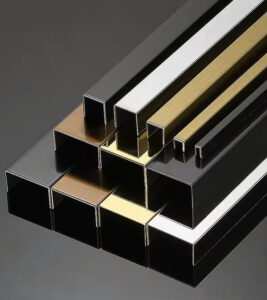
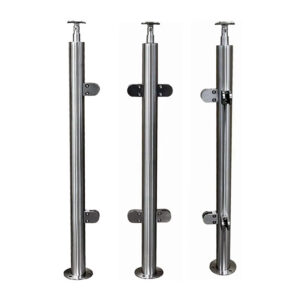
Specifying 304 stainless steel posts begins with a clear definition of dimensional and finish standards. The alloy’s cost-performance advantage over 316 is realized only when projects adhere to common manufacturing parameters. This includes standardizing on prevalent tubular sizes like 1-1/2″ and 2-1/2″ outer diameters, which leverage existing tooling and inventory to control costs. Wall thickness selection, typically from 16 gauge for standard duty to 12 gauge for structural flanges, directly correlates with load requirements and material expense.
Strategic Finish Application
A critical, often overlooked cost-control measure is the selective application of finishes. A uniform satin (brushed) finish is necessary for visible components to ensure a consistent, professional aesthetic. However, applying this finish to every part is wasteful. For concealed fittings—base plates, internal connectors, or mounting hardware—an unpolished mill finish is perfectly adequate. This dual-specification strategy requires clear drawings and procurement notes but can yield significant savings without impacting the final installed quality. In my experience, projects that fail to document this distinction often pay a 15-20% premium on raw material costs for no visible benefit.
Standardization as a Cost Driver
The foundation of an economical specification is adherence to industry standards. Components that fall within the common ranges defined by standards like ASTM A554 for welded mechanical tubing are produced at higher volumes, leading to better pricing and shorter lead times. Deviating from these standards for aesthetic reasons forces fabrication into custom, low-volume production runs, which exponentially increases unit cost and introduces schedule risk. The goal is to design within the established palette of available products.
| Parameter | Standard Specification | Application / Note |
|---|---|---|
| Common Outer Diameters | 1-1/2″, 2-1/2″ | Tubular post sizes |
| Wall Thickness Range | 16 gauge (1.5mm) to 12 gauge (2.7mm) | Standard to structural duty |
| Standard Finish | Satin (brushed) | Visible components |
| Cost-Saving Finish | Unpolished mill finish | Concealed fittings |
Source: ASTM A554 Standard Specification for Welded Stainless Steel Mechanical Tubing. This standard governs the manufacturing and material requirements for welded stainless steel tubing, which is the typical form for structural posts, ensuring consistent dimensional and mechanical properties.
Material Properties and Mechanical Performance Limits
Understanding the Baseline
The mechanical foundation of 304 stainless is defined by its austenitic chromium-nickel composition, which provides a minimum yield strength of 30 ksi (205 MPa) and tensile strength of 75 ksi (515 MPa) as per ASTM A240/A240M. These values are the starting point for structural calculations but represent a material baseline, not a system guarantee. The actual performance in an application is governed by geometry, connection details, and the properties of joined materials.
The System Performance Paradigm
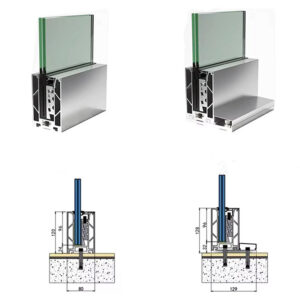
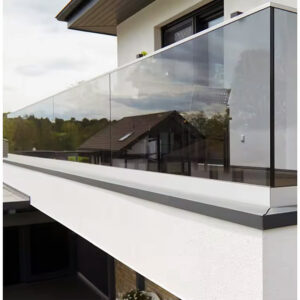
A critical mistake is assuming post material strength equates to system strength. In glass balustrade applications, a post’s validated load rating (e.g., 1-2 kN) is only valid when used with the manufacturer’s specified glass thickness, clamping systems, and anchors. The system’s capacity is dictated by its weakest link, which is often the connection to the substrate, not the post itself. Specifying a component outside its certified system voids performance warranties and compromises safety compliance.
The Full Lifecycle Value
The 100% recyclability of 304 stainless steel is often treated as an ESG footnote. However, it holds practical financial implications. The inherent scrap value of the material can partially offset end-of-life demolition and disposal costs. More importantly, its durability and corrosion resistance for interior use translate to near-zero maintenance over the asset’s lifecycle, reducing total cost of ownership beyond the initial installation.
| Property | Minimum Value | Key Context / Limit |
|---|---|---|
| Yield Strength | 30 ksi (205 MPa) | Baseline for structural calculations |
| Tensile Strength | 75 ksi (515 MPa) | Material performance baseline |
| System Load Rating | 1-2 kN (example) | Valid only with approved glass/connectors |
| Recyclability | 100% | End-of-life scrap value offset |
Source: ASTM A240/A240M Standard Specification for Chromium and Chromium-Nickel Stainless Steel Plate, Sheet, and Strip for Pressure Vessels and for General Applications. This fundamental material standard defines the chemical composition and minimum mechanical properties, including yield and tensile strength, for 304 stainless steel.
Dimensional Standards and Fabrication Constraints
Respecting Process Limits
Successful design is constrained by the hard limits of sheet metal and tube fabrication. For 304 stainless, fabrication services typically work with material thicknesses from 0.030″ (0.76mm) up to 0.250″ (6.35mm). Bend angles in standard air bending processes are constrained between 5 and 130 degrees. Requiring bends outside this range, or material at the extreme ends of the thickness spectrum, forces a shift from automated to manual or custom manufacturing, with corresponding cost and timeline impacts.
Designing for Manufacturability
Adherence to basic design rules is non-negotiable. This includes maintaining a minimum 2:1 base-to-flange ratio for U-channels to ensure formability and providing adequate clearance between cutouts and bend lines. Furthermore, designers must accept inherent cosmetic outcomes of bending: witness marks and minor bulging at bend radii are standard and should be accounted for in aesthetic specifications. Attempting to eliminate these features through post-processing is rarely cost-justified for interior structural elements.
The Digital Handoff
A pivotal moment in cost control is the digital file handoff. Providing production-ready CAD files with correctly defined bend lines, K-factors, and in standard formats (like .DXF or .STEP) is essential. These files act as a direct input for CNC machinery. Non-compliant or poorly constructed files require manual translation by the fabricator, a service that carries a premium and introduces risk of error. I’ve seen projects where the cost of correcting a CAD file exceeded the material cost of the part itself.
| Fabrication Parameter | Standard Range | Design Implication |
|---|---|---|
| Material Thickness | 0.030″ (0.76mm) to 0.250″ (6.35mm) | Sheet metal/tube fabrication limits |
| Bend Angle (Air Bending) | 5 to 130 degrees | Standard process constraint |
| Base-to-Flange Ratio (U-channel) | 2:1 minimum | Rule for manufacturability |
| Bend Outcome | Witness marks, minor bulging | Expected cosmetic compromise |
Source: Technical documentation and industry specifications.
Load Ratings and Structural Performance for Applications
Anchoring System Integrity
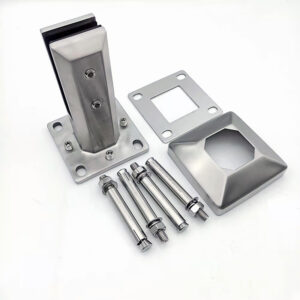
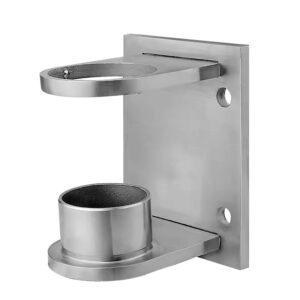
Theoretical post strength is meaningless without a robust connection to the building structure. The mounting interface is frequently the performance bottleneck. Flanges should be a minimum of 1/8″ (3mm) thick and designed for secure, multi-point anchoring into the substrate. The choice of anchor—wedge, sleeve, or chemical—must be appropriate for the base material (concrete, steel, wood). Overlooking this interface is a common source of field failure, regardless of the post’s certified rating.
The Rise of Integrated Systems
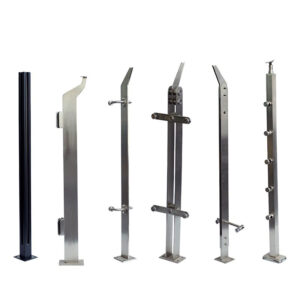
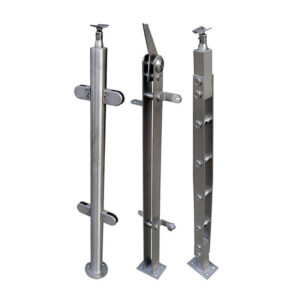
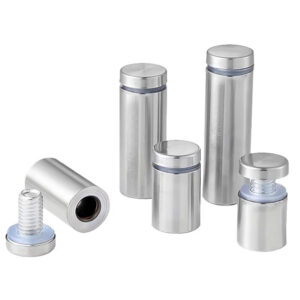
The industry trend is moving decisively toward proprietary, pre-engineered systems. Manufacturers develop and validate complete ecosystems of posts, rails, connectors, and glass panels. These systems often use simple, foolproof mechanical connections like jam nuts and set-screws. This design philosophy significantly reduces on-site labor costs by eliminating the need for skilled TIG welding and complex alignment. The trade-off is a loss of design flexibility and potential single-source dependency.
Validating Performance Claims
When evaluating any post system, demand the test reports. Performance must be validated for the exact configuration being specified: post size, glass type and thickness, spacer material, and clamping method. Generic load ratings are insufficient. The validation should reference relevant application standards, such as those found in JGJ 113-2015 for architectural glass, which defines load requirements for supporting structures in built environments.
| Application Consideration | Minimum Specification | Performance Driver |
|---|---|---|
| Mounting Flange Thickness | 1/8″ (3mm) minimum | Robust connection to substrate |
| Connection Type | Mechanical (jam nuts, set-screws) | Reduces skilled labor (TIG welding) |
| Performance Validation | Pre-engineered, certified systems | Guarantees compliance |
| Critical Factor | Weakest link (often substrate connection) | Governs overall system capacity |
Source: JGJ 113-2015 Technical specification for application of architectural glass. This technical specification governs the application of architectural glass, defining the performance context and load requirements for supporting structures like stainless steel posts in balustrade systems.
Corrosion Resistance Limits in Interior Environments
Defining the Boundary Conditions
304 stainless steel offers “good” corrosion resistance, but this is a relative term with clear limits. Its performance is adequate for controlled indoor environments like offices, hotels, and residential interiors. However, its moderate resistance can be compromised in spaces with persistent, unventilated high humidity, chlorine vapor (indoor pools, spas), or acidic cleaning agents. In these aggressive interior environments, specifying 316 stainless steel is not an upgrade but a necessity to prevent staining and pitting.
The Risk of Specification Leakage
A significant liability stems from the accidental substitution of interior-grade 304 in semi-exterior applications. Its lower cost and wide availability create a temptation for use in covered walkways, parking garages, or building overhangs where salt spray, rain drift, or pollution can accumulate. Project specifications must contain explicit, unambiguous language prohibiting 304 SS in all exterior and semi-exterior locations. This should be coupled with material identification protocols (mill certificates, grade stamps) during delivery inspection.
Proactive Protection Strategies
For interiors at the upper limit of 304’s capability, design can mitigate risk. Ensuring adequate ventilation to prevent moisture accumulation, specifying appropriate cleaning protocols to avoid chloride-based agents, and designing details that avoid moisture traps at connections all extend the material’s effective service life. The goal is to keep the environment within the alloy’s designed performance envelope.
Design for Manufacturing (DFM) and Cost-Saving Tactics
The Power of Standardization
The most effective DFM tactic is ruthless standardization. This means selecting from the manufacturer’s or fabricator’s catalog of standard tube diameters, wall gauges, and bend radii. Custom diameters, unusual wall thicknesses, or special bend angles require new tooling, setup, and low-volume production runs, each adding cost and delay. The economic leverage of using pre-existing tooling cannot be overstated.
Intelligent Detail Design
Small design details have outsized impacts on cost and quality. Incorporating bend relief notches at the ends of a bend prevents tearing and cracking, improving part yield. Specifying realistic tolerances (±1/16″ instead of ±1/32″) can move a job from precision machining to standard fabrication. Simplifying assemblies to use bolted connections instead of welds reduces skilled labor requirements and allows for easier field adjustments.
File Format as a Gatekeeper
As noted in fabrication constraints, the quality of the digital deliverable is a direct cost driver. Providing clean, layer-organized CAD files in the fabricator’s required format with accurate bend deductions is critical. This file is the instruction set for automated manufacturing. A flawed file triggers manual intervention, estimation of unknowns, and contingency pricing—all of which inflate the project cost before any metal is cut.
| DFM Tactic | Key Action | Primary Cost Impact |
|---|---|---|
| Feature Standardization | Use standard tube diameters, gauges | Leverages existing tooling/inventory |
| Bend Design | Include bend relief notches | Prevents tearing, improves yield |
| File Preparation | Provide CAD with correct bend lines/K-factors | Enables automated manufacturing |
| Connection Simplification | Mechanical fasteners over welding | Reduces production & installation expense |
Source: Technical documentation and industry specifications.
Selecting the Right Post: A Decision Framework for Designers
Establish Non-Negotiable Requirements
Begin the selection process by defining fixed parameters. First, conduct an environmental assessment to confirm 304’s corrosion resistance is suitable; if not, 316 is mandatory. Second, determine the structural performance required by code for the application (public vs. private occupancy, barrier height, load requirements). Third, identify any aesthetic mandates for finish and profile that are driven by the overall design intent.
Evaluate the Procurement Strategy
This is the central strategic decision: proprietary integrated system versus multi-vendor component assembly. An integrated system, like those offered by specialized suppliers of architectural railing components and posts, offers guaranteed compatibility, single-source responsibility, and simplified installation. The alternative—sourcing posts, glass, clamps, and anchors separately—offers maximum design flexibility and potential cost optimization but requires rigorous engineering coordination and assumes all performance liabilities.
Finalize for Fabrication and Installation
With a direction chosen, finalize the specification to ensure manufacturability and installability. Confirm all dimensions and details align with standard fabrication limits. Ensure production-ready digital files are part of the design deliverable package. Review the installation sequence and connection details to verify they align with the expected trade skills on site. This final review bridges the gap between design intent and practical, cost-effective realization.
The effectiveness of a 304 stainless steel post specification hinges on a disciplined approach that respects material limits, fabrication realities, and system-level performance. Prioritize decisions that lock in performance—validating environmental suitability, demanding certified load ratings for the full assembly, and explicitly prohibiting material substitution. Then, drive efficiency through strategic simplification: standardizing components, applying finishes selectively, and providing flawless manufacturing data.
Need professional guidance to navigate these specifications and source reliably manufactured components? The technical team at Esang can provide detailed material certifications and system performance data to inform your project decisions. For specific inquiries on integrating these components into your design, you can also Contact Us.
Frequently Asked Questions
Q: How do you determine if 304 stainless steel is suitable for an interior post application, or if an upgrade to 316 is needed?
A: Validate the interior environment’s exposure to persistent high humidity, chlorine, or salt air infiltration, as these conditions exceed 304’s corrosion resistance limits. The alloy’s moderate performance is cost-effective for standard, dry interiors but fails in aggressive settings like indoor pools. This means facilities with these specific environmental risks should prioritize specifying 316 stainless steel from the outset to prevent premature corrosion and safety liabilities.
Q: What are the key fabrication constraints to consider when designing 304 stainless steel posts to control costs?
A: Design must respect standard air bending limits of 5 to 130 degrees and common material thicknesses from 0.030″ to 0.250″. Exceeding these parameters, like requiring acute bends over 130°, forces a shift to expensive custom manufacturing. For projects where budget is a primary constraint, you must adhere to these digital fabrication rules and provide production-ready CAD files to access automated, economical production.
Q: How should we evaluate load ratings when specifying posts for a glass balustrade system?
A: Never rely solely on the base material strength; you must use the post system’s certified load ratings validated with specific glass thicknesses and connectors. A system’s capacity is defined by its weakest link, often the substrate connection, not the theoretical strength of the 304 alloy. If your project requires compliance for public spaces, plan to specify a pre-engineered, tested system rather than sourcing individual components.
Q: What cost-saving tactics are most effective for 304 stainless steel post specifications?
A: The primary tactic is to avoid custom features by specifying standard tube diameters, gauges, and bend radii to leverage existing tooling. Apply a selective finish strategy, using a satin finish only for visible areas and a mill finish for concealed fittings. For projects aiming to maximize value, this disciplined adherence to standard parameters and simplified mechanical connections over welding will significantly reduce both production and installation expenses.
Q: What is the risk of using interior-grade 304 stainless steel in semi-protected exterior locations?
A: The risk is high and involves premature corrosion failure, as 304 lacks the necessary resistance for exterior exposure to moisture and contaminants. Its lower cost and wide availability create a temptation for accidental substitution in areas like covered walkways. This means project documentation must explicitly prohibit 304 for all exterior uses and mandate clear material identification to mitigate this safety and liability risk.
Q: How does the procurement strategy for integrated post systems versus individual components impact a project?
A: Procuring a proprietary, integrated system guarantees component compatibility and simplifies installation, reducing skilled labor costs. Sourcing individual components offers more design flexibility and potential cost optimization but requires you to validate all connections and performance. For projects where installation speed and guaranteed compliance are critical, you should expect to evaluate the total cost trade-off of a single-source system.
Q: What material standards are relevant for specifying 304 stainless steel sheet or tubing for structural posts?
A: Key standards include ASTM A240/A240M for chemical composition and mechanical properties of plate and sheet, and ASTM A554 for welded mechanical tubing commonly used for structural posts. These standards define the baseline material performance for calculations. This means your specifications should reference these standards to ensure the raw material meets the required performance benchmarks for your application.