Specifying an infill type before resolving height, occupancy, and orientation requirements is one of the most reliable ways to reach permit review with a design that needs to be reworked. Wire infill attracts early commitment because the aesthetic case is immediate — it reads light, open, and architecturally clean — but the compliance and liability questions arrive later, when reversing the decision carries real cost. The gap between what wire delivers visually and what it delivers operationally is where most specification mistakes live. Understanding exactly where wire earns its place, and where glass or vertical bar infill should have been specified instead, is the judgment this comparison is designed to support.
Alternatives buyers should compare against wire infill
Wire infill does not compete in a single category — the alternatives a buyer should consider shift depending on project height, occupancy type, and what the system needs to do beyond hold a handrail. Treating it as a generic cable railing decision, rather than a product choice shaped by specific conditions, is what leads to late-stage infill substitutions.
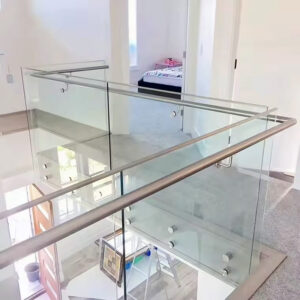
Glass balustrades enter the comparison most directly at elevated balconies where climbing behavior is a realistic concern. The structural transparency glass offers is visually similar to wire, but the climbing risk profile is substantially different — a smooth glass panel gives no foothold, whereas wire spacing, even at tighter configurations, retains enough grip potential to create a defensibility problem on high-level installations. For projects where the view preservation rationale is strong but the drop height is significant, glass is worth treating as the primary candidate rather than a variant of the same decision.
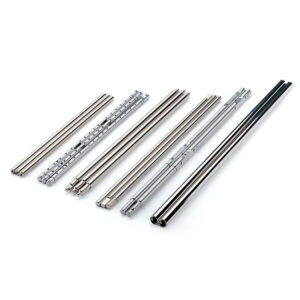
Vertical bar balustrades occupy a different position. They serve applications where horizontal elements cannot be used safely — primarily child-safety contexts and elevated installations — while still allowing air movement and partial sightlines. They do not match wire for visual lightness, but they address the climbing risk in a way that standard wire spacing does not. Rod infill systems, by contrast, are less a safety trade-off and more an aesthetic and durability distinction: within the same railing system category as cable infill, rod configurations like branded Onyx or Endurance variants offer a different finish quality and structural feel without significantly changing the safety profile. That distinction matters for buyers who want a premium finish but are comparing rod and cable as peer options rather than as safety alternatives.
| Alternative Infill | Aplicación típica | Key Advantage Over Wire |
|---|---|---|
| Glass Balustrade | High-level installations | Reduces climbing risk; recommended for elevated balconies |
| Vertical Bar Balustrade | High-level or child-safety applications | Provides a different safety profile; eliminates climbing risk that wire spacing still poses |
| Rod Infill System (e.g., Onyx, Endurance) | Higher-end projects within the same railing system | Offers a more premium aesthetic or different durability option compared to standard cable infill |
The practical implication of this comparison is that the decision tree branches by project condition before it reaches product preference. Height and occupancy type should drive the initial filter; aesthetic preference should follow, not lead.
Safety and privacy expectations wire does not automatically meet
Wire infill is consistently selected for its minimal visual presence, but that selection often carries an implicit assumption that the system will also satisfy safety expectations without further configuration review. That assumption is unreliable, and the points where it fails are specific enough to plan around.
At standard wire spacings of 80–100 mm, the configuration still presents a climbable surface for children. Wider spacing increases that risk; even tighter configurations do not eliminate it with the certainty that glass or vertical cable provides. For projects serving residential buildings with child occupancy — family homes, childcare-adjacent spaces, apartment balconies where children are a foreseeable user group — wire infill at conventional spacing should not be treated as automatically satisfying child-safety expectations. Vertical cable or glass infill addresses this more defensibly.
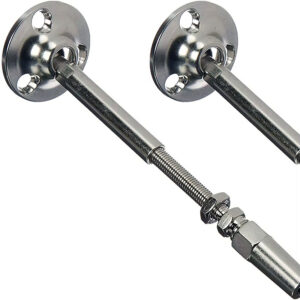
Orientation rules compound the issue. Under the Australian National Construction Code, horizontal wire orientation is only acceptable for deck drop-offs between one and four metres. Once the drop exceeds four metres, vertical wire orientation becomes mandatory. This is not a minor installation detail — it changes the entire visual character of the system and affects how the posts, tensioners, and connection points are specified. A project designed around the horizontal cable aesthetic for a higher balcony will need to be respecified, not just adjusted. Pool areas impose a further set of requirements: vertical wire orientation, a top rail height of 1.2 m measured from the outside, and boundary fence heights of at least 1.8 m. These figures are jurisdiction-specific references drawn from Australian code and pool safety regulations, not universal minimums, but they illustrate how much the required configuration can diverge from a default wire infill assumption.
| Safety Concern | Measurable Requirement / Threshold | What It Means for Wire Infill |
|---|---|---|
| Child climbing risk | Standard wire spacing 80–100 mm still poses a climbing hazard | Vertical cable or glass infill should be used in child-safety applications; standard wire does not automatically meet safety expectations |
| High drop-off orientation (Australia NCC) | Vertical wire orientation mandatory when deck drop-off exceeds 4 m; horizontal wire only for 1–4 m drops | Wire orientation must change with fall height; using horizontal wire on a high deck creates a non‑compliant installation |
| Pool area safety regulations | Vertical wire orientation required; top rail height 1.2 m from outside; boundary fence minimum 1.8 m | Wire infill must be installed vertically with specific rail heights to comply with pool safety codes |
Privacy is a separate gap. Wire infill by design offers no meaningful visual screening, and in settings where occupants expect some degree of privacy — ground-floor units with close neighbor proximity, terraces overlooking shared spaces — the aesthetic openness that makes wire attractive to architects often conflicts directly with the expectations of the people who will live or work behind it. That mismatch rarely surfaces during design review and reliably surfaces after handover.
Open-view benefits versus ongoing upkeep visibility
The non-reflective surface of stainless steel cable is one of the few infill characteristics that genuinely delivers on its visual promise without qualification. Minimal visual interruption is not just a marketing claim for wire — it holds up in practice in a way that, for example, glass does not when panels attract smears, calcium deposits, or bird strike marks. In view-critical installations, wire performs with a consistency that glass requires active maintenance to match.
The reversal is in how visible wire’s own maintenance demands become. A clean wire run reads almost as a material line in the composition. A wire run with surface oxidation, salt deposit, or accumulated grime in coastal conditions reads immediately as a maintenance problem, and the fine gauge of the cable means small-scale degradation becomes legible at distance in a way that it would not on a solid panel or a bar infill. The practical cleaning commitment for stainless steel wire infill is one to three times per year using mild soap and water under normal conditions, with that frequency increasing in coastal or humid environments. That figure should be treated as a planning criterion for ongoing ownership cost rather than a fixed schedule — the environment drives the actual demand, and a coastal installation that is cleaned on an inland schedule will show it.
Material grade selection directly affects how well wire holds its appearance over time. AISI 316 stainless steel is the practitioner-recommended grade for outdoor and coastal installations because of its superior chloride corrosion resistance. AISI 304 is appropriate for indoor use. This is not a regulatory requirement but a material specification judgment that affects service life and the maintenance burden over time — specifying 304 in a salt-air environment means accelerating the degradation cycle that makes maintenance visible. For any barandilla de balcón de alambre specification in a coastal or high-humidity context, confirming the steel grade before procurement is a straightforward step that prevents a costly correction later.
The underlying trade-off is honest: wire preserves the view better than most solid alternatives, but it requires a more active maintenance relationship to stay that way. Buyers who select wire primarily for its low visual presence should factor in whether the ownership model supports the upkeep that keeps it looking that way.
Architectural intent versus operator concerns
Wire railing is chosen by architects for reasons that are coherent on their own terms — minimal visual interruption, a marine-inspired material quality, and a composition that keeps the structural frame recessive. The problem is not that those priorities are wrong; it is that they are resolved at the design stage by people who will not be responsible for the system once it is in service. The operator inherits the liability consequences of decisions that were made on aesthetic grounds.
The climbing risk at high-level installations is the clearest version of this tension. Wire is not recommended for elevated balconies precisely because the infill geometry that creates the minimalist visual effect also creates a usable foothold. An architect specifying wire for a third-floor balcony may be working within the horizontal cable aesthetic they specified successfully at ground level, without recalibrating for the liability exposure that height introduces. That misalignment typically surfaces during permit review or, worse, after handover when the operator identifies the risk and faces a retrofit decision on an installed system.
Structural compliance is the other operator checkpoint that design-stage decisions sometimes defer. Wire railing posts should be tested for loads in the range of 0.5–1.0 kN/m and carry CE marking per EN 1090-1 where that framework applies. These figures are a testing-framework reference for structural verification rather than a universally governing standard across all jurisdictions, but they identify the review check operators should confirm before accepting a specified system: that the supplied posts have been tested to the required load range and that the marking is in place. A system with the right cable aesthetic but untested post performance creates a gap that the operator will have to answer for if the installation is ever reviewed.
| Aspecto | Architectural Preference | Operator / Liability Concern | Qué confirmar |
|---|---|---|---|
| Climbing risk | Minimalist, marine-inspired look with uninterrupted sightlines | Wire is not recommended for high‑level installations due to climbing hazards; liability risk is high | Verify project height and usage; if elevated, consider glass or vertical bar infill instead |
| Structural compliance | Sleek post design that keeps the focus on the view | Posts must resist loads of 0.5–1.0 kN/m and carry CE marking per EN 1090-1 | Confirm that supplied wire railing posts have been tested to the required load range and are CE marked |
The practical resolution is a handover review step where operator concerns about height, usage type, and post compliance are confirmed against the design specification before the system is ordered. That step costs almost nothing at specification stage and substantially more once the material is on site.
Project priorities that make wire the better infill
Wire infill earns its place most clearly when the project conditions align with what it actually delivers rather than what buyers hope it will cover. Ground-level decks, garden borders, patios, and interior staircases are the settings where the trade-offs resolve in wire’s favor — climbing risk is low, views matter, and the open, lightweight character of the infill suits the scale and occupancy without creating compliance or liability complications.
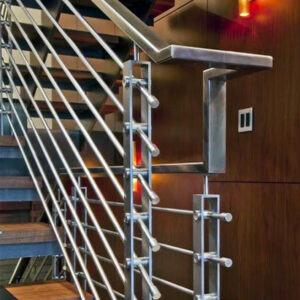
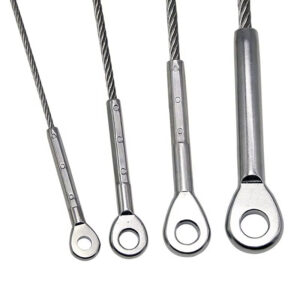
Configuration flexibility is a practical advantage in these settings. Paneles de relleno de malla metálica and cable systems can typically be specified with three to eight cables, adjusted to heights between 800 and 1,100 mm, and combined with stainless steel or timber handrails depending on the project’s material palette. That range of configuration options means wire can adapt to the specific geometry and aesthetic of a low-risk project without requiring bespoke fabrication. The fact that installation does not require welding and that components arrive pre-packaged for assembly also reduces contractor time on site — a meaningful factor when a project’s schedule or budget does not accommodate a more complex infill installation.
Cost is a directional input rather than a fixed benchmark, but the range of approximately $89 to $260 per linear foot in US markets gives buyers a realistic comparison point against glass and vertical bar alternatives, both of which generally carry higher installed costs. That figure is project-specific and influenced by configuration, grade, and supplier, but it establishes wire as a cost-competitive option in settings where its limitations are not a concern. The comparison becomes less favorable when the project requires a glass or vertical bar alternative for safety or compliance reasons — at that point, the cost differential narrows against a system that also removes the liability exposure wire cannot fully address.
The projects where wire consistently outperforms other infills are those where the buyer has already confirmed low drop heights, adult or mixed-but-supervised occupancy, and an ownership model that supports a moderate cleaning schedule. When those conditions are met, wire delivers the open, view-preserving aesthetic it promises with a configuration flexibility that solid infills cannot match at the same price point.
The decision wire infill ultimately asks buyers to make is whether the project conditions genuinely support it or whether its visual qualities are being allowed to override a safety or compliance factor that will need to be addressed later. That judgment depends on confirming drop height and orientation requirements before committing to horizontal cable, validating post load testing and marking before procurement, and understanding that wire’s low visual profile requires active maintenance to remain so — particularly in coastal environments where the cleaning cycle compresses.
Before finalizing a wire specification, the most useful pre-procurement step is to run the project against the three conditions where wire consistently earns its place: low drop height, low climbing risk, and an ownership model that supports routine upkeep. If any of those conditions is uncertain, the alternative infill options — glass for elevated, view-priority installations; vertical bar for child-safety applications — are worth pricing before the specification is locked.
Preguntas frecuentes
Q: Does wire infill remain a viable option if the project is a multi-unit residential building with balconies above four metres?
A: No — at that height, horizontal wire orientation is no longer acceptable under the Australian NCC, and the climbing risk profile that makes wire suitable at ground level becomes a liability exposure that the system cannot resolve through configuration alone. Glass infill is the more defensible choice at significant drop heights where view preservation is still a priority, and vertical bar infill covers the cases where glass falls outside the budget. The wire aesthetic that drove the original specification does not transfer cleanly once orientation rules mandate vertical cable, because the visual character of the system changes substantially.
Q: After confirming that a project meets the low-drop, low-risk conditions the article describes, what should happen before procurement is finalized?
A: The immediate next step is to verify that the posts being supplied have been tested to the required load range — 0.5–1.0 kN/m — and carry the appropriate compliance marking for the jurisdiction. Confirming steel grade follows directly from that: AISI 316 for any outdoor or coastal installation, AISI 304 only for indoor use. Both checks are straightforward at specification stage and expensive to correct once material is on site.
Q: Does wire infill perform differently in a commercial setting — such as a restaurant terrace or hotel balcony — compared with a private residential deck?
A: Yes, and the difference is largely an operator liability question rather than a structural one. Private residential settings generally have predictable occupancy and owners who accept maintenance responsibility. Commercial settings introduce variable user behavior, higher foot traffic, and an operator who carries liability if the infill presents a climbing opportunity or fails to hold its appearance under heavier use. The cleaning frequency that is manageable for a homeowner becomes a service contract line item for a commercial operator, and any climbing risk that an architect absorbed as acceptable at design stage becomes an insurance and duty-of-care issue once the building is in operation. Wire is not automatically excluded from commercial use, but the operator’s risk tolerance and maintenance model should be confirmed before the specification is locked.
Q: How does wire infill compare with rod infill systems on a project where safety is not the primary concern but finish quality and longevity are?
A: Rod infill is the stronger choice when finish quality and perceived durability are the deciding criteria and safety profiles are comparable. Rod configurations such as Onyx or Endurance variants sit within the same railing system category as cable infill but offer a more substantial structural feel and a different surface finish that tends to hold its appearance more consistently over time without the fine-gauge degradation visibility that cable develops in demanding environments. The cost premium over standard cable infill is real, but if the project brief prioritizes a premium result and the buyer is already operating within the cable-or-rod comparison rather than weighing wire against glass or bar, rod is worth pricing as the baseline rather than the upgrade.
Q: Is wire infill worth specifying when the budget is at the lower end of the cable railing cost range but the project is in a coastal environment?
A: Not without factoring in the ownership cost that coastal conditions add. The $89–$260 per linear foot range reflects procurement and installation, not the compressed cleaning cycle and accelerated corrosion risk that salt air introduces when the wrong steel grade is specified or when maintenance intervals stretch. A coastal installation that is correctly specified in AISI 316 and cleaned more frequently than the standard one-to-three-times-per-year schedule can hold its appearance, but that ongoing commitment narrows the cost advantage over glass or solid panel alternatives that are less sensitive to environment. Budget decisions for coastal wire infill should include a realistic maintenance cost estimate alongside the installed price — if that combined figure makes wire less competitive, glass or a denser infill may deliver better long-term value even at a higher upfront cost.