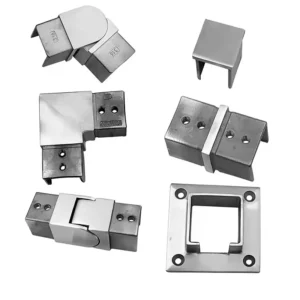
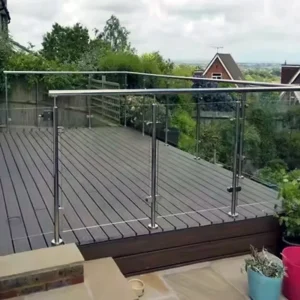
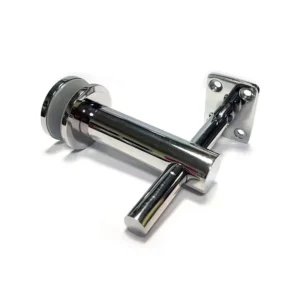
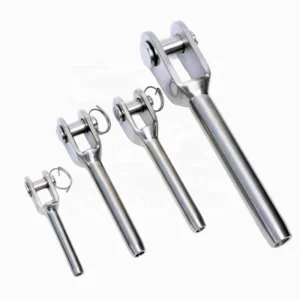
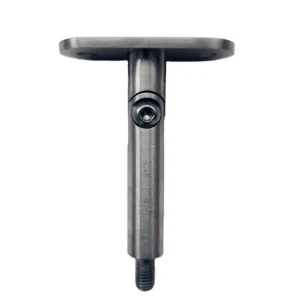
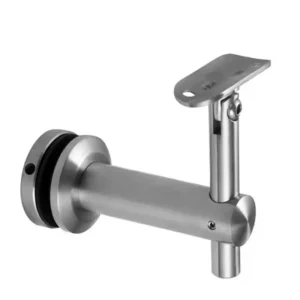
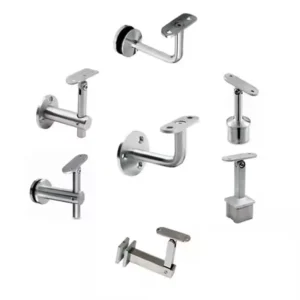
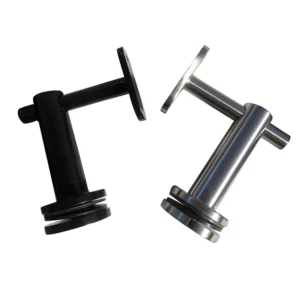
"Heavy duty" is a purchasing description, not a load rating. A larger plate or thicker-looking receiver may still be unsuitable if the post connection, anchors or supporting substrate govern the design. For a useful quotation, send the post profile, design actions or the engineer’s connection criteria, base material, available edge distances, exposure and quantity. ESANG can then describe a proposed plate configuration for project review.
Ask about heavy-duty base plates on WhatsApp
Translate "heavy duty" into a connection schedule
Different projects use the term for different reasons: a higher post moment, impact or crowd loading, a taller guard, larger post spacing, wind exposure, equipment vibration, a harsh environment, or simply a robust architectural appearance. State the governing condition. Without it, two suppliers can offer visibly substantial plates that cannot be compared.
- Actions at the post base: provide factored or service-level shear, tension, compression and moment as identified by the project engineer, including the load combinations or design basis.
- Post-to-plate transfer: define the post profile, wall thickness and whether the connection is welded, threaded, sleeved or mechanically fastened.
- Plate response: freeze plate length, width, thickness, receiver geometry, hole positions and any stiffening rather than relying on a family name.
- Anchor and substrate: identify the structural concrete, steel or timber support, plus thickness, strength information, edge distances, reinforcement constraints and access.

Receiver form changes how the post is connected
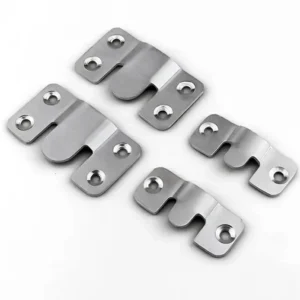
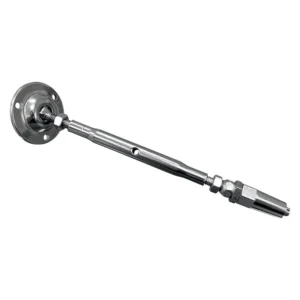
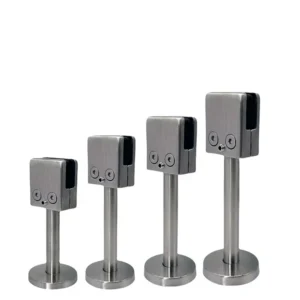
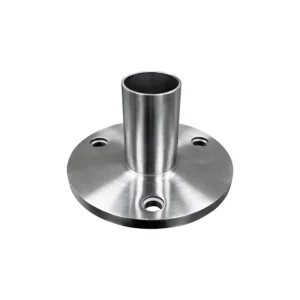
The public media for this product includes flat recessed plates, stepped plates and plates with a raised internally threaded receiver. These are different interfaces, not merely different finishes. A threaded receiver requires the mating thread, engagement, locking method and installation access to be defined. A recessed opening may be intended for another component, but its role cannot be inferred from the photograph. A stepped plate can change bearing and cover fit, yet the steps do not establish structural performance.

Anchors do not inherit a plate rating
Anchor capacity depends on the selected anchor system and installation conditions, including base material, concrete condition where relevant, embedment, hole cleaning, spacing, edge distance, member thickness and combined tension and shear. Plate stiffness and post leverage affect the forces delivered to individual anchors. A generic bolt count or a copied embedment dimension is not a safe substitute for a connection design.
The project engineer approves the complete load path and checks the supporting member. The installer verifies actual site conditions, reinforcement and services before drilling, uses the approved anchor and setting procedure, applies specified torque where required, and records any deviation. If the plate crosses screed, tile, grout or a membrane, the detail must explain bearing, stand-off and waterproofing rather than treating the finish layer as the structure.
Exposure and appearance still need a material decision
Indoor, outdoor, coastal, pool, chemical-cleaning and industrial environments create different corrosion and maintenance demands. Ask the quotation to identify the proposed plate, receiver, weld, fastener and cover materials, plus the finish and any requested material traceability. A polished appearance does not prove an alloy grade, and a stainless plate does not prevent galvanic or crevice-corrosion problems elsewhere in the assembly.
Compare the evidence, not the label
For each alternative, request the same deliverables:
- dimensioned plate and receiver drawing with revision;
- post connection, mating thread or weld detail;
- hole pattern and the anchor system proposed or expressly excluded;
- material, finish and requested certificates or inspection records;
- the calculation, test report or project-specific engineering basis required by the project, if any;
- included cover, fasteners and assembly work;
- quantity, packing split and any installation sample requirement.
If the project does not yet have final loads, share the layout, post height and spacing, infill type, use, location and substrate so the missing engineering inputs can be identified. Do not freeze a base plate from appearance alone.