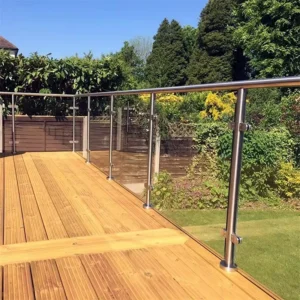
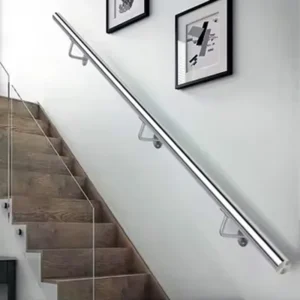
A guard top rail and a handrail look identical when they occupy the same height on a stair or landing, but the question of whether one member can satisfy both roles is a project-specific determination, not a visual one. A fabricator or specifier who assumes a single rail can serve double duty without checking the governing scope, the geometry, and the connection details risks approving an assembly that satisfies one function while leaving the other unverified.
The Two Functions a Shared Top Rail Must Perform
| Function under review | Purpose to preserve | Details that inform the review | Approval boundary |
|---|---|---|---|
| Охранник | Fall protection | Guard geometry and connection details | Satisfying handrail checks does not establish that the guard function is adequate. |
| Поручни | User support | Position, continuity, gripping surface, clearance, and connection details | Satisfying guard geometry does not establish that the handrail function is adequate. |
A guard and a handrail exist to do different work, even when a single horizontal member carries both. The guard’s purpose is fall protection: it resists a lateral or downward load applied by a person or object against the open side of a stair, landing, or elevated walking surface. The handrail’s purpose is user support: it gives a person descending or ascending a stair, or moving along a ramp, something to grip continuously for balance and control. These are not degrees of the same requirement; they are separate functions with separate review criteria.
Where a project proposes using the top rail of a guard as the handrail, the reviewer has to evaluate each function on its own terms rather than treating one as a proxy for the other. A rail that sits at a height and alignment suitable for gripping does not thereby demonstrate that its posts, connections, and overall geometry resist the loads a guard must resist. Conversely, a guard assembly that meets fall-protection geometry does not establish that its top member is positioned, continuous, or shaped in a way that supports a hand through the full length of travel.
This separation matters because the two functions can fail independently. A rail can be perfectly adequate as a guard and inadequate as a handrail if its profile is too wide to grip, if it is interrupted at posts or transitions, or if it terminates without the extensions a stair user needs at the top and bottom. The reverse also holds: a rail shaped and positioned correctly for gripping can be undersized, under-connected, or poorly anchored as a guard element if the posts or fasteners were sized only for handrail-type loading rather than guard loading.
Because of this, any proposal to use a shared top rail has to be reviewed as two separate approvals that happen to share one physical component. Confirming that the member works as a handrail says nothing about whether it works as a guard, and the reverse is equally true. A buyer or specifier evaluating a railing-system submittal should ask whether the documentation addresses both functions explicitly, or whether it only demonstrates one and assumes the other.
Workplace, Building, and Accessible-Route Scope Differences
| Project context | Authority lens | Supported review focus | Applicability limit |
|---|---|---|---|
| U.S. occupational workplace | OSHA 1910.29 | Workplace guardrail and stair-rail configurations | Occupational workplace criteria should not be applied to every building project. |
| Building application | ASTM E985-24 | Permanent metal guardrails, stair rails, ramp rails, and handrails | The standard excludes workplace occupancies governed by occupational-safety requirements and does not settle field-specific design. |
| Covered U.S. accessible stairway | Access Board Guide, Chapter 5 | Handrail continuity, gripping surface, clearance, and extensions | Confirm project coverage and the currently adopted code before applying the guidance. |
The same physical stair or landing can fall under different governing criteria depending on what kind of project it is part of, and the criteria that apply change what “adequate” means for a shared top rail. A workplace stair that occupational safety requirements govern is not evaluated the same way as a stair in a building application governed by general building-code and permanent-railing requirements, and a stairway that is part of a covered accessible route carries its own continuity, gripping-surface, clearance, and extension provisions on top of whatever guard or structural criteria apply.
OSHA 1910.29 addresses workplace guardrail and stair-rail configurations, but this scope is specific to U.S. occupational workplace settings; its criteria should not be carried over to a building project that falls outside that occupational context. ASTM E985-24 covers permanent metal guardrails, stair rails, ramp rails, and handrails in building applications, but this standard excludes workplace occupancies that occupational-safety requirements already govern, and it does not resolve field-specific design questions on its own. Where a project involves a covered accessible stairway, the Access Board Guide’s Chapter 5 addresses handrail continuity, gripping-surface, clearance, and extension provisions, but this guidance sits within U.S. accessibility scope and covered-facility context, so the project team has to confirm that the stairway in question is actually covered and that the guidance reflects the currently adopted code.
The practical consequence is that a buyer cannot assume one authority answers every question about a shared top rail. A stair that is simultaneously a workplace element, part of a building’s permanent railing system, and part of an accessible route may need its dual-use proposal checked against more than one set of criteria, and those criteria do not always align on continuity, height, or clearance expectations. Where the applicable scopes conflict, the project team needs a resolution from whoever has authority over that specific project rather than defaulting to whichever standard is easiest to locate. Identifying which scope governs a given stair, landing, or ramp is therefore a prerequisite to evaluating dual use, not a formality to confirm afterward.
Gripping Surface, Continuity, and Clearance Checks
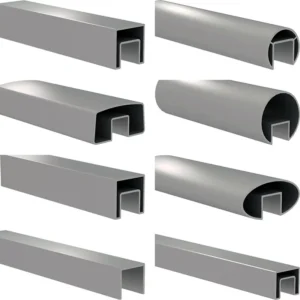
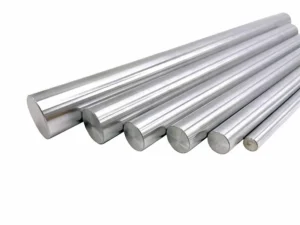
Once the governing scope is identified, the handrail function itself depends on several interacting details, and a shared top rail has to satisfy all of them together rather than any one in isolation. Position sets whether the rail sits at a height and alignment a hand can reach comfortably through the full run of a stair or ramp. Continuity addresses whether the gripping surface is unbroken from the start of travel to the end, or whether posts, corner transitions, or structural connections interrupt the line a hand would otherwise follow. Gripping surface concerns the profile itself: whether its shape, dimension, and clearance from any adjacent surface allow a hand to close around it securely rather than merely resting against a flat or oversized member. Clearance addresses the space between the rail and any wall, guard infill, or obstruction, which determines whether a hand can wrap the rail without striking something else.
These checks are connected rather than independent because a rail that passes one check can still fail the handrail function overall if it fails another. A continuous rail at the right height is still inadequate if its clearance from an adjacent surface prevents a hand from gripping it, and a rail with correct clearance and profile is still inadequate if it is interrupted at every post. Where a guard’s structural posts are spaced to resist lateral load, that spacing was set for the guard function; it does not automatically produce the continuity a handrail needs, and the reviewer has to check whether the posts or their connections create gaps in the gripping line.
Extensions beyond the top and bottom of a stair run are part of this same continuity question: a rail that performs well along the run but stops exactly at the first and last nosing may leave a user without support exactly where footing is least certain. Whether extensions are required, and how they must return or terminate, is set by whichever governing scope applies to the project, which is why identifying that scope has to happen before this geometry is checked, not after.
A shared top rail cannot be approved as a handrail by confirming any single one of these details. The reviewer has to work through position, continuity, gripping surface, and clearance as one connected assessment, because a deficiency in any one of them changes the outcome regardless of how well the others perform.
Guard Geometry and Handrail Support Interface Review
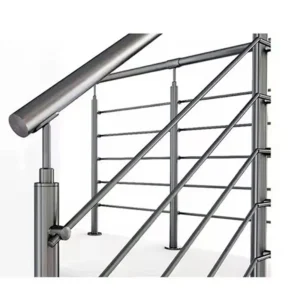
The guard side of a shared top rail depends on a different set of considerations, centered on geometry and connections rather than gripping and continuity. A guard’s effectiveness as fall protection depends on its overall height, the configuration of infill or intermediate members below the top rail, and the strength and detailing of the connections between the top rail, the posts, and the structure the posts anchor to. These are structural and configuration questions, separate from whether the same top rail happens to sit at a height a hand can reach.
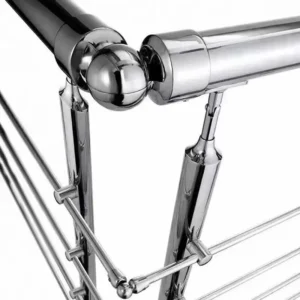
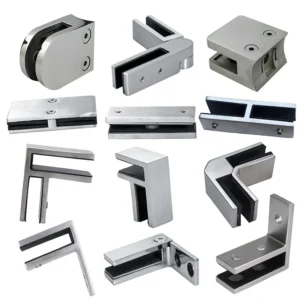
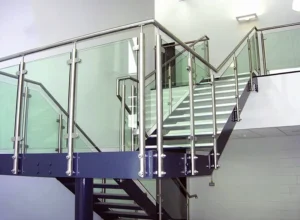
Where a single member is asked to serve as both guard top rail and handrail, the connection detailing at the interface between the rail and its supporting posts becomes a point where both functions converge and where both can be compromised simultaneously. A connection designed primarily to transfer guard loading into the posts may not have been detailed with the handrail’s continuous-grip requirement in mind, and a post spacing or bracket configuration chosen for guard strength can create exactly the kind of interruption that defeats handrail continuity. This is why the guard geometry review and the handrail support review are not simply two checklists run side by side; the physical interface between the rail and its supports is often the detail that determines whether either function, or both, actually works as installed.
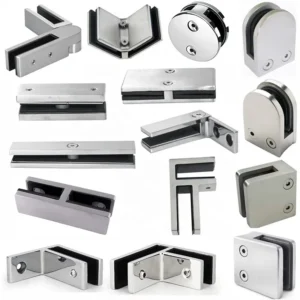
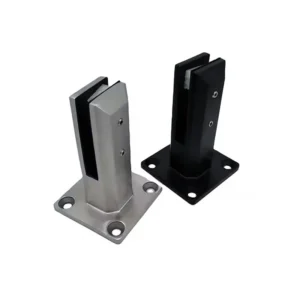
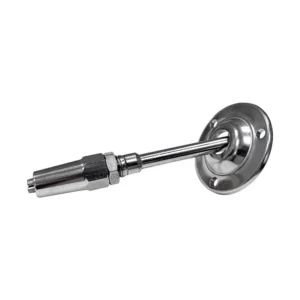
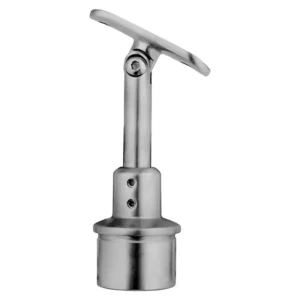
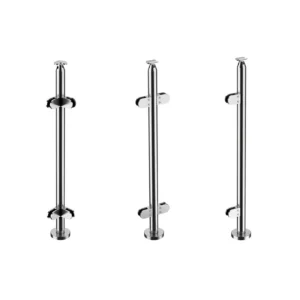
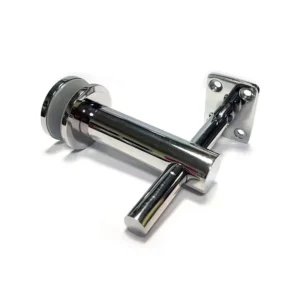
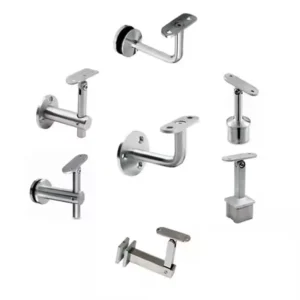
Where the guard function is reviewed on its own, the relevant questions concern whether the rail height and infill configuration resist the loads and openings the guard is meant to control, and whether the posts and their base connections are detailed to carry that load into the structure. None of this depends on whether the same rail is also serving as a handrail. The post-mount hardware and bracket interface connecting a rail to its posts is a physical detail that has to be reviewed for its role in both functions, since the same bracket or connection point carries the guard’s structural task and defines part of the handrail’s continuity. A reviewer who checks only the guard’s structural adequacy, or only the handrail’s gripping geometry, without examining how the shared connection point performs for both, has not completed the dual-use review.
Project Evidence Needed Before Approving Dual Use
| Evidence to review | Decision it informs | Limit before approval |
|---|---|---|
| Project use case and applicable governing rule | Whether workplace, building, or accessibility criteria apply | Jurisdiction-specific or conflicting requirements need resolution by the project designer or code authority. |
| Drawings showing position, continuity, gripping surface, and clearance | Whether the top rail can perform the handrail support function | This review does not establish the guard’s fall-protection role. |
| Guard geometry and connection details | Whether the shared member and its interface preserve the guard function | Handrail suitability alone does not establish this function. |
| Project-specific resolution from the designer or code authority | How conflicting or jurisdiction-specific requirements are applied to the proposed dual use | The resolution is project-specific and does not create a general approval for every installation. |
| Installed-system evidence | Whether the proposed system, rather than a component category, supports the approval decision | A post-mounted component by itself does not establish installed-system compliance. |
Approving a shared top rail for dual use depends on assembling specific project evidence, not on a general impression that the rail looks adequate for both roles. The first piece of evidence is identifying the project’s use case and which governing rule actually applies, since workplace, building, and accessible-route criteria can differ and sometimes conflict on the same physical stair. Only after that scope is settled does it make sense to review drawings showing the rail’s position, continuity, gripping surface, and clearance, because this review establishes whether the handrail function is satisfied without saying anything about the guard function. A separate review of the guard geometry and its connection details is needed to establish whether the fall-protection role holds, and this review does not borrow conclusions from the handrail check or vice versa.
Where the applicable requirements conflict, or where the project sits across more than one jurisdiction’s criteria, the resolution has to come from the project designer or the code authority with jurisdiction over that specific project. That resolution is specific to the project in front of it; it does not create a standing approval that a different project with similar-looking conditions can rely on. A related article on OSHA guardrail and handrail criteria for stainless steel workplace railing systems addresses how these workplace-specific criteria apply to railing hardware, which is relevant where the governing scope is occupational rather than a general building or accessible-route context.
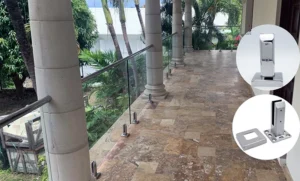
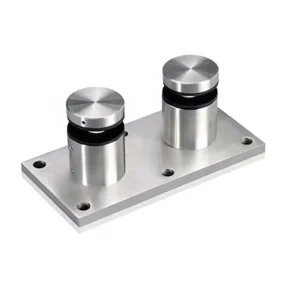
Finally, the evidence needed is installed-system evidence, not component-level evidence alone. A post-mounted handrail bracket or rail section, reviewed as a standalone component, does not establish that the assembled system as installed meets either the guard or handrail function once posts, spacing, connections, and field conditions are accounted for. When a project team submits its intended post spacing, rail configuration, and connection details for a round post или square post handrail bracket arrangement, that project-specific information is what allows a supplier’s configuration or quotation review to reflect the actual assembly rather than a generic listing. Where a project favors minimizing distinct hardware runs, a shared top rail reviewed and approved for both functions can reduce the number of separate members to install and maintain; where the governing scope or the geometry review shows the two functions cannot both be satisfied by one member, separating the guard and handrail into distinct components, coordinated through delivery and field installation, remains the available alternative.
Часто задаваемые вопросы
Вопрос: Can a guard top rail be specified as the handrail before the project scope is confirmed?
A: Keep the dual-purpose proposal provisional until the use context and applicable rules are identified. A workplace stair rail, building guard, and covered accessible stairway can require different review criteria, so record every relevant context before approving one shared member.
Вопрос: What should be included in a submittal for a proposed dual-purpose top rail?
A: Provide the project use case, the governing rule selected for each applicable context, and coordinated drawings showing the top rail’s position, continuity, gripping surface, clearance, guard geometry, and connections. Also identify any unresolved jurisdiction-specific issue so the project designer or code authority can decide it explicitly.
Вопрос: If the top rail has an acceptable gripping surface, what else can still prevent approval as a handrail?
A: The handrail review can still be incomplete if position, continuity, clearance, or connection details are missing or unsuitable for the project. Those checks also do not establish that the same member and its supports preserve the guard’s fall-protection function.
Вопрос: How should conflicting workplace, building, or accessibility criteria be handled?
A: Document the conflict against the actual occupancy and route, then obtain a project-specific resolution from the designer or code authority. Do not use one favorable criterion as a general approval when another applicable project rule points to a different requirement.
Вопрос: Does selecting a post-mounted handrail component establish that the installed system can serve both functions?
A: No. A post, bracket, or product category does not establish installed-system compliance; approval must be based on the proposed arrangement, its connections, and evidence that the complete system satisfies the separately reviewed guard and handrail functions.