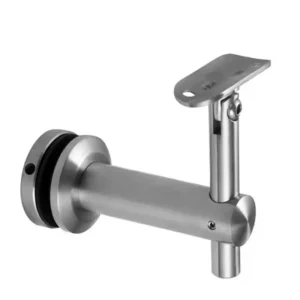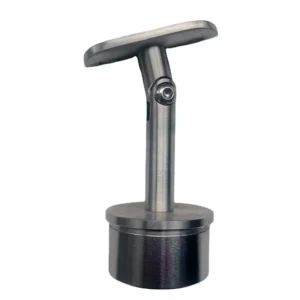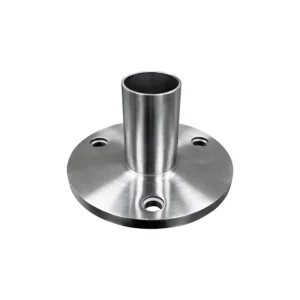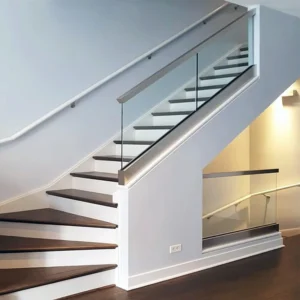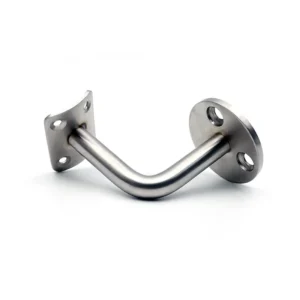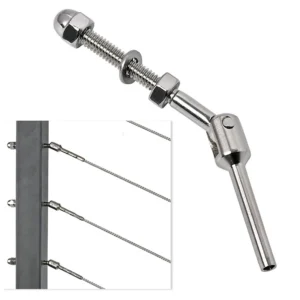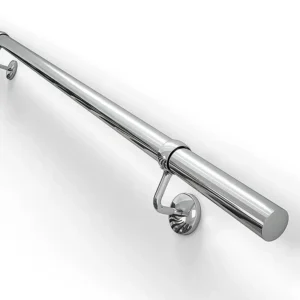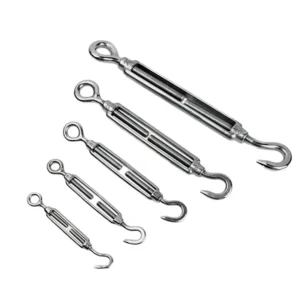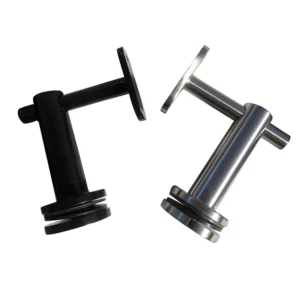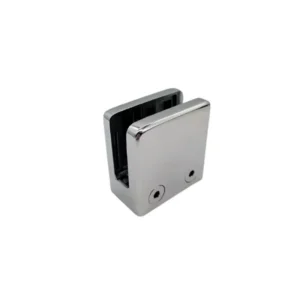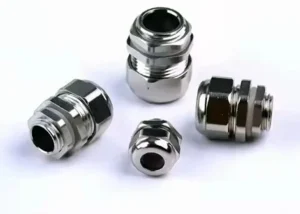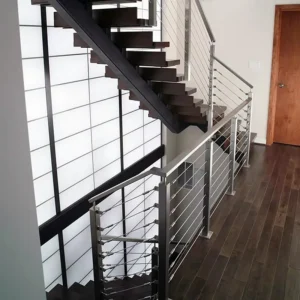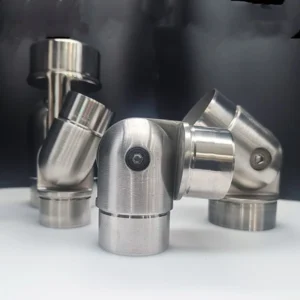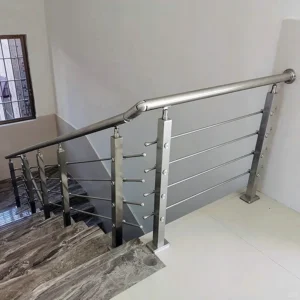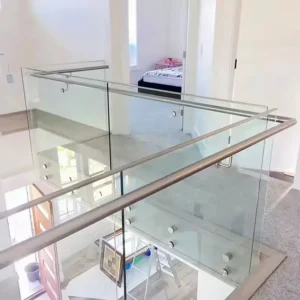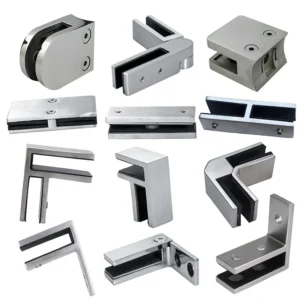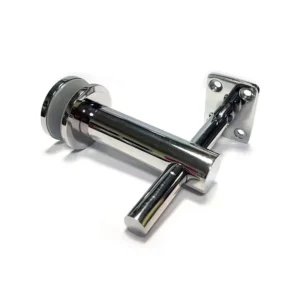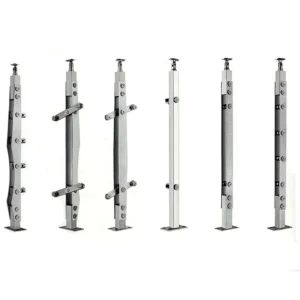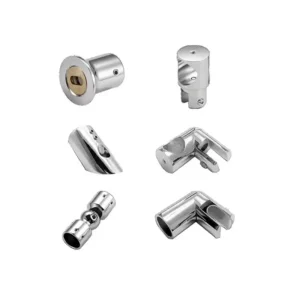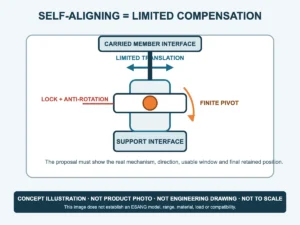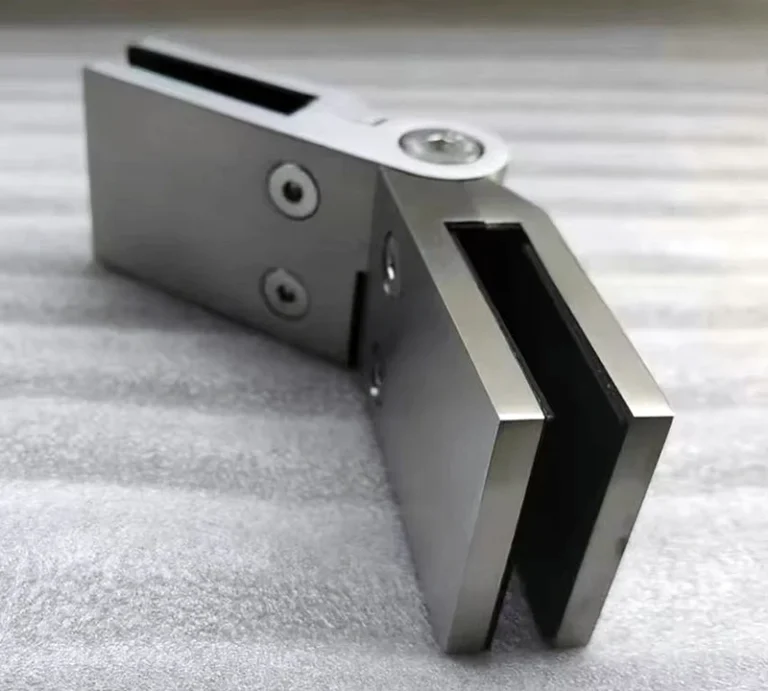
“Adjustable” must be translated into a specific movement, interface and locked condition. Send the intended joint, glass build-up, target geometry and support details. The proposed configuration can then state what adjusts, how it is fixed and what remains part of the wider system.
Discuss adjustable glass clamps on WhatsApp

Define what must adjust
Three different requests are often described as an adjustable clamp, but they solve different problems:
- Joint-angle setting: a pivoted connection is positioned to suit two glass panels or a panel and support, then locked for service.
- Alignment allowance: a slotted or movable interface helps resolve a limited installation tolerance before final tightening.
- Glass-thickness matching: the clamp uses a stated body/inlay combination for a defined glass build-up.
Do not assume that a product offering one function also offers the other two. The quotation should name the adjustment axis, proposed range or permitted alignment allowance, locking method and whether the adjustment is for installation only. A field-set joint is not automatically intended to remain movable in service.
Identify both sides of the joint
For a glass-to-glass connection, provide the relationship between the two panels: straight, corner, return or a project-specific angle. Mark which panel is fixed first, the desired gap and where the joint must align. For a glass-to-post or glass-to-wall connection, provide the support profile, face dimensions, thickness and fastener access.
A visible pivot does not define the back seat. The proposal should show whether each side receives glass, a flat mounting face, a round-tube saddle or an adapter. It should also identify the installed envelope so adjacent caps, rails, glass edges and tools have clearance.
Freeze the glass preparation before ordering
Issue the full glass construction—monolithic or laminated, nominal build-up and tolerance, edge condition, interlayer where relevant and required heat treatment. Confirm whether holes or notches are required and place them on the approved glass drawing. The pivot centre or visible face is not a safe reference for guessing hole positions.
The proposed clamp should state:
- the inlay or gasket matched to each glass side;
- whether either panel needs a hole, locating pin or anti-slip device;
- how the panel is held while the angle is set;
- which screws clamp the glass and which fastener locks the adjustment;
- the inspection access needed after installation.
For laminated glass, the responsible system designer should define the positive retention or post-breakage strategy. A movable-looking joint and clamp pressure alone do not establish that responsibility.
Material and finish are configuration fields
Describe the installation environment, exposure to salt, pool water, de-icing salts or cleaning chemicals, indoor/outdoor use and the finish intent. If 304, 316 or another grade is requested, ask the quote to identify the proposed material for the bodies, pivot or locking parts and exposed fasteners. Do not infer that all colours in the image share one substrate or corrosion performance.
Dark, gold-tone, brushed and polished appearances may involve different finishing routes and care requirements. Request a finish sample or controlled description when adjacent hardware must match.
Compare the locked assembly
| Поле | Question for the proposal | Mismatch to avoid |
|---|---|---|
| Регулировка | What moves, over what stated range, and how is it locked? | Treating thickness compensation as angle adjustment |
| Interfaces | What connects on each side of the joint? | Ordering glass-to-glass hardware for a post connection |
| Glass preparation | Which build-up, inlay, hole and edge details are required? | Releasing glass from a generic clamp photo |
| Retention | Which pins, anti-slip parts or locking fasteners are included? | Relying on friction or a pivot screw for every role |
| Service access | Can the locking and clamp screws be inspected after installation? | Hiding the required access behind finishes or adjacent panels |
System performance is not created by adjustability
The completed glass assembly depends on panel dimensions and build-up, connector quantity and spacing, joint geometry, posts or walls, rails, bases, anchors and substrate. An adjustable clamp is not a universal tolerance cure and does not by itself establish load capacity, code compliance or compatibility. The project designer or responsible system supplier must approve the final locked geometry and complete load path.
Start an adjustable clamp inquiry
- send a sketch showing both sides of each joint and the target angle;
- state what needs adjustment and whether it is set once or accessed later;
- provide glass make-up, thickness/tolerance, edge details and any existing holes;
- show the post, wall or other mounting surface with dimensions and access;
- identify required locating, anti-slip or post-breakage provisions;
- add environment, finish, quantity, destination and document requirements.
The quotation should return a proposed joint type, glass preparation, inlays, locking and clamp fasteners, material/finish, included parts and exclusions.
Adjustable glass clamp questions
Does adjustable mean one clamp fits different glass thicknesses?
Not necessarily. It may refer to joint angle or alignment. The proposed glass range and matched inlay must be stated for the exact configuration.
Can the angle be changed after installation?
Do not assume ongoing movement. Many adjustable connections are positioned during installation and then locked. The quote and installation detail should state the intended condition.
Can a pivoted glass-to-glass clamp mount to a wall?
Only if the proposed hardware includes the correct wall-side interface and fixing route. A second glass receiver is not automatically a wall plate.
What is included in the quoted joint?
Require the offer to list both clamp bodies, pivot/locking parts, inlays, glass screws, mounting fasteners where applicable, caps and exclusions.