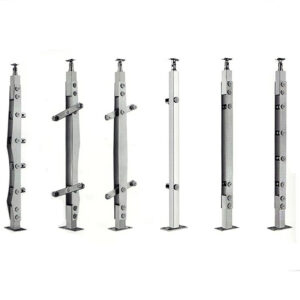
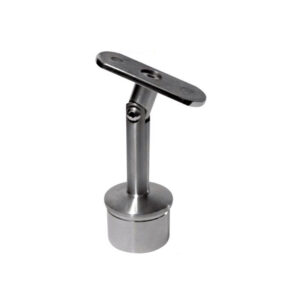
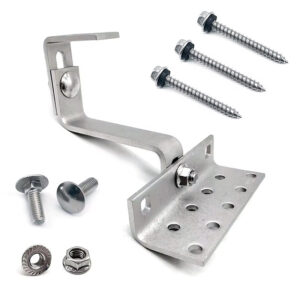
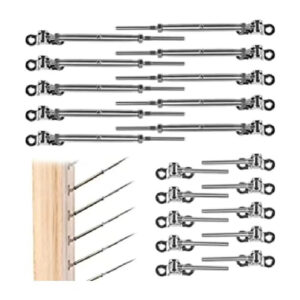
A wire mesh railing infill looks like a simple fill panel, but the forces acting on it do not stop at the mesh. Wind, impact, and handling loads travel from the panel into its edge or frame, into the fixings that attach it, into the rails and posts that carry it, and finally into the anchors and supporting structure below. When a contractor or project buyer asks who confirms that this path actually works, the honest answer depends on what the project documents assign, not on which party happened to supply the panel.
Define the Complete Load-Path Question
A wire mesh infill panel is only one link in a longer chain. The mesh and its edge or frame receive the applied load first, but that load then has to move through a defined fixing into the rail and post system, and from there into anchorages and the supporting structure itself. Treating the panel as a self-contained item, separate from what holds it and what it connects to, misreads how the assembly behaves under load.
This matters because each link in that chain can be governed by a different party’s information. The panel construction is a product-level fact. The fixing detail is a connection decision. The rail and post interface depends on how those members were designed and specified for the project. The anchorage depends on the supporting structure’s own condition, which is a site- and building-specific fact no product description can settle. Where any one of these links is left undefined, the chain as a whole cannot be said to be resolved, even if every individual component has a data sheet.
The practical effect is that “the wire mesh infill panel is compliant” and “the wire mesh railing load path is confirmed” are different statements. The first can be true within a narrow product scope. The second requires that every link in the chain, from mesh to structure, has been defined and accepted by someone with the authority and information to do so. ESANG’s position reflects this distinction directly: final compliance depends on the complete installed assembly, the structural design, the installation method, and the site conditions, not on any single component in isolation.
For a buyer, this reframes the opening question. Instead of asking “does this panel meet requirements,” the more useful question is “who has defined and accepted each link between this panel and the structure it depends on.” That question cannot be answered by inspecting the mesh panel alone, and it changes depending on whether the fixing, rail, post, and anchorage details already exist in the project documents or still need to be produced.
| Link in the chain | Information needed |
|---|---|
| Mesh and panel edge/frame | Defined component construction |
| Panel fixing | Connection detail and design criteria |
| Rails and posts | Member/interface information and design basis |
| Anchors | Anchorage detail and supporting condition |
| Несущая конструкция | Project structural criteria and acceptance |
What the Supplier Can Confirm
A supplier of wire mesh infill panels can speak with authority about what it is actually providing: the panel construction, the material, the frame or edge condition, and the fixing concept associated with that offered product. Where product-specific data has been prepared and submitted as part of the order, the supplier can confirm that data applies to the item being supplied. This is a bounded and legitimate scope of confirmation, and it is often the starting point for the rest of the load-path discussion, since the wire mesh infill panel is the component the reader is trying to place within the larger assembly.
What this scope does not include is the building load path itself. A quotation for a panel, even a detailed one, is not a statement about how that panel’s forces will move through a specific project’s rails, posts, anchors, and supporting structure. Those downstream elements depend on design decisions and site conditions that sit outside a single component supply relationship unless the project has expressly brought them into that scope.
The distinction changes with how the order is written. Where a purchase order or specification only calls out the panel and its fixing concept, the supplier’s confirmation reasonably stops there. Where the project instead assigns the supplier a wider scope, such as coordinating fixing selection against stated post spacing or rail sizes, the supplier’s confirmable information can extend further, but only to the extent that scope and the supporting requirements were actually communicated and accepted. This is also where project information the buyer supplies becomes relevant: the material, glass or mesh construction, installation method, and finish details a customer provides feed directly into how a supplier’s configuration or quotation review is framed, and the resulting confirmation is only as complete as those inputs were.
A buyer reviewing a supplier’s documentation should be able to separate manufacturing feasibility against the requirements actually supplied from a claim that the supplier has validated the complete railing design or the adequacy of the supporting structure. The first is within a component supplier’s ordinary scope; the second requires design responsibility that has to be expressly assigned, not assumed from the existence of a product quotation.
| Supplier may confirm when in scope | Do not assume from a quotation |
|---|---|
| Offered panel construction and material | Complete railing-system design |
| Frame/edge and fixing concept | Supporting-structure adequacy |
| Product-specific data actually submitted | Project code compliance or acceptance |
| Manufacturing feasibility against supplied requirements | Design responsibility not expressly assigned |
What the Fabricator and Contractor Coordinate
Between the supplier’s product-level confirmation and the project’s structural sign-off sits the work of turning approved requirements into an installed assembly. A fabricator’s task is to convert project requirements, once those requirements are approved, into fabrication and connection details within whatever scope has been assigned to it. That can mean detailing how a panel edge attaches to a rail, or how a post base connects to its anchorage, depending on what the fabricator has been asked to detail.
A contractor’s task runs in parallel but is not identical. The contractor coordinates submittals across the different parties supplying information, checks field conditions against what the drawings assumed, manages how the infill work interfaces with adjacent trades and structural work, and handles what happens when a deviation from the approved documents appears during installation. None of these coordination tasks by themselves constitute a design decision, but all of them can surface a load-path question that was left open earlier, such as a fixing detail that does not match the post that arrived on site, or an anchorage condition that differs from what the drawings assumed.
Where the project documents clearly separate design from fabrication from installation, this coordination role stays administrative: the fabricator details within limits someone else has set, and the contractor manages execution against those limits. Where the documents are less clear, the fabricator or contractor can find itself making a decision that has design consequences without an explicit assignment to do so. This is precisely the condition that a responsibility matrix is meant to prevent, because it forces the question of who decided a connection detail to be answered before the detail is built rather than after.
Exactly how these responsibilities divide between fabricator and contractor remains a contractual matter, set by the specific agreements and delegated-design language in force on that project, rather than by a general rule about how railing work is normally organized. A buyer should not assume that fabrication drawings alone represent design approval, or that field coordination alone represents structural acceptance, without checking what the contract actually assigns to each party.
When an Engineer Must Be Named
The point at which an engineer’s signature becomes necessary is not fixed by the type of hardware involved; it is fixed by what the project documents assign. UFGS 05 52 00, the metal railings guide specification, frames this as a conditional structure rather than a blanket rule: where delegated connection design is assigned to the contractor, the drawings are required to show the connection loads, and the design calculations supporting those connections are to be signed and sealed by a registered professional engineer.
This conditional framing matters because it means the question is not “is an engineer always required for a wire mesh railing infill,” but “has delegated connection design been assigned on this project, and if so, to whom.” Where delegation has been made, the trigger is clear: loads need to appear on the drawings, and a named, licensed engineer needs to produce and seal the calculations behind the connections, including whatever connections carry the infill’s forces into rails, posts, and anchors. Where design has instead been retained by a project engineer rather than delegated outward, the responsibility sits with that party from the start, and the buyer’s task is to obtain that party’s design criteria and confirm the review path rather than to look for a delegated submittal that was never created.
The more difficult condition is where the project documents are silent or contradictory about which of these two situations applies. In that case, the correct response is not to infer responsibility from who supplied the panel or who is installing it, but to treat the silence itself as an open item requiring written clarification before work proceeds. Supplier data, however detailed, does not resolve this silence; it remains component information and does not stand in for a delegated design submittal or a retained engineer’s approval.
This turns the engineer question into a proceed-or-hold check rather than a fixed rule: confirm which condition the project documents describe, and only proceed with fabrication or installation once the applicable path, delegated or retained, has produced the loads, calculations, and sealed submittal that condition requires.
| Project-document condition | Действие |
|---|---|
| Delegated connection design is expressly assigned | Identify loads/criteria, engineer, calculations, and sealed submittal required by the project |
| Design is retained by the project engineer | Obtain complete design criteria and review path from that party |
| Responsibility is silent or contradictory | Hold release and obtain written clarification |
| Supplier data is the only available information | Treat it as component information, not complete load-path approval |
Build a Project Responsibility Matrix Before Release
Once the load-path chain, the supplier’s bounded scope, the fabricator and contractor’s coordination role, and the conditional engineer trigger are each understood, the remaining task is to record who is actually doing what on this project before fabrication or installation proceeds. This is a documentation step, not a design step, but it is the step that prevents the earlier distinctions from collapsing back into an assumption that someone else has already handled the load path.
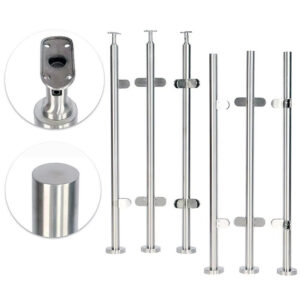
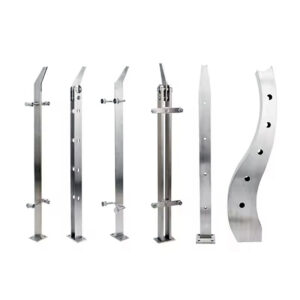
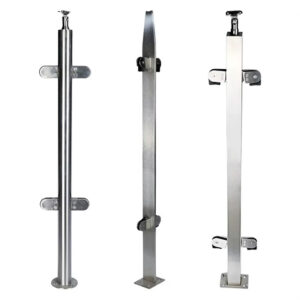
A useful matrix names, for this specific project, who supplies the design criteria and loads the rest of the chain depends on, who is responsible for designing each connection or system portion, who prepares and coordinates the drawings that record those decisions, who reviews and approves any deviation from what was originally approved, who signs and seals delegated work where that is required, and who has the authority to accept the installed system as complete. Where a wire mesh infill panel, its posts, and its top and bottom rails are being sourced as coordinated components, this is also where the interface between those parts needs an explicitly named party, since panel forces reaching the post and rail interface do not become someone’s responsibility by default; they become that party’s responsibility only where the matrix says so.
Building this record before release, rather than after an installation question arises, is what allows a buyer to point to a specific name against each decision instead of relying on the general expectation that “someone” is handling it. Where the matrix shows a gap, such as a connection detail with no assigned designer, or a delegated calculation with no named engineer, that gap is the exact information the project team still needs, and closing it before release changes the decision from a guess about who is responsible to a documented answer the project can rely on.
| Decision/deliverable | Named party required | Evidence before release |
|---|---|---|
| Design criteria and loads | Project-assigned designer/engineer | Issued criteria or drawings |
| Panel and connection details | Assigned supplier/fabricator/designer | Coordinated fabrication details |
| Delegated calculations | Assigned professional engineer when required | Signed/sealed submission per project |
| Field/installation coordination | Contractor/installer as assigned | Verified conditions and coordination record |
| Final approval/acceptance | Project-defined reviewer/authority | Required documented disposition |
Часто задаваемые вопросы
Вопрос: Does the mesh supplier’s component data confirm the entire railing load path?
A: No, component data covers only the construction and information actually supplied. The load-path question extends through the panel edge or frame, fixings, rails and posts, anchors, and supporting structure. Those links need coordinated project criteria and assigned design review before a complete installed-system conclusion can be made.
Вопрос: Can we assign connection design to the fabricator simply by asking for shop drawings?
A: Shop drawings alone do not establish that assignment. The project documents must define whether the fabricator is detailing approved requirements or undertaking delegated design. Where delegated connection design is assigned, identify the connection loads, required calculations, professional engineer, and signed or sealed submission required by the project.
Вопрос: What information should we request from the supplier if engineering remains with our project team?
A: Request the offered panel construction, material, frame or edge, fixing concept, and product-specific data included in the agreed scope. Use that information in the project team’s review of connections and the complete assembly. Keep manufacturing feasibility separate from supporting-structure adequacy and project acceptance.
Вопрос: What should happen when the contracts are silent about who confirms a connection?
A: Hold release and obtain written clarification for that unresolved responsibility. Name who supplies criteria and loads, designs each connection or system portion, coordinates drawings and field conditions, reviews deviations, and accepts the installed system. If delegated work requires professional engineering documentation, identify its responsible party explicitly.