Selecting the correct stainless steel grade for coastal construction is a critical technical decision with significant financial and structural implications. The common misconception is that “stainless steel” is universally corrosion-resistant, leading to the specification of Grade 304 in environments where it is fundamentally unsuited. This error results in premature pitting, fastener failure, and costly remediation long before a structure’s intended lifespan. The core challenge is navigating the precise alloy performance data against chloride exposure to make a defensible, code-compliant material choice.
This decision is more urgent than ever. Coastal building codes are rapidly evolving, with municipalities enacting specific ordinances that legally mandate material grades for corrosion control. Furthermore, insurers and financiers are now scrutinizing material specifications as part of climate risk assessment, tying compliance to premium reductions and loan terms. Specifying the wrong grade is no longer just an engineering oversight; it is a liability and financial risk that can impact project approval, insurance, and long-term asset value.
304 vs 316 Stainless Steel: The Core Technical Difference
The Defining Alloy: Molybdenum
The fundamental divide between 304 and 316 stainless steel is chemical. Both are austenitic alloys relying on a chromium-rich passive oxide layer for corrosion resistance. The decisive additive in Grade 316 is 2-3% molybdenum. This element integrates into the passive film, dramatically increasing its stability against chemical attack, particularly from chloride ions. Grade 304 lacks molybdenum, making its protective layer more vulnerable to breakdown in saline environments. This is not a minor specification difference but the primary technical factor determining long-term performance near saltwater.
Performance of the Passive Layer
In service, the passive layer is a dynamic, self-repairing barrier. When scratched, the chromium in the alloy reacts with oxygen to reform the protective film. In coastal atmospheres, chloride ions compete with oxygen, disrupting this repassivation process. The molybdenum in 316 strengthens the film’s integrity, making it more resistant to this chloride penetration. Consequently, while 304 may perform adequately initially, its lack of molybdenum leaves it susceptible to localized corrosion initiation over time, especially in sheltered, unwashed areas where chlorides concentrate.
The Real-World Implication
This technical distinction frames the selection as a direct cost-performance trade-off. Specifying 304 in a coastal zone is a calculated risk that the environment will not exceed the alloy’s chloride tolerance. Industry experts recommend erring on the side of caution; we consistently observe that projects using 304 within 3000 feet of the ocean face inspection and maintenance issues years earlier than those with 316. The molybdenum premium buys extended service life and reduced intervention frequency.
Cost Analysis: Initial Price vs. Long-Term Value in Coastal Projects
Understanding Total Cost of Ownership
The higher initial material cost of Grade 316 is often the primary objection. However, value engineering for coastal resilience requires evaluating the total cost of ownership (TCO). This includes all costs over the asset’s life: initial purchase, installation, maintenance, repair, and premature replacement. For critical fasteners or structural elements, the cost of the component is negligible compared to the labor and access costs required for its inspection or replacement. Downgrading to 304 for short-term savings creates a false economy, significantly increasing lifecycle costs.
Quantifying the Value of Mitigation
Research into hazard mitigation demonstrates a compelling return on investment. Data indicates that every dollar spent on upfront resilience measures, such as specifying superior corrosion-resistant materials, can save approximately six dollars in future disaster recovery and repair costs. This ROI is realized through drastically reduced maintenance frequency and the avoidance of catastrophic failures. Furthermore, insurers are increasingly offering premium reductions for construction that exceeds code minimums, using financing as a lever to enforce higher standards and de-risk their portfolios against climate-related losses.
The Financial and Compliance Shift
The market is moving beyond simple price comparison. Project financiers and insurers now review material specifications as part of their risk assessment. Specifying 316 provides documented evidence of a risk-averse design approach, which can facilitate permitting, satisfy insurance requirements, and protect against future liability claims. The long-term value lies not just in the metal, but in the risk mitigation it represents.
| Cost Factor | Grade 304 | Grade 316 |
|---|---|---|
| Initial Material Cost | Lower | Higher premium |
| Maintenance Frequency | Higher | Drastically reduced |
| Replacement Risk | Premature failure | Extended service life |
| ROI from Hazard Mitigation | Lower | ~$6 saved per $1 spent |
| Insurance Implications | Standard terms | Potential premium reductions |
Note: Total cost of ownership outweighs initial purchase price for coastal resilience.
Source: Technical documentation and industry specifications.
Performance Data: Pitting & Crevice Corrosion Resistance Compared
The Failure Mechanisms
In coastal environments, general surface rust is rarely the issue. The primary failure modes for stainless steel are localized pitting and crevice corrosion. These occur when the passive layer breaks down in small, isolated areas, leading to aggressive, penetrating attack. Crevice corrosion—under washers, at lap joints, or in any tight gap where oxygen is depleted—is particularly insidious. Chlorides concentrate in these micro-environments, accelerating the corrosion process out of sight.
Data-Driven Grade Comparison
The performance gap between 304 and 316 is clearly defined by their composition. The molybdenum in 316 is specifically added to combat these localized attacks. In stagnant seawater tests, Grade 304 is susceptible to pitting, while Grade 316 demonstrates superior resistance. This technical reality is why standards like ISO 3506-1 Fasteners — Mechanical properties of corrosion-resistant stainless steel fasteners classify fasteners into material groups (e.g., A2 for 304, A4 for 316), providing a standardized basis for selection in corrosive environments.
Codification into Law
This isn’t just best practice—it’s becoming law. Municipalities in coastal regions are referencing standards such as FEMA Technical Bulletin 8 to enact ordinances that legally mandate the use of 304 or 316 for exposed hardware. This shifts material selection from an engineering guideline to an enforceable code requirement with direct implications for building permits, inspections, and liability. Specifying the correct, verifiable grade is now a fundamental compliance activity.
| Factor | Grade 304 | Grade 316 |
|---|---|---|
| Molybdenum Content | 0% | 2-3% |
| Chloride Ion Resistance | Susceptible | Superior |
| Passive Layer Stability | Moderate | High |
| Primary Failure Mode | Localized pitting | Crevice corrosion (delayed) |
| Common Application Risk | Unwashed crevices, sheltered spots | Severe splash zones |
Source: ISO 3506-1 Fasteners — Mechanical properties of corrosion-resistant stainless steel fasteners. This standard classifies fastener materials (e.g., A2 for 304, A4 for 316) based on their mechanical and corrosion-resistant properties, providing the technical basis for their performance in chloride-rich environments.
Which Grade Is Better for Severe vs. Moderate Coastal Zones?
Defining Exposure Zones
Effective material selection requires a risk-based zoning approach tied to precise exposure severity. Severe Exposure Zones are characterized by direct saltwater splash, immersion, or heavy, constant salt spray. This typically includes areas within approximately 3000 feet of the shoreline, encompassing docks, seawalls, boardwalks, and the ocean-facing elevations of structures. In these zones, the chloride load is high and persistent, demanding the highest resistance.
Recommendations by Zone
For Severe Exposure Zones, Grade 316 is not merely recommended; it is often explicitly required by local code. Its molybdenum content is essential to withstand the aggressive conditions. For Moderate Exposure Zones—several miles inland where corrosion is driven by wind-borne airborne salts—Grade 304 may be technically adequate if designed and maintained properly. However, specifying 316 even here provides a critical margin of safety, extends service life, and future-proofs the structure against changing environmental conditions or more stringent future codes.
The Site Assessment Imperative
Project planning must begin with a geolocation assessment to determine the mandatory or prudent grade. This assessment should consider local topography, prevailing wind patterns, and existing municipal ordinances. This formalizes coastal construction as a specialized discipline, requiring expertise distinct from standard inland building practices. Overlooking this initial zoning step can lead to under-specification and premature failure.
| Exposure Zone | Distance/Proximity | Recommended Grade | Key Applications |
|---|---|---|---|
| Severe | Direct splash, ~3000 ft from shore | 316 (often required) | Docks, seawalls, coastal-facing fasteners |
| Moderate | Airborne salts, several miles inland | 304 (adequate) / 316 (safer) | Cladding, general hardware with design |
| Critical Structural | All coastal zones | 316 (mandatory) | Embedded anchors, hurricane clips, fasteners |
Source: Technical documentation and industry specifications.
Critical Application Notes: Fasteners, Cladding, and Structural Elements
The Paramount Importance of Fasteners
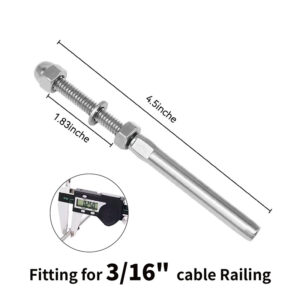
Fastener failure is a silent, destructive force. A single corroded bolt can compromise the load-bearing capacity of a connection, leading to disproportionate and costly structural outcomes. For these non-redundant, critical connection points, the cost premium for Grade 316 is negligible compared to the value of the structure it secures. Specifying 316 for all fasteners in coastal zones is a high-leverage risk mitigation strategy. This is supported by procurement standards like ASTM A276/A276M Standard Specification for Stainless Steel Bars and Shapes, which govern the material quality for such critical components.
Cladding and Architectural Elements
For architectural cladding and sheet applications, the selection depends on the exposure zone and design. In severe zones, 316 is preferred. In moderate zones, 304 might be specified, but only with designs that promote drainage and allow for regular rainwater washing to remove salt deposits. The selection of sheet and plate materials is often governed by standards such as ASTM A240/A240M Standard Specification for Chromium and Chromium-Nickel Stainless Steel Plate, Sheet, and Strip for Pressure Vessels and for General Applications, ensuring the delivered product meets the specified grade’s chemical and mechanical properties.
Structural Elements and High-Stakes Components
Structural elements like embedded anchors, hurricane tie-downs, and reinforcement in concrete require the highest certainty. These are typically “specify and verify” items where Grade 316 is mandatory. The consequence of failure is too great to accept the risk associated with 304. Procurement for these elements must involve technical suppliers who provide mill test reports (MTRs) and understand the micro-environments of coastal construction, not those offering generic substitutes.
| Application | Risk Level | Recommended Grade | Rationale |
|---|---|---|---|
| Fasteners & Connections | Very High – Non-redundant | 316 | Minimal cost vs. structural failure risk |
| Architectural Cladding | Severe Zone: High Moderate Zone: Medium | 316 304 (with washing) | Direct salt exposure vs. airborne salts |
| Structural Elements | Highest – Load-bearing | 316 | Demands highest certainty and compliance |
Source: ASTM A276/A276M Standard Specification for Stainless Steel Bars and Shapes. This standard governs the procurement of stainless steel bars and shapes, ensuring the specified grade (like 316) for critical structural elements and fasteners meets required chemical and mechanical properties for coastal environments.
Beyond Material Choice: Design & Installation Best Practices
Corrosion Control as a System
Durability is a system, not merely a material property. Even Grade 316 is corrosion-resistant, not corrosion-proof. Its performance depends on complementary design and installation practices. A holistic approach to corrosion control includes specifying compatible metals to prevent galvanic corrosion, designing details to avoid moisture traps and crevices, and ensuring all configurations allow for complete drainage. Details matter more than the bulk material choice.
The Role of Maintenance
Establishing owner maintenance protocols is a strategic implication for long-term performance. For both 304 and 316, regular freshwater rinsing to remove accumulated salt deposits is explicitly recommended. This simple practice helps preserve the protective oxide layer by preventing chloride concentration. This is especially critical for architectural elements and in moderate zones where 304 may be used. The design should facilitate access for this maintenance.
Installation Vigilance
Installation errors can nullify the benefits of a superior alloy. Using carbon steel tools that leave contaminating particles on stainless surfaces (tooling rust), failing to protect stainless from contact with uncured concrete, or installing fasteners without proper torque can all create initiation sites for corrosion. Best practice mandates clean installation techniques and awareness of the material’s requirements throughout the construction process.
Verification and Compliance: Ensuring You Get the Specified Grade
The Necessity of Material Traceability
In an era of accelerating codes and high liability, material verification is non-negotiable. Simply specifying “stainless steel” on a drawing is inadequate and invites substitution. Contract documents must specify the exact grade (e.g., ASTM A276, Grade 316) and require submittals of mill certificates or material test reports (MTRs) from suppliers. This due diligence protects against the delivery of inferior, non-compliant materials that could jeopardize the entire project’s integrity and compliance status.
Documentation for Defense
This documentation serves multiple critical functions: it is required for passing inspections, satisfies insurer and financier requirements, and provides a defensible record in the event of future performance claims or litigation. As regulatory codification intensifies, having a verifiable chain of custody for materials becomes as important as the design itself. The market is responding with a trend toward “marine-grade” certification, where manufacturers provide verified performance data from third-party testing.
Partnering with Technical Suppliers
The procurement strategy must involve suppliers with proven coastal construction expertise. These suppliers understand the importance of traceability and can provide the necessary technical documentation, such as MTRs that comply with EN 10088-2 Stainless steels – Part 2: Technical delivery conditions for sheet/plate and strip of corrosion resisting steels for general purposes. They compete on verified performance and technical support, not just price, becoming partners in risk mitigation.
Decision Framework: Selecting the Right Grade for Your Project
A Structured Five-Step Process
A disciplined framework integrates technical data with project strategy. First, conduct a formal site-specific exposure assessment based on distance from shore and local code mandates. This defines the baseline requirement. Second, categorize every application by criticality; structural fasteners and connections in any coastal zone should always specify 316. Third, run a total cost of ownership analysis to justify 316’s premium through quantified reductions in maintenance and risk.
Execution and Documentation
Fourth, deliberately partner with builders and suppliers who possess verified coastal expertise. Require evidence of their supply chain specialization and insist on MTRs for all stainless components. Finally, document every specification and its corresponding verification. This complete package ensures compliance, secures favorable financing and insurance terms, and provides a clear audit trail. This framework transforms material selection from a simple line item into a core resilience strategy.
| Step | Key Action | Quantitative/Technical Driver |
|---|---|---|
| 1. Site Assessment | Determine exposure zone | Distance from shore (~3000 ft threshold) |
| 2. Application Criticality | Categorize component risk | Non-redundant fasteners = Always 316 |
| 3. Cost Evaluation | Calculate total cost of ownership | Justify 316 premium via reduced maintenance |
| 4. Partner Selection | Verify supplier coastal expertise | Require mill certificates (MTRs) |
| 5. Documentation | Secure compliance evidence | For permits, insurance, and financing |
Source: Technical documentation and industry specifications.
The decision between 304 and 316 stainless steel hinges on a precise evaluation of chloride exposure, component criticality, and total lifecycle cost. Prioritize 316 for all structural connections and fasteners in coastal zones, and apply a risk-based zoning approach for other elements. Always validate your choice against local codes, which are increasingly mandating specific grades for corrosion control. Implementing a verification protocol with mill certificates is essential to ensure you receive the specified material and protect the project’s long-term integrity.
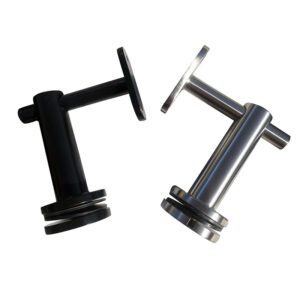
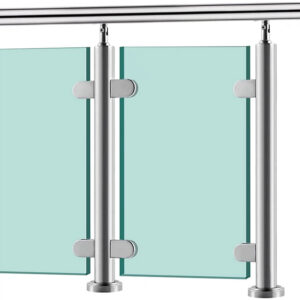
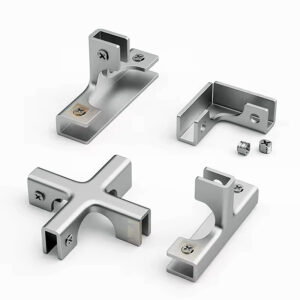
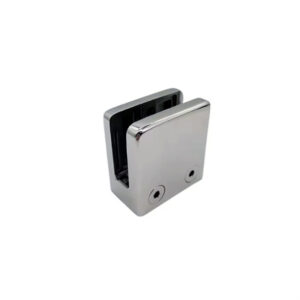
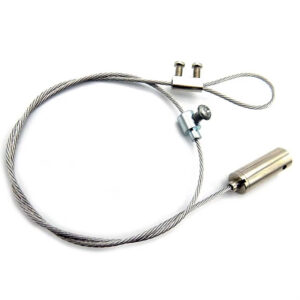
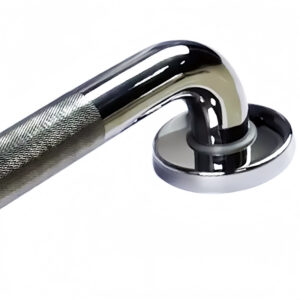
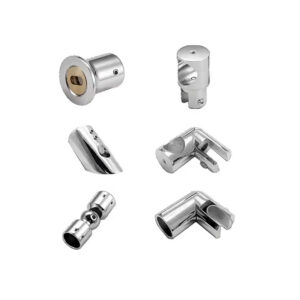
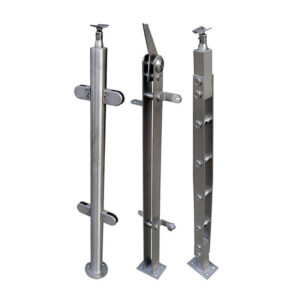
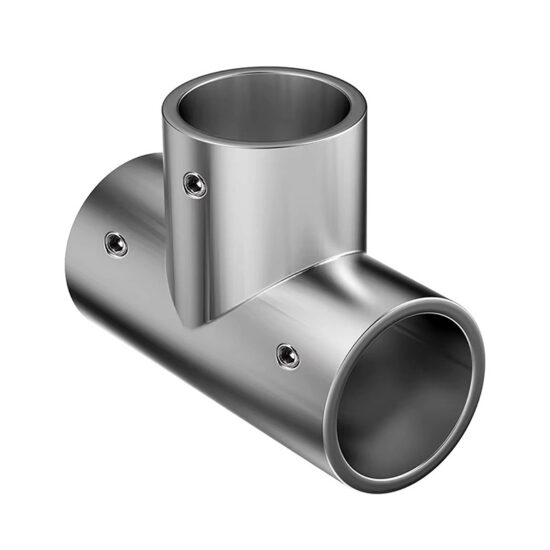
Need professional guidance on specifying and sourcing the correct stainless steel components for your coastal project? The technical team at Esang specializes in providing engineered mounting hardware and brackets for demanding environments, ensuring compliance and performance from specification through installation.
For a detailed consultation on your specific application requirements, you can Contact Us.
Frequently Asked Questions
Q: How does the alloy composition of 316 stainless steel improve its performance in coastal environments compared to 304?
A: The critical difference is the addition of 2-3% molybdenum in Grade 316, which fortifies the material’s protective chromium oxide layer. This enhanced passive film is far more stable and resistant to breakdown from chloride ions present in salt spray and marine atmospheres. For projects within direct splash zones, this means specifying 316 is a fundamental requirement, not an optional upgrade, to prevent premature failure.
Q: What is the total cost of ownership argument for specifying the more expensive 316 grade?
A: While Grade 316 has a higher initial cost, it delivers superior long-term value by drastically reducing inspection, maintenance, and premature replacement cycles for critical components. This lifecycle cost analysis often shows that upfront savings from using 304 are a false economy that increases liability. For coastal asset owners, this means justifying the premium through demonstrable risk reduction and potential insurance incentives for resilient construction.
Q: How do pitting and crevice corrosion risks differ between 304 and 316 stainless steel?
A: In stagnant conditions where chlorides concentrate—such as under fastener heads or in unwashed joints—Grade 304’s passive layer is vulnerable to localized breakdown, initiating aggressive pits. The molybdenum in Grade 316 provides demonstrably superior resistance to this chloride-induced attack. This technical reality means that for any concealed or moisture-trapping detail, 316 is the necessary choice to meet evolving code mandates and limit liability.
Q: How should we zone material selection for a project site based on its proximity to the coast?
A: Use a risk-based zoning approach: specify Grade 316 for Severe Exposure Zones within approximately 3000 feet of the shore with direct salt spray, and consider 304 only for Moderate Exposure zones several miles inland with airborne salts only. This assessment must be the first step in project planning. This means your procurement and compliance strategy is dictated by a geolocation analysis before any material is ordered.
Q: Why are fasteners considered a critical application requiring special attention in material specs?
A: Fastener failure is a high-consequence risk that can compromise the structural integrity of an entire assembly without visible warning. For these non-redundant connection points, the minimal extra cost of Grade 316 provides disproportionate risk mitigation. This means you should always specify verified high-grade fasteners, guided by standards like ISO 3506-1 for mechanical properties, and procure from technical suppliers, not generalists.
Q: What design and installation practices are essential even when using Grade 316 stainless?
A: Durability requires a systems approach: design to avoid moisture traps, ensure drainage, specify compatible metals to prevent galvanic corrosion, and establish protocols for regular freshwater rinsing to remove salt deposits. Even corrosion-resistant alloys can fail if installed improperly. This means your project documents must include both material specs and explicit installation details, transferring this holistic knowledge to the construction and maintenance teams.
Q: How can we verify that the stainless steel delivered to our site matches the specified grade?
A: You must require and review mill certificates or material test reports (MTRs) from suppliers for all shipments, as a simple “stainless steel” designation is inadequate. This due diligence protects against non-compliant substitutions. For plate, sheet, and strip, reference the ASTM A240/A240M specification. This means your procurement contracts must explicitly mandate this documentation for inspection and liability protection.
Q: What is a practical decision framework for selecting between 304 and 316 on a coastal project?
A: Follow a structured process: 1) Conduct a site exposure assessment, 2) Categorize application criticality (always use 316 for structural connections), 3) Evaluate total lifecycle cost, 4) Partner with coastal-experienced suppliers, and 5) Document all specs and verifications. This framework transforms material selection from a line item into a core resilience strategy. For structural bars and shapes, ensure they conform to ASTM A276/A276M for guaranteed properties.