For facility managers, the handrail specification process is often reduced to a line-item budget comparison. This approach prioritizes initial cost over lifecycle performance, leading to procurement decisions that increase long-term operational burdens. The real challenge is quantifying how material selection impacts total cost of ownership across a 20-year horizon, balancing upfront investment against maintenance, compliance, and replacement cycles.
Strategic specification now requires a data-driven framework. With evolving sustainability mandates and tighter operational budgets, the 2025 procurement cycle demands tools that translate material properties into financial justification. This analysis provides the methodology to move beyond price-per-foot to a comprehensive ROI model.
Stainless Steel vs. Alternative Handrail Materials: Key Differences
The Core Value Proposition
Material selection dictates the entire lifecycle cost profile. Stainless steel’s premium upfront cost, ranging from $40 to over $150 per linear foot, is a strategic capital investment. The value is realized through its inherent corrosion resistance, provided by a self-healing chromium oxide layer. This eliminates the recurring cost and labor of protective coatings required for carbon steel. In my experience reviewing facility maintenance logs, the cumulative cost of repainting carbon steel systems over a decade often surpasses the initial premium for stainless.
Comparative Durability in Operation
Mechanical performance under daily use is a critical differentiator. Stainless steel offers superior impact resistance compared to aluminum, which is prone to denting in high-traffic corridors or healthcare settings. Wood, while aesthetically warm, introduces vulnerabilities to moisture, rot, and insect damage, alongside mandatory refinishing cycles. This positions stainless not merely as a material but as a system designed to minimize operational disruption.
A Strategic TCO Perspective
The decision framework must shift from purchase price to total cost of ownership. Alternatives with lower initial cost typically carry hidden liabilities: scheduled maintenance, part replacement, and shorter service life. Stainless steel’s 30+ year lifespan often defers full replacement cycles two to three times longer than other materials. This fundamentally alters the financial model, making the higher initial outlay a net positive over the asset’s life.
Material & Installation Cost Breakdown for 2025 Budgets
Deconstructing Material Variables
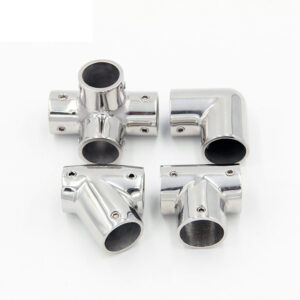
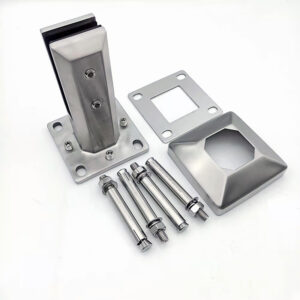
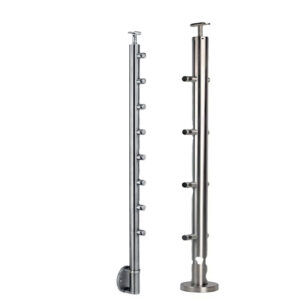
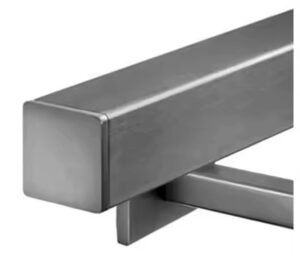
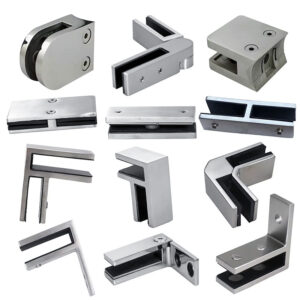
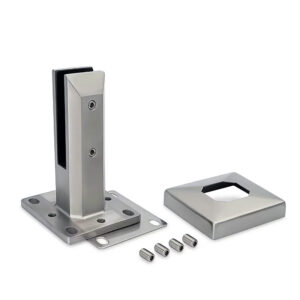
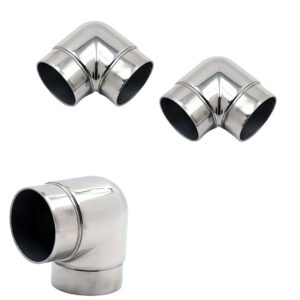
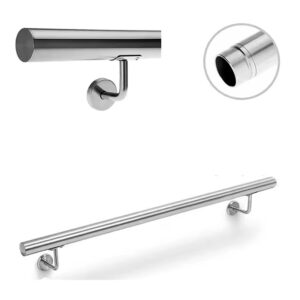
Accurate 2025 budgeting requires dissecting material variables. Cost is driven by grade (304 vs. 316), tube diameter, profile (round or square), and finish (satin, brushed, or polished). The component ecosystem—brackets, elbows, wall returns, and end caps—constitutes a significant portion of the material quote and is often overlooked in preliminary budgets. Omitting these from initial estimates is a common budgeting error.
The Labor and Complexity Multiplier
Installation labor is a major cost variable, often equaling or exceeding material cost. Professional installation is non-negotiable for ensuring compliance with the 2010 ADA Standards for Accessible Design, which dictate precise height, diameter, and extension requirements. Site complexity, such as raking stairs, curved walls, or changes in plane, increases fitting requirements and labor time dramatically. Substrate material (concrete vs. steel studs) dictates anchoring methods, further affecting cost.
A Framework for Accurate Budgeting
To avoid cost overruns, budgets must allocate equal weight to installation strategy. This requires detailed site assessments and quotes that itemize labor separately from materials. Industry experts recommend treating installation with the same rigor as material specification, as retrofitting for non-compliance is invariably more expensive than correct initial installation.
The following table breaks down the key cost components and their impact on a total handrail project budget.
| Cost Component | Key Variables | Impact on Total Project |
|---|---|---|
| Material Cost | Grade (304 vs. 316), finish | 30-50% of total cost |
| Installation Labor | Site complexity, ADA compliance | Can equal material cost |
| Component Ecosystem | Brackets, elbows, end caps | Significant budget factor |
| Substrate | Concrete vs. wood studs | Affects anchoring method/time |
Source: 2010 ADA Standards for Accessible Design. Compliance with ADA standards for handrail height, diameter, and extensions directly dictates installation complexity, labor time, and required fittings, which are major cost variables.
Lifecycle Cost Analysis: Calculating Total Cost of Ownership (TCO)
Defining the TCO Framework
For facility managers, Total Cost of Ownership is the definitive metric. It calculates the sum of all costs associated with an asset over its service life: initial purchase, installation, maintenance, repair, and eventual replacement or disposal. This analytical approach reveals the true financial impact of material selection, often contradicting decisions based solely on lowest bid.
Projecting Long-Term Operational Costs
The TCO advantage of stainless steel emerges in the operational phase. Maintenance is typically limited to periodic cleaning with mild detergent. Compare this to the scheduled expenditures for alternatives: repainting carbon steel every 3-10 years, resealing wood every 2-4 years, or part replacement for damaged aluminum or plastic systems. These recurring costs, including material and labor, accumulate significantly over decades.
Quantifying the Payback Period
A formal TCO analysis projects costs over a 25-30 year period. It models when the cumulative savings on maintenance and deferred replacement for stainless steel offset its initial premium. This payback point provides a powerful data-driven rationale for capital investment, shifting the procurement conversation from departmental cost to long-term organizational value.
The table below summarizes the maintenance and lifespan profiles that feed into a TCO calculation.
| Material | Maintenance Cycle | Projected Lifespan |
|---|---|---|
| Stainless Steel | Periodic cleaning only | 30+ years |
| Carbon Steel | Repaint every 3-10 years | Shorter |
| Wood | Reseal every 2-4 years | Shorter |
| Aluminum | Part replacement as needed | Moderate |
Source: Technical documentation and industry specifications.
How to Use Our Handrail ROI Calculator for Your Facility
Inputting Project Fundamentals
An effective ROI calculation starts with accurate baseline data. Input the total linear feet of handrail required, ensuring you include all ADA-mandated 12-inch horizontal extensions at stair tops and runs. Select your comparison materials—typically your specified stainless steel system versus a baseline alternative like powder-coated steel or aluminum. The precision of your initial scope directly affects the accuracy of the output.
Modeling Maintenance and Replacement Variables
The strategic power of the calculator lies in projecting operational variables. For stainless, estimate modest annual cleaning labor. For alternatives, quantify the frequency and cost of painting, sealing, or rust treatment based on your facility’s historical data or industry benchmarks. Crucially, set different projected replacement cycles for each material based on expected service life.
Interpreting Output for Procurement Justification
The calculator outputs the TCO for each option over your chosen timeframe, revealing the net present value and long-term savings. It identifies the payback period, showing when stainless steel becomes the lower-cost option. This model transforms a technical specification into a financial justification, empowering facility managers to secure budgets based on lifecycle value and operational efficiency rather than upfront cost alone.
Which Handrail Grade Is Better: 304 vs. 316 Stainless Steel?
The Chemical Distinction
The choice between 304 and 316 is dictated by environmental chemistry, not budget preference. Grade 304, containing 18% chromium and 8% nickel, is suitable for most interior and dry atmospheric conditions. Grade 316 includes an additional 2-3% molybdenum, which drastically enhances resistance to chlorides, acids, and industrial solvents.
Application Environment as Decision Driver
This alloy difference makes 316 non-negotiable for specific environments. Coastal properties, pool decks, food processing plants, parking garages using de-icing salts, and chemical processing areas require 316. The molybdenum content prevents pitting and crevice corrosion in these aggressive settings. Specifying 304 in these conditions leads to premature failure, while using 316 in a benign office interior incurs an unnecessary cost premium.
The Impact on Specification Policy
A standardized corporate specification is inefficient. Facility policies must adapt to regional and environmental conditions. This requires a site-by-site assessment to optimize both performance and cost, ensuring the specified grade meets the ANSI/BHMA A156.18 Materials and Finishes requirements for durability in the intended environment.
The following table provides a clear guide for selecting the appropriate stainless steel grade.
| Grade | Key Alloy Addition | Recommended Application Environment |
|---|---|---|
| 304 | 18% Chromium, 8% Nickel | Interior, dry atmospheric conditions |
| 316 | 2-3% Molybdenum | Coastal, pool decks, chemical exposure |
Source: ANSI/BHMA A156.18 Materials and Finishes. This standard establishes requirements for material grades and finishes, providing the authoritative basis for specifying 304 or 316 stainless steel based on required durability and corrosion resistance for the application environment.
Key Installation Factors That Impact Cost and Compliance
Precision Measurement and ADA Mandates
Professional installation begins with precise measurement of the handrail’s actual path, not just linear floor distance. This includes calculating the required 12-inch horizontal extensions at stair tops, as mandated by ADA. Each deviation—a bend, joggle, or change in plane—requires specific fittings like adjustable elbows or universal bends to maintain a continuous, grippable surface. Overlooking these details during quoting is a primary cause of change orders.
Substrate and Anchoring Challenges
The substrate dictates the installation method and cost. Concrete cores require drilling and anchoring with epoxy or mechanical anchors, while steel studs need specialized toggle bolts or backing plates. Masonry or tile surfaces present their own challenges. The anchoring system must support not just the weight but the required load resistance for safety, a factor directly addressed in model building codes.
Avoiding the Cost of Non-Compliance
Non-compliance carries legal liability and retrofit costs that far exceed proper initial installation. Ensuring the installer’s quote details labor separately and accounts for all site-specific complexities is essential. This due diligence prevents budget overruns and delivers a system that is both safe and code-compliant from day one.
Maintenance Requirements & Long-Term Durability Compared
The Science of Low Maintenance
Stainless steel’s operational ROI is rooted in its passive layer. The chromium oxide surface reforms if scratched, providing continuous corrosion protection without intervention. Maintenance is purely custodial: periodic cleaning with mild soap and water. This eliminates the recurring material purchases, specialized labor, and facility disruption associated with repainting or refinishing other materials.
Comparative Lifecycle Burdens
Evaluating alternatives reveals their hidden operational costs. Carbon steel requires ongoing vigilance for coating failure and rust treatment. Wood demands cyclical sanding, staining, and sealing. Powder-coated systems can fail through chipping and UV degradation, requiring complete stripping and recoating. Aluminum, while corrosion-resistant, can oxidize and pit in certain chemical environments and has lower impact strength.
Strategic Asset Management
Proactively documenting the specifications of installed systems—including alloy grade, finish, and component details—into facility digital twins or BIM models is a best practice. This creates a single source of truth for future maintenance planning, audits, and renovation projects across a portfolio, ensuring long-term performance and simplifying lifecycle management.
The maintenance drivers for each material highlight the operational implications of your initial selection.
| Material | Primary Maintenance Task | Long-Term Durability Driver |
|---|---|---|
| Stainless Steel | Clean with mild soap | Self-repairing chromium oxide layer |
| Carbon Steel | Repainting, rust treatment | Quality of protective coating |
| Wood | Refinishing, sealing | Susceptible to rot, insect damage |
| Powder-Coated Systems | Recoating after failure | Integrity of powder coat |
Source: Technical documentation and industry specifications.
A Facility Manager’s Guide to Final Specification & Procurement
Categorizing the Project Scope
Begin by defining the project’s position on the spectrum: Is it a premium architectural statement requiring bespoke finishes, or a functional retrofit prioritizing durability and code compliance? This directs you to the appropriate supplier tier and informs the level of detail required in the specification. Using online configurators for preliminary handrail system budgeting increases transparency before engaging suppliers.
Building the Specification Document
Your final specification must be unambiguous. It should mandate material grade (304 or 316), finish type (e.g., #4 satin), tube diameter and wall thickness, and a complete list of required components (rails, fittings, brackets, fasteners). Require suppliers to provide detailed, itemized quotes that separate material costs from installation labor. This clarity prevents substitution with inferior components and allows for accurate comparison between bids.
Incorporating Sustainability and Final Review
Increasingly, specifications must consider sustainability metrics. Request Environmental Product Declarations (EPDs) to compare embodied carbon and end-of-life recyclability. Prior to procurement, conduct a final review aligning the specification with organizational goals for safety, lifecycle cost, aesthetics, and sustainability. This disciplined, integrated approach ensures the procured system delivers lasting value and compliance.
The foundational differences between materials are captured in the following comparison.
| Material | Upfront Cost (per linear foot) | Key Long-Term Consideration |
|---|---|---|
| Stainless Steel | $40 – $150+ | Self-healing corrosion resistance |
| Carbon Steel | Lower | Requires protective coatings |
| Aluminum | Moderate | Lower impact resistance |
| Wood | Lower | Recurring refinishing required |
Source: Technical documentation and industry specifications.
The core decision points revolve around environment-driven material grade selection, a comprehensive TCO analysis over a 25-year horizon, and treating installation with the same strategic importance as product specification. This framework moves procurement from a tactical purchase to a strategic investment in long-term facility safety and operational efficiency.
Need professional guidance to specify and procure a handrail system that optimizes for lifecycle value and compliance? The experts at Esang can help you navigate material selection, detailed budgeting, and installation planning to ensure your project meets both financial and performance goals.
For a detailed quote or technical consultation, you can also Contact Us.
Frequently Asked Questions
Q: How do you calculate the true long-term cost of stainless steel handrails versus cheaper alternatives?
A: You must analyze Total Cost of Ownership (TCO) over 20-30 years, not just the initial bid. Sum the upfront project cost with all projected future expenses, such as repainting carbon steel every 3-10 years or resealing wood every 2-4 years. Stainless steel’s primary long-term cost is periodic cleaning, and its longer replacement cycle defers capital expenditure. This means facilities with tight long-term operational budgets should use a TCO model to justify stainless steel’s higher initial investment based on cumulative savings.
Q: When is Grade 316 stainless steel mandatory for handrails instead of the more common 304?
A: Specify Grade 316 for any environment exposed to chlorides, which aggressively attack standard 304. This includes coastal properties, pool decks, food processing areas, and locations using de-icing salts. The added molybdenum in 316 provides critical resistance that 304 lacks. For projects in these harsh environments, using 304 will lead to premature corrosion and failure, making the 316 premium a necessary cost for lifecycle integrity.
Q: What are the most critical installation factors for controlling cost and ensuring compliance?
A: Precise measurement of the handrail’s actual path and accounting for all required fittings are paramount. Each bend or change in plane needs specific components to maintain a continuous gripping surface, a core requirement of the 2010 ADA Standards for Accessible Design. The substrate material also dictates anchoring methods and labor time. This means complex sites with raking stairs or multiple transitions will see installation costs rival or exceed material costs, requiring detailed upfront planning.
Q: How can a facility manager create a procurement specification that ensures lifecycle value?
A: Your specification must mandate the exact material grade (304/316), finish, diameter, and a complete list of all components, from brackets to end caps. Require suppliers to provide itemized quotes that separate these material costs from installation labor. This disciplined approach ensures you are comparing equivalent systems and prevents cost-cutting on critical elements. For projects where long-term durability is the goal, this level of detail is non-negotiable for procurement transparency.
Q: What maintenance should we budget for with a stainless steel handrail system over 25 years?
A: Budget primarily for routine cleaning with mild soap and water. The material’s passive chromium oxide layer provides self-healing corrosion resistance, eliminating the need for repainting, sealing, or rust treatment associated with alternatives. For facilities in aggressive environments, specifying Grade 316 maintains this low-maintenance profile where other metals would degrade. This means your operational budget can reallocate funds from recurring handrail upkeep to other priority areas.
Q: How do ADA requirements directly impact the material and installation cost of handrails?
A: ADA standards dictate specific dimensions for height, diameter, clearance, and mandatory 12-inch horizontal extensions at stair tops. These rules directly increase the linear footage of material required and often necessitate additional custom fittings to execute correctly. Non-compliant installation risks legal liability and costly retrofits. This means your initial project measurements and quotes must explicitly account for all ADA-mandated extensions and geometries to avoid change orders and ensure compliance from day one.
Q: What role do industry standards like ANSI/BHMA A156.18 play in specifying handrails?
A: Standards like ANSI/BHMA A156.18 establish rigorous requirements for materials, finishes, and the performance of builders’ hardware. Referencing such standards in your specification provides an objective benchmark for durability and corrosion resistance, moving the selection beyond subjective vendor claims. For facility managers creating a corporate specification, leveraging these standards ensures consistency, quality, and defensible procurement decisions across a portfolio of properties.