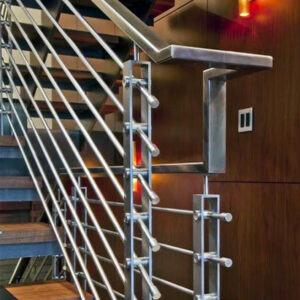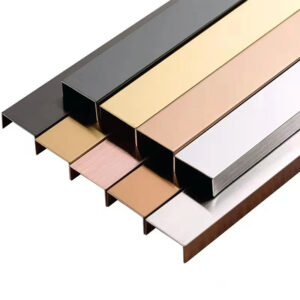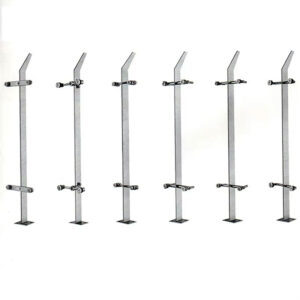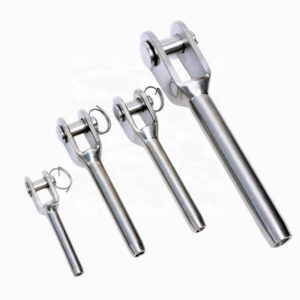
Specifying a stainless steel railing system that meets code is a foundational safety requirement, yet the path to compliance is often misunderstood. The primary challenge is not simply selecting a material but ensuring the entire installed assembly—from the top rail down to the anchors in the concrete—functions as a unified structural system. A common and costly misconception is focusing on component strength while neglecting the systemic load path, which can lead to failed inspections and liability exposure.
Attention to IBC Section 1607.8 is non-negotiable now due to increased enforcement and the convergence of multiple codes. A railing must simultaneously satisfy IBC structural loads, ADA graspability rules, and often OSHA or local seismic amendments. This complexity makes a proactive, documentation-first approach essential for architects, specifiers, and contractors to avoid project delays and ensure occupant safety.
Understanding IBC Section 1607.8 Load Requirements
The Systemic Nature of Code Compliance
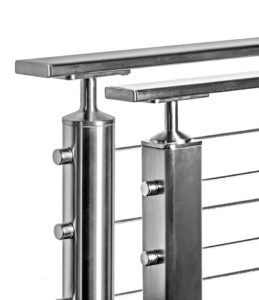
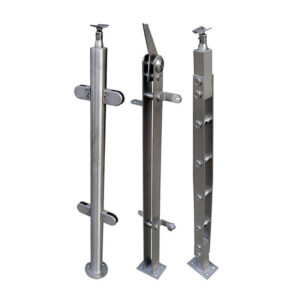
IBC Section 1607.8 mandates that guard and handrail systems resist a 200-pound concentrated force and a 50 pounds per linear foot uniform load applied to the top rail. Crucially, these are force requirements for the complete installed assembly, not PSI-based material tests. This holistic approach means compliance is defined by the weakest link in the load path: the handrail, posts, anchors, and structural substrate must all perform as an integrated unit. Focusing solely on the stainless steel tube’s yield strength is a fundamental error.
Material Selection as a Foundational Decision
This systemic view elevates material specification from an aesthetic choice to a critical performance calculation. The selection between T304 and T316 stainless steel grades is a direct cost versus environmental durability decision. In coastal or chemically aggressive environments, specifying T304 to save cost risks premature corrosion at connection points, compromising the entire system’s integrity. A proper environmental assessment is the mandatory first step in the specification process.
Translating Code into Design Parameters
The code’s force requirements translate into specific design parameters for post spacing, tube diameter, and wall thickness. Engineering calculations must account for the maximum allowable deflection under load, which directly impacts user perception of safety and rigidity. Industry experts recommend that these calculations always consider the end-use environment and load combinations, as a railing on a monumental stair in a high-traffic lobby faces different demands than one on a service balcony.
The following table clarifies the core load requirements and the critical insight they represent:
| Load Type | Required Force | Application Point |
|---|---|---|
| Concentrated Force | 200 pounds | Single point, top rail |
| Uniform Load | 50 plf | Distributed, top rail |
| Key Insight | System, not component | Weakest link defines compliance |
Source: ICC-ES AC58 Acceptance Criteria for Handrails and Guards. This acceptance criteria establishes the evaluation protocol for handrail and guard systems to verify compliance with IBC structural load provisions, including the 200-lb concentrated and 50 plf uniform loads.
Core Load Tests: Concentrated vs. Uniform Force Explained
Simulating Real-World Impact Scenarios
The two prescribed load tests simulate distinct human interactions. The 200-lb concentrated load represents an individual applying maximum pressure at a single point, testing for localized failure. The 50 plf uniform load models distributed pressure from a crowd leaning against the railing, evaluating overall system deflection and stability. Both tests must be passed independently, and the design must accommodate the more demanding result.
The Dual-Function Design Conflict
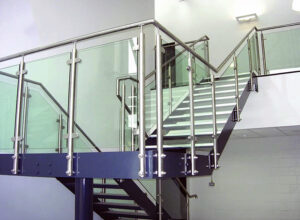
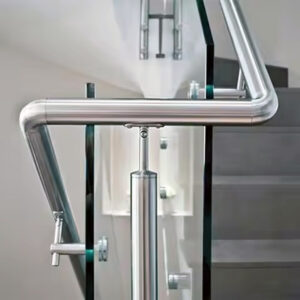
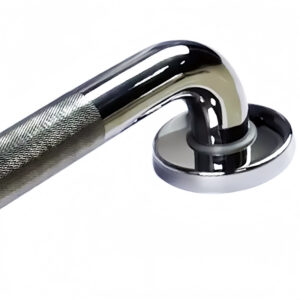
A significant design challenge arises from another code mandate: the 42-inch minimum height for guards. In commercial stair applications, the top rail must often serve dual functions as both this structural guard and a graspable handrail, which ADA recommends be between 34 and 38 inches. This conflict forces design innovation, such as incorporating a secondary graspable element or engineering a rail that meets both criteria, directly impacting system complexity and aesthetics.
Navigating the Height and Strength Trade-off
The 42-inch height creates a longer lever arm, increasing the moment force on posts and anchors. This physical reality creates a material and design trade-off. A taller, slender post may aesthetically fail under load, while an overly robust design can become cost-prohibitive. The solution lies in precise engineering that optimizes the section modulus of the post and its connection detail. In my experience, this is where value engineering most often compromises safety by reducing wall thickness or post diameter without recalculating the entire load path.
The table below contrasts the two core tests and the primary design constraint they create:
| Test Type | Simulated Scenario | Critical Design Constraint |
|---|---|---|
| Concentrated (200 lb) | Maximum individual pressure | Material/design trade-off |
| Uniform (50 plf) | Distributed crowd pressure | Dual-function rail requirement |
| Resulting Challenge | 42-inch minimum height | Structural guard + graspable handrail |
Source: Technical documentation and industry specifications.
Infill and Component-Specific Testing Standards
The 50-Pound Horizontal Load Mandate
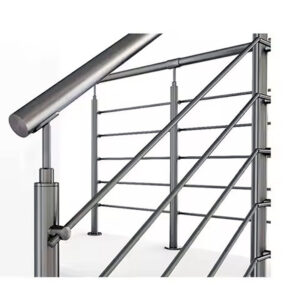
Beyond the top rail, all infill elements—balusters, cables, glass panels, or mesh—must withstand a horizontally applied normal load of 50 pounds over a one-square-foot area. This test ensures intermediate components will not fail, deflect excessively, or detach under pressure. For glass infill, this necessitates tempered or laminated glass of specified thickness and a compliant clamping system. For metal balusters, it validates weld integrity and spacing.
The Economic Dictate of the “Sphere Rule”
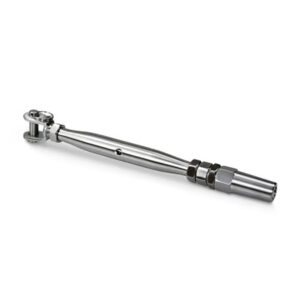
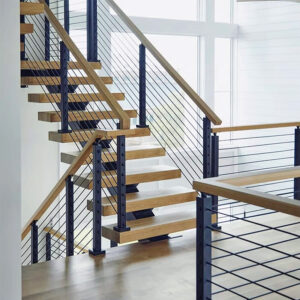
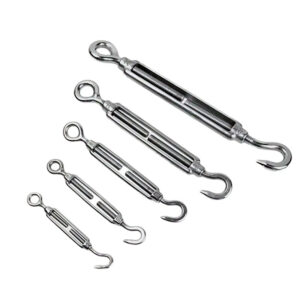
For stainless steel cable railings, infill testing is economically pivotal due to the “sphere rule” (IBC 1013.4). A 4-inch sphere cannot pass through any opening. Under the 50-lb load, cables deflect. To ensure a sphere still cannot pass, initial spacing must be tighter—often 3-1/8 inches on-center instead of a theoretical 4 inches. This physical constraint dictates maximum post spacing, increases cable and fitting quantities, and makes professional tensioning tools a necessary investment. It directly limits design flexibility for long spans.
Validating Connections and Transitions
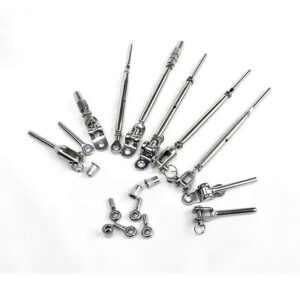
Infill components must also be tested at their connection points to posts and rails. A common failure point is where a cable ferrule is swaged or a glass clamp is secured. The test verifies that these connections maintain integrity under repeated load. Furthermore, transitions between different infill types or at stair landings require specific detailing and testing to ensure a continuous load resistance. Easily overlooked details include the pull-out strength of set screws in adjustable fittings and the fatigue resistance of cable tensioners.
The Critical Role of Anchoring and Substrate Compliance
The Non-Negotiable System Bottleneck
The railing system’s ultimate strength is defined by its connection to the building structure. Anchors must be engineered for the specific substrate—concrete, steel, or masonry—to transfer all imposed loads. This is the non-negotiable bottleneck in system performance. An anchor specified for solid concrete may fail catastrophically in cracked concrete, a common condition. Anchor selection is therefore a primary focus for both specifiers and inspectors.
The Mandate for Certified Anchor Systems
Manufacturers explicitly certify anchors like the DEWALT Power-Stud+ or Hilti KH-EZ for “safety-related attachments” with ICC-ES Evaluation Service Reports (ESRs) that cover conditions like cracked concrete and seismic zones. These reports provide validated embedment depths, edge distances, and spacing requirements. Value engineering that substitutes a non-compliant anchor from a general hardware catalog creates systemic failure risk and voids any railing system warranty.
Substrate Assessment and Installation Protocol
Compliance requires verifying the substrate’s capacity before anchor installation. Is the concrete slab thickness sufficient for the required embedment? Is the steel beam flange thick enough for a through-bolt? The installation protocol—drill bit type, hole cleaning, torque setting—is part of the anchor’s certification and must be followed precisely. Field modifications, like using an anchor in a core-drilled hole larger than specified, invalidate the certification.
The table below outlines the critical considerations for anchoring, which is the definitive factor in system safety:
| Anchor Consideration | Key Requirement | Example Certified Products |
|---|---|---|
| Substrate Specification | Concrete, steel, or masonry | DEWALT Power-Stud+, Hilti KH-EZ |
| Performance Certification | ICC-ES reports mandatory | For cracked concrete, seismic conditions |
| System Bottleneck | Anchor specification | Non-negotiable for liability |
Source: ASTM E488 Standard Test Methods for Strength of Anchors in Concrete and Masonry. This standard provides the foundational test methods for determining the tensile and shear strength of anchors, which is critical for validating the performance of the mechanical anchors that secure railing posts to the structure.
Verifying Compliance: Engineering Calcs vs. Evaluation Reports
The Two Paths to Documentation
Compliance is verified through one of two primary documents: engineering calculations sealed by a registered professional (P.E.) for custom designs, or an ICC Evaluation Service Report (ESR) for proprietary, pre-engineered systems. The engineering calc path offers design flexibility but places liability squarely on the project’s engineer of record. The ESR path provides a pre-approved, off-the-shelf solution with shared liability held by the manufacturer.
The ESR as a Liability Shield and Market Differentiator
Manufacturers increasingly market pre-engineered, code-documented railing kits as a risk mitigation service. An ESR is a powerful liability shield for architects and contractors, as it demonstrates due diligence in selecting a code-compliant product. This shifts competition beyond aesthetics and price toward the completeness and clarity of compliance documentation. A comprehensive ESR will include detailed drawings, allowable spans for various configurations, and explicit anchor options.
The Rise of Digital Workflow Integration
Merely providing a PDF of an ESR is no longer sufficient. Digital workflow integration is becoming a competitive mandate. Providing BIM objects and CAD details that embed load ratings and specification data allows designers to integrate compliant systems directly into their models. This reduces specification errors, streamlines permitting, and can be a decisive factor in winning bids. The most effective stainless steel railing specification tools now embed this technical data directly into the designer’s workflow.
Key Referenced Standards: ASTM E488 and ACI 355.2
ASTM E488: Validating Anchor Performance
The IBC references recognized testing standards to validate performance. ASTM E488 governs the strength tests for anchors in concrete and masonry, providing procedures for static tension, shear, and fatigue testing. It is the foundational method for determining if an anchor will hold under the loads imposed by the railing. Adherence to this protocol is essential for the anchor data used in engineering calculations or submitted for an ICC-ES report.
ACI 355.2: The Qualification Protocol
While ASTM E488 provides the test method, ACI 355.2 provides the rigorous qualification protocol for post-installed mechanical anchors in concrete. It is more comprehensive, covering requirements for static, seismic, fatigue, and crack cycling tests to simulate real-world conditions. An anchor that is “ACI 355.2 qualified” has passed a battery of tests that prove its reliability, especially in cracked concrete, which is a critical distinction for life-safety applications.
The Trajectory Toward Greater Verification
The use of these standards signals a move toward greater verification on projects. We are anticipating that special inspection and testing will increase for high-risk applications like monumental stairs, arenas, or buildings in seismic zones. This may involve third-party inspectors witnessing anchor installations or performing field pull-tests per these standards to verify installed capacity matches the design. Specifying anchors with clear ACI 355.2 qualifications prepares the project for this higher level of scrutiny.
Common Compliance Pitfalls and How to Avoid Them
The Fragmented Landscape of Local Amendments
A primary pitfall is assuming the IBC is universally applied. Jurisdictions in Chicago, coastal California, Seattle, and Florida often impose stricter amendments for wind, seismic, corrosion, or height. This patchwork of local codes fragments the national market and requires localized due diligence for every project. The remedy is to engage with the local building department during the schematic design phase to confirm all applicable amendments.
The Residential vs. Commercial Specification Error
Assuming a residential railing design meets commercial code is a critical error. The 42-inch height requirement for commercial guards, the dual-function conflict with handrails, and the stringent infill requirements create a fundamentally different product. Residential cable railings, for example, often fail the 4-inch sphere rule under load. Specifying a residential-grade system for a commercial application guarantees a failed inspection.
Overlooking Installation-Critical Details
Even with perfect components, compliance fails at installation. Common oversights include ignoring the minimum edge distance for anchors (causing concrete blowout), incorrect embedment depth, using the wrong drill bit diameter (affecting holding values), and failing to achieve proper torque. The solution is to treat the manufacturer’s installation instructions as part of the code-approved system and mandate that installers be trained on or certified for that specific system.
Ensuring Your Stainless Steel Railing System Passes Inspection
Begin with a Clear Compliance Path
Successful inspection passage starts at specification. Choose a system with a clear, documented compliance path—either a sealed engineering drawing or a current ICC-ES Report. Specify every component as part of a unified, tested assembly: the rail, post, infill, and the exact anchor model with its required installation instructions. Document all material certifications, especially the stainless steel grade.
Prepare for Increased Field Verification
Budget and plan for potential third-party special inspection. For high-risk or high-profile applications, proactively schedule field pull-tests on a sample of installed anchors per ASTM E488 to verify installed capacity. Have the railing system’s compliance binder on-site, including the ESR, material mill certificates, and installer qualifications. This demonstrates proactive quality control.
Partner with the Authority Having Jurisdiction
Treat the building inspector as a partner, not an adversary. Schedule a pre-installation meeting if the project is complex. Present your compliance documentation and proposed installation sequence. This early engagement can clarify expectations, reveal unique local requirements, and build confidence that the installation will meet code. It navigates the complex convergence of IBC, ADA, and OSHA requirements that define modern railing performance.
The priority is moving from component selection to system engineering. Verify the load path from point of impact to the building structure is continuous and documented. Confirm local amendments and prepare for field verification. Finally, specify every element, including certified anchors, as part of a unified assembly.
Need professional guidance to navigate these complex requirements for your next project? The technical team at Esang specializes in providing code-compliant stainless steel railing solutions backed by clear engineering documentation.
For specific project inquiries, you can also Contact Us.
Frequently Asked Questions
Q: How do the IBC’s 200-lb concentrated and 50 plf uniform load tests differ in their real-world application?
A: The 200-pound concentrated load simulates a single person applying maximum force at one point, testing for localized failure. The 50 pounds per linear foot uniform load replicates the distributed pressure of a crowd leaning against the rail. Both tests must be passed by the entire installed assembly, not just individual parts. For projects where railings serve high-occupancy areas like stadiums or lobbies, the uniform load often dictates the required post spacing and anchoring strategy.
Q: What is the most critical bottleneck for ensuring a stainless steel railing system meets IBC load capacity?
A: The anchor connection to the structural substrate is the definitive performance bottleneck. Anchors must be specifically qualified for the base material—concrete, steel, or masonry—to transfer all imposed loads. Using anchors with valid ICC-ES AC58 reports for the exact application is non-negotiable. This means specifiers must treat anchor model selection and its installation instructions as a primary compliance item, not a contractor substitution.
Q: When should we use an ICC-ES Evaluation Report versus engineering calculations for compliance verification?
A: Use an ICC-ES Evaluation Service Report (ESR) for pre-engineered, proprietary railing systems, as it provides a pre-approved liability shield. Rely on project-specific engineering calculations for custom designs or unique site conditions. The ESR streamlines permitting but limits design flexibility. For projects with tight timelines or where minimizing architect/contractor risk is paramount, specifying a system with a current ESR is the most efficient path.
Q: How does the 42-inch guard height requirement create a design conflict for commercial stair railings?
A: The IBC mandates a minimum 42-inch height for guards, but accessible routes also require a graspable handrail between 34 and 38 inches. In commercial stairs, this often forces a single top rail to fulfill both structural and assistive roles. This convergence directly increases system complexity and cost. For monumental stairs or other designs where a separate handrail is not feasible, you must select a railing system explicitly engineered and tested for this dual-function conflict.
Q: What specific standards govern the testing of anchors used for railing posts in concrete?
A: Anchor performance is validated through ASTM E488 for strength tests in concrete and masonry, and qualification for post-installed mechanical anchors follows ACI 355.2. These protocols test for static, seismic, and cracked concrete conditions. If your project is in a seismic zone or uses post-installed anchors, verify the manufacturer’s ICC-ES report explicitly cites compliance with these standards.
Q: What common mistake leads to cable railing systems failing the IBC’s infill load test?
A: A frequent failure point is underestimating cable deflection under the required 50-pound horizontal load, which can cause the system to violate the 4-inch sphere rule. Tighter cable spacing (e.g., 3-1/8 inches on-center) and reduced post spans are needed to limit this deflection, increasing material and labor costs. For long-span cable applications, you must budget for professional tensioning tools and a design that accounts for this inherent flexibility.
Q: How do local code amendments impact the specification of a nationally code-compliant railing system?
A: Jurisdictions in cities like Chicago, Seattle, or coastal California frequently amend the IBC with stricter height, material, or seismic provisions. This creates a fragmented compliance landscape where a nationally approved system may still fail local inspection. For every project, you must engage the local building department during the specification phase to identify and design for these amendments, treating them as mandatory addenda to the base code.