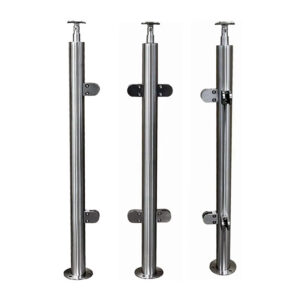
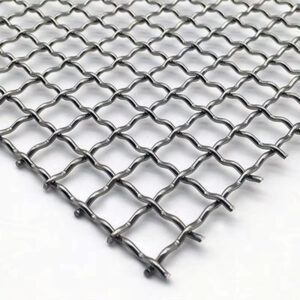
Catalog claims collapse fastest at the receiving dock. An importer who approves a supplier based on product photography and a grade callout on a data sheet often discovers the actual problem months later—finish variation across a single shipment, hardware that corrodes at an unexpected rate in a coastal installation, or dimensional inconsistency that forces field rework on fittings that were supposed to be drop-in replacements. The cost is not just the return freight; it’s the labor already spent, the project delay, and the relationship damage with the contractor who installed the parts. Closing that gap requires a structured evaluation process that starts before a purchase order is issued and holds at each stage until measurable evidence—not sales assurances—clears the next gate.
Factory Evidence Beyond Sales Presentations
A catalog that lists branded products under another company’s name is a screening signal, not a disqualifier, but it should prompt a direct question: which processes actually run inside this facility and which components come from outside it? Some suppliers operate legitimate hybrid models, assembling components that are finished or fabricated elsewhere, and that arrangement may be entirely acceptable depending on what the importer is sourcing. The problem arises when the importer assumes full in-house production and builds a qualification plan around that assumption without verifying it.
The verification step that most importers skip is matching the product scope being purchased against the factory’s actual process route. Asking a manufacturer to walk through the production sequence for a specific SKU—material receipt, forming, surface treatment, dimensional inspection, packaging—and then comparing that sequence against observable evidence during a factory visit reveals whether the capability being sold matches what the facility can actually control. If a fitting or terminal component in the product line is branded by a separate company, that’s a prompt to clarify whether the supplier is reselling it, co-branding it, or subcontracting its production. Each scenario has different implications for consistency, traceability, and the buyer’s ability to raise a nonconformance.
The downstream consequence of skipping this verification is that audit findings later in the relationship become harder to act on. If a finish inconsistency surfaces after bulk orders have been placed, and the root cause is a subcontracted polishing operation that the importer didn’t know existed, the corrective path is unclear—the supplier may not have direct process control over the step that failed. Catching that structure before the first order gives the importer a realistic picture of where accountability sits.
Material Finish and Dimensional Failure Risks
Material grade and surface finish are frequently specified at the catalog level and then not verified at any point in the ordering process. That gap is where corrosion failures and finish variation originate. One manufacturer’s guidance notes that AISI 316 stainless steel is recommended for outdoor projects because of its resistance to corrosive environments—that recommendation reflects a design consideration worth taking seriously in coastal or high-humidity applications, not a regulatory mandate. The importer’s role is to decide whether the application warrants it and then confirm, through documentation, that the material being shipped actually is what the supplier claims.
The verification tool here is the inspection document. ISO 10474:2013 defines certificate types that establish traceability from the steel mill through the manufacturing process. Requiring a 3.1 or 3.2 certificate—where material properties are confirmed by an independent inspection body or by the manufacturer under third-party witness—provides a documented link between the product shipped and the heat or batch it came from. Without that document, an importer accepting a “316 marine grade” callout on a packing list has no process-level evidence that the material is what it says. Mixed material—304 components packaged alongside 316 hardware, either accidentally or as a substitution—will not be visible on arrival and may not appear until corrosion begins under service conditions.
Dimensional failure follows a similar pattern. Tolerances that look acceptable on a drawing can drift across production runs when tooling wears, when a different operator runs the same process, or when a batch is sourced from a different sub-supplier. The failure mode for dimensional inconsistency in cable railing hardware is usually discovered during installation: a fitting that doesn’t seat correctly on a post profile, a thread engagement that is marginal, or a cable end that doesn’t reach tension before the fitting bottoms out. Catching these issues requires dimensional records from the factory—not just a certificate stating that inspection was performed, but actual measured values that the importer can compare against the drawing tolerances in the purchase specification.
Capacity Versus Specialized Process Ownership
A large-volume manufacturer may be able to fulfill a 10,000-unit order inside the lead time a smaller supplier cannot match. That capacity advantage is real and can matter for an importer managing tight project schedules. But capacity alone does not indicate process ownership, and for certain product types and finish requirements, the two are not interchangeable.
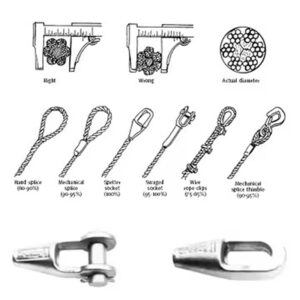
A focused supplier whose production is organized around a specific product category—cable railing hardware, for example—often signals process ownership through the technical options it can support. Consider a manufacturer that offers field swage, factory swage, and swageless cable assembly options: that range indicates that the facility has made deliberate decisions about process capability across different application needs. An importer evaluating that supplier can probe each option to understand where the tolerance boundaries are, what the failure mode looks like if a field swage is made incorrectly, and what the supplier’s response process is when a component performs outside specification. That kind of technical conversation is harder to have with a high-volume general manufacturer whose product line spans dozens of unrelated categories.
The trade-off is that a specialist’s tighter process ownership doesn’t always scale to the volumes a growing importer needs. The evaluation question is not which model is better, but which model matches the importer’s current sourcing profile and the specific finish and dimensional requirements on the products being purchased. A large factory with inconsistent surface finishing on marine-grade 316 creates a different risk than a specialist that can’t absorb a 50% volume increase. Both are real risks; neither can be assessed from a catalog.
For importers sourcing marine-grade cable fittings, the decision about process ownership is particularly relevant because stainless steel cable fittings in 316 marine grade require consistent control at both the material and finishing stage—two process steps that a general manufacturer may route through separate departments or subcontractors with limited cross-check.
Turning Audit Findings Into Purchase Controls
The hardest part of a factory audit is not identifying the observations—it’s writing them into purchase specifications that can function as approval gates on future orders. An audit finding that stays as a narrative note (“supplier has inconsistent labeling on hardware types”) has no enforcement function. Translated into a purchase control (“each purchase order must identify components by function—tensioning end or terminal end—and packing lists must separate them accordingly”), it becomes something that can be verified at receiving without reopening the audit report.
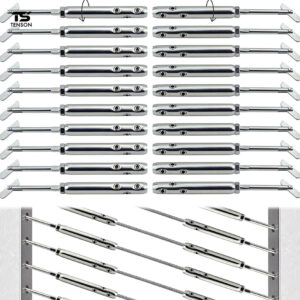
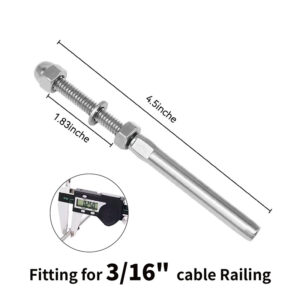
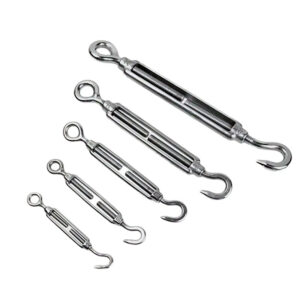
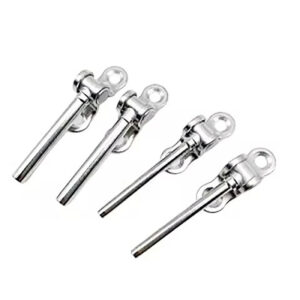
The tensioning-versus-terminal-end distinction illustrates this directly. Some manufacturers distinguish between hardware designed to apply tension to a cable run and hardware designed to secure an end without tensioning function. That distinction matters for installation correctness, but it also matters for purchase specification: if both types appear on the same line item or arrive unlabeled in the same bag, the installer has to sort them on-site, which introduces an error risk. Linking the audit observation—”supplier uses functional taxonomy for cable hardware”—to a purchase control—”PO line items must separate tensioning and terminal ends; packing list must confirm quantities by type”—creates a checkpoint that doesn’t require a return visit to the factory to enforce.
ISO 9001:2015 provides a process framework for how a supplier should document, address, and close nonconformances, which makes it a useful reference when evaluating whether a manufacturer’s corrective action system is functional rather than cosmetic. But the practical test for an importer is simpler: present one nonconformance finding from a prior order and ask the supplier to walk through what happened, what the root cause was, and what changed in the process. The answer to that question tells more about the supplier’s corrective capacity than any quality manual.
For broader context on how to structure the supplier evaluation before a first bulk commitment, the approach described in how to evaluate a stainless steel railing supplier before your first bulk order offers a compatible pre-order framing.
Trial-Order Release Criteria for Importers
A trial order is not a test of whether the supplier can ship product. It is a test of whether the supplier can consistently meet the acceptance criteria that the importer has written down before the order is placed. Without a written acceptance plan, the trial order becomes a judgment call at receiving—and judgment calls at receiving tend to shift in the direction of accepting the shipment because the alternative is a delay.
The acceptance plan should identify what will be measured, what the acceptable range is, and what the release decision process is if any criterion is not met. Surface finish is one area where a measurable criterion is achievable: a supplier that specifies a Matte 180 grit finish on marine-grade 316 stainless steel has provided a threshold that can be referenced in the acceptance plan and checked against incoming parts using a surface comparator or profilometer. That specific value comes from one supplier’s specification and is not an industry-wide standard, but it illustrates exactly the kind of parameter that should appear in a written acceptance plan rather than being left to visual approximation at receiving. If the acceptance plan says “smooth finish,” there’s no way to reject a shipment that comes in at a different grit level. If it says “Matte 180 grit, verified against agreed reference sample,” the receiving decision is structured.
Material documentation should be a release condition, not a follow-up item. Requiring that ISO 10474:2013-compliant inspection certificates accompany the shipment—before the shipment clears receiving—prevents a situation where the importer accepts product and then chases paperwork afterward. Dimensional records, finish confirmation, and correct functional identification of hardware types (tensioning ends labeled and counted separately from terminal ends) round out the release criteria. If any criterion is unmet, the acceptance plan should specify whether the shipment is held, returned, or accepted under a concession with a documented corrective action from the supplier. The trial order’s value is in generating that first real-world data set against written criteria—not in confirming that product arrived.
The practical implication of this evaluation sequence is that most of the protection it provides happens before a bulk order is issued. Factory evidence gaps, material documentation weaknesses, and finish inconsistencies are recoverable at the qualification stage; they are expensive after installation has begun. The importer who leaves for audit without a written acceptance plan, or who moves to a trial order before defining release criteria, is compressing the evaluation into a stage where the cost of rejection is higher and the leverage to act on findings is lower.
Before committing to a supplier, confirm three things independently of sales materials: what processes the factory actually controls in-house, what documentation trail exists from material receipt through finished goods, and whether the supplier’s corrective action history reflects a functioning response system or a paper one. Those three checks do not guarantee a successful import relationship, but they define a floor below which the qualification evidence should not fall.
Frequently Asked Questions
Q: How can I evaluate a factory’s actual process control if an on-site visit isn’t possible?
A: Remote evaluation works but requires substituting observable evidence with requested documentation. Ask the supplier to provide a step‑by‑step process flow for one specific SKU—including which steps happen in‑house and which are subcontracted—and then request ISO 10474 inspection certificates for the material, dimensional measurement records from recent production runs, and photos or video of the finishing station against an agreed grit reference. If the supplier cannot produce this evidence, treat the missing visibility as a risk and consider a smaller paid sample run before any trial order.
Q: After a successful trial order that meets all acceptance criteria, what is the next step before placing a full production order?
A: Lock the approved acceptance plan into the purchase contract and establish a periodic surveillance process, not a one‑time gate. Document the reference sample, material‑certificate requirements, dimensional records, and functional labeling conventions agreed during the trial. Then specify that every subsequent bulk shipment will be released against the same criteria, with the frequency of spot‑checking or third‑party inspection agreed in advance. This prevents the factory from drifting after the first order passes.
Q: What if the factory cannot provide ISO 10474 inspection certificates—can I still use the evaluation approach?
A: You can, but the burden of material proof shifts entirely to your own receiving inspection. Without mill‑certified traceability, the evaluation framework still applies to process ownership, dimensional records, and packaging accuracy. However, to close the material‑grade gap you must add destructive testing (such as XRF analysis or corrosion testing) on random samples from each shipment and build that into your release criteria. If dimensional records are also missing, you will need to measure a statistically meaningful sample yourself, which may erase the cost benefit of a less formal supplier.
Q: How do I decide whether a large-volume general manufacturer or a focused specialist is the safer choice for my cable railing hardware order?
A: Choose based on which failure mode your project can least afford. If late delivery of large quantities is the top risk, a large factory with proven capacity may be safer—provided you can enforce finish and material controls through the purchase specification. If finish consistency and installation‑critical dimensional accuracy are non‑negotiable, a specialist with documented process ownership (for example, a supplier that offers field‑swage, factory‑swage, and swageless cable assembly options) is often the more protective route, because their system is built around those exact tolerances. Use the process‑walk evidence and audit, not catalog breadth, to make the final comparison.
Q: Is this full evaluation process worth the effort for a small-volume or first-time import order?
A: The process scales down, you don’t skip it entirely. Even for a small order, request the same three evidence items—in‑house production steps, material inspection certificates, and a corrective‑action example—before shipping. The cost of omitted checks includes mixed materials, dimensional misfit, and finish variation that are far more expensive to resolve after delivery than the few hours spent evaluating. Only for truly low‑stakes, non‑critical indoor applications might a visual‑only check be acceptable; any order that represents a client commitment or a repeatable specification deserves a written acceptance plan regardless of volume.